What is the origin of the brown tree snake?
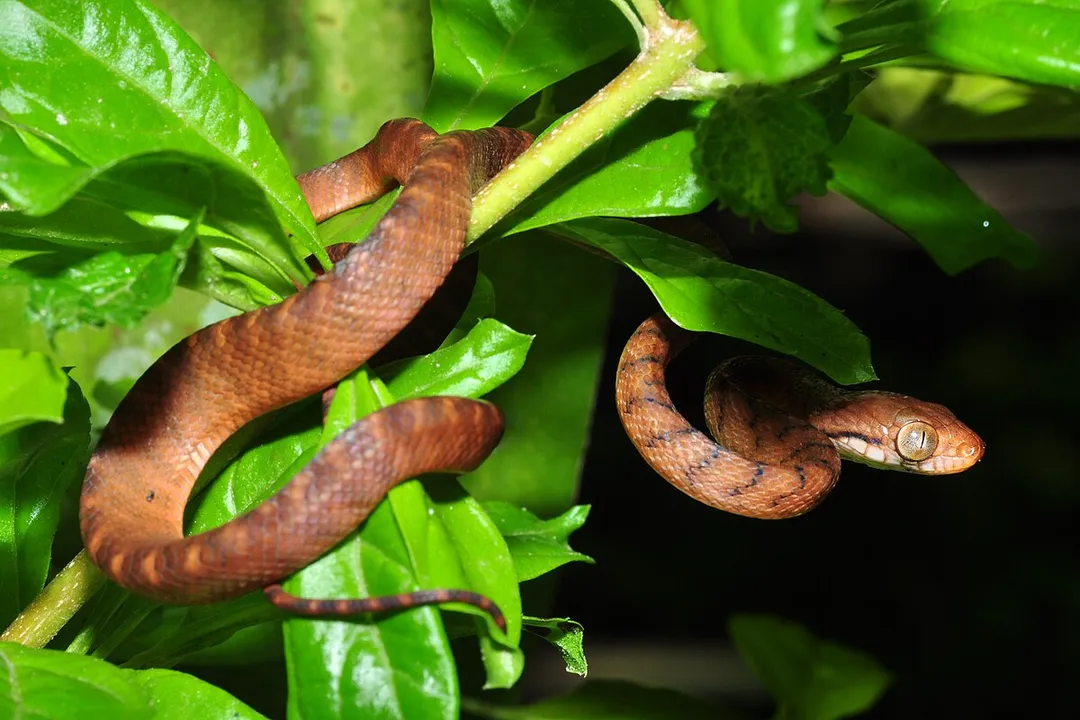
The slender, arboreal Boiga irregularis is infamous across the Pacific, primarily due to the ecological devastation it wrought on Guam. Before it became a symbol of invasive peril, however, the brown tree snake was simply another part of the complex fauna of its native home. Understanding where this creature evolved provides critical context for grasping how its introduction elsewhere led to such catastrophic consequences.
# Native Range
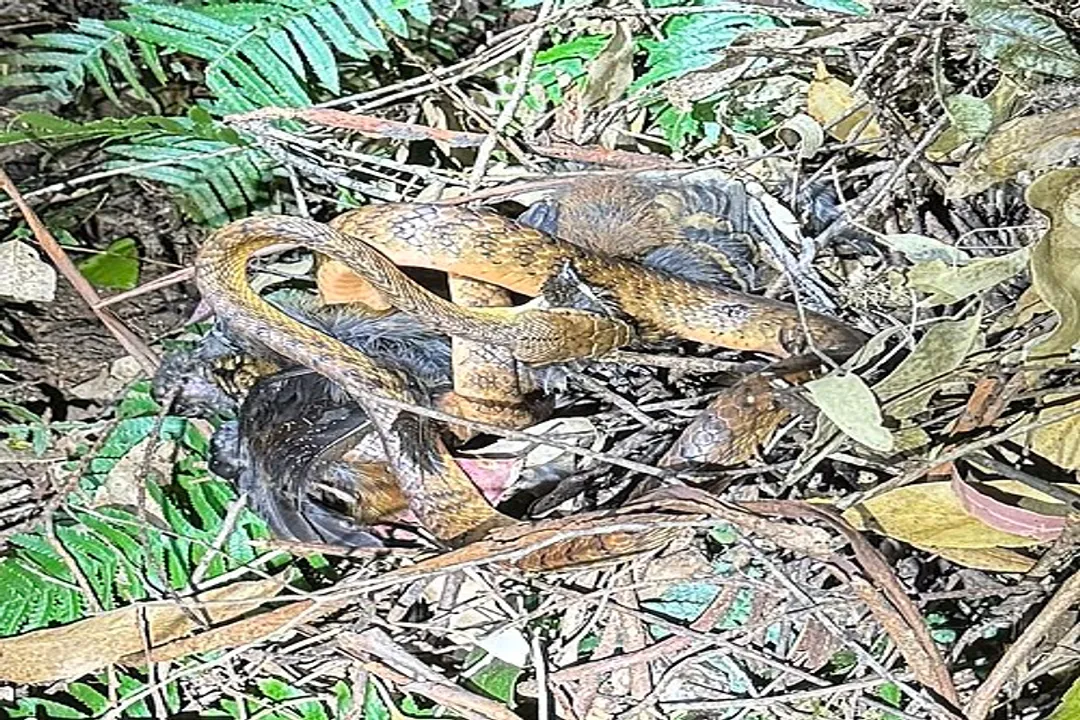
The species, scientifically classified as Boiga irregularis since Merrem described it in 1802, is native to a broad, somewhat discontinuous stretch of the Western Pacific. Specifically, its native range encompasses eastern and northern coastal Australia, the islands of eastern Indonesia extending from Sulawesi eastward, and Papua New Guinea, along with various islands within northwestern Melanesia. This serpent is a member of the Colubridae family and belongs to the genus Boiga, often referred to as "cat-eyed" snakes due to their distinct vertical pupils. In its natural settings, the snake is known to inhabit diverse environments, ranging from grasslands to dense forest, occasionally at elevations up to 1,200 meters in places like Papua New Guinea.
Within this expansive native territory, the brown tree snake is adaptable. It hunts both in the forest canopy and on the ground at night, seeking daytime refuge in tree crowns, caves, rock crevices, and even sheltered spots within human dwellings. Its diet in these environments is varied, typically including invertebrates, birds, lizards, mice, and other small rodents. Larger individuals in the native range often shift their diet to favor endotherms, like birds and mammals, over ectotherms such as lizards. This natural variability in coloration—ranging from brown and beige to green, sometimes with red markings—also exists across its native range.
# The Vector
The precise moment this species crossed into a new territory is tied directly to one of the largest military movements in modern history: the aftermath of the Second World War. The island of Guam became the unfortunate recipient of this accidental cargo. Researchers have determined that the introduction likely occurred after World War II and before 1952.
The mechanism was simple yet devastatingly effective: the snake stowed away, probably hidden in ship cargo or perhaps by climbing into the landing gear of aircraft bound for Guam. Between 1946 and 1950, the U.S. military engaged in a massive effort to salvage damaged war materiel abandoned across Melanesia. A crucial staging point for this salvaged equipment, destined for Guam, was the vast naval base located on Manus Island in the Admiralty Islands. The snake's natural behavior—seeking out small, dark hiding places for refuge—made it an ideal, albeit disastrous, stowaway amidst the heaps of equipment being shipped.
It is worth noting an earlier, though ultimately unconfirmed, early arrival scenario. In 1949, a snake was found on Wake Island and initially assumed to be a brown tree snake arriving from the South Pacific via military transport, although it was later identified as a North American Pituophis. While this specific sighting was a misidentification, the fact that observers at the time immediately suspected the brown tree snake as a stowaway in military cargo suggests that the pathway for accidental translocation was a recognized risk even then.

# Evidence Linking Source
Pinpointing the exact source population among its wide native range required more than just examining shipping manifests; scientists needed biological proof. Since the snake is known for variability in color and scale patterns, researchers compared morphological data from the Guam population against specimens collected from various parts of its known range. They focused on standard scale counts, which can be relatively stable characteristics within distinct populations.
The analysis revealed a compelling match: the scale counts—specifically the number of dorsal scale rows counted around the neck, midbody, and posterior body—showed that the Guam snakes were statistically indistinguishable from specimens originating in the Admiralty Islands. Furthermore, these counts differed significantly from those found in snakes from mainland New Guinea. This morphological data strongly supported the historical evidence pointing toward the Admiralty Islands as the point of origin. The similarity, particularly in the number of scale rows around the posterior body, suggests a direct genetic link between the colonizers and the snakes from that specific Melanesian archipelago.
This triangulated evidence—where post-war military salvage operations utilized the Admiralty Islands as a staging point for shipments to Guam, and the resulting snakes on Guam matched the physical characteristics of the Admiralty snakes—creates a particularly strong case for the means and location of introduction. This reliance on physical traits, such as scale counts, to confirm historical narratives highlights a vital area of expertise in invasive species research: combining historical documentation with systematic biology to map biological invasions.
# Initial Foothold
The snake’s arrival in the Apra Harbor area of Guam was initially met with relative silence. For nearly two decades following the war, the area surrounding the harbor, where the snakes first appeared, was primarily a Navy base largely off-limits to civilians at night—the very time the nocturnal snakes are active. Moreover, many American soldiers stationed there had grown up in areas where the presence of snakes was not a cause for alarm, leading to a lack of immediate, widespread reporting.
The earliest written documentation surfaced around 1953, referencing persistent rumors of snakes near Apra Harbor brought by ships. By 1955, eight snakes, identified as Boiga irregularis, had been captured near the harbor and were believed to have arrived via visiting ships. For several years following, newspaper coverage, often featuring photographs of the snakes found near the Santa Rita area adjacent to the harbor, tended to use the sighting to disprove the notion that Guam was snake-free, rather than signaling an ecological disaster. During this period, the snake was occasionally misidentified locally as the Philippine Rat Snake.
It wasn't until the 1960s that evidence of the snake's presence rapidly increased, marking the true beginning of the irruption. By the end of that decade, snakes were being sighted across the southern and central parts of the island, and by the early 1970s, they had reached the northern end. The explosion in population, due to abundant prey and a lack of natural predators (aside from feral pigs and the native Mariana monitor), led to densities that far exceeded those seen in their native habitat. The snake’s origin story is thus inextricably linked to the massive, non-biological transfer of goods following a global conflict, a historical event that created the perfect, unintentional dispersal corridor for a highly adaptable predator.
Related Questions
#Citations
Brown tree snake - Wikipedia
Brown Tree Snake | National Invasive Species Information Center
[PDF] Origin and Population Growth of the Brown Tree Snake,