What is the history of the Caucasian Shepherd?
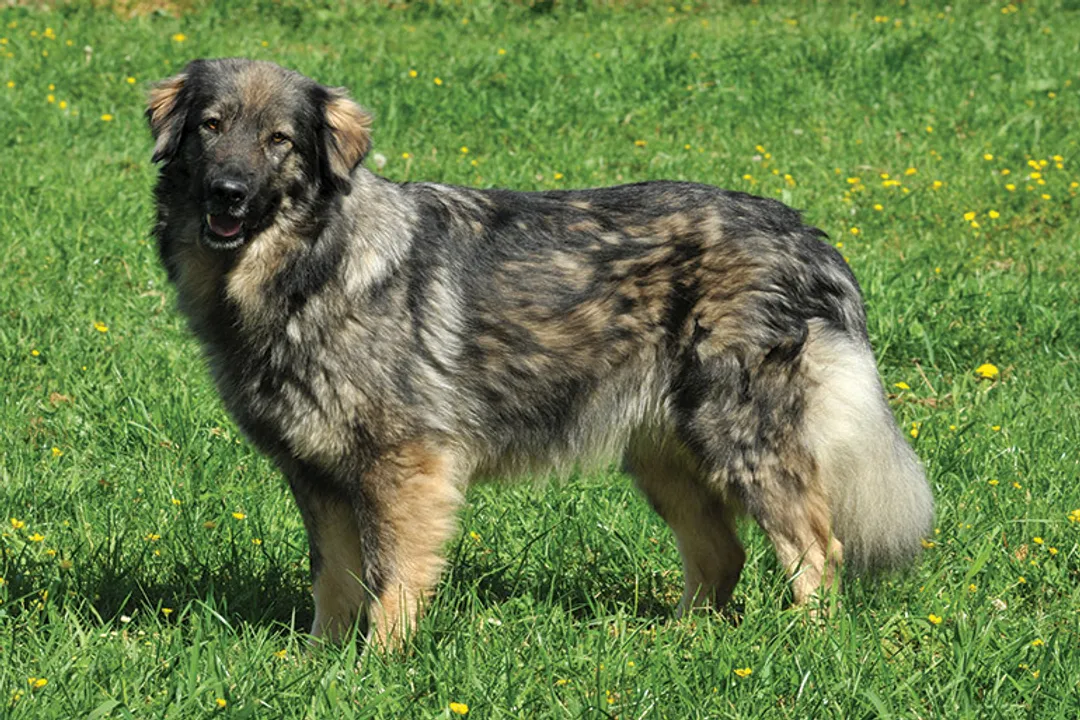
The story of the Caucasian Shepherd Dog is intrinsically tied to the rugged, unforgiving geography of the Caucasus Mountains, a vast territory spanning the bridge between the Black Sea and the Caspian Sea. [1][5] This lineage is exceptionally ancient, representing one of the oldest known working dog types, developed not through the whim of a single breeder, but through millennia of natural selection and necessity. [1][5] For thousands of years, these powerful dogs served one primary, life-and-death purpose: to guard livestock against formidable predators native to the region, most notably wolves and bears. [1][2][5][6][9]
The environment shaped the dog. In a region where survival depended on constant vigilance and unmatched strength, only the most capable dogs were allowed to breed. [5] These dogs were not pets or companions in the modern sense; they were essential, self-sufficient partners to nomadic shepherds, expected to defend entire flocks with minimal human intervention. [6] This intense selective pressure forged a dog with innate protective instincts, massive size, and a thick, weather-resistant coat capable of withstanding brutal winters and harsh summers. [5] The dog’s utility—its ability to survive and defend autonomously—is the foundational element of its history, far preceding any modern kennel club registration. [2]
# Ancient Origins
The broad geographic area encompassing the Caucasus ensured that the ancestral dogs developed along slightly different lines depending on the specific terrain and prevailing threat levels. [1] Unlike breeds developed in smaller, more controlled regions, the ancestors of the modern Caucasian Shepherd were dispersed across various high-altitude villages and steppes, leading to inherent regional variations in size, coat, and temperament. [2] The earliest records or mentions of these dogs are often anecdotal, woven into the local lore of the peoples inhabiting the mountainous areas between Europe and Asia. [5]
It is helpful to view the historical dog not as a single, unified breed, but as a collection of related landrace guardians inhabiting the mountain ranges extending from the Caucasus northwards into Russia. [1] These distinct local populations were unified by their function—livestock guardianship—rather than by a strict aesthetic standard. [2] The sheer range of their historical territory, stretching across diverse climates, means that any attempt to trace a single point of origin is largely speculative, as the breed is the region it protects. [1][5] This wide distribution explains the physical variation seen even today; a dog bred for the cold, high-altitude terrain might look quite different from one developed on the drier, flatter steppes just beyond the main mountain range. [2]
# Soviet Standardization
The transition from an ancient landrace to a recognized breed occurred during the 20th century under the governance of the Soviet Union. [1][9] After the Russian Civil War, efforts began in the 1920s and 1930s to consolidate the various regional guardian dogs into a standardized national breed, primarily for use by the Soviet military and state-run farms. [1][9] This move was deliberate and systematic, shifting the selection criteria from purely survivalist merit to adherence to a written standard. [2]
The breed was formally established and recognized within the Soviet system, often under the name Kavkazskaya Ovtcharka, or Caucasian Ovcharka (CO). [1][9] Russian breeders took the best examples from the mountainous regions, particularly those near Mount Elbrus, and began intensive breeding programs to solidify the desired traits: immense size, powerful structure, and unwavering loyalty combined with extreme suspicion of strangers. [1][5] The Russian Kynological Federation (RKF) continues to oversee the breed standard within that sphere. [1]
This standardization process inherently involved eliminating some of the highly localized physical variations that existed in the older landrace populations, favoring a specific, powerful phenotype deemed most suitable for Soviet-era guarding tasks. [2] While this created the breed we recognize today, it also inevitably erased some of the unique characteristics developed over centuries in isolated valleys. [1]
# Varied Appearance
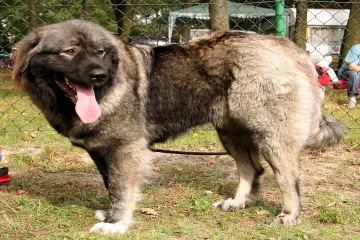
The historical development across such a massive area directly results in the observed physical differences in the dogs today, often leading to debates about what constitutes the "true" type. [1] Early in the standardization effort, breeders needed to account for the differing climates encountered by shepherds working across the Caucasus and beyond. [2]
These physical differences generally fall into categories related to coat type and body structure, reflecting ancestral origins in either high-altitude or steppe environments:
- Mountain Type: Tends to be more heavily built with a very dense, long, and thick double coat, perfect for extreme cold. [1][2] These dogs often possess a more imposing, bear-like stature.
- Steppe Type: Often slightly lighter boned, sometimes with a shorter coat, reflecting a need for greater mobility across flatter, perhaps less bitterly cold terrain. [1]
The coat length itself is a major historical variable. Dogs living in the highest, coldest elevations developed impressive long coats for insulation, while those in warmer, lower regions developed medium or short coats. [1][2] Both types, however, retained the defining characteristic: a deep-seated, non-negotiable guarding instinct. [5] When looking at different kennel clubs globally, you may notice slight differences in emphasis—some prioritize the massive, long-coated mountain dog, while others accept a wider variance based on the historical breadth of the original landrace. [2] It is important for modern owners to realize that the dog's heritage is not monolithic, and what looks like an "imperfect" coat might actually be perfectly aligned with a specific regional tradition that predates the 20th-century standard. [1]
# Modern Recognition Status
As the breed gained renown for its protection capabilities, it slowly began to be exported outside of the former Soviet sphere, introducing it to Western dog fanciers. [2] Recognition by major international bodies has been a slow and sometimes fragmented process, reflective of the breed’s specialized, non-companion purpose. [10]
In the United States, for instance, the breed is recognized by the United Kennel Club (UKC) as the Caucasian Shepherd Dog. [9] However, it has not yet achieved full recognition status with the American Kennel Club (AKC), often residing within the Foundation Stock Service (FSS), which allows participation in certain events while breeders work toward full entry. [10] This status often signifies that the breed is still undergoing evaluation regarding population consistency and breed history documentation outside its native region. [10]
Internationally, the breed is listed under the FCI (Fédération Cynologique Internationale) standard, usually under the name Caucasian Shepherd Dog, grouped within the Molosser family. [1] The variation in how different national kennel clubs classify or register the dogs often comes down to how much weight they place on the original, varied landrace characteristics versus the strict adherence to the standardized Soviet-era template. [1][2]
The history of the Caucasian Shepherd Dog is essentially a history of necessity translating into genetics. It is a testament to working dogs whose primary trait—protectiveness—was so successfully ingrained by harsh environmental selection that it has survived centuries of change. [5]
# Insight into Breeding Heritage
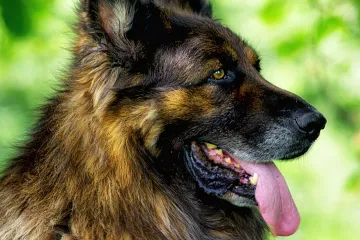
The sheer longevity of this dog as a functional guardian offers a unique insight into canine genetics. Because the breed was sustained primarily by rural shepherds focused entirely on results—the sheep must live—the genetic bottleneck created by modern, controlled breeding was less severe for a much longer time than in many Western breeds developed in the last 150 years. [5] This means that an individual Caucasian Shepherd today might carry genetic traits from very distinct regional pools that were kept separate until the Soviet standardization efforts. [1] For a novice owner encountering this breed today, understanding this deep history is key to responsible ownership: this dog was bred to make life-or-death decisions independently when the shepherd was absent or asleep. That ingrained self-reliance and suspicion of the unknown will never truly be bred out, regardless of how pleasant the individual dog may seem in a controlled, familiar environment. [6]
The historical purpose also explains the common difficulties encountered by owners trying to introduce them to unfamiliar people or animals. Unlike many breeds selected for easy socialization or companionship, the CO’s primary success metric was non-acceptance of anything new approaching the flock or territory. This inherent protective drive is the most authentic part of their history to preserve. [2]
| Feature | Ancient Purpose (Pre-1920s) | Modern Standardized Focus (Post-1930s) |
|---|---|---|
| Selection Driver | Survival against predators; Shepherd's immediate need | Adherence to established written physical criteria |
| Coat Variation | Wide; adapted to local microclimates (mountain vs. steppe) | Narrowed; preference often given to heavy double coats |
| Temperament Goal | Autonomous problem-solver; fierce defender | Consistent protection; manageable within a controlled military/state context |
| Recognition | None; defined only by utility | Formal registration with Kynological Federations [1][9] |
This table contrasts the historical development eras, showing how the shift from an environmental selection process to a controlled breeding program altered the emphasis placed on the dog's characteristics. [1][2]
Ultimately, tracking the history of the Caucasian Shepherd Dog is less about finding a single ancient scroll and more about tracing the migration paths of ancient peoples and the ecological pressures of the Eurasian landmass. [5] It is a living artifact of the world’s oldest professions, preserved through fierce loyalty and unparalleled guardian instinct. [6]
#Videos
Caucasian Shepherd The Untold Truth about this Dog Breed
Related Questions
#Citations
Caucasian Shepherd Dog - Wikipedia
Caucasian Shepherd Dog Facts - Wisdom Panel™ Dog Breeds
History of Caucasian Shepherd
Origin of the Caucasian Shepherd Dog - Cane Corso Kennel Club
From Caucasus worldwide: Caucasian Shepherd breed
Caucasian shepherd: Dog breed characteristics & care - BetterPet
Caucasian Shepherd Dog Breeds - Dogs NSW
Caucasian Shepherd The Untold Truth about this Dog Breed
Breed Standards : Caucasian Ovcharka | United Kennel Club (UKC)
Caucasian Shepherd Dog - American Kennel Club