Is a crabeater seal a carnivore?
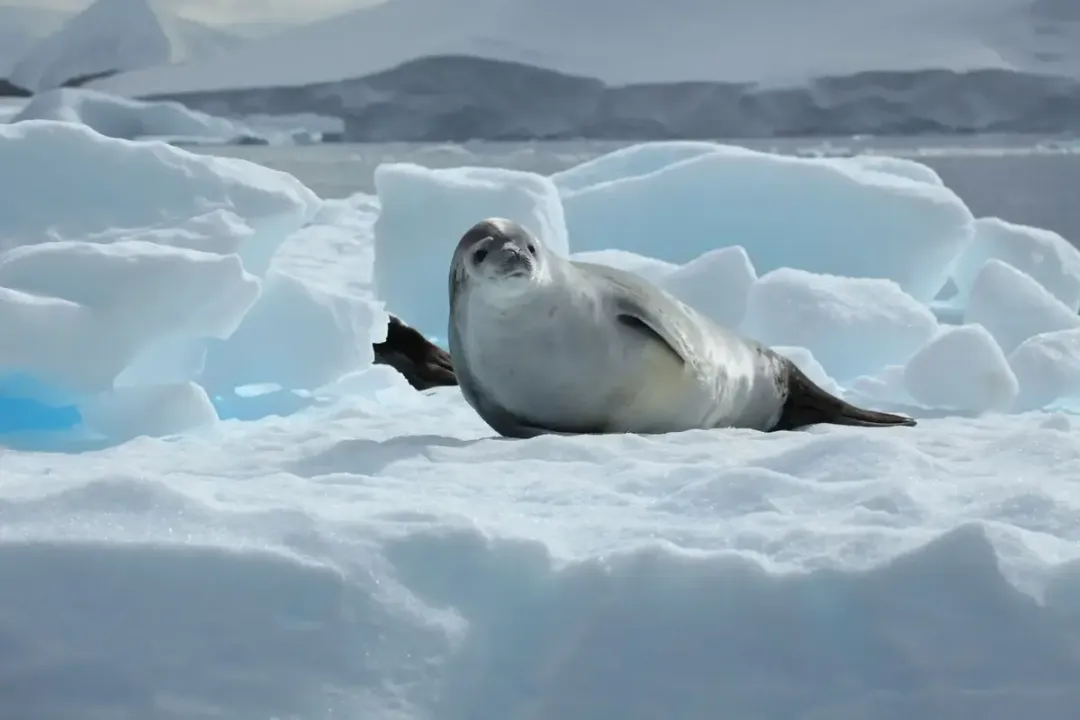
The designation of the crabeater seal (Lobodon carcinophaga) often causes immediate confusion among those encountering the name for the first time, leading to the central question of its dietary classification. While its scientific name, Lobodon carcinophaga, literally translates to "crab-eater," the reality of this Antarctic pinniped’s menu is far removed from large, shelled crustaceans. [1][7] Despite the common name being a significant misnomer regarding its preferred meal, biologically, the crabeater seal absolutely falls under the umbrella of a carnivore. [7] This classification is based on its taxonomic placement within the order Carnivora, placing it alongside true predators, even though its feeding strategy has evolved to target the ocean's smallest abundant animals. [3][7]
# Dietary Misnomer
The most crucial piece of information to understand about the crabeater seal is that crabs constitute a minimal part of its diet, perhaps less than one percent. [4][7] In fact, one source notes that despite its common name, the crabeater seal does not feed on crabs at all. [4] The initial naming likely occurred because early European explorers observed the seal eating crustaceans, making the assumption that crabs were the staple, a classic case of observational error solidified into common terminology. [4]
Instead of scuttling along the seafloor for crabs, the crabeater seal focuses almost entirely on one primary food source: Antarctic krill (Euphausia superba). [1][2][7] Researchers estimate that an adult crabeater seal consumes between 150 and 450 kilograms (330 to 990 pounds) of krill annually. [7] This reliance on krill makes them one of the most abundant, yet least understood, large mammals on Earth, with population estimates reaching into the tens of millions. [7][6] While krill is the overwhelming preference, they are opportunistic hunters and will consume small fish and squid when krill is less available. [2][6]
# Specialized Dentition

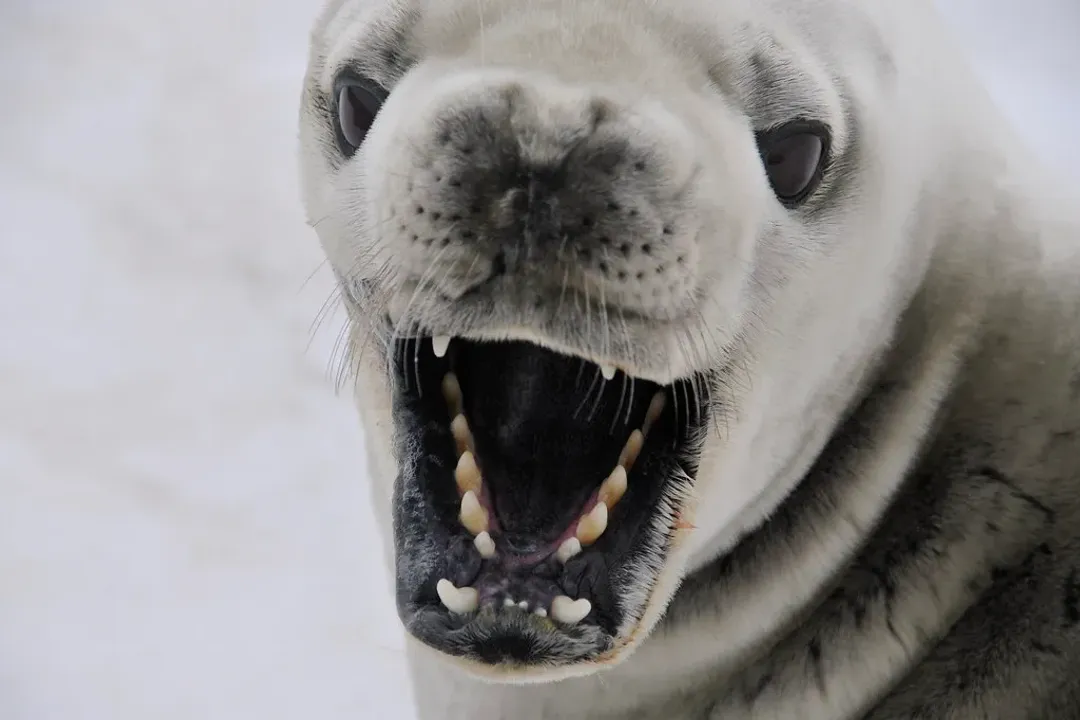
What truly sets the crabeater seal apart, and explains how it manages to thrive on a diet of tiny, schooling invertebrates, is its unique dental structure. [1][7] Unlike true carnivores that possess sharp canines and shearing carnassials designed for tearing flesh and bone, the crabeater seal has evolved highly specialized teeth. [1][7]
The teeth are long, slender, and possess multiple cusps, almost resembling a sieve or comb. [1][2][7] These cusps interlock when the seal closes its mouth. [1][7] This arrangement functions similarly to the baleen plates found in filter-feeding whales. [1] When the seal scoops up a large volume of water thick with krill, it closes its jaws and uses its tongue to push the water back out through the gaps between the cusps, effectively straining the krill inside its mouth. [1][7] This method requires minimal chewing, making the seal an incredibly efficient bulk feeder when the krill swarms are dense. [1]
It is fascinating to consider this parallel evolution. While baleen whales occupy a massive niche at the top of the pelagic food web, filtering plankton directly from the water column, the crabeater seal has achieved a similar bulk-feeding strategy using teeth rather than keratinous plates, demonstrating how environmental pressures can lead to convergence in feeding mechanics across very different mammalian lineages. [7] This adaptation is not common among other seals, which typically have simpler, cone-shaped teeth suited for gripping fish or squid. [1]
# Carnivore Classification

The question of whether the crabeater seal is a carnivore ultimately boils down to taxonomy, regardless of the meal size. The Crabeater seal belongs to the order Carnivora. [3][7] This classification means its ancestors were meat-eaters, and its basic biological structure, physiology, and evolutionary history align with other carnivorous mammals. [7] Even though its diet is primarily crustacean-based—a gray area often confusingly labeled as piscivore or crustacean-eater—it is not a herbivore or a pure omnivore in the traditional sense. [7] It preys upon other animals, which is the fundamental definition that places it within the Carnivora order. [6]
The distinction here is between the order (a broad biological grouping based on ancestry) and the specific feeding niche (the actual food source). [3] If the definition of carnivore is strictly "one that eats flesh or meat," then a seal eating krill—which are animals—satisfies that requirement, even if the prey is small enough to be filtered. [6]
# Sea Ice Dependence
The life cycle and massive population success of the crabeater seal are inextricably linked to the presence and extent of Antarctic sea ice. [6][7] They spend almost their entire lives on or near this ice. [7] This ice platform is vital for resting, molting, and giving birth. [6] More importantly, the underside of the sea ice provides a crucial habitat for the algae that bloom early in the season, which in turn feeds the Antarctic krill—the seal’s sustenance. [7]
This dependency creates a critical feedback loop in the Antarctic ecosystem. When sea ice coverage is extensive and stable, krill populations thrive, supporting large seal populations. [7] Conversely, changes in the extent or duration of sea ice directly threaten the base of the food chain upon which the crabeater seal depends. [6] Observing the health and density of crabeater seal colonies serves as an excellent, if slightly delayed, barometer for the overall stability and productivity of the Southern Ocean's marine environment, offering scientists a tangible metric for tracking the effects of regional climate shifts. [2]
# Life Cycle Notes
Crabeater seals are generally solitary animals, avoiding other seals outside of mating season. [5] They are slender animals, often looking somewhat lanky compared to their bulkier relatives like elephant seals. [5] Females are generally slightly larger than males. [2] They have a relatively high reproductive rate, typically giving birth to a single pup after about eleven months of gestation, with a nursing period lasting only three to four weeks. [2][7] This short dependency period is advantageous in a harsh environment where reliable food sources can fluctuate rapidly. [7]
They face very few predators once they reach adulthood. [6] Orcas (killer whales) are known to prey on them, and leopard seals sometimes target the young or weaker individuals. [6][7] However, their sheer numbers and their ability to quickly retreat to the sea ice afford them significant protection from most threats. [6]
# Summary of Diet and Classification
To summarize the classification quandary, we can organize the factual information derived from observation and taxonomy:
| Characteristic | Detail | Citation |
|---|---|---|
| Taxonomic Order | Carnivora | [3][7] |
| Primary Diet | Antarctic Krill (over 90%) | [1][7] |
| Secondary Diet | Fish, Squid | [2][6] |
| Crab Consumption | Negligible (Less than 1%) | [4][7] |
| Feeding Method | Specialized Filter Feeding (Interlocking teeth) | [1][7] |
The crabeater seal is thus a prime example of how functional ecology—what an animal does—can diverge significantly from its formal biological classification—what an animal is. [3] It is a specialized filter-feeding carnivore of the Antarctic sea ice, genetically wired to be a meat-eater, yet functionally adapted to consume vast quantities of small crustaceans. [1][7] This unique dietary niche allows it to dominate its habitat without directly competing with apex predators like leopard seals or orcas that target larger prey items such as whole fish or penguins. [6]
Related Questions
#Citations
This seal has the craziest teeth in the carnivore world
Crabeater Seal - Lobodon carcinophaga - A-Z Animals
Crabeater Seal | The Animal Kingdom Wiki - Fandom
Despite its name, the crabeater seal does not feed on crabs ... - Reddit
Crabeater Seals Have the Weirdest Teeth in the World - YouTube
Lobodon carcinophaga (crabeater seal) - Animal Diversity Web
Crabeater seal - Wikipedia
Crabeater Seal | Antarctica Wildlife - SA Vacations
Meet the crabeater seal. This little guy comes from Antarctica and ...