What is the description of a finch?
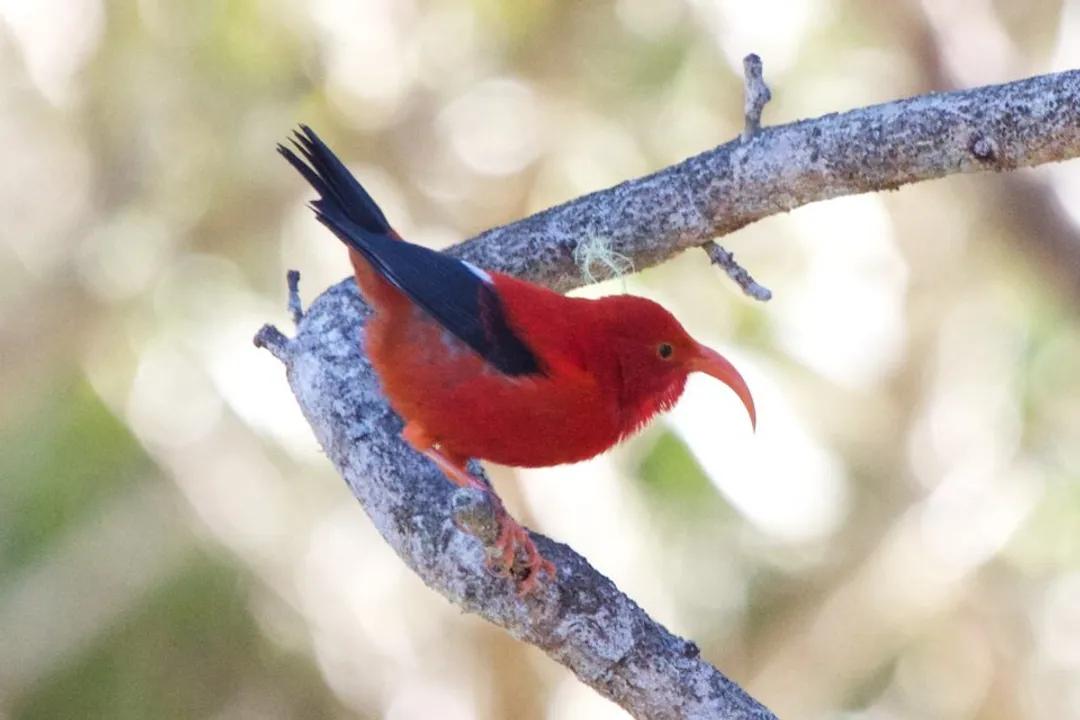
The general appearance of a finch is often summarized by the iconic image of a small, seed-cracking songbird, but this description only scratches the surface of the more than two hundred species classified as true finches within the family Fringillidae. [3] While many birds across different families share the common name "finch"—like the estrildid finches of the tropics or the famous Darwin's finches, which are actually tanagers [3][6]—the core Fringillidae family possesses shared traits that define them. These are small to medium-sized passerines, meaning they are songbirds, found across the Americas, Eurasia, and Africa, though notably absent naturally from Australia and the polar regions. [3][4] The characteristics that tie this group together, despite wide variations in color and specific shape, revolve around their build, their specialized tool for diet—the beak—and the interplay between their appearance and their survival strategy. [3][5]
# Structure and Size
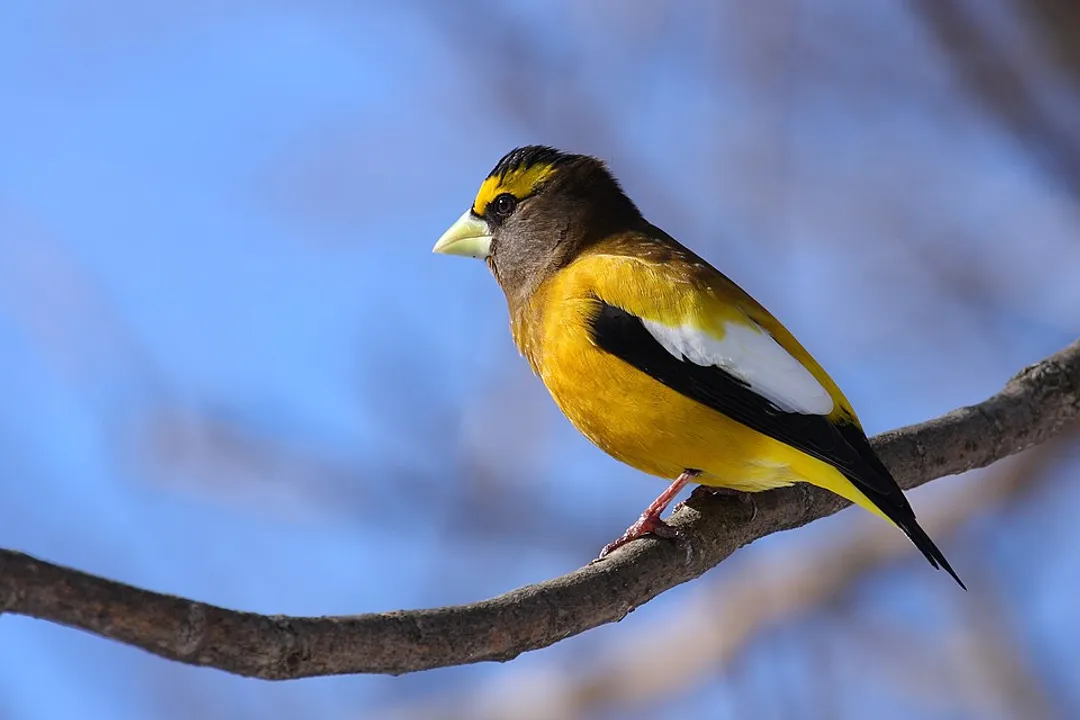
When first observing a finch, one notices their compact bodies. [6] They fall into a size range that can be described as small to medium, with documented lengths ranging from as little as 9.5 cm (about 3.8 inches) for the Andean Siskin up to nearly 25 cm (10 inches) for larger grosbeaks. [3] For context, the common House Finch typically measures around 5.1 to 5.5 inches long. [7] They possess relatively large heads supported by short necks, and many species share a tail that is distinctly notched or forked. [3][6][7] The House Finch, for example, has a somewhat long tail relative to its short wingspan. [7] While some species, like the Lesser Goldfinch, are among the smallest, the Collared Grosbeak represents the larger end of the scale within the family. [3] This general compactness allows them to navigate dense woodland and scrub habitats effectively. [3][4]
# Conical Bill
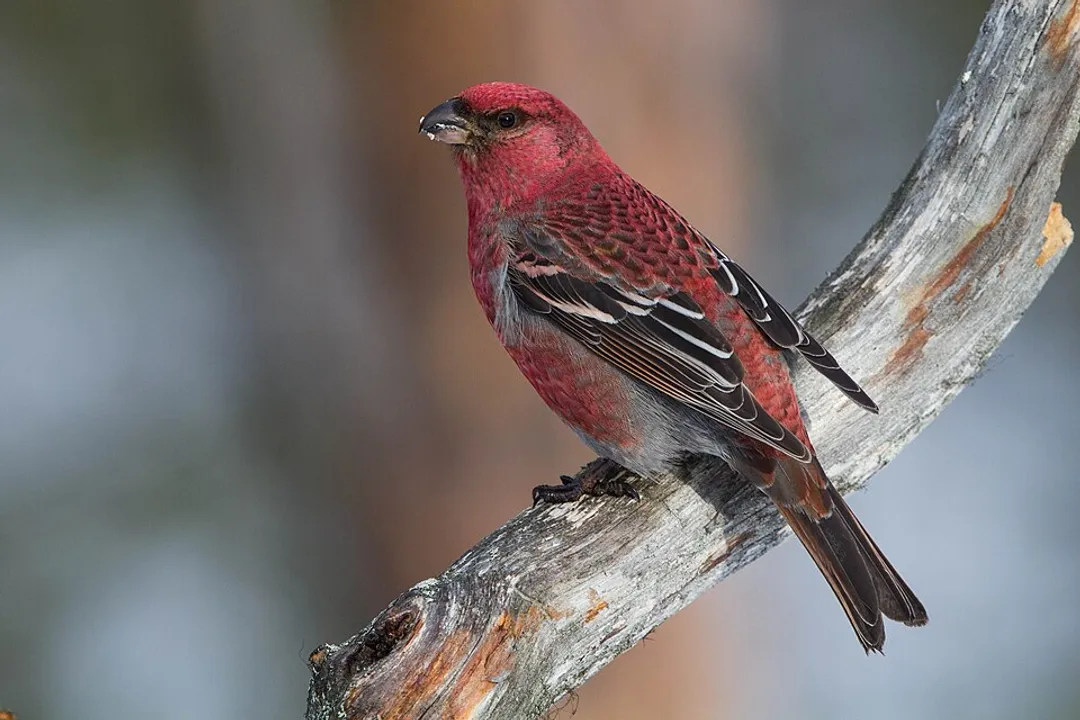
Perhaps the single most defining feature of a true finch is its bill. The typical finch sports a stout, deep, conical bill that is wide at the base and tapers to a sharp point. [5][6] This structure is an evolutionary masterwork, supremely adapted for the family’s predominantly granivorous diet—the crushing of hard seed hulls. [3][5] The mechanism involves wedging the seed in a groove on the upper mandible and using the lower mandible in a slicing or sawing motion to crack the shell, allowing the bird to consume the kernel inside. [6]
The degree of "stoutness" varies considerably, correlating directly with the size and hardness of the primary seeds consumed. [6] Species termed grosbeaks—a name derived from the French for "fat beak"—possess the thickest bills, allowing them to exert significant crushing force on larger seeds. [6]
However, this defining structure also highlights the incredible diversity achieved through adaptive radiation, particularly evident in the Hawaiian honeycreepers, which evolved a wide variety of bill shapes to access nectar or insects. [3] An even more specialized adaptation is seen in the six species of crossbills. Their upper and lower mandibles cross over each other horizontally at the tips, a unique feature in the avian world, allowing them to pry open the scales of conifer cones like pine and larch to extract the seeds within. [6] Observing a bird like a small siskin or redpoll waiting for a larger grosbeak to crack a tough seed, knowing that the smaller bird lacks the necessary bill power, offers a clear illustration of how morphology dictates feeding strategy within the flock. [6]
# Plumage and Coloration
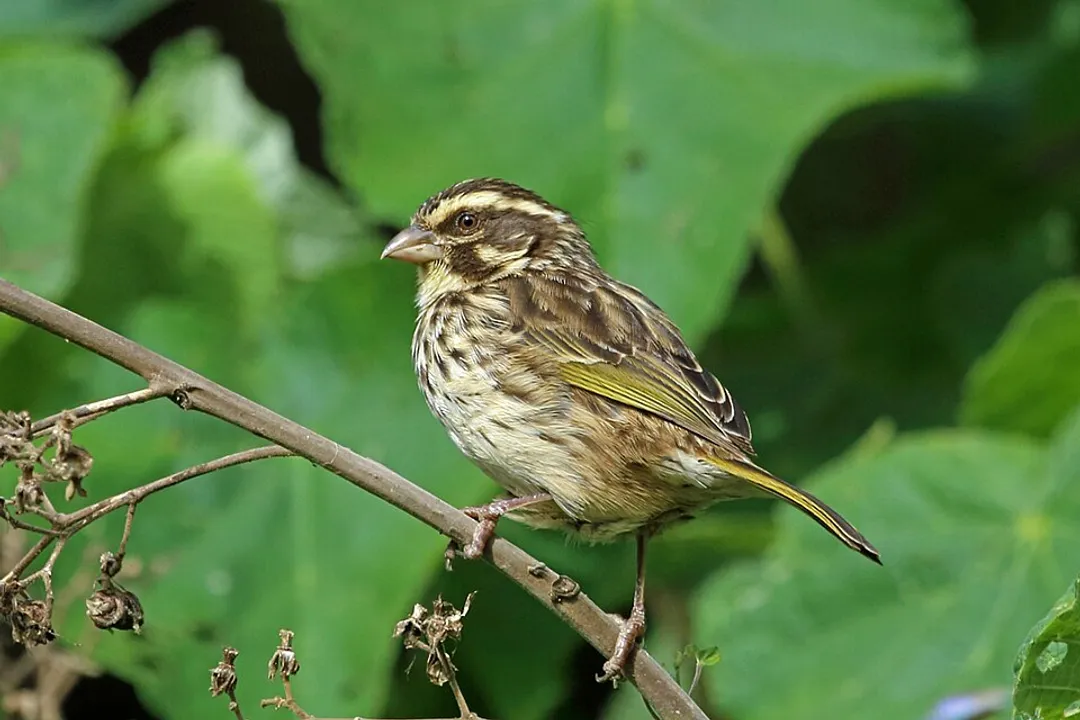
Finch coloration runs the gamut from drab to dazzling. The most basic plumage color across the Fringillidae family is generally brownish or sometimes greenish. [3] Many species fall into the category of "Little Brown Birds" (LBBs), which are protectively colored with streaks or spots, especially those inhabiting low bushes or grass. [4][6]
Contrasting this are the bright hues derived from carotenoid pigments, commonly resulting in vibrant yellows and reds. [3][4] Many species exhibit strong sexual dichromatism, meaning the males are significantly brighter than the females. [3] In the House Finch, for instance, males display rosy-red or orange markings on their heads, chests, and backs, used to attract mates—the intensity of the red often signaling the quality of the male’s diet. [1][6] Conversely, females are typically plain grayish-brown with blurry streaks. [7] American Goldfinches are another excellent example: males are bright lemon-yellow adorned with a jet-black cap and wings. [6] Within the Euphoniinae subfamily, the coloration shifts, with species like the Chlorophonias displaying glossy blue and green feathers. [6]
# Taxa and Misnomers
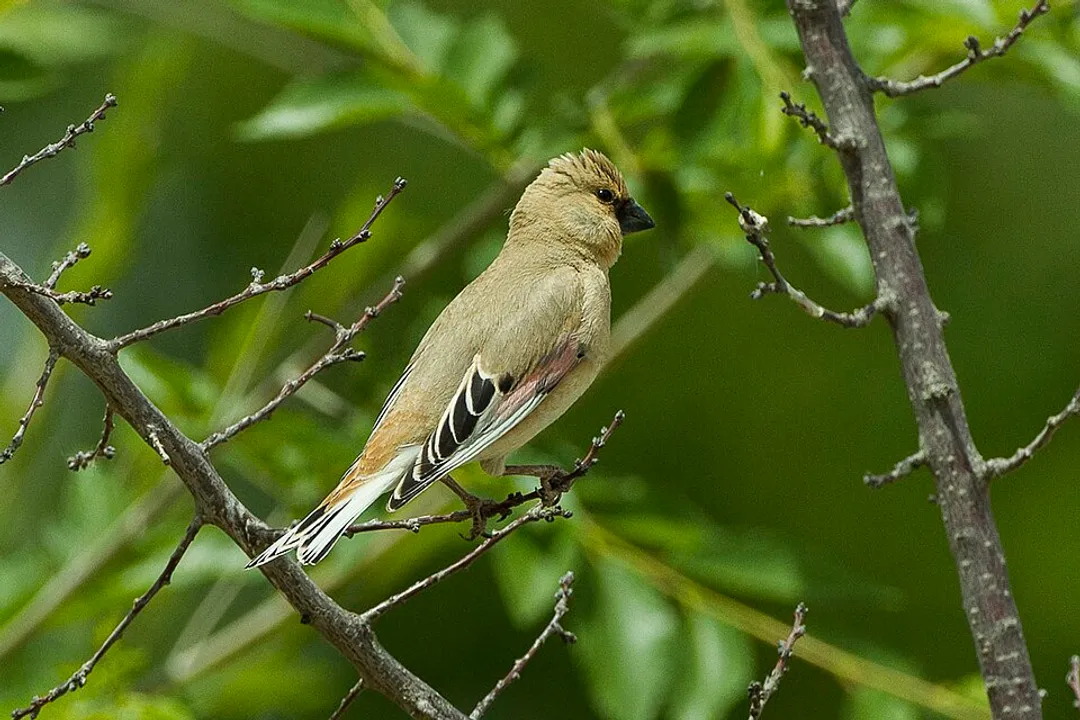
A significant component of describing a finch is understanding which bird one is actually looking at, as common names are notoriously misleading in ornithology. [6] The term "finch" is applied broadly to many birds not belonging to the Fringillidae family. [3] For general readers, distinguishing the "true finches" from these look-alikes requires recognizing shared anatomical features like the specific conical bill. [6]
For example, the famous Darwin's Finches of the Galapagos are actually members of the tanager family (Thraupidae). [3][6] Similarly, the popular Zebra Finch belongs to the waxbill family (Estrildidae). [6] These birds may share a superficial, seed-crushing appearance with true finches, but genetic data places them on different branches of the avian family tree. [6] True finches are united by characteristics like having 9 primary flight feathers and 12 tail feathers, and their evolutionary lineage, Fringillidae, is relatively recent, originating perhaps 10 to 20 million years ago in Eurasia. [3][6]
# Lifestyle and Appearance Correlation
It is fascinating to consider how the finch description extends beyond static physical traits to encompass behavioral patterns that shape their appearance and success in different environments. [6] Research suggests that finches have adopted two primary evolutionary strategies: the "Barbarian" and the "Civilized". [6]
The Barbarian strategy, likely ancestral, suits harsh, seasonal environments like northern forests. [6] These finches—such as the European Goldfinch or Pine Siskin—are highly gregarious, forming nomadic flocks to roam widely for food. [6] To compensate for the inherent dangers of such a lifestyle, they must produce many offspring, often raising multiple broods per year. [6] A key physical manifestation here is low sexual dimorphism; if survival is tough and resources must be shared among a large brood, investing heavily in flashy male plumage might be a less successful strategy, leading to sexes that look similar. [6]
Conversely, the Civilized strategy is seen in stable, predictable tropical lowlands. [6] Birds like the South American Euphonias establish territories, are less gregarious, and can afford to raise fewer, but better-cared-for, young. [6] In these less stressful environments, sexual selection can place a higher premium on male appearance, leading to the vivid, contrasting colors seen in the highly ornamented males of the Euphoniinae subfamily. [6] Thus, the description of a finch is never just about its beak size; it is a composite story of its anatomy, its diet, and the environment that shaped its social structure. [6] A reader observing finches in a local park might notice, for instance, that the less colorful individuals are often the females or perhaps are younger birds still developing their species-specific carotenoid saturation, a direct result of foraging success. [7]
Related Questions
#Citations
Finch | Characteristics, Species, & Facts | Britannica
Finch - Wikipedia
Meet the Finches: Common Traits of these Colorful Birds
Interesting Facts About Finches - The Spruce Pets
House Finch Identification, All About Birds, Cornell Lab of Ornithology
10 Fun Facts About Finches | Ivel Valley Wild Bird Food
Finches - Fringillidae - The Science of Birds
What Does a Finch Look Like? - Critter Control