What is the classification of a blister beetle?
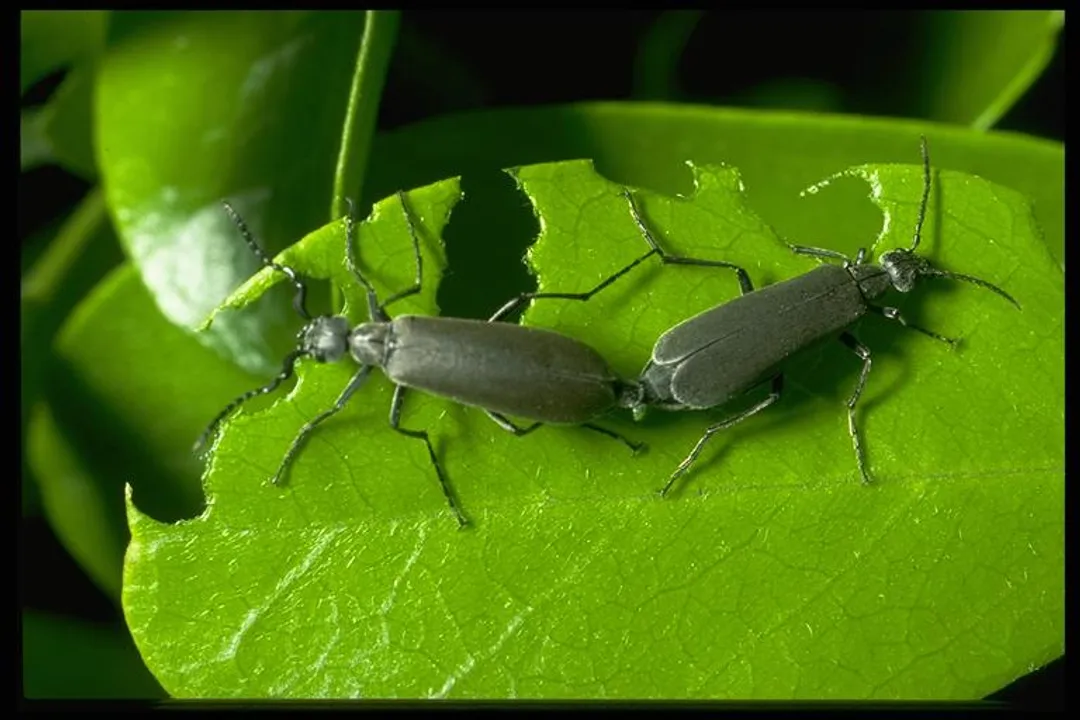
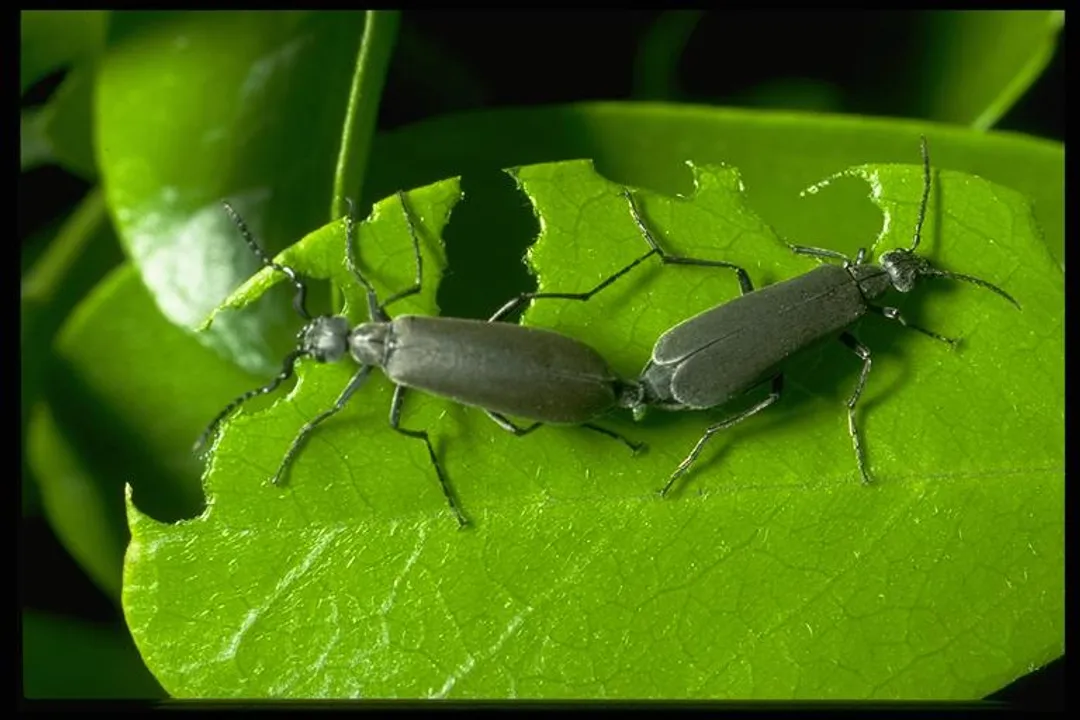
The insect commonly referred to as the blister beetle isn't defined by a single taxonomic rank but rather by its placement within a specific family known for its defensive chemistry. Understanding what a blister beetle is requires looking higher up the scientific hierarchy, where it finds its true classification among the vast order of beetles. [1][2]
# Order Family
Scientifically, blister beetles are classified under the order Coleoptera, which comprises all beetles. [1][5] This places them alongside everything from ladybugs to longhorn beetles. More specifically, they belong to the family Meloidae. [1][2][5][7] The name "blister beetle" itself is descriptive, referencing the effect their defensive secretions have on skin, rather than being a formal grouping like genus or family. [1] While many insects might cause skin irritation, the hallmark of the Meloidae family is their potent chemical defense. [5]
# Subfamily Groups
The family Meloidae is further divided into several distinct subfamilies, reflecting evolutionary divergences within the group. [3] Although general entomological texts confirm these divisions, for the casual observer or agriculturalist dealing with an infestation, the specific subfamily might be less immediately relevant than the genus or species causing the issue. [3] The recognized subfamilies include Meloinae, Nemognathinae, and Tetraoninae. [3] Some sources also refer to certain members as "oil beetles" or, historically, the source of "Spanish fly" preparations. [1]
# Common Genera
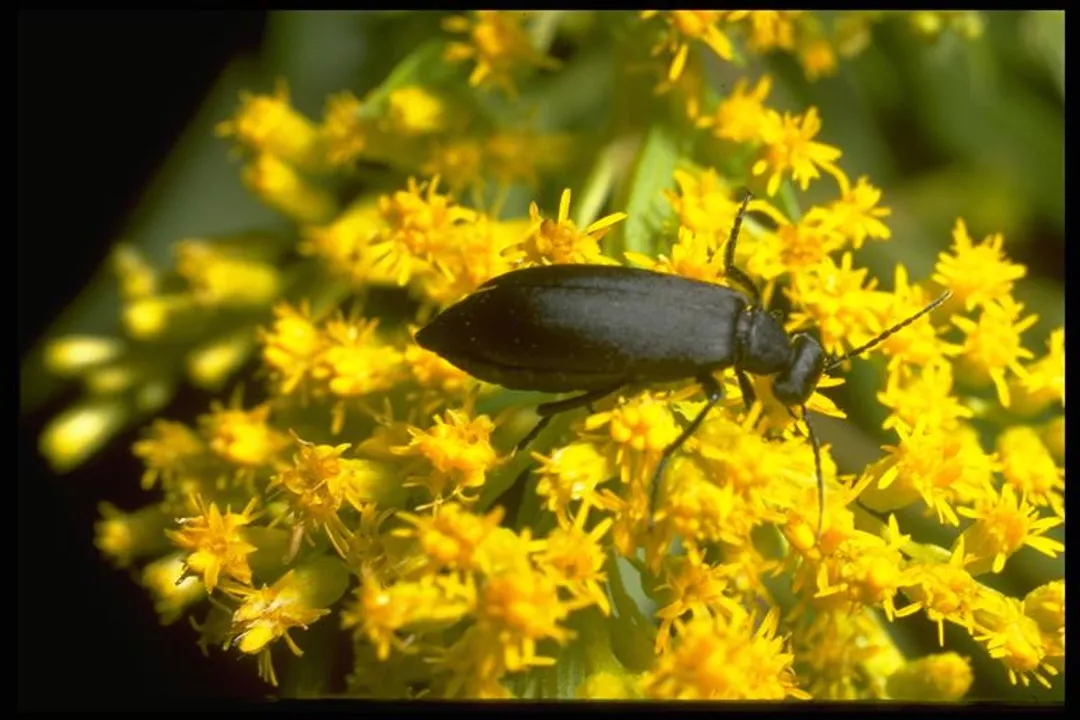
Within the family Meloidae, several genera frequently emerge as significant, particularly those containing species that interact with human activities like agriculture or livestock rearing. [2][7] Key genera often encountered include Epicauta, Lytta, and Meloe. [2][7]
The genus Epicauta is particularly noteworthy, as it contains several species known for infesting crops, especially alfalfa. [9] Examples within this genus that often cause concern include:
- The Spotted Blister Beetle (Epicauta maculata). [4]
- The Black Blister Beetle (Epicauta pennsylvanica). [4]
- The Ashgray Blister Beetle (Epicauta cinerea). [4][6]
Other genera, like Lytta, also have well-known members, such as the Oil Beetles. [2] Recognizing the genus is often the first step in management, as behaviors and peak timings can vary between them. [9]
# Chemical Defense
The single most defining feature connecting all members of the Meloidae family is their defensive compound: cantharidin. [5] This substance is what earns them the name "blister beetle" because when crushed or handled, they exude the toxin, which causes painful blistering upon contact with skin or mucous membranes. [1] Cantharidin is a highly toxic chemical; ingesting even small amounts can be lethal to livestock, which is a major reason these beetles are studied so closely in forage crops. [4]
This shared chemical characteristic acts as a strong unifying feature at the family level, separating Meloidae from other Coleoptera that rely on different defensive strategies, such as physical armor or foul smells. [5]
# Life Cycle
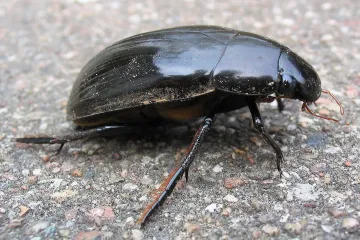
Another classification-defining feature of blister beetles lies in their unusual life history, known as hypermetamorphosis. [9] This development pattern means the larval stages look significantly different from one another and from the adult beetle. [9] The initial larval stage, called the triungulin, is mobile and actively searches for a host, often a grasshopper egg pod or bee cell, to parasitize. [9] This drastic physical transformation across developmental stages is a characteristic shared by the family Meloidae and helps distinguish them biologically, even if their adult forms appear superficially similar to other ground beetles. [9]
One insightful observation emerges when comparing the agricultural pests with other members of Meloidae: while the family level unites them by toxicity, the hypermetamorphic larval stage is critical because the larvae are often specialized parasitoids of other insect orders, like Orthoptera (grasshoppers). [9] This implies that the adult beetle population density is not solely dependent on the local presence of their food source (like alfalfa) but is intrinsically linked to the success of the preceding generation's ability to locate and parasitize specific host larvae—a complex population dynamic often overlooked when only focusing on the adult feeding stage. [9]
# Identification Nuance
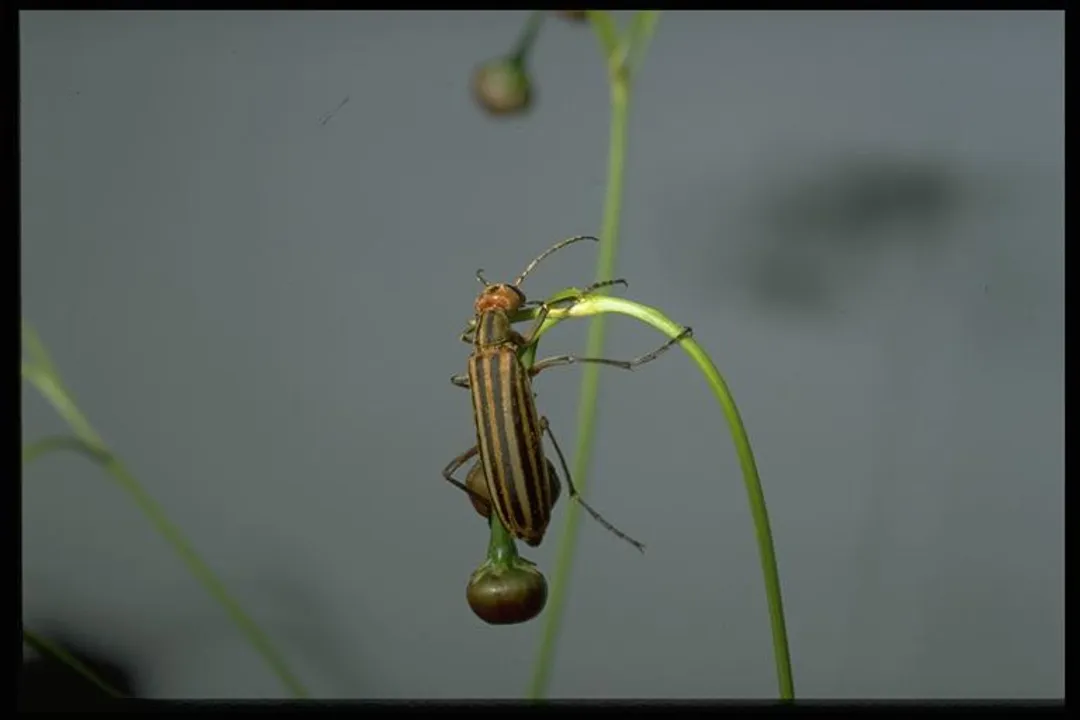
While the taxonomic placement is clear—Order Coleoptera, Family Meloidae—the practical application often demands genus and species-level identification, which can be tricky given the variation within the family. [7] For instance, while the Ashgray Blister Beetle (E. cinerea) and the Striped Blister Beetle (E. vittata) might both be found in the same field, their color patterns—one being grayish-white and the other having yellow/orange stripes on a black body—are distinct guides for species identification within the Epicauta genus. [6][8]
This species-level differentiation is important because management protocols, particularly concerning harvest timing in alfalfa, often depend on which Epicauta species is numerically dominant, as their flight periods and peak abundance might slightly overlap or follow one another sequentially throughout the summer months. [4] Simply knowing the insect is a "blister beetle" might lead to incorrect management timing if the actual species present has a different peak activity window than the one assumed. [8] The high stakes associated with cantharidin toxicity in feed necessitate this level of precise classification, moving from the general family Meloidae down to the specific species causing the contamination risk. [4][5]
Related Questions
#Citations
Blister beetle - Wikipedia
Blister Beetle - Field Guide to Common Texas Insects
Blister Beetles - Family Meloidae - BugGuide.Net
Dealing with Blister Beetles | UNL Beef
Blister Beetles | Department of Entomology
Blister Beetles - Home and Garden IPM from Cooperative Extension
Blister Beetles (Meloids) - Missouri Department of Conservation
Blister Beetles Make Their Late-Summer Appearance | BYGL
Blister Beetles / Alfalfa / Agriculture - UC IPM