What exactly is a blister beetle?
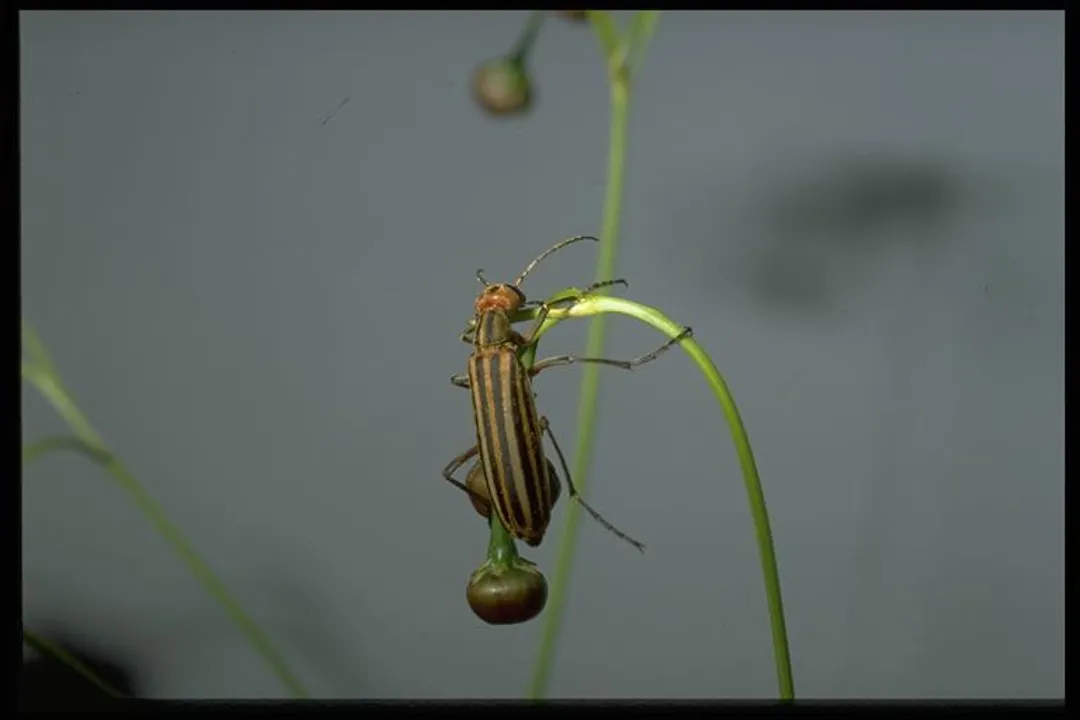
The presence of the blister beetle, a creature often recognized more for its defensive capabilities than its appearance, warrants close examination, especially for those involved in agriculture or equine care. These insects belong to the family Meloidae and are infamous across various regions for secreting a potent chemical defense that can cause significant harm to livestock and irritation to humans. [1][2][3] They are not the typical hard-shelled, shiny beetles one might picture; instead, they possess a distinct, somewhat fragile look that belies their chemical arsenal. [3][5]
# Beetle Family
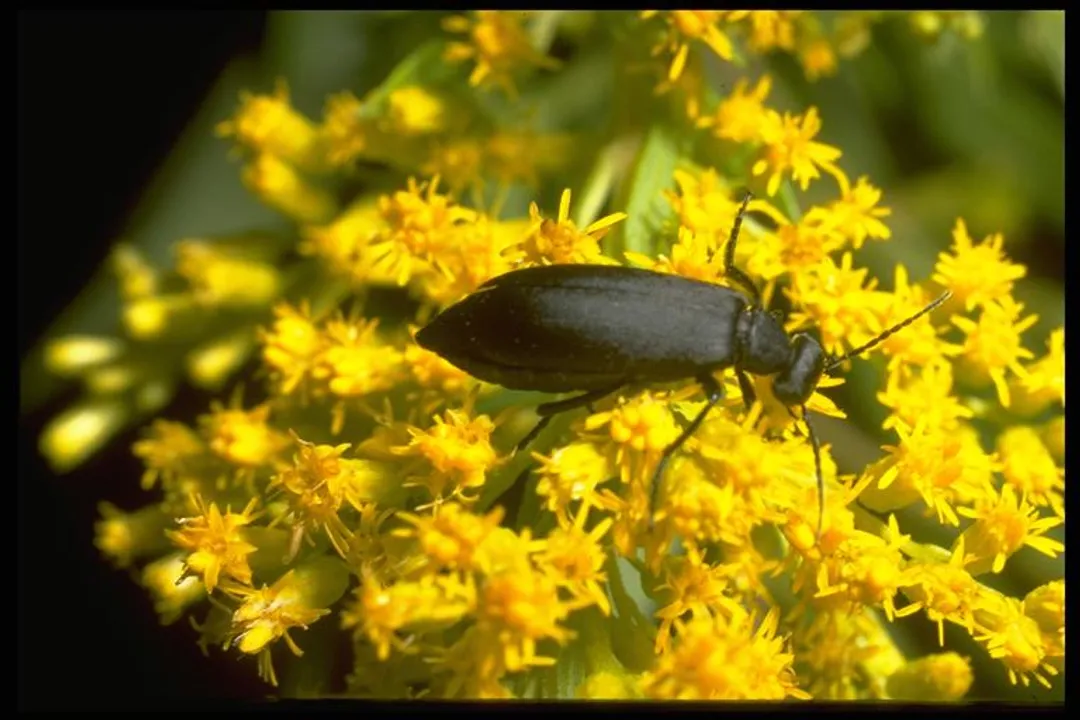
Blister beetles are part of the order Coleoptera, placing them firmly within the beetle group, but they are specialized members of the family Meloidae. [1][5] Globally, this family contains many species, often exhibiting striking color patterns, though many found in agricultural settings are uniformly black, gray, or yellowish. [5][6] A key identifying characteristic across many species is a relatively narrow, flexible neck connecting the head to the thorax, giving them a somewhat "pinched" appearance compared to many other common beetles. [3][5] Their bodies are generally elongated, and their wing covers, or elytra, are often somewhat soft or flexible, distinguishing them from beetles with very hard shells. [3]
In North America, different genera are frequently encountered, with Epicauta being particularly significant due to its prevalence and agricultural impact. [1][6] Species within Epicauta are often described as being grayish or blackish, sometimes with longitudinal stripes or spots, which can vary based on the specific species and geographic location. [6][10] Their classification within the larger insect world means they undergo complete metamorphosis, passing through egg, larva, pupa, and adult stages, but their larval stage is exceptionally unusual. [1][2]
# Defense Toxin
The common name "blister beetle" derives entirely from their remarkable defense mechanism: the secretion of a toxic substance called cantharidin. [1][2][5] This oily, colorless, and odorless compound is produced by both male and female adults and is utilized when the beetle is physically stressed, crushed, or handled roughly. [2][5] When released, cantharidin acts as a powerful vesicant, meaning it causes severe blistering of the skin upon contact. [1][2] For humans, this contact can result in painful, fluid-filled blisters appearing hours after exposure, which can take a long time to heal. [1][2][8]
Interestingly, the toxicity of the blister beetle is concentrated in the hemolymph (insect blood) and tissues, and it is often sequestered from the insects they consume during their larval stage, specifically blister beetle larvae prey on the egg pods of grasshoppers. [1][2] This chemical defense is so effective that it deters many potential predators, including birds, who learn quickly to avoid the insects. [2] A critical distinction to make when discussing this compound is the difference between external exposure and internal consumption. While external contact causes localized epidermal damage—the titular blister—ingestion leads to systemic poisoning, which affects the gastrointestinal tract, kidneys, and bladder, posing a far greater, often fatal, risk to animals. [2][8]

# Life Cycle Complexity
The life cycle of blister beetles is characterized by hypermetamorphosis, a developmental process involving multiple, distinctly different larval stages, which is quite different from the simple larva-pupa-adult cycle seen in many other insects. [1][5] This complexity contributes to why controlling them can be difficult; the first-stage larva, often called a planidium, is mobile and seeks out host materials. [1]
The life cycle typically proceeds as follows:
- Egg Laying: Adult females lay their eggs, usually in masses, on or near the ground, often close to their food sources or host sites. [1][5]
- First Larval Stage (Planidium): The first instar larvae hatch and are active crawlers, often possessing long legs adapted for searching. [1] These specialized larvae seek out the egg masses of ground-dwelling insects, particularly grasshopper eggs, which they consume entirely. [1][2][5] This stage is crucial, as the beetle acts as a beneficial predator during this period. [2]
- Subsequent Larval Stages: After consuming the host eggs, the subsequent larval stages are grub-like, less mobile, and feed on other materials within the soil until they pupate. [1][5]
- Adult Emergence: The insect overwinters as a pupa or pre-pupa in the soil and emerges as the adult beetle during the late spring or summer months, ready to feed on plants and reproduce. [1][5]
This drawn-out, multi-stage development means that their appearance in fields or gardens is often staggered, with adults appearing throughout the summer depending on local conditions. [5] The timing of their emergence is a key factor in agricultural management decisions. [6]
# Alfalfa Hazard
For agricultural producers, especially those growing forage crops like alfalfa, blister beetles represent a significant economic and safety threat. [4][6][10] While they feed on flowers and foliage of many plants, including roses, potatoes, and tomatoes, alfalfa is particularly prone to heavy infestations. [4][5][10] The danger here centers on the potential for the beetles to be inadvertently harvested along with the crop. [4][6]
When alfalfa is mowed and cured into hay, the beetles are often crushed during raking, baling, or handling. [4][6] This crushing action releases lethal doses of cantharidin directly into the hay. [4][10] Horses are exceptionally susceptible to cantharidin poisoning, even when consuming relatively small amounts of contaminated hay—sometimes just a few dozen beetles in a flake of hay can be fatal to a horse. [4][6][10] Cattle, sheep, and goats are less sensitive than horses, but consumption can still cause illness, reduced weight gain, or death. [4][6]
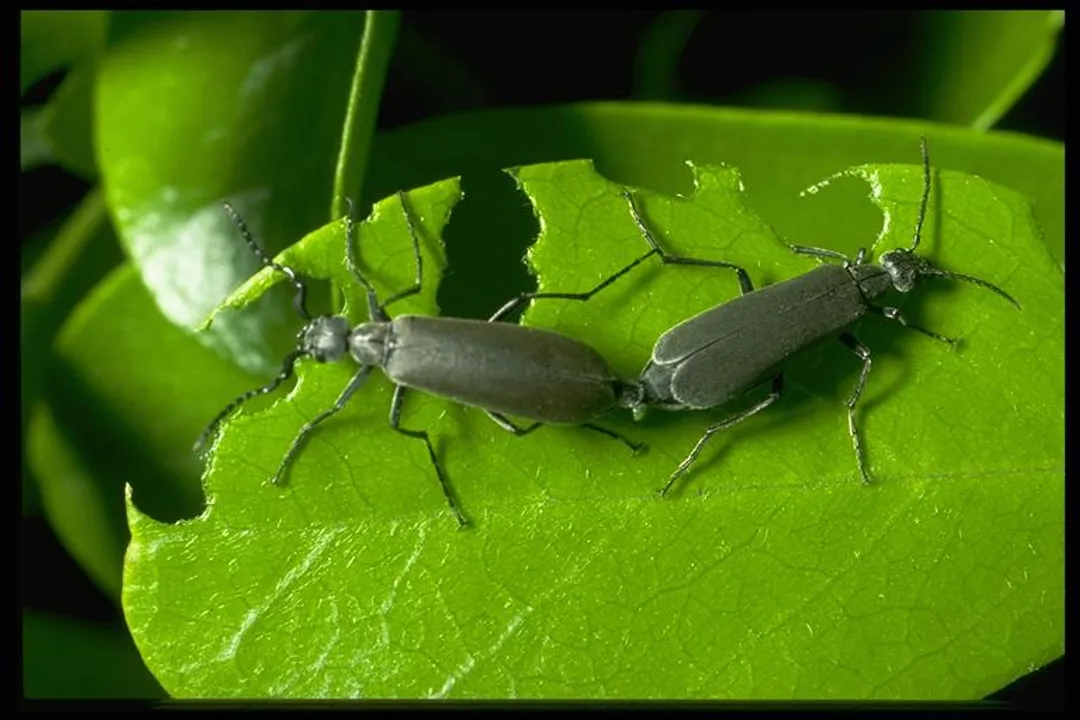
One useful observation for farmers dealing with alfalfa is that blister beetles often aggregate or cluster together, especially when feeding or mating. [6] If you observe a field with patchy wilting or insect activity, the density in those specific areas might be much higher than a random distribution would suggest. Therefore, even after a field has been cut, inspecting the resulting windrows or bales for concentrated clusters of dead or dying beetles, or looking for distinct color patches caused by high concentrations of dried beetles mixed in the forage, can be a more effective assessment technique than simply looking across the whole field pre-harvest. This behavioral pattern means that local control efforts targeting these aggregations might be more efficient than broad-spectrum spraying, if spraying is deemed necessary. [6]
# Handling Contact
Understanding the physical effects of the toxin dictates how one should interact with these insects if encountered in the garden or near the home. Since the defense is chemical and requires physical disruption, direct handling should be avoided at all costs. [3][5] Never attempt to crush or handle a blister beetle with bare hands. [3]
If accidental contact occurs, the first action involves minimizing the chemical's contact time with the skin. [8] Immediately wash the affected area with soap and cool water. [8] Some sources suggest that applying an ice pack to the affected skin might help reduce the intensity of the reaction or the development of the blister, as cooling can sometimes slow chemical absorption or inflammatory responses, though the primary focus must remain on thorough cleaning. [8] If a blister forms, it should be treated much like any other burn or severe blister—kept clean and protected—and medical attention sought if the reaction is severe or covers a large area. [2][8]
For pets and livestock, the primary management strategy is prevention, particularly in areas where hay is stored or fed. If a horse shows signs of colic, bloody diarrhea, or signs of kidney distress shortly after eating new hay, immediate veterinary consultation is critical, as prompt treatment can sometimes mitigate the damage caused by cantharidin ingestion. [6][10] Because horses often consume hay quickly, the rapid onset of symptoms is a major concern. [6]
# Species Diversity
While the danger often centers on a few common agricultural pests, the Meloidae family is vast, encompassing thousands of species worldwide. [1][2] The physical appearance can vary widely among these species, sometimes involving bright reds, oranges, or yellows mixed with black, making them appear like other toxic insects, though this warning coloration is not universal among them. [5] In many agricultural contexts, identification often comes down to genus or common name rather than exhaustive species-level taxonomy, particularly when rapid assessment for poisoning risk is needed. [6][10]
It is worth noting that some blister beetles, particularly those in the genus Lytta, might be found in different habitats or feed on different primary host plants than the Epicauta species that plague alfalfa fields, though they still carry the cantharidin defense. [1][5] For instance, while Epicauta spp. are often associated with legume pests, other types might show a preference for nightshades or other garden vegetables. [4][5] Recognizing that a slow, soft-bodied beetle with a noticeable neck is a potential hazard, regardless of its exact color pattern, is a good general rule of thumb for quick hazard assessment. [3][5] This generalization provides a practical safety margin in the field until a precise identification can be made. [3]
Related Questions
#Citations
Blister beetle - Wikipedia
Blister Beetle Bugs - Facts, Identification and Control - Orkin
Blister Beetles - UK Entomology - University of Kentucky
Blister Beetles / Alfalfa / Agriculture - UC IPM
Blister Beetles | Department of Entomology
Blister Beetles and Alfalfa - Oklahoma State University Extension
Blister Beetles - Home and Garden IPM from Cooperative Extension
Blister Beetles: What to Know - WebMD
Blister Beetle - Field Guide to Common Texas Insects
Blister Beetles - University of Illinois - Extension Crop Science