What is special about Harris's hawks?
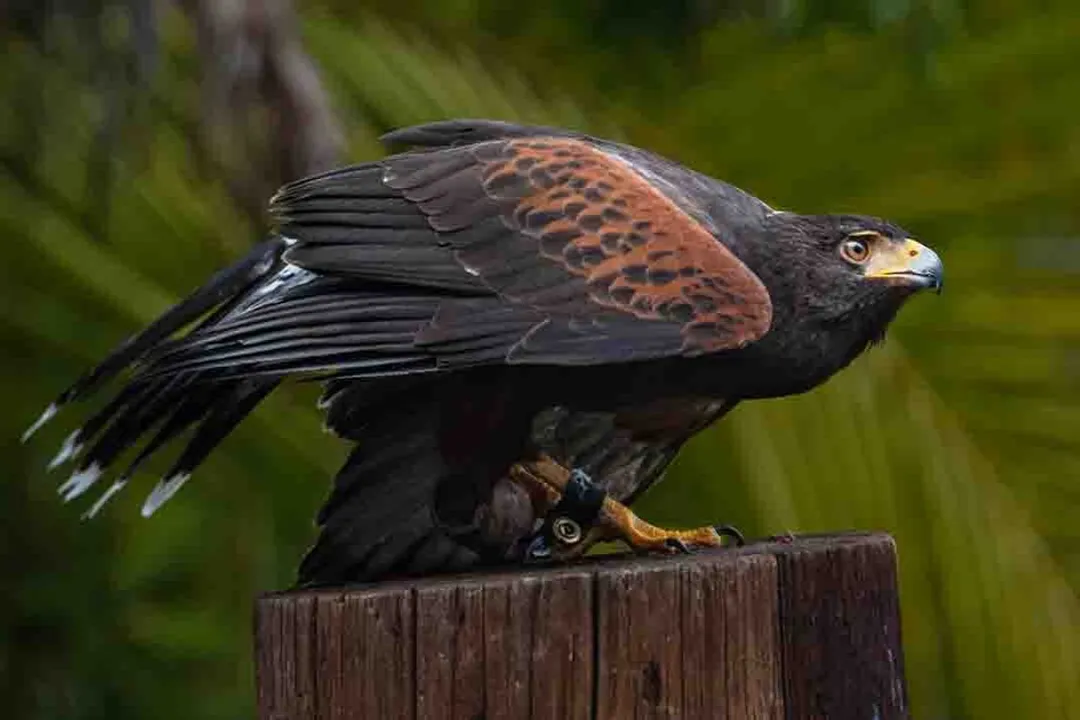
The Harris's Hawk stands apart from most other birds of prey, setting a fascinating contrast to the solitary existence typically associated with eagles and falcons. This species, with its rich, dark plumage accented by warm chestnut patches on the shoulders and thighs, possesses a characteristic that truly makes it special: a profound inclination toward cooperative living and group hunting. While other raptors might tolerate proximity, the Harris's Hawk actively lives and works together, forming family units that challenge the common perception of aerial predators as lone operators.
# Family Units
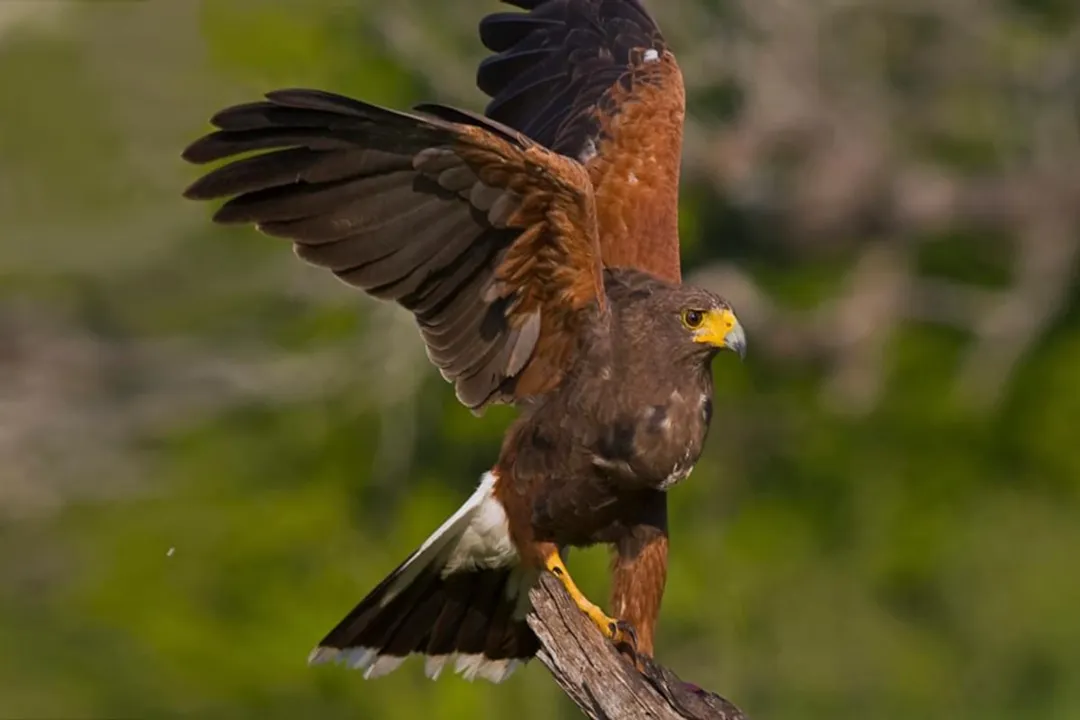
The social organization of the Harris's Hawk is perhaps its most defining feature, a behavior rare among diurnal raptors. These hawks are often found in groups, which can range from monogamous pairs up to seven or eight individuals, all belonging to the same extended family unit. These groups are not transient congregations; they are stable, year-round social structures built around a breeding pair. The core of the group is the breeding male and female, but the remaining members are typically non-breeding offspring from previous seasons.
These helpers, often the juvenile and sub-adult offspring, play a key role in the survival and success of the current generation. Unlike species where young birds scatter as soon as they fledge, the young Harris's Hawks stick around, contributing to the household economy. This level of integrated family support is unusual for a raptor, suggesting an evolutionary path that favors social cooperation over strict individualism in their competitive environment. It's interesting to consider that this social structure might be an adaptation to the scattered, yet reliable, prey base in their often arid and semi-open habitats, where coordinated effort can yield better results than individual searching.
# Cooperative Hunting
The social structure directly translates into their hunting strategy, creating one of the most engaging spectacles in the avian world. Harris's Hawks are renowned for cooperative hunting, a coordinated effort where multiple birds work together to flush, pursue, and capture prey that a single hawk might struggle to subdue. This behavior is not just incidental; it is highly organized.
When hunting, a typical sequence might involve one or two hawks flushing prey, perhaps from a thicket or low bush, while others wait patiently nearby to intercept the fleeing animal. They effectively use flanking maneuvers, with different group members taking on specific roles in the pursuit. For instance, one hawk might drive a rabbit toward another waiting hawk stationed downrange. This sophisticated teamwork allows the group to take down prey considerably larger than what a single hawk could manage on its own, greatly increasing the overall hunting success rate for the unit.
The dynamics within the group are often observed even after a successful hunt. If a hawk captures a sizable meal, the other group members will gather around, and the prey is shared among them. The dominant breeding male often gets the first portion, but the principle remains: the success of the hunt feeds the entire extended family. This shared reward reinforces the cooperative bonds necessary for the system to function effectively season after season.
To visualize the roles in a typical hunt, we can break down the coordinated effort:
| Role | Primary Action | Goal |
|---|---|---|
| Flusher | Initiates movement, flying low or perching near cover. | To scare or drive hidden prey into the open. |
| Interceptor/Stopper | Positions itself strategically along likely escape routes. | To capture the flushed prey or redirect it toward another hawk. |
| Follower/Chaser | Engages in the active pursuit phase once prey is moving. | To maintain pressure on the prey item. |
This division of labor, while not always rigid, illustrates a level of strategic communication and role adoption unseen in many other raptors. It suggests a cognitive capacity for planning and social understanding that warrants further study, especially when comparing them to their more solitary relatives.
# Range and Environment

The geographic distribution of the Harris's Hawk spans from the southwestern United States down through Central America to Chile and the Caribbean islands. Specifically, in the U.S., they are found in the deserts and scrublands of Arizona, New Mexico, and southern Texas. This association with arid and semi-arid environments—including deserts, thornscrub, and riparian areas—dictates much about their lifestyle.
Their preferred terrain often features scattered, dense vegetation, which is perfectly suited for their cooperative flushing tactics. Unlike many migratory hawks that follow broad weather fronts, Harris's Hawks are generally non-migratory, remaining in their territories year-round. This year-round residency further solidifies the need for their strong, stable social units, as the entire family must rely on local resources throughout all seasons.
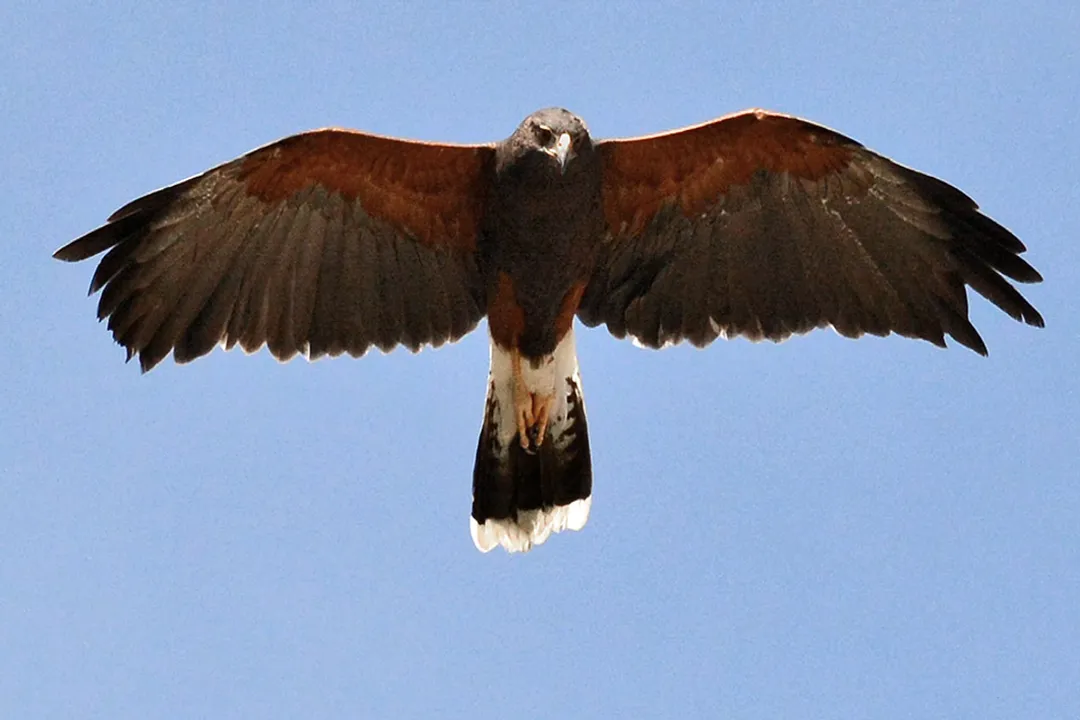
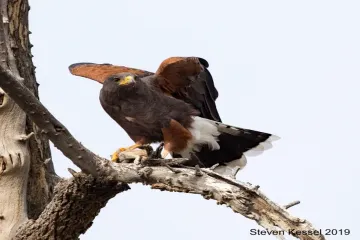
Physically, they are medium-sized hawks. Adults exhibit a dark brown to black body plumage, contrasting sharply with the reddish-brown shoulders (lesser and median coverts) and thighs, or tibia. Their tail is relatively long, tipped with a white band, and their flight feathers show white patches underneath. Juveniles, while similar, are more heavily streaked below, offering a slightly mottled appearance compared to the deep, rich tones of the adults. They possess strong, relatively short wings, which are well-suited for maneuvering through the patchy cover of their scrubland homes rather than long-distance soaring.
# Aiding Humans
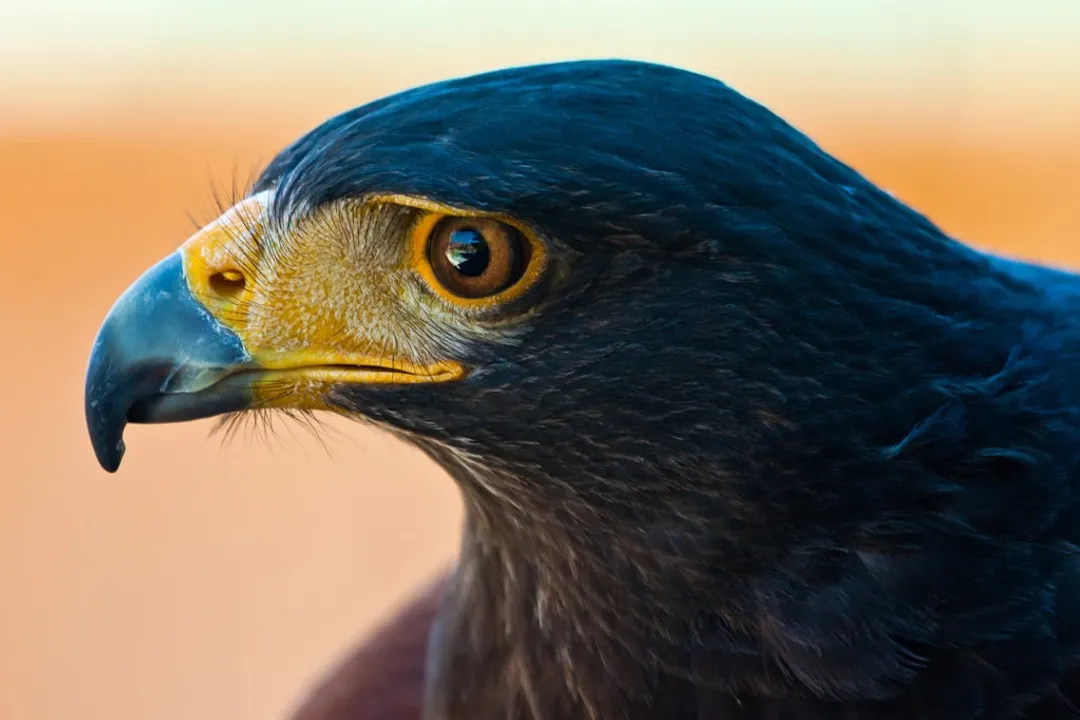
The intelligence and trainability inherent in the Harris's Hawk's social nature have made them exceptionally popular in the practice of falconry. In fact, they are considered one of the most commonly flown birds by modern falconers. Their willingness to hunt cooperatively with humans mirrors their natural behavior with their family units.
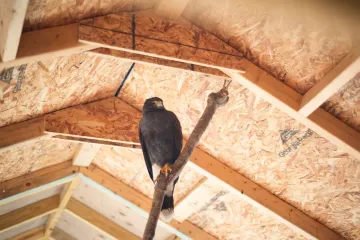
A trained Harris's Hawk is often managed in a "covey" or group setting, sometimes even hunting alongside other raptors trained by the same person. This tractability contrasts sharply with birds like the Peregrine Falcon or Gyrfalcon, which are typically flown solo and require a more distant relationship between bird and falconer. The hawk is often comfortable perching near the falconer or even on the gloved hand while waiting for the next opportunity, exhibiting a comfort level with human presence that is unusual for wild-caught raptors. This ease of partnership stems from their innate tolerance for the presence of other "hunters". They are known to be fierce and determined hunters, focusing intently on their quarry, whether it's a released pigeon or a wild rabbit.
This specific aptitude has led to unique applications. In some areas, they have even been employed in "wildlife management" programs, particularly around airports, to deter pest birds that pose a collision hazard to aircraft. The hawk's presence alone is often enough to scare away flocks of nuisance birds, providing a natural, non-lethal control method.
# Distinctive Features Summary
To better appreciate what sets this hawk apart, a quick comparison highlights the deviation from the norm:
| Trait | Harris's Hawk | Typical Solitary Raptor (e.g., Red-tailed Hawk) |
|---|---|---|
| Social Structure | Lives in stable, multi-adult family groups. | Generally solitary outside of the breeding pair. |
| Hunting Style | Highly cooperative, using complex flushing and flanking maneuvers. | Hunts alone, relying on surprise or high-speed stoops. |
| Prey Sharing | Prey is commonly shared among group members. | Food is usually consumed by the individual captor. |
| Migration | Largely non-migratory; stays in territory year-round. | Many related species undertake significant migrations. |
The ability of Harris's Hawks to maintain these tight-knit social bonds across multiple seasons suggests a high degree of social learning and recognition within the group, perhaps enabling the young helpers to become highly efficient hunting partners over time. This extended parental care and cooperative breeding strategy represent a significant energy investment, which must result in a substantial fitness advantage, likely tied to securing difficult-to-obtain or large prey items in their challenging desert ecosystems. The very fact that they have successfully colonized and thrived in the relatively harsh environment of the Southwestern US deserts while maintaining complex social needs speaks volumes about the effectiveness of their lifestyle. They trade the wide-ranging searching ability of a solitary raptor for localized, highly efficient group effort.
# Conservation Status
While they are popular in captivity and falconry, the conservation status of the Harris's Hawk in the wild generally reflects a species that is widespread and currently not of immediate global concern. However, like many desert dwellers, local populations can be affected by habitat degradation, especially the loss of riparian corridors or dense scrub areas they rely on for nesting and cover. Monitoring the stability of their arid and semi-arid ranges remains important for their long-term security. For those interested in supporting raptors, observing the local presence of these social hunters can be a good indicator of a relatively healthy local scrubland ecosystem capable of supporting complex animal interactions.
Related Questions
#Citations
Harris's Hawk Overview, All About Birds, Cornell Lab of Ornithology
Harris's Hawk Fact Sheet - Desert Museum
Harris's hawk - Wikipedia
Harris's Hawk | The Peregrine Fund
Harris's Hawk - The Maryland Zoo in Baltimore
Harris' Hawk - Sacramento Zoo
Harris's Hawk | Audubon Field Guide
Harris's Hawk - Los Angeles Zoo and Botanical Gardens
What do you think of the Harris's hawk, the only known pack hunting ...