Is a Harris Hawk an accipiter?
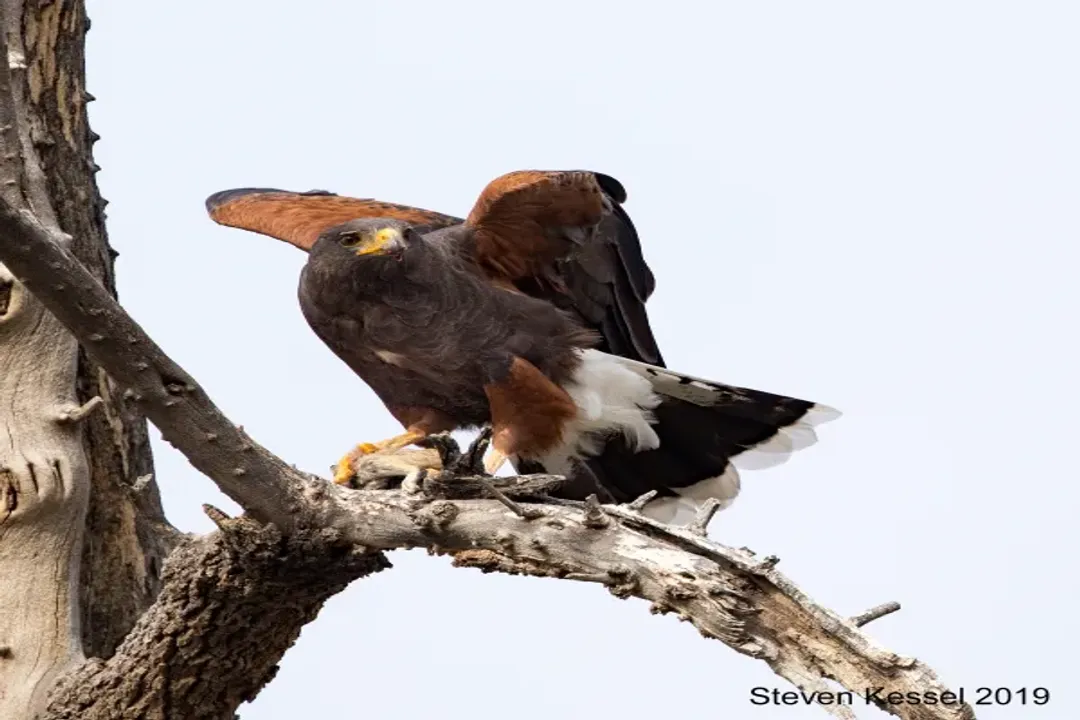
The classification of the Harris Hawk, Parabuteo unicinctus, often causes a ripple of confusion among bird enthusiasts because its common name includes "hawk," leading many to immediately place it within the genus Accipiter, the group commonly referred to as true accipiters like Cooper's Hawks or Sharp-shinned Hawks. [8] However, this placement is taxonomically inaccurate, though understandable given the shared family membership. The Harris Hawk is indeed a member of the large and diverse family Accipitridae, the same family that encompasses true accipiters, eagles, kites, and buzzards. [3][7][8][9] This family defines a broad grouping of birds of prey within the order Accipitriformes. [8][9] The distinction that matters most for accurately answering the question lies not at the family level, but at the genus level, where the Harris Hawk diverges significantly from the Accipiter lineage. [8]
# Family Structure
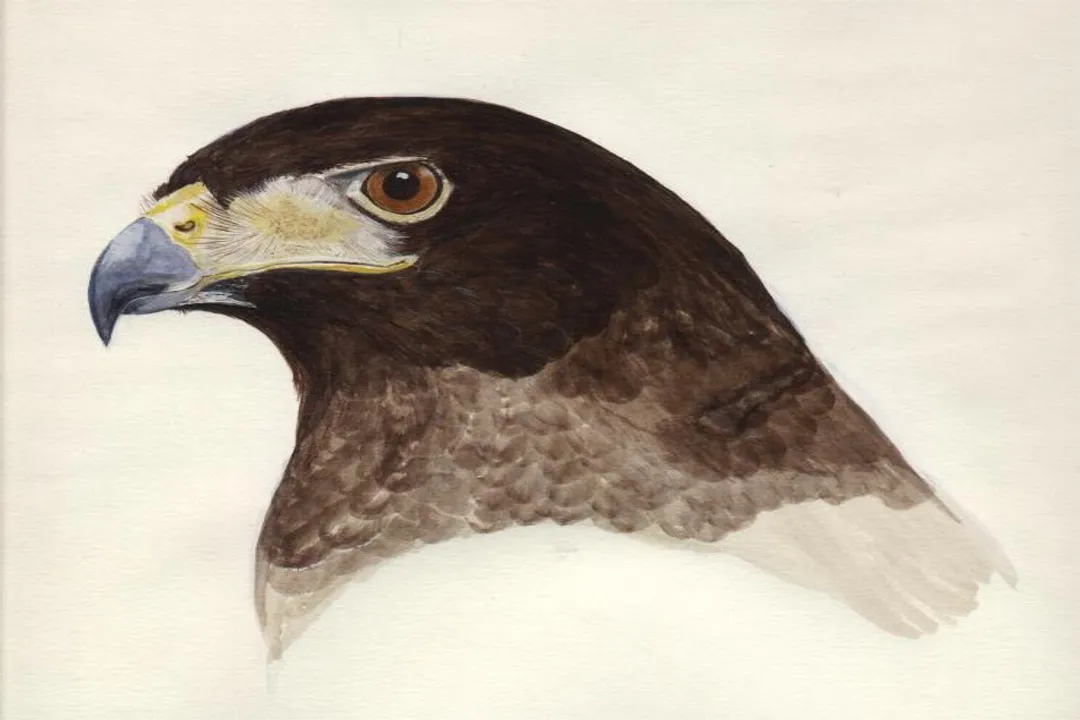
The family Accipitridae is massive, housing the majority of diurnal birds of prey found across the globe. [9] Birds within this family share common ancestry and general raptorial features, but their ecological roles, hunting styles, and physical characteristics vary widely. [9] Knowing that the Harris Hawk sits within this group simply confirms it is a genuine hawk, distinct from falcons (Falconidae) or owls (Strigiformes). [9] The presence of the Harris Hawk in the Southwestern United States and south through Central and South America places it in a region where many different raptor types coexist. [3] While sharing the family name with Accipiter, the scientific designation Parabuteo unicinctus places it outside that specific genus. [5][7]
# Genus Separation
To determine if something is an accipiter, one must check its genus designation; the Harris Hawk is not in the genus Accipiter. [8] The genus Accipiter typically includes woodland hawks known for short, rounded wings and long tails, adaptations perfect for navigating dense forest undergrowth. [8] These birds are generally solitary hunters that rely on bursts of speed and surprise attacks. [1] In contrast, the Harris Hawk is placed in the genus Parabuteo. [7] While the Harris Hawk is sometimes noted for behaviors sometimes associated with the Buteo (soaring hawks), its unique social structure and hunting methods place it in its own distinctive niche within Accipitridae. [8] This distinction at the genus level is critical: sharing a family tree does not make them members of the same specific genus group. [8]
# Social Hunting
Perhaps the most compelling evidence separating the Harris Hawk from the typical Accipiter profile is its extraordinary social behavior. [1][5] While most hawks, including the classic woodland accipiters, are solitary hunters, Harris Hawks frequently hunt in cooperative groups, often involving two to six individuals. [2][5] This cooperative strategy is highly unusual among raptors. [3] The group dynamic involves several birds working together to flush prey out of dense cover, such as mesquite thickets, allowing one hawk to make the final capture. [1][7]
This cooperative hunting style is a defining characteristic, contrasting sharply with the surprise-attack methods employed by solitary Accipiters. [1][8] In the Sonoran Desert environment where they thrive, this teamwork allows them to successfully tackle prey that might be too large or too difficult to flush alone. [1] For instance, a group can methodically work a dense area, with some birds maintaining watch while others drive the prey toward a waiting partner. [1]
Consider the typical hunting behavior comparison: an Accipiter might rely on a sudden, silent dash from a concealed perch to surprise a small bird or rodent. [8] The Harris Hawk, however, often hunts with a distinct, almost buoyant flight, sometimes even hopping on the ground or flushing prey by walking or running, a highly un-raptor-like behavior that demonstrates adaptability beyond the pure aerial ambush. [1] It is this complex, persistent interaction with prey and territory that marks the Harris Hawk as ecologically distinct from its more solitary woodland cousins. [5]
# Physical Forms
While not possessing the textbook shape of a Buteo (broad wings, short tail) or a classic Accipiter (shorter wings, long tail for maneuvering), the Harris Hawk exhibits features that suggest a compromise or adaptation for its semi-open habitat and unique flight patterns. [8] They are medium-sized raptors, visually distinct with their dark plumage contrasted by rich chestnut on the shoulders and thighs, and white undertail coverts. [3][7] Their flight silhouette, especially when soaring or maneuvering during a cooperative hunt, betrays an intermediate form compared to the classic short-winged, long-tailed Accipiter adapted solely for dense forest pursuit. [8]
If we were to create a simple visual guide based on general morphology, the Accipiter type emphasizes agility in confined spaces, the Buteo type emphasizes soaring on thermals over open country, and the Harris Hawk presents a middle ground, capable of more open flight while still operating near cover for flushing prey. [1][8] The wing loading and tail length facilitate sustained flight during group efforts, rather than just quick dashes. [8]
It is fascinating to observe how the social structure seems to have driven the evolution of this specific morphology. While an Accipiter must be built for rapid acceleration and tight turns to catch evasive songbirds, the Harris Hawk's requirement to maintain formation, pursue flushed prey over distances, and fly in concert suggests that sustained, maneuverable flight is more critical than the explosive, short burst ability characteristic of Accipiters. [5] This behavioral pressure acting over evolutionary time is likely what cemented Parabuteo as a genus separate from Accipiter. [8]
# Identification Nuances
For the dedicated observer in North America, differentiating between a true Accipiter and a Harris Hawk requires more than just spotting dark plumage. If you see a raptor soaring high, it is far more likely to be a Buteo or a falcon; the Harris Hawk is often seen lower, near scrub or desert edges. [3] If you spot a hawk engaging in behavior that seems overtly social—multiple large raptors circling, chasing, or even hopping near the ground in tandem—you are almost certainly observing a Harris Hawk family group. [1][2]
When observing raptors in the Southwestern US, where both groups overlap geographically, remembering this behavioral anchor point is the fastest way to correct misidentification. An Accipiter will always be hunting alone, focused intently on a single target from a concealed spot. [7] The Harris Hawk is inherently a community hunter. [5] This difference in hunting strategy is so pronounced it functions as a reliable field mark, even when the physical shape might be partially obscured or appear intermediate in flight. [8]
# Ecological Context
The habitat preference of the Harris Hawk—arid scrubland, deserts, and riparian corridors—also provides a geographic clue that often separates it from many North American Accipiters, such as the Sharp-shinned Hawk, which favors forested areas. [3][7] While the Cooper’s Hawk (an Accipiter) can be found near human habitation, its hunting success relies on ambush tactics within suburban trees and shrubbery. [8] The desert setting of the Harris Hawk demands a different approach to finding enough food to sustain a social group, favoring the flushing technique described. [1]
If you are tracking raptors in a region far north of the typical Harris Hawk range, any hawk fitting the general description is much more likely to be a Buteo or an Accipiter than a vagrant Harris Hawk, although extreme range deviations do occur. [3] Conversely, in Arizona or New Mexico, observing a group is a near certainty for identifying Parabuteo. [1]
In summary, the Harris Hawk is categorized within the broad family Accipitridae. [3][9] It is absolutely not an accipiter in the taxonomic sense because it belongs to the genus Parabuteo. [8] Its defining characteristics—cooperative hunting, social bonding, and preference for semi-open arid habitats—set it apart ecologically and behaviorally from the solitary, specialized woodland hunters of the genus Accipiter. [5][7] They are hawks, yes, but they occupy a unique evolutionary path within the great hawk family. [8]
Related Questions
#Citations
Harris' Hawks In Our Neighborhood — Part II - Sonoran Images
Harris's Hawk - Wildlife Facts
Harris's Hawk | The Peregrine Fund
First described by Dutch zoologist Coenraad Jacob ... - Facebook
Background on Harris' hawks
Harris's Hawk | Creative Spark
Harris's Hawk (Parabuteo unicinctus) - Greg Lasley
Accipitriformes- Harris's Hawk - The ZT2 Round Table
Accipitridae - Wikipedia