What classifies a snake as a pit viper?
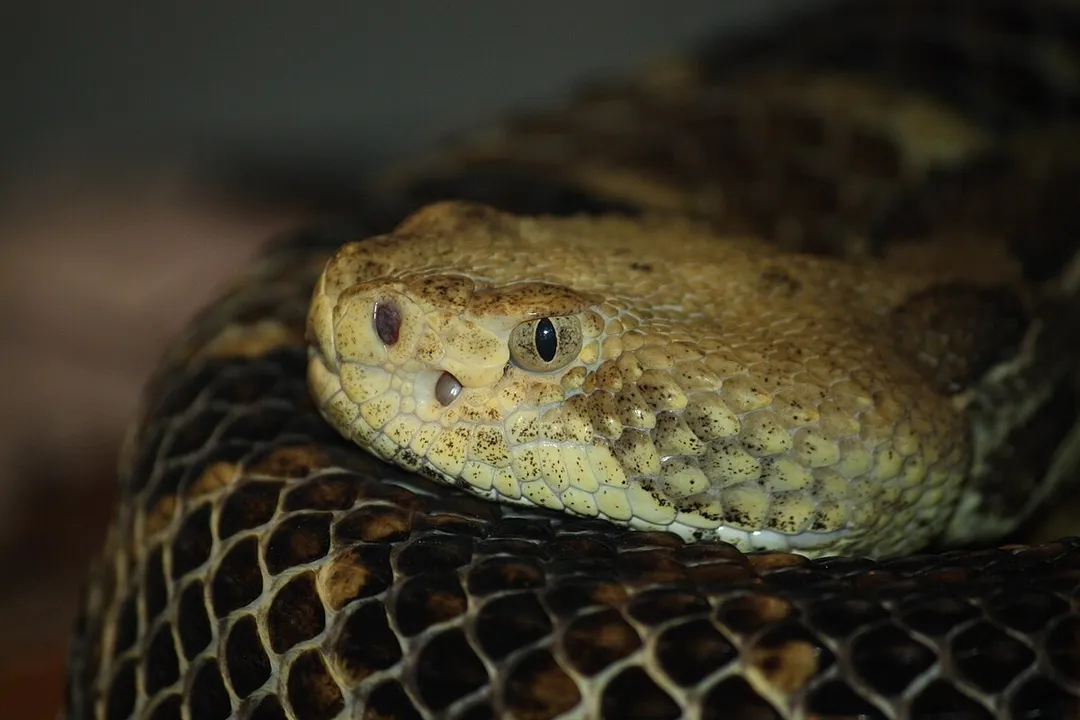
The defining characteristic that sets a pit viper apart from other snakes—even other snakes within the larger viper family—is a highly specialized set of sensory organs located on its face. These are the loreal pits, which give the entire group its common name. Anatomically, these pits are deep depressions found on each side of the snake’s head, situated between the eye and the nostril. They are not merely small indentations; they are sophisticated, infrared-detecting organs that allow the snake to perceive the body heat of potential prey. This thermoreception capability is a massive advantage, enabling the snake to accurately strike warm-blooded targets—like rodents or birds—even in complete darkness or when visibility is otherwise poor. It acts almost like a sixth sense, supplementing sight and smell.
# Pit Anatomy

The loreal pit functions similarly to the human ear, but instead of detecting sound waves, the membrane lining the pit detects thermal radiation. The temperature differential between the snake's environment and its warm-blooded prey is precisely measured by this organ. It is this unique structure that immediately classifies a snake into the subfamily Crotalinae, commonly known as pit vipers. If a snake possesses these pits, it is a pit viper; if it does not, even if it is venomous and has other viper characteristics, it belongs elsewhere.
It is interesting to note the distinction between pit vipers and other venomous snakes, like cobras or elapids, which generally rely solely on sight and smell for ambush hunting, whereas the pit viper has this added thermal targeting system. This evolutionary trait represents a significant sensory specialization that directs their predatory behavior.
# Fang Structure
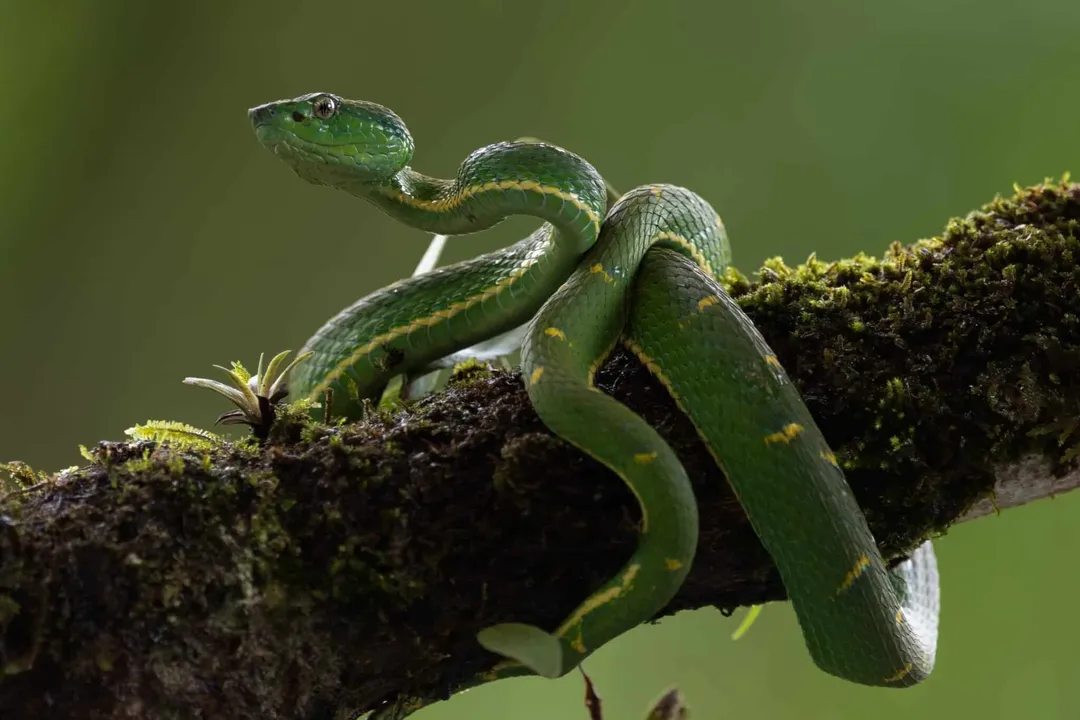
Beyond the pit, classification as a pit viper also ties into the mechanical design of their venom delivery system. Like all snakes in the Viperidae family, pit vipers are vipers, meaning they possess solenoglyphous fangs. These are long, hollow, hinged fangs located on the front of the upper jaw. When the snake's mouth is closed, these fangs fold backward, lying flat against the roof of the mouth, which protects them from breaking as the snake moves or feeds on non-prey items. When a strike occurs, the maxilla rotates forward, erecting the fangs so they can pierce the victim and inject venom deep into the tissue. This rapid deployment mechanism allows for a quick strike and retreat, minimizing the snake's own risk of injury.
# Venom Traits
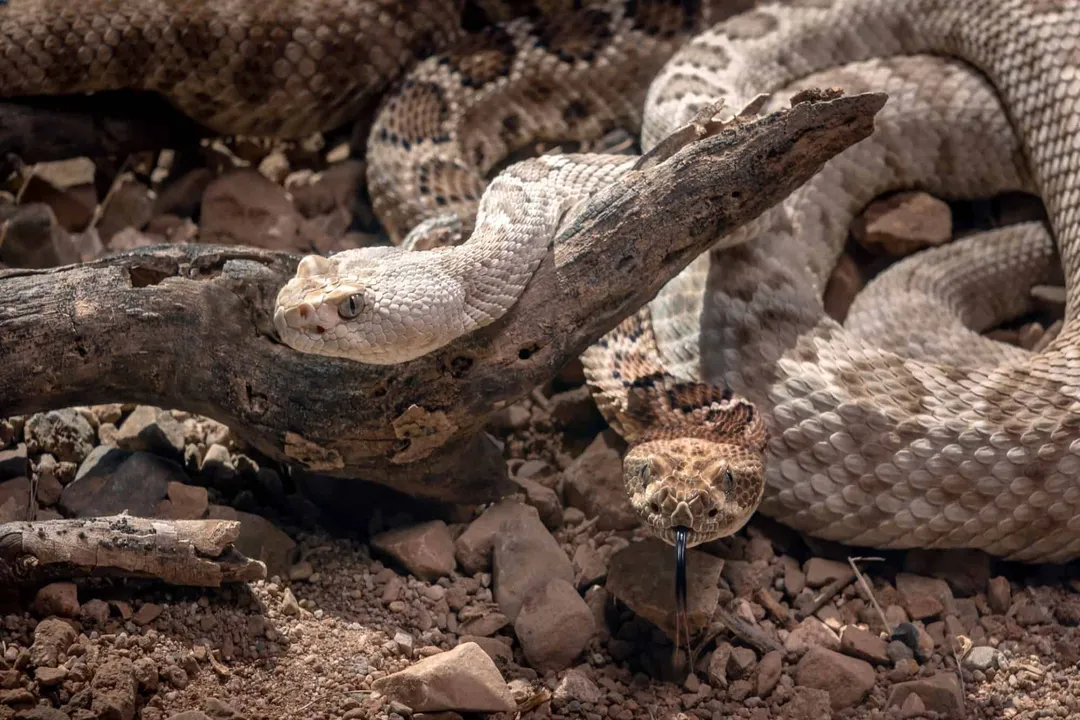
While the loreal pits and fang structure are anatomical markers, the venom profile often aligns with this group, although it is not the defining classifying feature itself. Pit viper venom is typically characterized as being hemotoxic, meaning it primarily attacks the blood and surrounding tissues. This venom can cause severe local pain, massive swelling, tissue damage, and internal bleeding. However, it is important to remember that while many pit vipers possess hemotoxic venom, some species also contain neurotoxins (which affect the nervous system) or other enzymes, adding complexity to their toxic effects. For instance, the venom of rattlesnakes, a well-known group of pit vipers, is primarily hemotoxic but can vary significantly by species.
# Taxonomy Grouping

To understand classification clearly, we need to look at the scientific hierarchy. Pit vipers belong to the subfamily Crotalinae. This subfamily is nested within the larger family Viperidae. The Viperidae family is generally divided into two main subfamilies: Crotalinae (the pit vipers, primarily found in the Americas, but also parts of Asia and Africa) and Viperinae (the "Old World vipers," found across Africa, Europe, and Asia).
A common point of confusion arises when discussing rattlesnakes. A rattlesnake is indeed a pit viper because it possesses the characteristic loreal pits and hinged fangs. However, they are distinct from the Vipera genus, sometimes colloquially referred to as "true vipers," which reside in the Viperinae subfamily and lack the heat-sensing pits. Therefore, all pit vipers are vipers, but not all vipers are pit vipers.
| Feature | Pit Viper (Crotalinae) | Old World Viper (Viperinae) |
|---|---|---|
| Defining Organ | Present: Loreal Pits | Absent |
| Fang System | Solenoglyphous (Hinged) | Solenoglyphous (Hinged) |
| Primary Habitat | Americas, parts of Asia/Africa | Africa, Europe, Asia |
| Examples | Rattlesnakes, Cottonmouths | Puff Adders, Vipers of the Vipera genus |
When considering the ecological role, the presence of the pit organ suggests a strong evolutionary pressure toward preying on endotherms (warm-blooded animals). In areas where both Old World vipers and pit vipers might coexist, or where a snake relies heavily on visual hunting in bright, open environments, the pit organ provides a distinct thermal edge when ambient temperatures drop or visibility is reduced.
# Geographic Range
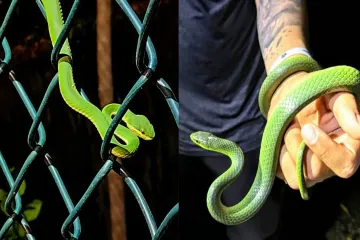
The distribution of pit vipers is quite extensive, though it is heavily weighted toward the New World. The majority of known pit viper species reside in the Americas. Major groups include the rattlesnakes (Crotalus and Sistrurus), copperheads (Agkistrodon contortrix), and cottonmouths or water moccasins (Agkistrodon piscivorus). While heavily associated with the Americas, the subfamily Crotalinae also includes species found in parts of Asia and Africa, such as the bushmasters. This wide distribution suggests that the evolution of the loreal pit provided a successful adaptation strategy across diverse thermal environments.
For instance, if one were tracking snake populations in the Badlands National Park in the United States, identifying a rattlesnake means immediately recognizing it as a pit viper equipped for thermal targeting, which influences its nighttime activity patterns compared to a strictly diurnal, non-pit viper species. This knowledge is key for anyone needing to manage wildlife encounters safely.
# Recognizing Encounters
For the general reader, understanding classification translates directly into awareness and safety protocols, particularly in areas where pit vipers are common. Since the pits are used to sense warmth, a snake that appears unresponsive or hidden may still be perfectly capable of detecting a human or large animal approaching, especially if the human is radiating heat. This insight suggests that staying clear of dense underbrush or rocky crevices where a snake might be hiding, even if it appears inactive during the day, is prudent, as its internal thermal "radar" is likely on standby. Furthermore, because the pit viper's system is so sensitive, they often do not need to see their target directly before striking if the heat signature is clear enough.
The key identifying features are therefore threefold: the presence of the loreal pit, the hinged fangs, and membership within the Crotalinae subfamily. While many pit vipers are known for their threat displays or the characteristic rattle found on some species, these behavioral traits are secondary to the physical, anatomical markers used by herpetologists for definitive classification. Recognizing these specific anatomical traits is essential for accurately identifying the risk associated with a snake encountered in the wild.
Related Questions
#Citations
Pit viper - Wikipedia
Crotalus viridis, better known as the Prairie Rattlesnake. These pits ...
Pit Viper - an overview | ScienceDirect Topics
Pit Viper Animal Facts - A-Z Animals
Is a rattlesnake a true viper or a pit viper? - Quora
Venomous, Pit Vipers, Rattlesnakes - Britannica
A Pit Viper Snake Can 'See' You, Even in the Dark | HowStuffWorks
PIT VIPER Definition & Meaning - Dictionary.com