What is a moth classified as?
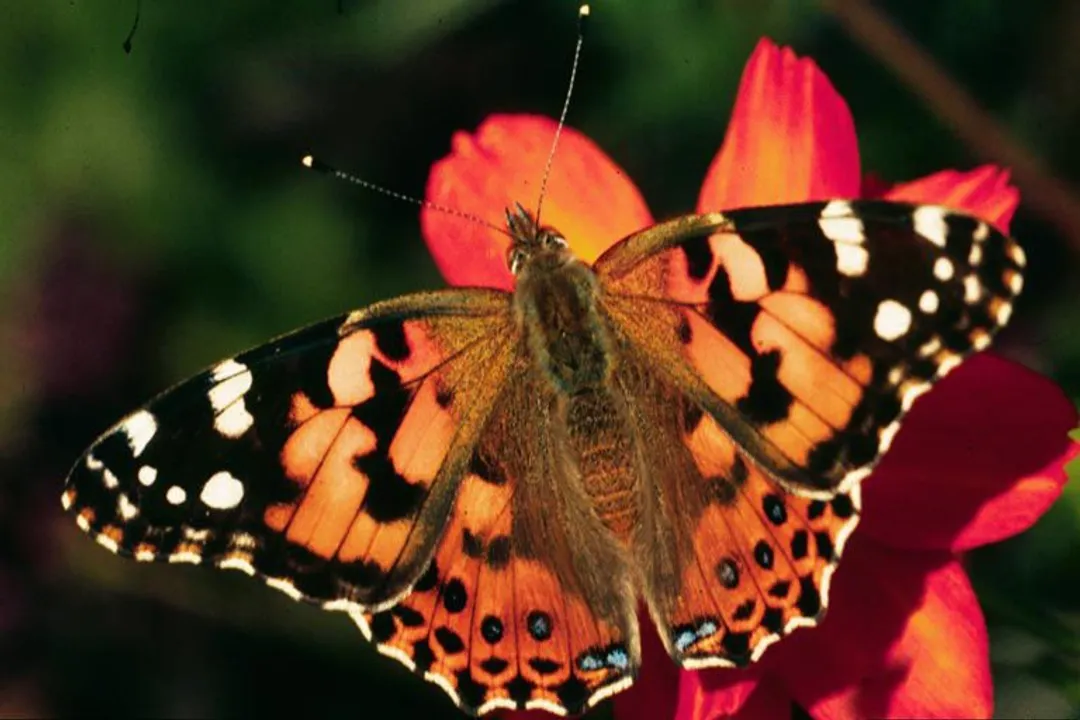
The immediate classification of a moth places it firmly within the grand assemblage of insects, specifically within the massive order known as Lepidoptera. [6][7][8] To understand what a moth is from a scientific standpoint, one must look at this larger group, which famously encompasses both moths and butterflies. [7][8] Entomologically speaking, moths are not a single, tidy taxonomic group equivalent to, say, a family or genus; rather, they represent the larger, more ancient, and substantially more diverse portion of the Lepidoptera order. [1] If you look at the global count, moths significantly outnumber their diurnal relatives. [1]
# Order Name

The scientific designation for the group containing both moths and butterflies, Lepidoptera, is derived from Greek roots that literally translate to "scale wing". [8] This name is wonderfully descriptive because the most defining characteristic of every organism in this order—whether it flits around a garden in the daytime or searches for light at midnight—is the covering of tiny, overlapping scales that coat their wings and bodies. [8][3] These scales, which are actually modified, flattened hairs, are responsible for the creature's coloration and pattern. [3]
# Classification Rank
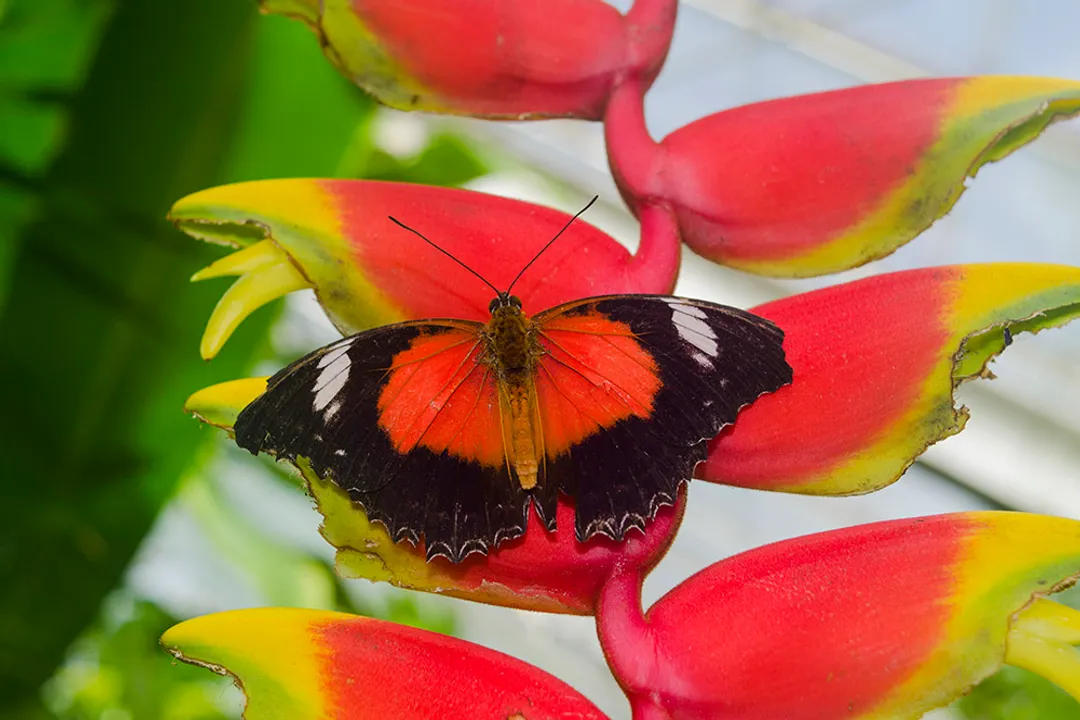
When classifying organisms, scientists arrange them in a nested hierarchy, moving from very broad categories down to specific ones: Kingdom, Phylum, Class, Order, Family, Genus, and Species. [8] Moths belong to the Class Insecta and the Order Lepidoptera. [7][8] While butterflies are sometimes informally categorized under the term Rhopalocera (meaning "clubbed horn"), the term "moth" itself doesn't correspond to a single, neat scientific rank equivalent to a suborder or superfamily recognized universally across all species. [1] Instead, "moth" is a functional term used to describe the vast majority of Lepidoptera that do not fit the general criteria of a butterfly. [1] This means that if a scaled-wing insect is not called a butterfly, it is, by default, referred to as a moth. [1]
# Life Cycle Stages
Like all members of the Lepidoptera order, moths undergo complete metamorphosis, passing through four distinct life stages: egg, larva (caterpillar), pupa (chrysalis or cocoon), and the adult insect. [7] The caterpillar stage, characterized by specialized chewing mouthparts, is dedicated almost entirely to feeding and growth. [7] The subsequent pupal stage is a period of radical reorganization, where the larval tissues are broken down and rebuilt into the adult form. [7] This complete transformation is a key feature linking all members of the order, whether they are the magnificent Atlas moths or the delicate garden butterflies. [7][9]

# Distinguishing Features
The most common way people try to place an insect into the "moth" category is by comparing it directly to its closest relatives, the butterflies. [5] While the scientific classification is based on deep genetic and morphological characteristics, several easily observable external differences often help separate the two groups. [5] It’s helpful to remember that these are generalizations, and there are always exceptions—nature rarely follows simple, perfect rules—but they serve as excellent starting points for identification. [1][5]
Here is a summary of the commonly cited differences:
| Feature | Moths (General Trend) | Butterflies (General Trend) |
|---|---|---|
| Antennae | Feathered, thread-like, or tapering to a fine point [1][5] | Slender with a club or knob at the end [1][5] |
| Activity Time | Primarily nocturnal or crepuscular (active at twilight) [1][2] | Primarily diurnal (active during the day) [1][5] |
| Body Shape | Generally stout, fuzzy, or heavily scaled [1][5] | Generally slender and smooth [1][5] |
| Resting Wings | Usually held tent-like over the body or flat against the surface [1][5] | Held upright and together over the back [1][5] |
| Wing Coupling | Often possess a frenulum (a bristle mechanism to lock wings together) [1] | Lack a frenulum; wings operate independently in flight [1] |
The antennae are one of the most reliable visual cues. [5] If you see an insect resting with its wings open flat like a miniature aircraft, or pulled back like a tent over its body, and its antennae look fuzzy or shaped like a delicate feather, you are likely observing a moth. [1][5] In contrast, a butterfly typically rests with its wings closed vertically above its back, and its antennae end in distinct clubs. [5]
# Wing Mechanics
A fascinating distinction lies in how the wings are connected during flight, which speaks to deeper classification within the order. [1] Many moths possess a structure called a frenulum. [1] This is a small bristle or hook system that physically links the forewing and hindwing together, allowing them to operate as a single, large aerodynamic surface when the moth flies. [1] Butterflies lack this mechanism, and their forewings and hindwings operate more independently, though this is more of an internal structural difference observable upon closer inspection or dissection. [1]
# Diversity and Scale
The sheer magnitude of the moth population within Lepidoptera is difficult to overstate. [1] While the numbers shift depending on the source and taxonomic splits, it is generally accepted that the vast majority of species within the order are moths. [1] For instance, one might find that out of hundreds of thousands of described species in the order, only about 10% are butterflies. [1] This massive diversity means that moths occupy an incredible array of ecological niches across the globe, from the freezing tundra to tropical rainforests. [2]
Moths display an astonishing range of sizes, from the tiny Fiery Jewel Moth, which has a wingspan measured in mere millimeters, to the massive White Witch moth or the aforementioned Atlas moth, boasting wingspans that can exceed ten inches. [2]
This huge variety means that the general characteristics used to define a "moth" often break down when examining specific families. For example, the tropical sunset moths or certain day-flying moths exhibit bright, vibrant colors similar to butterflies and are active during the day, blurring the lines based on color or time of day alone. [2] Scientific classification ultimately relies on these more subtle morphological traits, like the structure of the wing scales or pupa case, rather than just observing when the insect is flying. [1]
One way to appreciate this diversity is by considering regional variation. If you live in a temperate region, you might see many common groups like hawk moths (Sphingidae) or tiger moths (Erebidae), which possess the typical stout body and often display striking warning colors. [2] However, in other parts of the world, completely different families dominate, illustrating that "moth" is a classification of convenience rather than a single, exclusive lineage above the family level. [1]
As someone observing insects locally, you might notice that the moths you encounter are almost universally drawn to light sources at night. [2] While this behavior is heavily associated with moths, it's important to remember that attraction to light isn't a strict taxonomic marker but a behavioral trait common to most nocturnal Lepidoptera. [2] If you are trying to identify a specimen, focus on that antenna shape; if it's plume-like or subtly tapering, you are looking at a moth, regardless of whether it was found near a porch light or resting quietly under a leaf during the afternoon. [5]
# The Importance of Classification
Understanding that a moth is classified as a member of the Lepidoptera order, rather than as a separate, equal counterpart to butterflies, is essential for appreciating insect biology. [7][9] This hierarchy tells biologists that moths and butterflies share a common ancestor relatively recently in evolutionary terms, sharing fundamental traits like the scaled wings and the process of complete metamorphosis. [8][9]
For conservation efforts or agricultural science, knowing the exact classification matters intensely. A pest identified broadly as a "moth" might belong to the Tortricidae family, whose caterpillars bore into fruit, or the Crambidae family, whose larvae feed on grass stems. [4] The treatment and ecological impact of these two groups are vastly different, showing why moving past the general "moth" label to the family or subfamily level is where true scientific understanding begins. [7]
If we look at it from an ecological perspective, the nocturnal habits of most moths mean they serve as the primary pollinators for many plants that only release their scent and nectar after sundown. While butterflies are celebrated daytime visitors, the quiet, steady work of moths is what keeps many night-blooming species, like certain evening primroses or yucca plants, reproductively successful. [2] This critical, often unseen ecological function stems directly from their success within the vast, scaled-wing order they inhabit.
Ultimately, the classification of a moth is hierarchical: it is an Insecta, a member of the Order Lepidoptera, and culturally, it is defined as any member of that order that doesn't fit the typical profile of a butterfly. [1][7] The defining feature remains those scales, the very essence of what makes it a "scale-wing". [8]
Related Questions
#Citations
Moth - Wikipedia
Moths | Smithsonian Institution
A Closer Look at Lepidoptera - Alabama Cooperative Extension ...
Moths belong to the order Lepidoptera with butterflies - Facebook
8 Differences Between Butterflies and Moths
Lepidoptera - Butterflies, Moths | Wildlife Journal Junior
Order Lepidoptera - Butterflies and Moths | Department of Entomology
Butterflies and moths | Research Starters - EBSCO