What are some fun facts about Procoptodon?
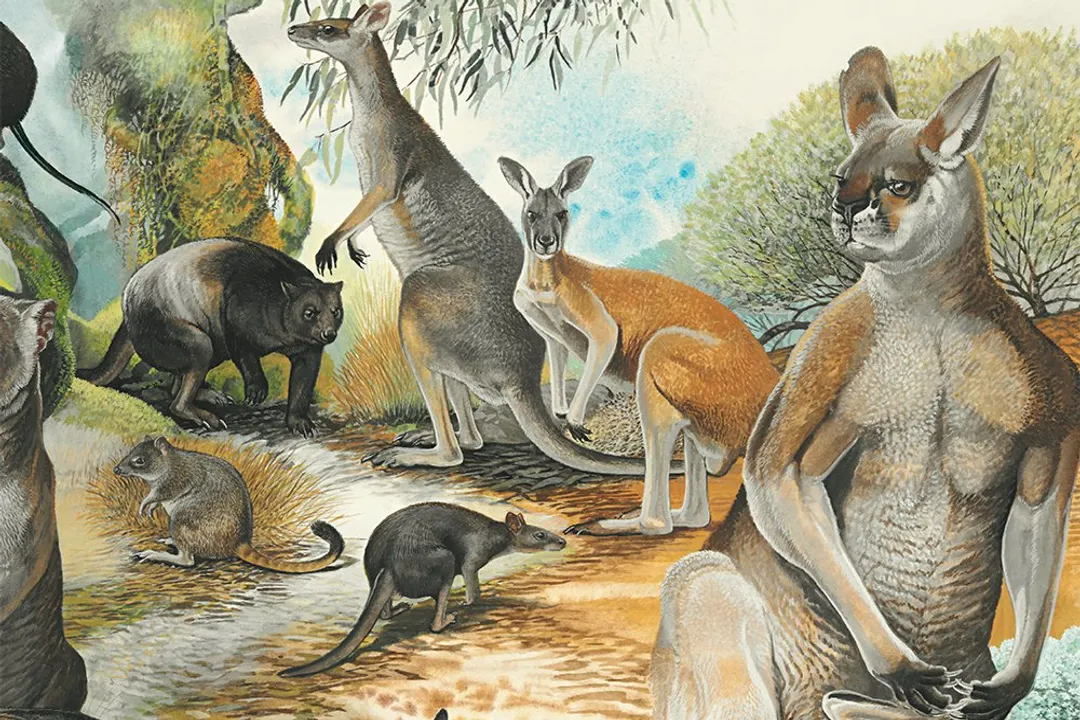
The fossil record of Australia is filled with creatures so bizarre they seem like something dreamed up for a science fiction movie, and among the most striking is Procoptodon. Often referred to as the giant short-faced kangaroo, this ancient marsupial wasn't just a bigger version of the red kangaroo we see today; it was a creature built on a completely different design plan, boasting features that make modern kangaroos look relatively normal. [2][4] Imagine an animal that was perhaps ten feet tall, moving around in a manner unlike any kangaroo currently inhabiting the grasslands. [9][2]
# Giant Size
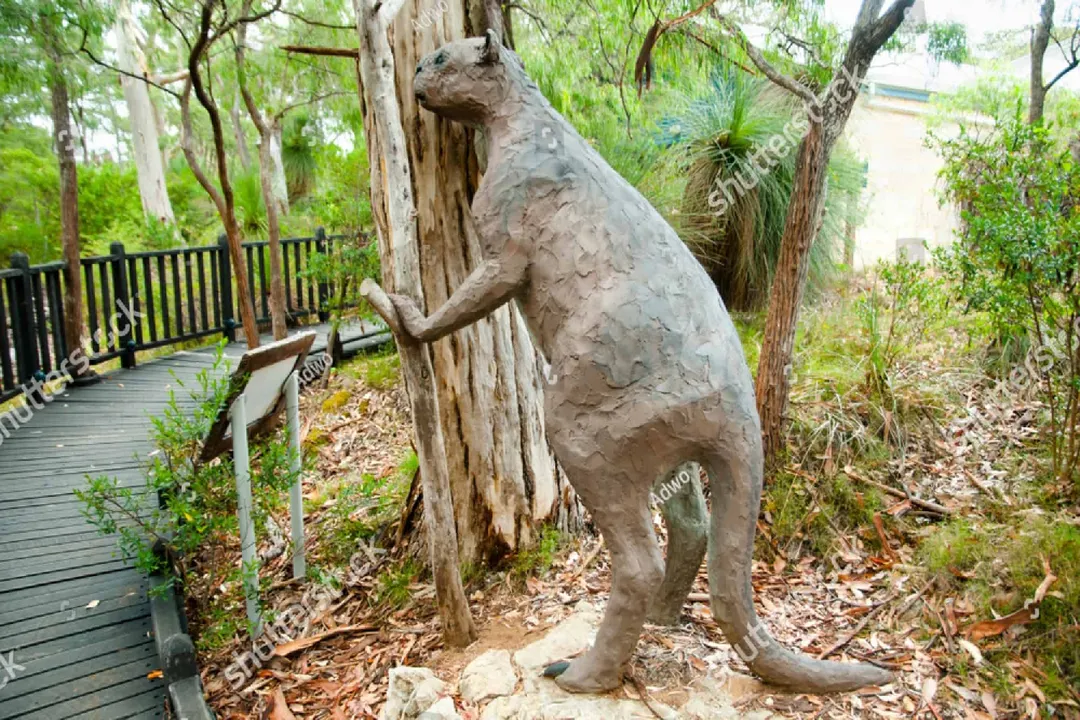
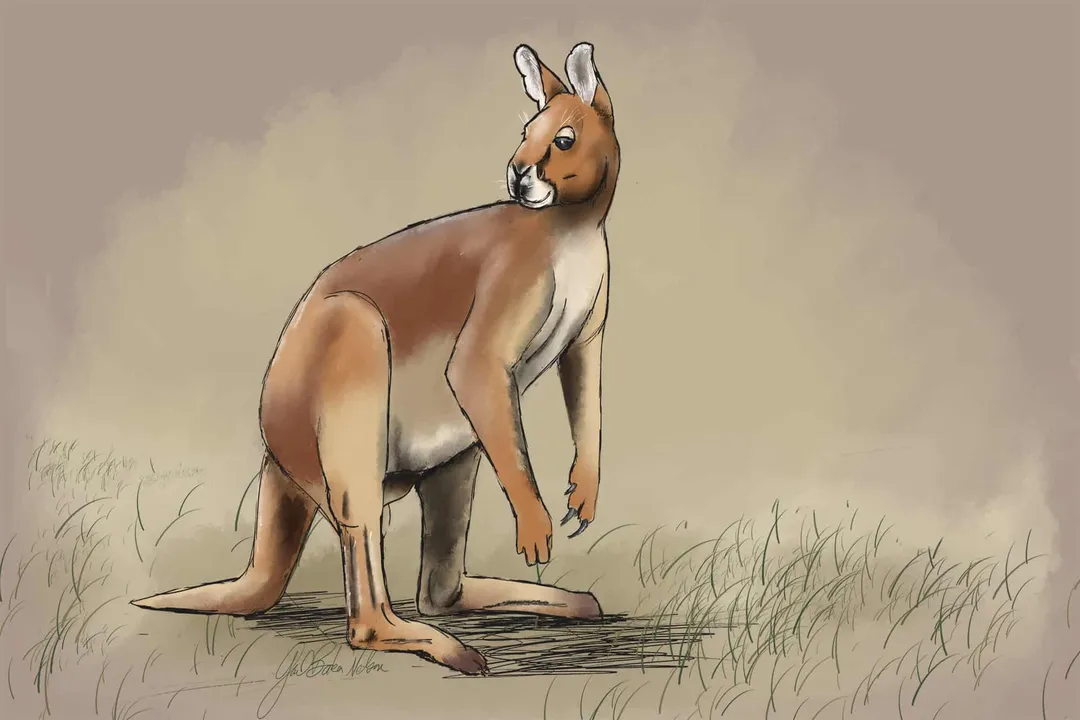
The most immediate fact that captures attention about Procoptodon is its sheer scale. It stands as one of the largest kangaroos known to have ever existed. [2][9] Estimates place the height of a fully grown individual at around three meters (10 feet). [9] To put that immense size into perspective, a 10-foot tall creature would easily tower over the average person and would look down upon many professional basketball players. [2] While the exact weight is debated due to incomplete skeletal records, some estimates suggest masses approaching 240 kilograms, solidifying its place in the continent's lineup of megafauna. [4] This massive stature meant that when Procoptodon goliai, the largest species, moved across the landscape during the Pleistocene epoch, it commanded a significant presence. [2][4]
# Unique Head
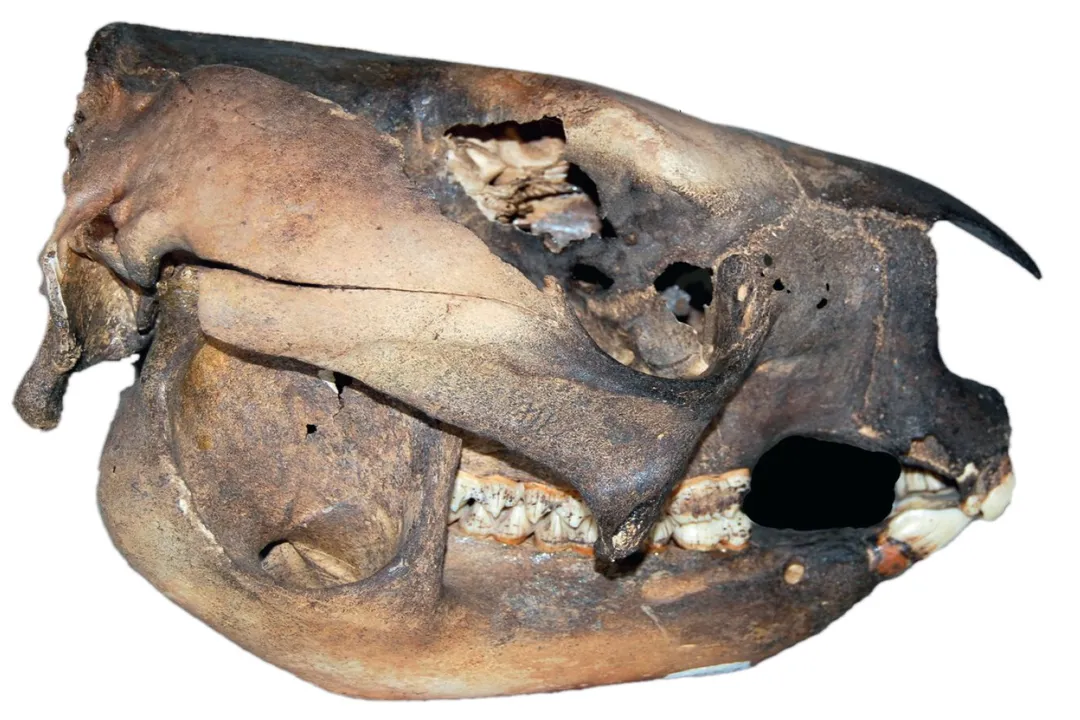
If the size didn't make it unusual enough, taking a close look at its skull reveals truly striking differences from its modern relatives. [2] Procoptodon possessed a remarkably short and deep skull. [4] This facial structure is what earned it the nickname "short-faced kangaroo". [4]
Perhaps the most fascinating aspect of its anatomy lies in its eyes. Unlike modern kangaroos, whose eyes are positioned more on the sides of the head for a wide field of view to spot predators, Procoptodon had eyes that faced much more forward. [2] The eye sockets were enormous and almost circular, suggesting a high degree of binocular vision. [4] This forward orientation implies a need for excellent depth perception. [4] It’s theorized that this excellent depth perception would have been crucial for navigating dense scrub or precisely selecting leaves from branches, rather than just scanning wide open plains. [2][5] The arrangement made the face look quite different—sometimes described as almost owl-like or bug-eyed due to the size and placement of those deep orbits. [4][5]

# Slow Mover
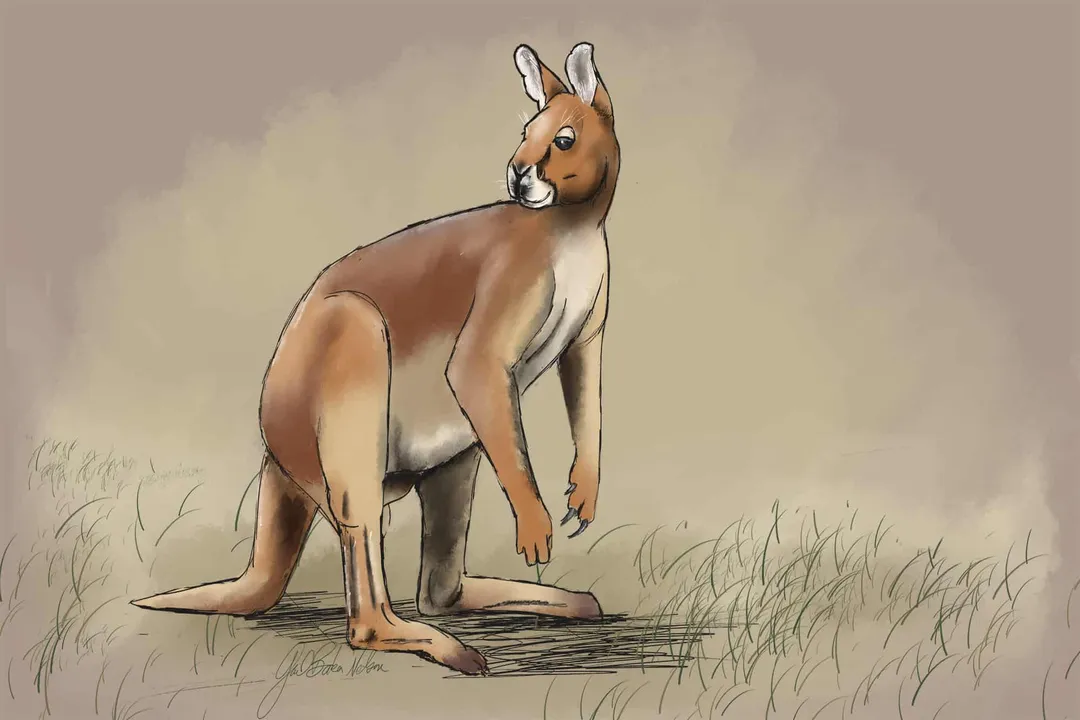
The mechanics of how this giant animal got around are a major point of discussion among paleontologists, largely because its skeletal structure doesn't support the high-speed bounding locomotion characteristic of modern kangaroos. [2] When you picture a kangaroo, you picture that powerful, rapid hop; however, Procoptodon likely moved in a much more deliberate fashion. [2]
The hind feet were unusual; rather than the broad, four-toed feet of its modern cousins, Procoptodon often featured long, single-toed feet. [2][5] This specialized foot structure seems better suited for pushing off the ground or maintaining stability while feeding, rather than absorbing the impact of rapid, long-distance bounding. [2] Evidence suggests it might have walked or used a slow hop, perhaps using its relatively sturdy forelimbs to help propel itself or balance, something modern kangaroos rarely do for primary movement. [2][4] Considering its bulk and its presumed diet of browsing on leaves, a slow, stable gait makes more ecological sense than rapid flight. [2] It’s an interesting departure from the typical kangaroo blueprint, suggesting that evolution took a very different path for this massive herbivore. [2]
# Single Tooth
The dental configuration of Procoptodon provides another excellent example of its unique specialization. [5] Modern kangaroos possess several molars in the back of their jaws for grinding tough grasses. [5] Procoptodon, conversely, had a much simpler setup: it is thought to have possessed only one large, crescent-shaped, high-crowned tooth in each quadrant of its jaw. [2][5]
This configuration means that a single, massive grinding surface did the heavy work for each side of the jaw, rather than the continuous, complex battery of teeth found in grazing kangaroos. [5] This specialized dentition strongly supports the idea that its diet consisted primarily of leaves and soft browse, likely from trees and shrubs, rather than tough, silica-rich grasses. [2][5] If you imagine trying to process a tough acacia leaf versus grazing on savanna grass, the difference in necessary dental equipment is clear, and Procoptodon was clearly equipped for the former. [2]
# Mega Extinction
Procoptodon was a prominent member of Australia’s megafauna, thriving during the Pleistocene epoch. [2][5] It shared its environment with other giants, including giant flightless birds and short-faced kangaroos. [3] However, like much of the megafauna across the continent, Procoptodon disappeared around 18,000 years ago. [4]
The exact reasons for the extinction of these large animals remain a subject of scientific debate, often involving a combination of factors like climate change and the arrival of humans. [4] What is certain is that the specialized feeding mechanism and locomotion of Procoptodon might have made it particularly vulnerable as the Australian environment shifted and potentially became drier or experienced different pressures. [2] The disappearance of such a large, structurally unique herbivore must have left a noticeable void in the way vegetation was managed across the ancient continent—the selective browsing pressure it exerted on tree canopy and undergrowth simply vanished when the last Procoptodon stopped pushing off the earth with its massive hind feet. [4] This extinction event marks a significant turning point in the history of Australian fauna. [2]
Related Questions
#Citations
Procoptodon Animal Facts - A-Z Animals
Procoptodon goliah - The Australian Museum
Procoptodon Facts for Kids
Procoptodon - Wikipedia
Fossil Factfile: Procoptodon - Australian Geographic
Procoptodon | Dinopedia - Fandom
Uncovering the Mysteries of the Extinct Procoptodon - TikTok
Procoptodon goliah : An extinct genus of short faced kangaroo that ...