What is a Colette snake?
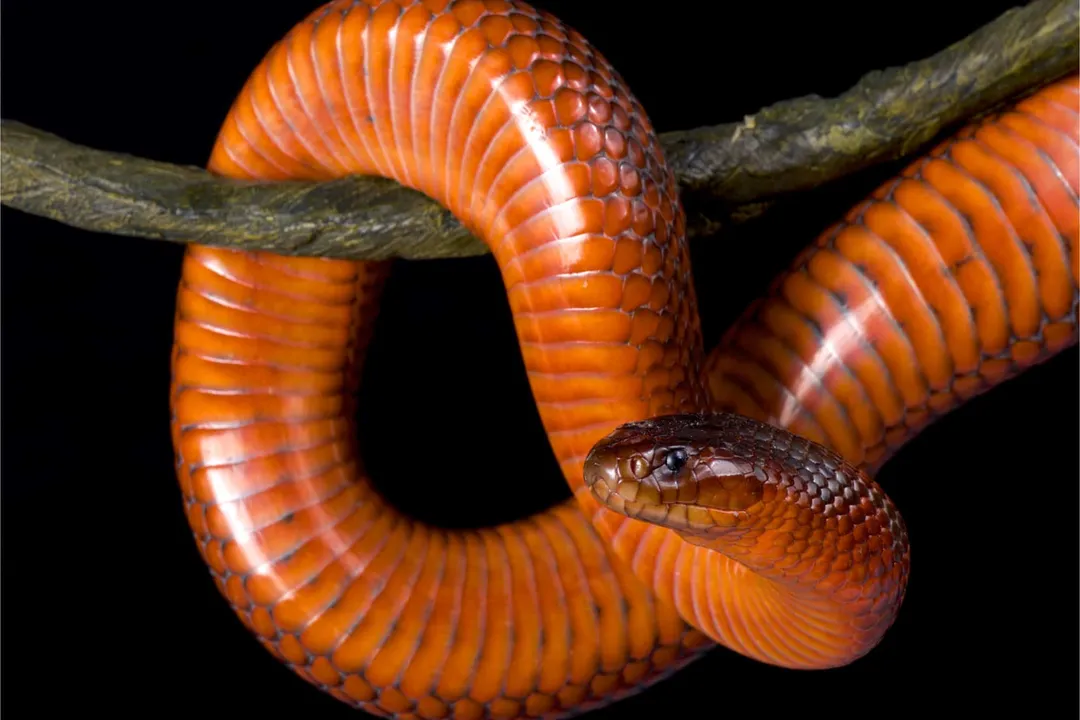
The Collett’s snake (Pseudechis colletti), one of Australia’s most visually striking reptiles, holds a unique position among the venomous snakes of the continent. Often confused with its more common relatives due to its genus grouping, this species is distinctive for its dramatic appearance and specialized life within a harsh, inland environment. [2] While it is often grouped with the black snakes, its true affinity lies closely with the blue-bellied black snake (P. guttatus), according to DNA studies. [2][3] Described formally in 1902 by George Albert Boulenger, the species was named in tribute to the Norwegian zoologist Robert Collett. [2][3]
# Striking Appearance
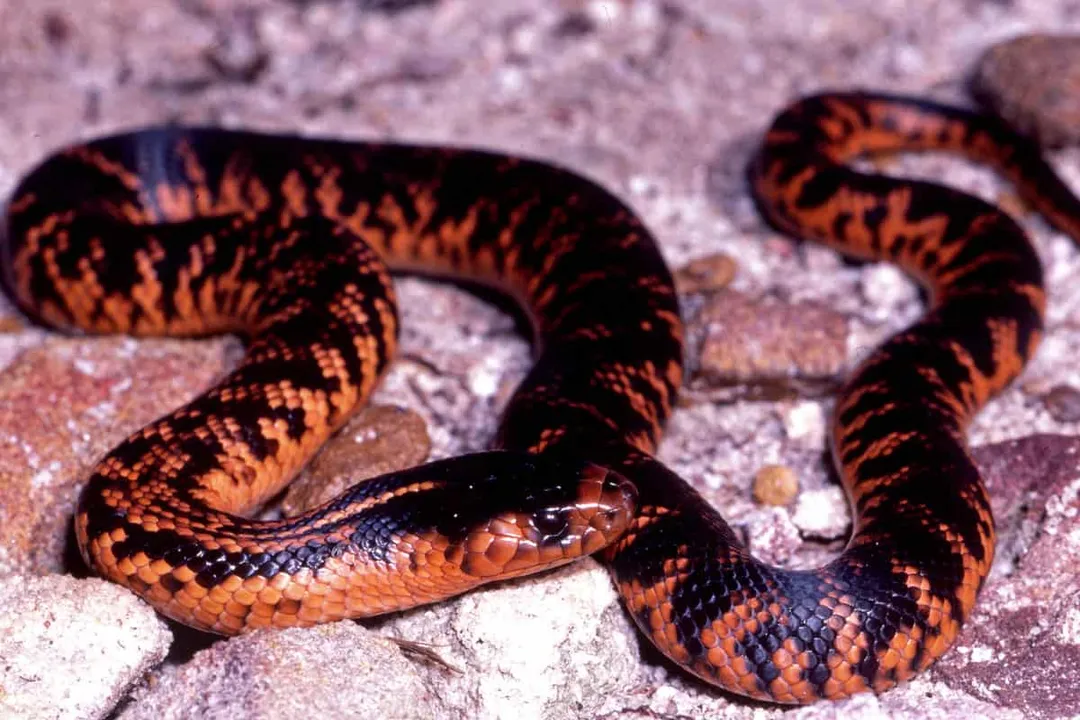
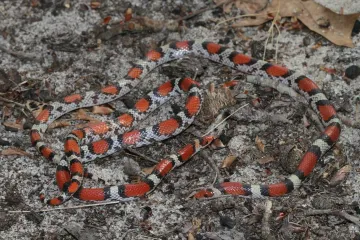
Perhaps the most immediate characteristic that sets P. colletti apart is its vivid coloration, making it arguably the most colourful member of the Pseudechis genus. [2] Its overall base colouration ranges from a deep dark brown to absolute black. [2][3] Superimposed on this dark canvas is an irregular, often cross-shaped, pattern of pink, cream, or vibrant orange-red bands. [2] This striking contrast has led to nicknames such as the "Jaffa snake". [4] The underbelly scales usually mirror the lighter band colour, presenting as pale yellow or orange, though slight variations or discolourations can occur. [2][3]
Juveniles share the same base pattern but often exhibit brighter shades and more pronounced contrast than their older counterparts. [2][3] When looking closely at the head, the top is typically uniformly dark, although the snout might present a slightly paler hue. [2] The eye itself is dark brown, distinguished by a noticeable reddish-brown rim encircling the pupil. [2][3] Structurally, the snake is strongly built with a robust body and a broad, blunt head that is only barely distinguishable from the neck region. [2] Adults commonly reach lengths between 1.8 and 2.2 metres (about 5.9 to 7.2 feet). [2][3] Males are noted for being significantly larger in snout-vent length than females, with the largest recorded males pushing close to 2.6 metres in total length. [2] Hatchlings, however, emerge quite small, around 30 centimetres, though they are remarked upon for being unusually large compared to other Pseudechis newborns. [2]
The very intensity of its colours seems almost mismatched with its typical environment. Found primarily in the black soil plains of central inland Queensland, this habitat can experience extreme temperature fluctuations, including surface temperatures exceeding 50°C (120°F) during the dry season. [2][4] While this intense striping makes the snake appear almost radioactive or like a dramatically marked tiger snake in photographs, its behaviour suggests camouflage or warning function may be secondary to its need for thermal regulation. One must appreciate the specific structural markers when attempting identification, as colour can vary; for instance, it might vaguely resemble a reddish-brown variant of the Blue-bellied Black Snake (P. guttatus), though their established distributions generally keep them separate. [2] A closer look at the scale counts can solidify identification: the snake reliably possesses 19 rows of midbody scales. [2] Furthermore, the anal scale is divided, and the subcaudal scales are single at the front but become divided towards the tail. [2]
# Hidden Domain
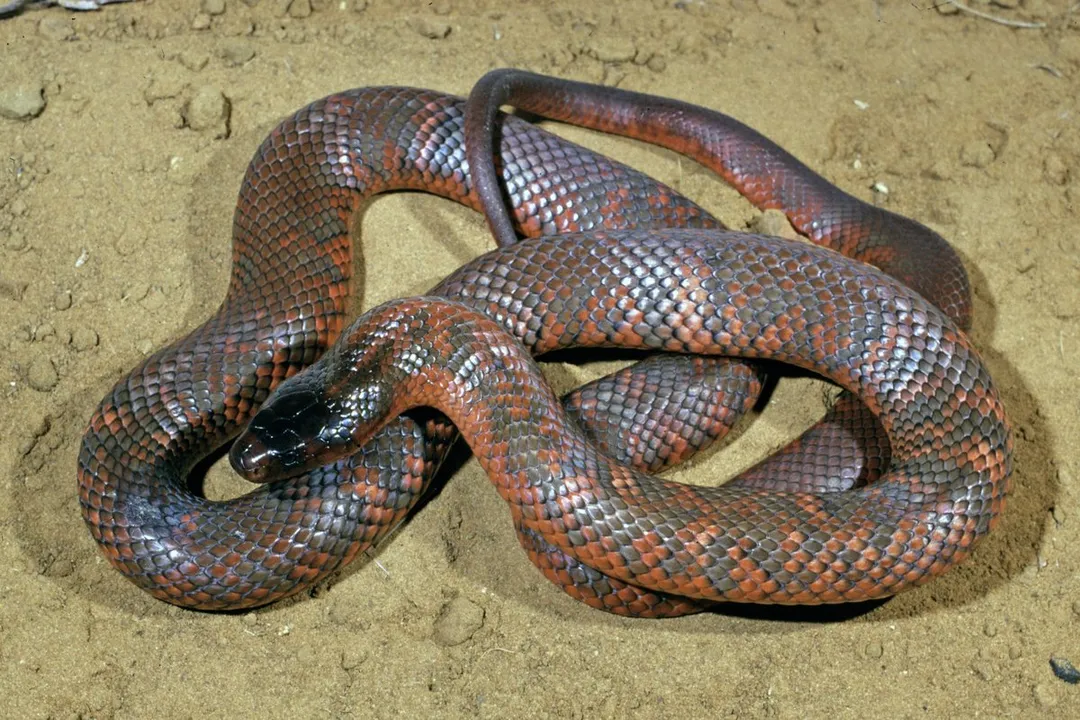
The distribution of Collett’s snake is quite restricted, confining it almost exclusively to central western Queensland, Australia. [2][3] This area is characterized by subtropical or warm temperate black soil plains that are subject to seasonal inundation from monsoonal rains. [2] This demanding environment dictates their primary survival strategy. They are secretive and rarely observed in the open. [2]
To cope with the region's thermal extremes—scorching summers and cold winters—the Collett’s snake takes shelter in deep fissures within the desiccated black soil, known as gilgai (sinkholes), or retreats under substantial fallen timber. [2] The formation of these deep cracks during dry periods provides an essential, stable subterranean refuge. When surface temperatures are tolerable, usually during the cooler parts of the day or evening, they will emerge to hunt. [2] They are generally considered terrestrial, though they may seek refuge in trees occasionally. [2]
It is a fascinating adaptation; the snake that boasts the most spectacular pattern in its group spends most of its active time hiding deep within the ground or in dark crevices, only briefly exposing itself when the conditions allow. If one were to search for them in the wild, the best time to spot one would likely be during the daytime—as they are diurnal—when the weather is neither oppressively hot nor cold, often in the early morning or late afternoon. [2] Given their secretive nature and remote distribution in areas like the Mitchell Grass Downs region, encountering one outside of a captive setting is a genuinely rare event for most observers.
# Potent Venom
Despite its stunning appearance, the Collett’s snake is seriously venomous, currently ranked as the world's nineteenth most venomous snake species. [2][3] While earlier assessments suggested moderate venom toxicity, current understanding, often derived from incidents involving captive handlers, confirms the potential for severe envenomation. [2] The venom composition is notably cytotoxic and possesses haemolytic activity, meaning it damages cells and red blood cells, respectively. [2] There is also the possibility of neurotoxins being present. [2]
The primary systemic effects seen following a significant bite closely resemble those of the formidable mulga snake (P. australis). [2] Initial symptoms can include nausea, vomiting, headache, abdominal pain, and diarrhea, often accompanied by an anticoagulant coagulopathy (impaired blood clotting). [2] The most critical danger lies in the potential progression to rhabdomyolysis (muscle breakdown) and subsequent acute kidney injury if fluid replacement and appropriate antivenom are not administered promptly. [2] A typical strike delivers approximately 30 milligrams of venom. [2]
It is essential to note that while bites in the wild are undocumented, several incidents have occurred with keepers. [4] Some anecdotal reports from these handling incidents suggest unusual lingering effects, such as a reported loss of the sense of smell in some individuals after being bitten. [4] Fortunately, the availability of both black snake and tiger snake antivenom provides an effective treatment option when administered quickly. [2]
For anyone encountering a suspected bite, the protocol emphasizes immediate action: call emergency services immediately (000 or 112 in Australia). [2] The recommended first aid involves applying a pressure-immobilisation bandage firmly over the injury site and along the entire affected limb to slow the venom’s spread, followed by splinting the limb to minimize movement. [2] Crucially, the bandage should remain in place until medical professionals take over, and the victim must remain as still as possible. [2]
# Dietary Habits
As a carnivore, the Collett’s snake maintains a varied diet reflective of the fauna in its Queensland habitat. [2] Its primary food sources consist of amphibians, small mammals, and reptiles. [2][3] They are known to prey on local geckos, such as the dubious dtella, which forms part of their active hunting pursuits during the day. [3] Given the opportunistic nature of many elapids, cannibalism—the consumption of other Collett’s snakes—is also documented behaviour within the species. [2][3] Their method of predation involves envenomation via a bite to subdue their prey before consumption. [3]
# Reproduction Cycle
Reproductive activities for P. colletti generally commence in the late Australian winter or early spring, with mating observed between early August and late October. [2][3] The species is oviparous, meaning the females lay eggs. [3] After mating, the female incubates the clutch for roughly 56 days before depositing the eggs between October and December. [2] A single clutch size typically ranges from 7 to 14 eggs, though sources indicate up to 20 eggs can be laid. [2][3] The eggs then require a lengthy incubation period, hatching up to 91 days later, though this can vary based on ambient temperature. [2]
A particularly interesting note is that the hatchlings are unusually large for black snakes, sometimes reaching lengths up to 37 centimetres upon emergence. [2][4] After hatching, the baby snake may remain inside the broken shell for up to 12 hours before fully emerging. [2] Captive breeding programs have demonstrated that this species is highly successful in reproduction under controlled conditions. [2][3] In a more behaviourally focused observation from captivity, the male combat ritual has been noted, and copulation itself can be a lengthy process, sometimes lasting up to six hours. [2]
# Temperament and Captivity
Collett's snake is generally described as relatively placid. [2] Their primary instinct is avoidance; they are shy creatures that prefer to be left entirely alone, whether they are on the ground or seeking cover. [2][3] If they detect a potential threat, they employ a distinct warning display before resorting to biting. This display involves inflating their body, raising the front portion into a low curve, and issuing loud, short hisses intended to deter the perceived danger. [2] This warning sequence is often repeated until the snake exhausts itself or the threat retreats. [2] Only when they feel directly pressed or further threatened will they resort to striking. [2]
This combination of spectacular looks and defensive temperament has made them a highly sought-after, albeit dangerous, species in private reptile collections. [2] Their relatively high numbers in captivity, particularly in regions like Victoria, contrast with their scarcity in the wild. [3] Their general protection under Australian federal law provides a layer of security, though in Queensland, their status is specifically listed as Rare. [2][3] For those who keep them, understanding their specialized thermal and shelter needs—mimicking the deep soil cracks—is paramount to their well-being in an artificial environment.
To summarize this unique reptile, one sees an Australian endemic defined by extreme duality: a creature of magnificent, almost garish, colour that resides in a desolate, drab landscape, possessing venom potent enough to cause severe systemic failure, yet maintaining a generally shy and defensive disposition. [2] Its specialized habitat requirements in the black soil plains underscore its vulnerability to environmental change, justifying its protected status. [2]
#Videos
The Collets Black Snake - YouTube
THE RARE AND REMARKABLE COLLETT'S SNAKE - YouTube
Related Questions
#Citations
Collett's snake - Wikipedia
Collett's Snake - The Australian Museum
Collett's Snake Animal Facts - Pseudechis colletti
The Collets Black Snake - YouTube
Collett's Snake | Reptipedia | Fandom