What family is the pangolin in?
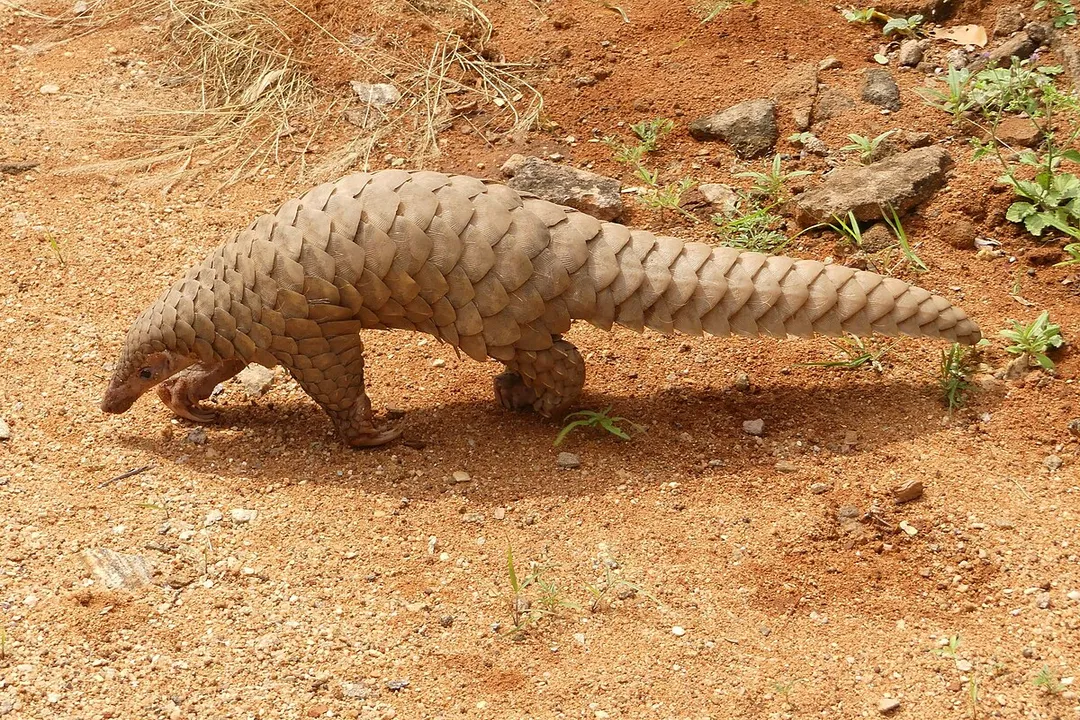
The animal known for its unique, overlapping armor, the pangolin, belongs to the fascinating and increasingly recognized family Manidae. This classification places the pangolin within the broader order Pholidota, a name derived from Ancient Greek meaning “clad in scales,” perfectly describing their most striking feature. It is crucial to note that despite superficial resemblances to animals like armadillos or anteaters, pangolins are not closely related to them; scientific consensus now places them much closer to the order Carnivora—the cats, dogs, and bears—forming a clade known as Ferae. The family Manidae is currently the only extant family within the order Pholidota, housing all living pangolin species.
# Scale of Classification
The order Pholidota, containing the family Manidae, represents a unique branch of mammalian evolution. The very name pangolin itself originates from the Malay word pengguling, meaning "one who rolls up," referencing their signature defensive maneuver. While the overall classification is straightforward—Order Pholidota, Family Manidae—recent research, particularly phylogenetic analysis, has led to a necessary refinement of the family structure.
Until the late 2000s, all living pangolins were often grouped under the single genus Manis. However, cladistic analysis has shown a significant divergence, leading to the recognition of three distinct extant genera within Manidae:
- Manis: This genus is dedicated to the Asian pangolins.
- Phataginus: This group encompasses the smaller, arboreal (tree-dwelling) African pangolins.
- Smutsia: This genus covers the larger, terrestrial African pangolins.
This three-genus split reflects the geographic separation and evolutionary divergence between the Asian and African clades. Considering the estimated time of divergence between Asian and African pangolins occurred around 41.37 million years ago, the distinct adaptive pressures in their respective continents—from the deep Asian forests to the varied African woodlands and savannas—likely reinforced the morphological differences we now see codified in their generic classification (Phataginus vs. Smutsia vs. Manis). This internal diversification within the family Manidae shows a history of successful adaptation across two continents.
# Eight Species Divide
The family Manidae currently supports eight recognized extant species, distributed evenly across Africa and Asia. Each species has evolved specific characteristics suited to its habitat, though they all share the fundamental pangolin traits of scales and a specialized insectivorous diet.
The Asian contingent, all falling under the genus Manis, faces the most severe conservation challenges:
- Chinese Pangolin (Manis pentadactyla): Listed as Critically Endangered.
- Sunda Pangolin (Manis javanica): Also listed as Critically Endangered.
- Palawan Pangolin (Manis culionensis): Endemic to the Philippines and Critically Endangered.
- Indian Pangolin (Manis crassicaudata): Listed as Endangered.
In sub-Saharan Africa, the four species are distributed across the genera Phataginus and Smutsia:
- White-bellied Pangolin (Phataginus tricuspis): An Endangered species, often noted for its arboreal habits.
- Giant Pangolin (Smutsia gigantea): Listed as Endangered.
- Ground Pangolin (Smutsia temminckii): Currently listed as Vulnerable, this species is notably the only one found in Southern Africa.
- Black-bellied Pangolin (Phataginus tetradactyla): Also listed as Vulnerable.
While all four Asian species are classified by the IUCN as either Critically Endangered or Endangered, the African species show a slightly broader range of threat levels, with two listed as Endangered and two as Vulnerable as of early 2020 data. It is important to recognize that even the "Vulnerable" status demands immediate attention given the intense pressures on the order as a whole.
# Physical Armor
The defining characteristic of any pangolin, whether Asian or African, is its coat of armor made of overlapping, keratinous scales. These scales are composed of keratin, the same tough protein found in human fingernails and hair, and are structurally different from reptile scales. When threatened, the pangolin employs volvation—curling tightly into a near-impenetrable ball, protecting its soft underside and tucking its face away. The edges of these scales are sharp, adding a layer of defense against predators like leopards or lions.
Physically, pangolins are well-equipped for their specialized diet. They possess strong forelimbs and long, curved claws perfectly adapted for demolishing termite mounds and ant nests. Their heads are small and conical, and perhaps most distinctively, they lack teeth entirely. To compensate for their poor vision and hearing, they possess an extremely well-developed sense of smell to locate prey.
Their feeding apparatus is an evolutionary marvel. The tongue of a pangolin is remarkably long, sometimes extending over 38 cm. In some larger species, the tongue can be up to 40 cm long. Uniquely, this tongue is not attached near the jaw or hyoid bone in the mouth but instead roots deep within the thorax, near the pelvis, allowing for maximum reach. The saliva coating this tongue is sticky, efficiently trapping vast numbers of insects as the pangolin probes the tunnels.
Since they cannot chew, digestion relies on mechanical breakdown within a muscular stomach, which functions much like a bird’s gizzard. Pangolins intentionally ingest small stones, known as gastroliths, which accumulate in the stomach to help grind up the ants and termites they consume. Furthermore, the interior of this stomach is lined with tough, keratinous spines that aid further in macerating the prey.
# Habitat and Foraging
Pangolins are distributed across diverse habitats ranging from tropical forests to savannas and grasslands, though their presence is always dictated by the availability of their primary food source: ants and termites. The four African species occupy different ecological niches; for instance, the White-bellied Pangolin (Phataginus tricuspis) is noted as an adept climber and arboreal species, while the Ground Pangolin (Smutsia temminckii) is more terrestrial. Some species, like the Sunda pangolin, can be found foraging both on the ground and in trees.
Their daily rhythms are mostly nocturnal; they emerge at night to forage, sometimes traveling several miles in search of food. They sleep curled up, often using abandoned animal burrows, caves, hollow trees, or constructing their own elaborate tunnels. Terrestrial species can excavate burrows up to 3.5 meters deep, sometimes featuring chambers large enough for a human to crawl into.
Their appetite is prodigious. Estimates suggest a single adult pangolin can consume upwards of 70 million insects annually. They seal their nostrils and ears shut while feeding to prevent attacking insects from entering, and specialized muscles in their mouths prevent captured prey from escaping. This massive consumption makes the pangolin an important regulator of termite populations in its native ecosystem, acting as a natural form of pest control. The soil aeration resulting from their constant burrowing is another ecological service they provide, helping to distribute nutrients in the earth.
# Parental Investment
Pangolins are generally solitary creatures, only meeting to mate. While mating seasons vary—some breed year-round, others in specific seasons like late spring or autumn—most species typically breed once per year. Males are generally larger than females, sometimes by 10% to 50%.
Reproduction involves a relatively small output; most species usually give birth to a single offspring, though the Asiatic species can sometimes manage litters of up to three young. Gestation periods vary, falling generally between 80 and 180 days depending on the species. Newborn pangolins are small, weighing around 80 to 450 grams, and crucially, their scales are soft and pale at birth, hardening within a couple of days.
Maternal care is extensive and essential for survival. The mother nurses the young for about three to six months, during which time the infant will often cling to the base of the mother’s tail while she forages, or stay protected in the nest burrow for the first few weeks. The young begin eating insects alongside nursing around one month of age. Independence, and thus abandonment by the mother, generally occurs around two years of age when the offspring reach sexual maturity. The father plays no role in this parental investment.
# Conservation Crisis
The unique biology and scarcity of information about pangolins have tragically contributed to their status as the most highly trafficked mammals in the world. All eight species are assessed as threatened on the IUCN Red List. This crisis is driven by two primary factors: poaching for their scales, used in traditional medicine based on unproven claims—such as promoting circulation or stimulating lactation—and the demand for their meat as a delicacy.
While African pangolin trafficking was historically secondary to Asian demand, Africa is now heavily involved in supplying scales to Asian markets. The sheer volume of illegal trade has been staggering, with estimates suggesting tens of thousands impacted annually. Beyond direct poaching, habitat loss due to expanding agriculture and human settlements further fragments and reduces their necessary foraging grounds.
The difficulty in conservation is compounded by the pangolin's inherent fragility outside its natural setting. Attempts to breed them in captivity have met with little success. This difficulty is partially due to their highly specialized diet; artificial insectivorous diets often lack the required nutritional value found in wild ants and termites, leading to high mortality rates in captivity. Indeed, the difference in reported longevity—up to 20 years in the wild versus up to 13 years in captivity—suggests that even when removed from poaching threats, the failure of artificial insectivorous diets to replicate natural nutrition presents a major conservation hurdle, suggesting habitat protection is paramount over simple captive breeding for recovery. Furthermore, pangolins have significantly decreased immune responses due to genetic dysfunction, making them susceptible to ailments like pneumonia and ulcers when stressed or housed incorrectly. The conservation community's response, such as the IUCN's "Scaling up Pangolin Conservation" action plan, emphasizes combating trafficking alongside community education. Disrupting the financial chains of smugglers by "following the money" is increasingly recognized as a critical, though often overlooked, tactic alongside direct species protection efforts.
# Taxonomy Context
To further appreciate the family Manidae, it helps to place it within the wider scope of mammalian classification. While the immediate order is Pholidota, pangolins belong to the clade Pholidotamorpha, which also includes the extinct Palaeanodonts. The genetic evidence shows the split between pangolins and the Carnivora order is estimated to have occurred approximately 79.47 million years ago. The deep evolutionary split within Manidae itself—separating the Asian Manis genus from the African Phataginus and Smutsia genera—is thought to be about 41.37 million years ago. This ancient separation explains why distinct generic classifications are necessary to properly organize the family based on geography and morphology. The continued presence of these unique scaled mammals, despite intense human pressure, underscores their remarkable biological success over deep time, even if their immediate future remains precarious.
Related Questions
#Citations
Pangolin - Wikipedia
About Pangolins
Manidae (pangolins) | INFORMATION - Animal Diversity Web