What is the origin of the pangolin?
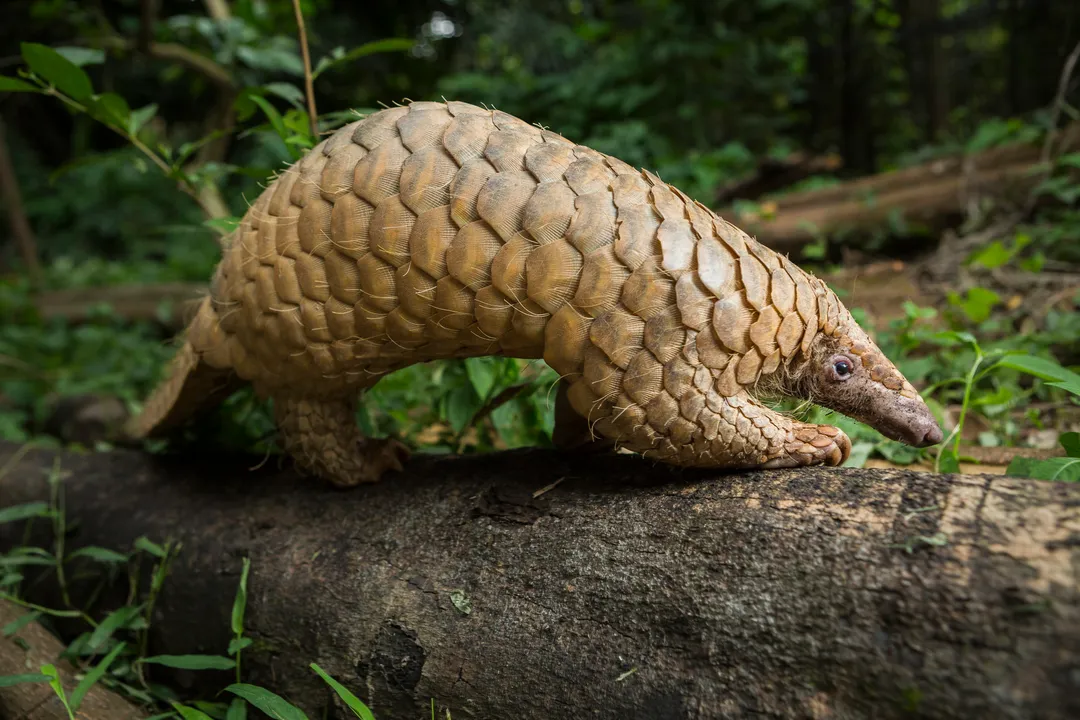
The image of a pangolin—a walking artichoke covered entirely in overlapping, hard scales—often leads people to assume it is some form of reptile, perhaps an evolutionary offshoot of an armadillo or a lizard. This perception could not be further from the truth. Pangolins are, in fact, unique mammals, distinguished by their scales, which are made purely of keratin, the same material found in human fingernails and hair. [2][3] This unusual armor sets them apart, but their true distinction lies in their ancient lineage and solitary existence, making them one of the most fascinating and tragically vulnerable creatures on the planet. [1][7] They are currently considered the world's most illegally trafficked mammals. [1]
# Mammal Order
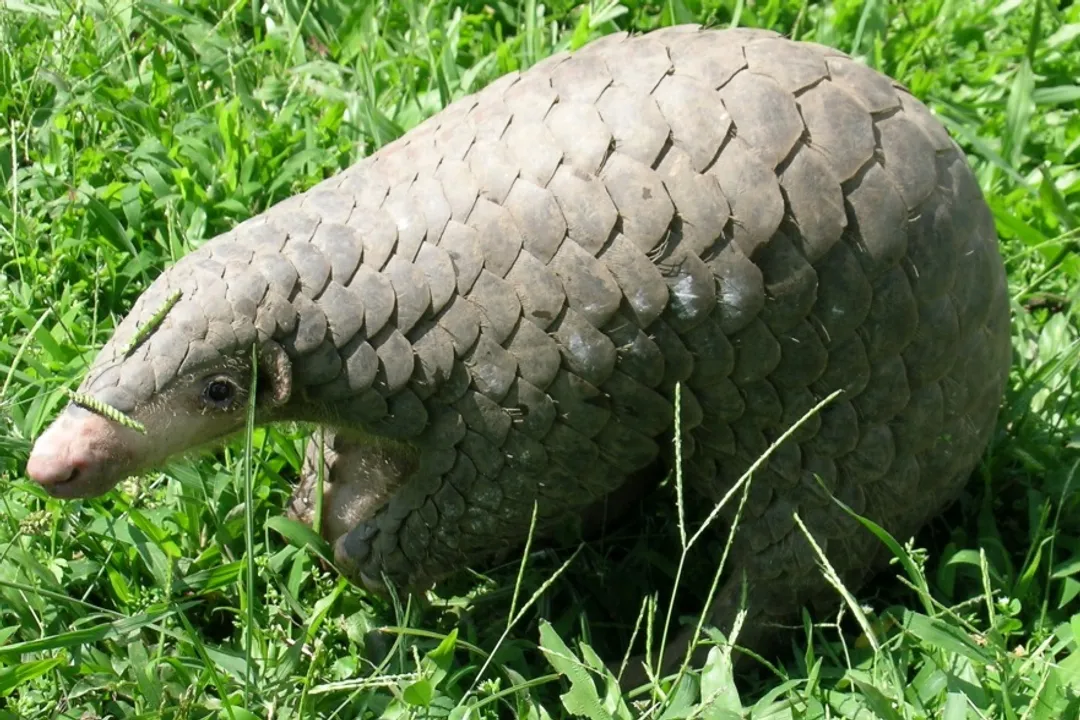
To understand the pangolin's origin, we must first place it within the system of life. Pangolins are classified under the order Pholidota. [3][5] This order is a biological island unto itself; pangolins do not have any close living relatives that share a recent common ancestor. [3] While early genetic research suggested a relationship with the order Carnivora (which includes cats, dogs, and bears), more comprehensive studies have shown that while the split occurred a very long time ago, the Pholidota lineage branched off early in the evolution of placental mammals. [3] The order Pholidota is contained within the larger mammalian group, making them definitively non-reptilian. [2]
# Evolutionary Roots
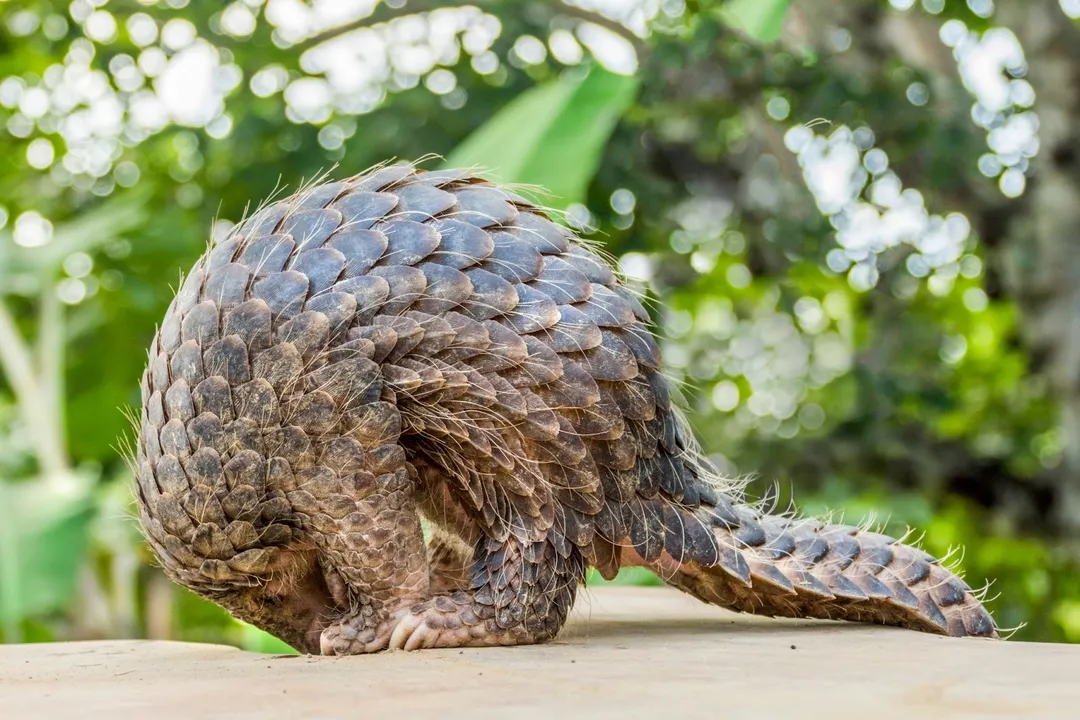
The most accepted hypothesis regarding the geographic origin of pangolins points squarely to Africa. Fossil evidence and genetic analysis suggest that the ancestors of modern pangolins began to evolve there approximately 60 to 80 million years ago (mya). [1][3] This deep evolutionary history means that for tens of millions of years, the pangolin lineage developed its highly specialized traits—the keratin scales, the unique tongue mechanism, and the terrestrial or arboreal adaptations—in relative isolation before some of these lineages migrated across land bridges or ancient routes into Asia. [3] The long, independent evolutionary path taken by the Pholidota means that losing a species today is not just losing one animal; it is erasing an entire, unique branch of the mammalian tree that has been evolving separately since before the time of the dinosaurs’ final reign. [3]
# Eight Species
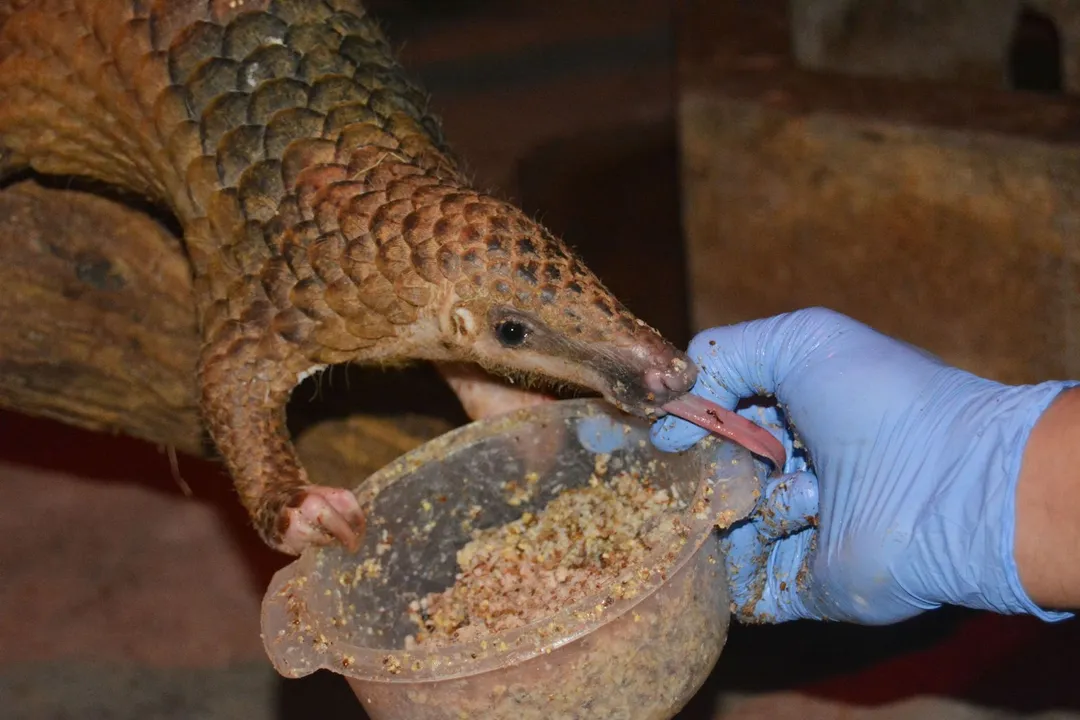
Today, the order Pholidota consists of eight distinct species, split between two continents: four species inhabit Africa, and four are found across Asia. [2][5][6] These eight species are often grouped into two main families: the Asian pangolins and the African pangolins, though modern taxonomy generally places all eight under the single family Manidae. [5] This continental separation suggests that the ancestral African lineage gave rise to the Asian species after a separation event, likely millions of years after the initial African diversification. [3][5]
The species vary significantly in size, habitat preference, and scale patterns, reflecting adaptation to their local environments:
- African Species: These include the Giant Ground Pangolin, Tree Pangolin, Long-tailed Pangolin, and Temminck's Ground Pangolin. [6] These species range from large terrestrial forms to smaller, more arboreal (tree-dwelling) varieties. [6]
- Asian Species: These include the Chinese Pangolin, Sunda Pangolin, Indian Pangolin, and Philippine Pangolin. [6] They are often smaller than their African cousins, with many species, like the Sunda Pangolin, showing a preference for tree-dwelling. [6]
It is worth noting that while we group them geographically, the degree of genetic separation between the African and Asian clades is substantial, indicating an ancient divergence event within the Manidae family itself. [5]
# Armor Anatomy
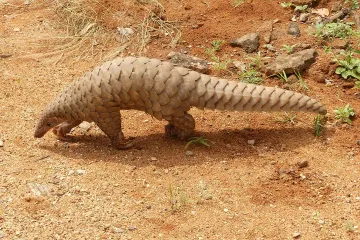
The defining feature of the pangolin—its scales—is central to its identity and survival strategy, yet it also contributes significantly to its peril. These scales are not merely decorative; they are rigid, overlapping shields that provide formidable protection against predators like lions or leopards. [2][7] When threatened, the pangolin’s primary defense mechanism is to curl up tightly into an almost impenetrable ball, protecting its soft underbelly and face. [2][7]
This keratin armor is a fantastic example of convergent evolution in mammals. While they look similar to an armadillo’s bony scutes, the pangolin’s scales are structurally distinct because they lack any underlying bone structure in the scale itself, relying solely on the density and overlap of the keratin layer. [3] This reliance on scales for defense is an evolutionary trade-off; it provides excellent protection against natural predators but makes them relatively slow-moving and incredibly vulnerable to human poachers who know exactly how to neutralize this defense by simply rolling them over or picking them up.
# Diet Specialization
Pangolins’ origins are deeply tied to their diet, as they are highly specialized insectivores. They subsist almost entirely on ants and termites, using their powerful claws to rip open mounds and nests, and a remarkably long, sticky tongue—which can sometimes be longer than their own body—to lap up their prey. [2][6] This dietary niche helps shape their morphology, demanding powerful digging claws and a highly specialized digestive system adapted for consuming chitinous insects. [7] The fact that they require specific types of ant and termite colonies dictates where they can live, further reinforcing the separation between the distinct African and Asian species as their respective insect populations and environments differ. [6]
# Historical Confusion
For centuries, the true origin and classification of the pangolin remained obscure to Western science. Early specimens sent back to Europe caused considerable confusion, often being lumped with various other scaled or shelled animals due to the superficial resemblance. [3] This confusion persisted because, unlike many other mammal groups, the pangolin lineage did not give rise to a diversity of forms; the eight species we see today represent the entirety of their living diversity, having evolved along their own isolated path for epochs. [3] This isolation makes studying their true ancestral origins an ongoing, complex process reliant on sophisticated genetic markers to trace their deep connection to other placental mammals. [5] Their status as a unique order highlights the vastness of the mammalian family tree that existed before modern groups became dominant.
#Videos
The Insane Biology of: The Pangolin - YouTube
Related Questions
#Citations
Pangolins: one of the world's least known and most hunted animals
About Pangolins
Pangolins | What's in a Name? - Harvard University
Pangolin genomes and the evolution of mammalian scales and ...
The complete family tree of extant pangolins provides suitable ...
Pangolin - World Wildlife Fund
7 Things You (Probably) Didn't Know About Pangolins
The Insane Biology of: The Pangolin - YouTube
Genetic identification of African pangolins and their origin in illegal ...