What family is a Bloodhound in?
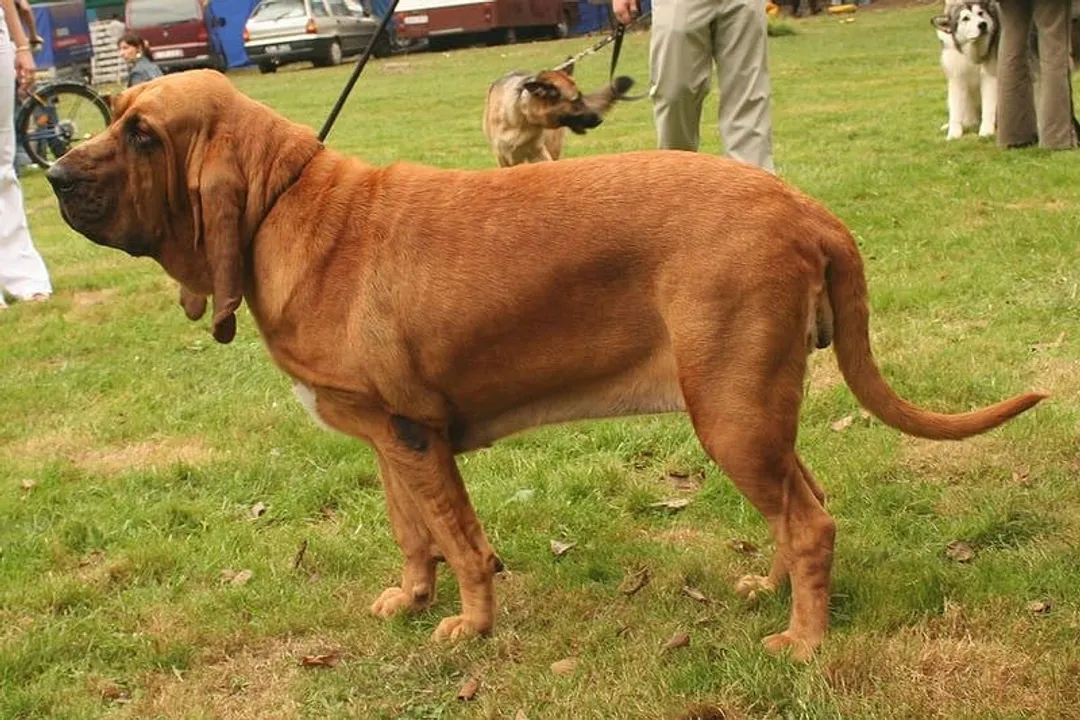
The sheer presence of a Bloodhound is often unmistakable, characterized by that melancholy expression, the deeply wrinkled brow, and those impossibly long, pendulous ears. Anyone seeing one immediately recognizes a dog built for a very specific, ancient purpose. However, when classifying this magnificent breed within the sprawling canine kingdom, the primary question centers on its lineage and grouping. The Bloodhound firmly resides within the Hound family, a designation that speaks volumes about its history and singular talents. [2][7]
# Breed Grouping
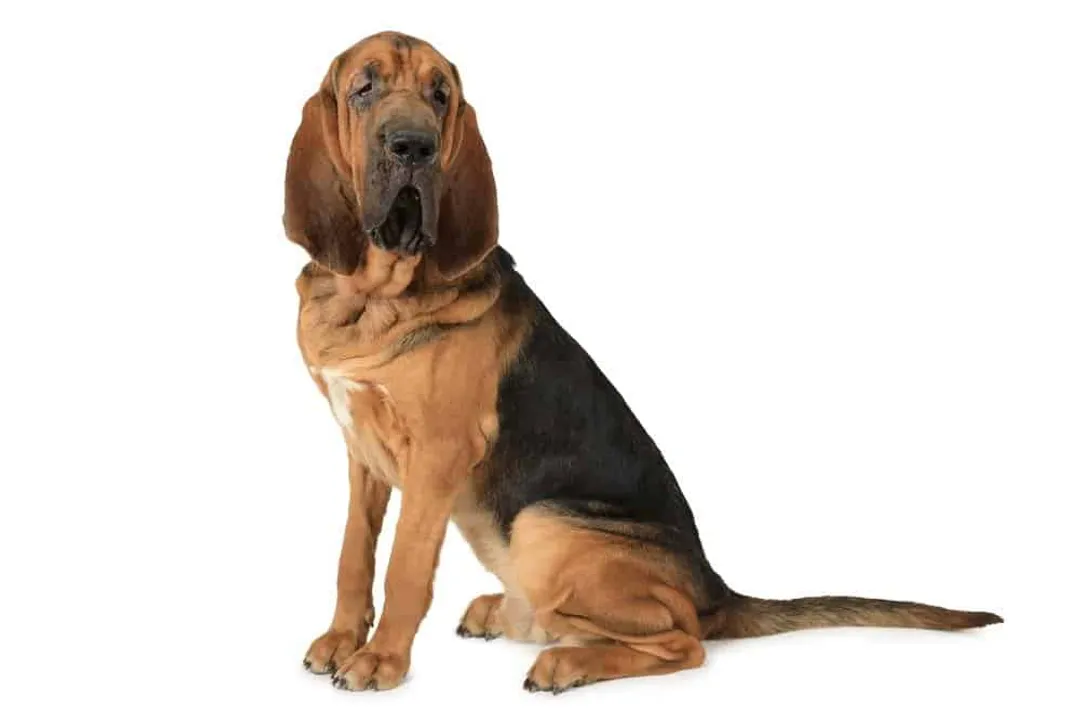
This classification places the Bloodhound squarely within the classification used by major international registries. For instance, The American Kennel Club (AKC) lists the breed in the Hound Group. [3] Similarly, other major organizations, such as The Royal Kennel Club and the Canadian Kennel Club USA, also categorize this breed under the Hound designation. [6][10] This grouping is not arbitrary; it directly relates to the dog’s original function, which was hunting, primarily by following a trail of scent rather than sight or sound. [1][8] Within the Hound Group, the Bloodhound is specifically recognized as a Scenthound. [1][8] While the term "family" can sometimes refer to the broader biological classification, in the context of purebred dogs recognized by kennel clubs, it is the Group designation that matters most for understanding breed standards and historical purpose. [2][3]
# Defining Characteristics
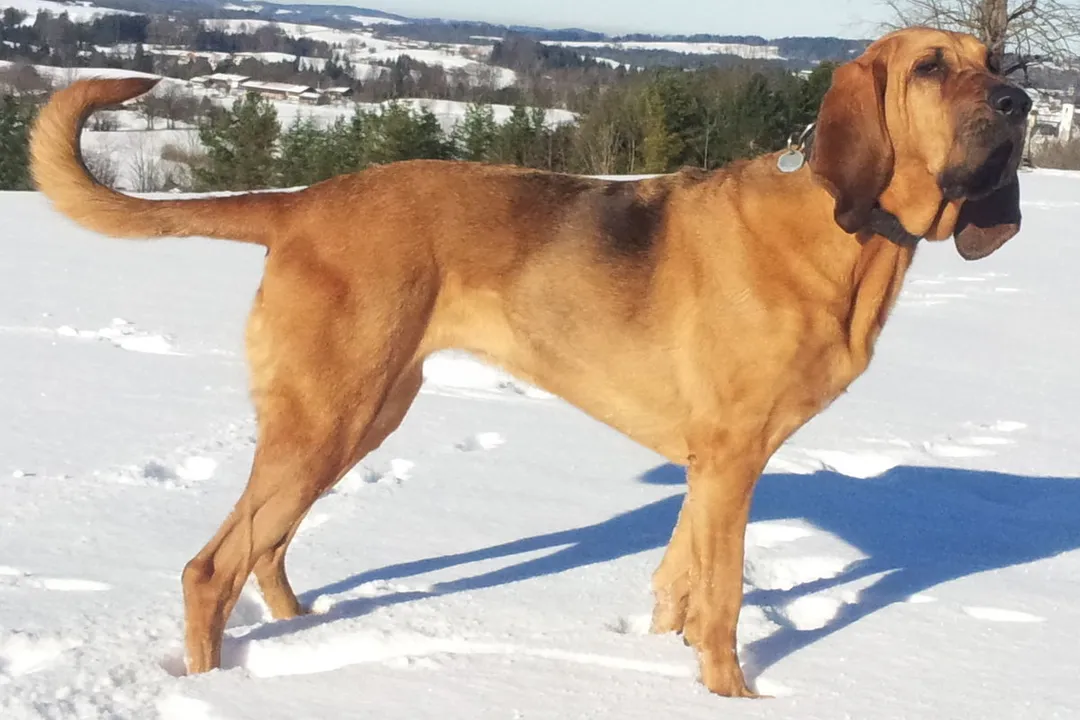
To understand why the Bloodhound is so dedicated to its classification as a Scenthound, one must look at its unique physical structure. These dogs are large, powerful animals, built for endurance rather than outright speed. [8] Males often stand over 25 inches tall at the shoulder, while females are slightly smaller, though height can vary between kennel clubs. [1][3] They typically weigh between 80 and 110 pounds. [3]
The breed’s signature look is intrinsically linked to its tracking prowess. The loose, wrinkled skin, particularly around the head and neck, along with the long, low-set ears, are functional tools for scenting. [1][8]
| Feature | Typical Measurement / Description | Function Related to Scenting |
|---|---|---|
| Height (Male) | Over 25 inches [1][3] | Endurance and presence on the trail. |
| Weight | 80–110 lbs [3] | Stability and power for long tracking efforts. |
| Ears | Long and low-set [1] | Acts like a funnel, sweeping scent particles toward the nose. |
| Skin | Loose and pendulous [1] | Traps scent molecules close to the ground and the dog's face. |
It is interesting to observe how these physical traits move beyond mere aesthetics. While many observers might simply see these features as indicative of a gentle, world-weary appearance, the engineering is quite precise. The lengthy ears, for example, are not merely for decoration; when the dog drops its head to follow a trail, those heavy leather flaps effectively sweep the ground, keeping scent particles airborne and directing them precisely into the nasal passages. [1] This integration of form and function demonstrates an intense specialization developed over centuries of selective breeding for scent work. [7]
# Ancestral Origins
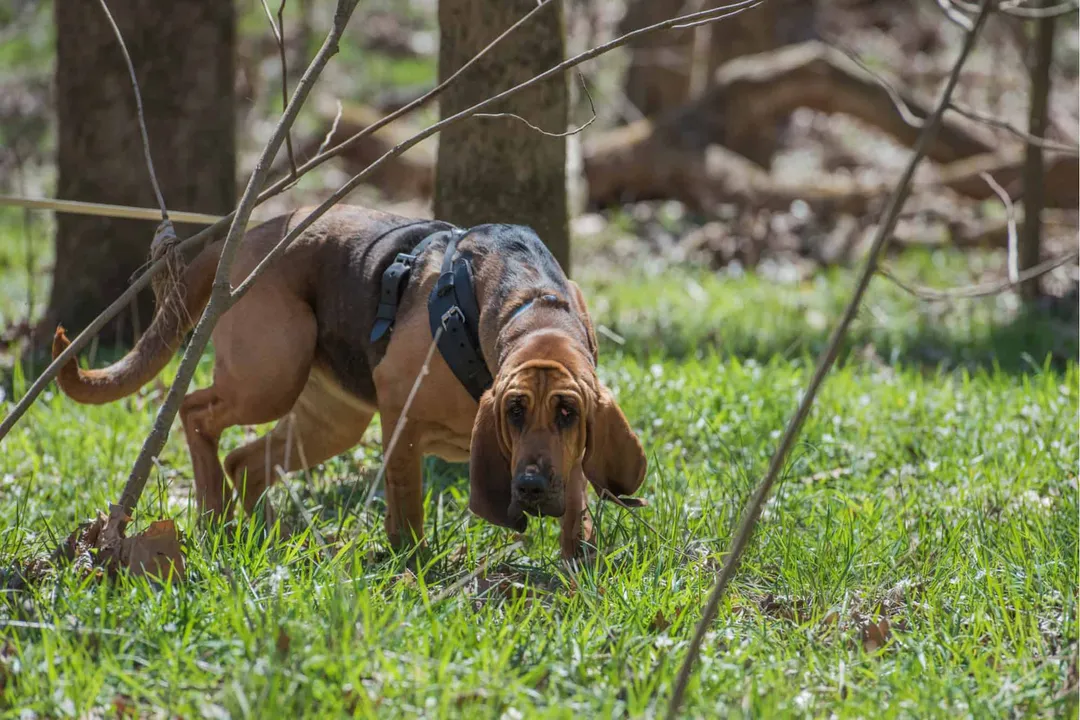
The history of the Bloodhound stretches back centuries, with its origins often traced to the monasteries of Belgium. [1] Early records link the development of these dogs to St. Hubert, and subsequently, they were refined in the Abbey of St. Hubert, leading to their early name, the St. Hubert Hound. [1][7] These early hounds were prized by nobility for tracking game. [7] The name "Bloodhound" itself likely implies purity of lineage—dogs of "good blood"—rather than any connection to tracking human blood, though their skill in trailing people eventually surpassed their use in game hunting. [1][2] By the Middle Ages, they were already renowned across Europe for their acute noses. [7]
# Temperament and Drive
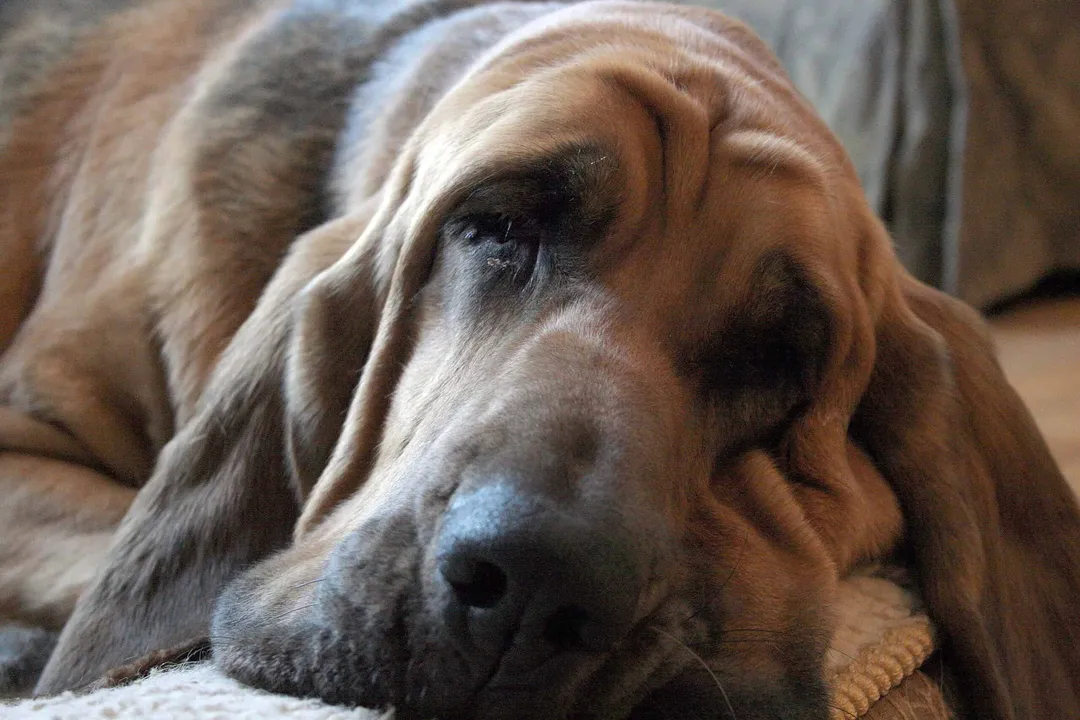
The temperament of the Bloodhound is one of its most endearing qualities, though it presents unique challenges to owners. [3][8] They are generally known for being sweet-natured, patient, and wonderfully gentle, making them surprisingly good family pets despite their imposing size. [3][8] They tend to be calm indoors and generally get along well with children and other pets. [3]
However, this gentle nature evaporates the moment a compelling scent captures their attention. When a Bloodhound is "on the trail," the outside world ceases to exist. [1][8] They become single-minded, utterly absorbed in the task of following the scent—a state often referred to as being "scent-loyal". [1] This single-mindedness is crucial to their identity as hounds but means that standard obedience commands can become entirely meaningless once the nose takes over. [8]
When considering training a Bloodhound, owners must recognize this inherent conflict. A dog that reliably sits and stays in the kitchen might completely ignore the command if a rabbit runs through the yard or if a specific, tracked scent is present. [8] This is a key difference when comparing them to, say, a high-drive herding dog, where the drive is to control movement. The Bloodhound’s drive is purely to follow an invisible path, making recall reliability outside of a secure area a significant undertaking. [3] It is less about teaching them what to do and more about managing their overwhelming instinct to pursue the scent they have locked onto.
# Daily Life and Needs
Because of their history as endurance trackers, Bloodhounds require consistent management regarding exercise and mental stimulation. [8] While they are not hyperactive dogs that need to run miles every day, they do need regular, substantial walks to satisfy their need to investigate the world via their nose. [3] A simple trot around the block might not be enough; they thrive on opportunities to use their noses in a controlled environment. [8]
For prospective owners, this translates into a need for high-security fencing. A Bloodhound’s tendency to follow a scent means they can slip out of gates or dig under fences with surprising determination if something interesting crosses their path. [3][8] A simple yard is insufficient if the dog is left unsupervised near an opening; the drive to follow a scent is powerful enough to override basic training adherence. [1][8]
Grooming needs are moderate but essential. Their loose skin requires regular inspection, particularly in the wrinkles, to ensure moisture doesn't linger, which could lead to skin infections. [3][5] The ears, being so long and close to the ground, also need routine cleaning to prevent trapped moisture and subsequent yeast or bacterial growth. [3]
# Scent Capabilities Comparison
The Bloodhound is often cited as the gold standard for scent tracking, but it is worth noting that its abilities often exceed those of other scent-driven breeds. While Beagles and Basset Hounds share the Scenthound lineage and possess phenomenal noses, the Bloodhound is typically believed to have a superior ability to track older, colder trails and discriminate between similar scents over long distances. [1][7] This superior capability is what led to their adoption by law enforcement and search and rescue teams across the world, often giving them the official title of the best tracking dog available. [1] A successful Scenthound handler understands that the dog is not merely reacting to the presence of a scent, but mapping the path of a scent as it has decayed and moved over time—a skill that few other breeds can replicate with the same fidelity. [1] This inherent tracking expertise places them in a category almost separate from other large hounds. [7]
# Commitment to the Breed
Bringing a Bloodhound into the home is a commitment to understanding a deeply instinctual animal. Their lineage as a hunting dog means they are not necessarily eager to please in the way a sporting or herding dog might be; their loyalty is to the scent, and their relationship with humans is based on mutual respect and leadership, not immediate compliance. [3] Prospective owners should research local ordinances and potential compatibility with small household pets, as the hound drive, though generally focused on human trailing in modern contexts, is still present. [8] Finding reputable breeders who prioritize health and temperament, especially sound hips and elbows given their size, is as important as understanding their unique position within the canine family structure. [3][5] The Bloodhound remains, without question, a specialized member of the Hound Group, an ancient pedigree maintained in one of the world’s most focused noses. [1][6]
Related Questions
#Citations
Bloodhound - Wikipedia
Bloodhound Dog Breed Complete Guide - A-Z Animals
Bloodhound Dog Breed Information - American Kennel Club
Origin of bloodhound breed name - Facebook
Bloodhound Dog Breed Information | Purina
Bloodhound | Breeds A to Z - The Kennel Club
Bloodhound | Origins, History, Scenting Ability, Care ... - Britannica
Bloodhound - PDSA
Bloodhound - Woodstock - Crossroads Veterinary Hospital
Bloodhound Dog Breed Information - Continental Kennel Club