What does a ring-billed gull eat?
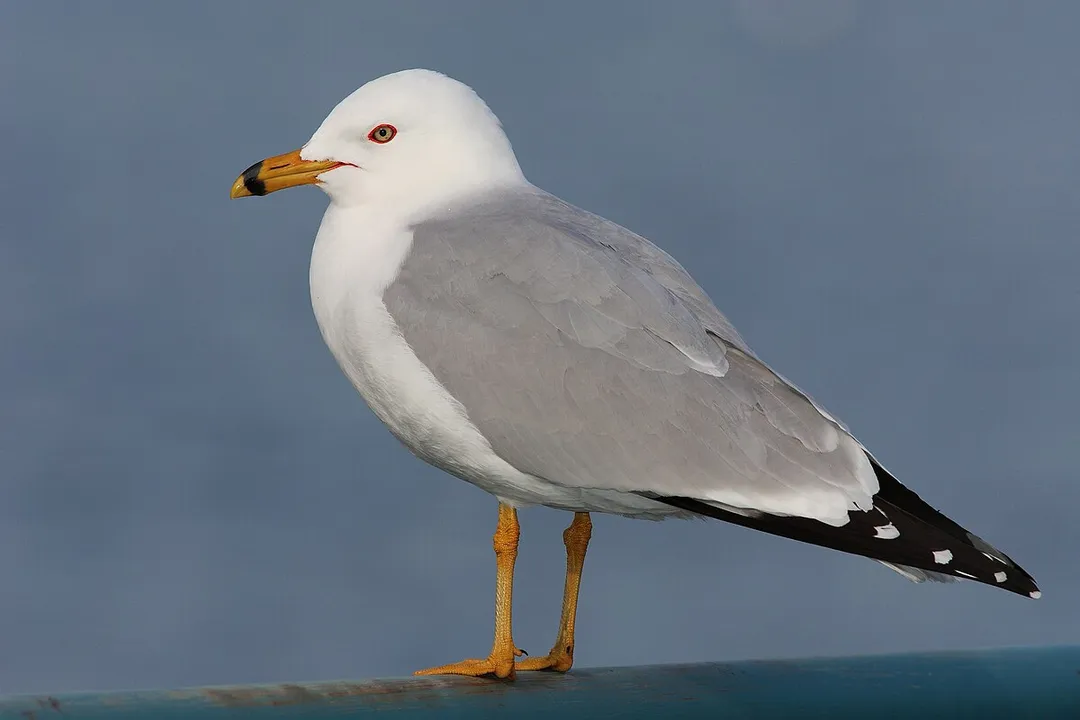
The Ring-billed Gull presents a fascinating study in dietary flexibility, easily earning its reputation as a bold opportunist and scavenger across North America. These medium-sized gulls are far from specialized feeders; rather, they thrive by consuming almost any available source of nutrition, which allows them to maintain high populations and adapt to numerous environments, from coasts to the interior of the continent[1 (Audubon)]. The sheer variety in their menu means that what one population consumes might look completely different from what another is eating, depending on proximity to water, agricultural activity, or human settlements.
# Omnivore Range
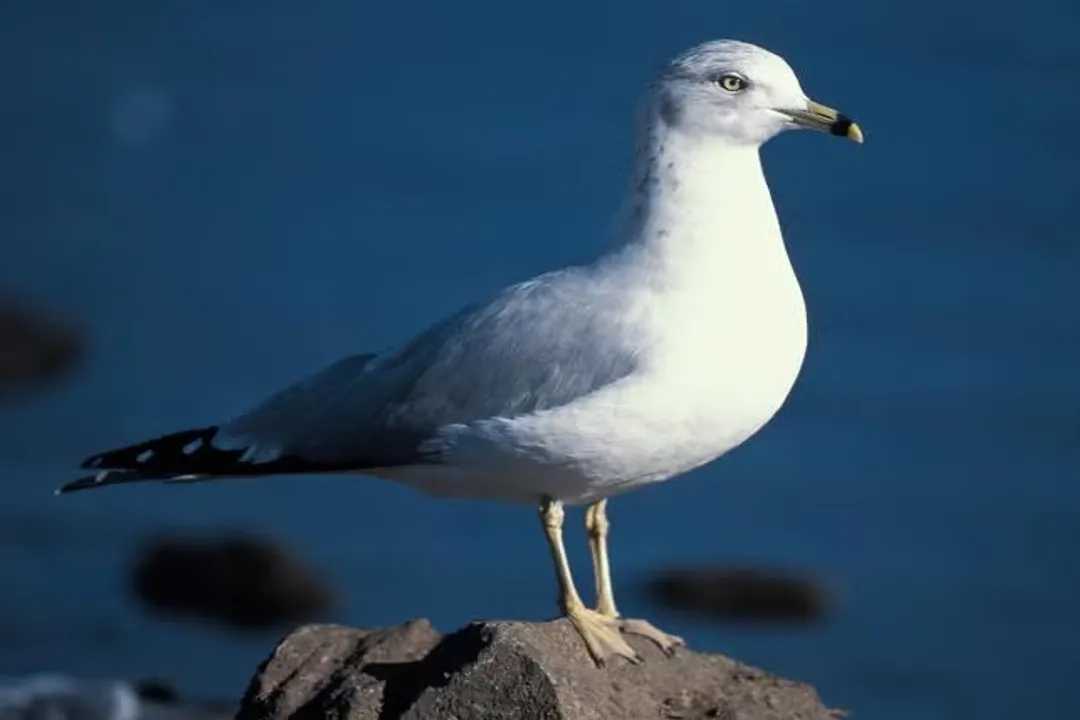
The general description of the Ring-billed Gull’s diet confirms its omnivorous nature. They are well-equipped to exploit resources both in and out of the water. This broad palate is a key characteristic distinguishing them in the field guide descriptions. They are often found near large bodies of water like lakes and rivers, but their presence is equally associated with human-altered habitats such as landfills, docks, parking lots, and city environments[1 (Audubon)]. This willingness to associate closely with human activity is a defining feature of their feeding ecology[1 (Audubon)]. They are known to congregate where people might discard food or, in some cases, where they might even be hand-fed [1 (Audubon)].
# Aquatic Prey
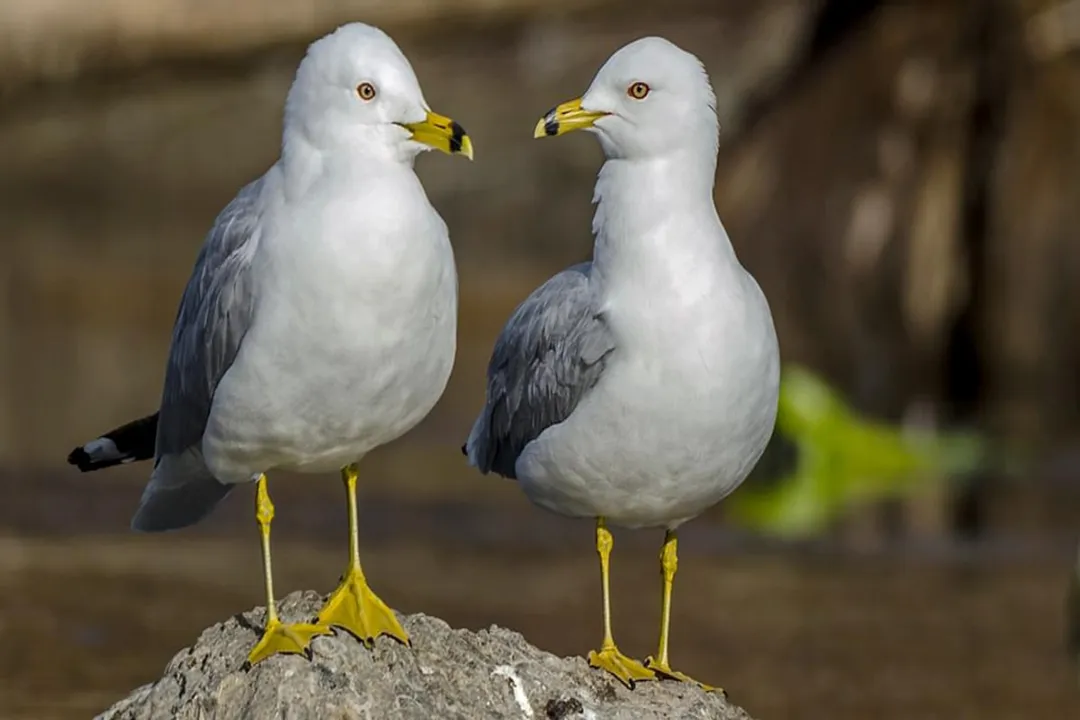
When foraging near water, the Ring-billed Gull targets a variety of aquatic life. Fish form a significant part of their intake in many regions. Specific fish prey noted include the alewife, smelt, yellow perch, and the nine-spined stickleback. Beyond finfish, they consume aquatic invertebrates like mussels and crabs. Gulls are adept at skimming the surface of shallow water to catch small fish [3 (Cornell)]. An interesting behavior associated with uncovering smaller prey is their technique of stamping their feet in the water, which may help flush out small invertebrates hidden in the substrate [3 (Cornell)].
# Terrestrial Insects
The diet extends well beyond the aquatic realm, incorporating numerous terrestrial invertebrates when available. Earthworms are a frequently cited food item, often accessed when gulls wade or walk across damp ground. Furthermore, they actively hunt or forage for grubs, which they may find in surprising locations like freshly plowed fields. Insect meals are varied and can feature beetles, flies, and dragonflies [3 (Cornell)]. This reliance on soil-dwelling organisms demonstrates their comfort and expertise in foraging on land as much as they are near water [3 (Cornell)][1 (Audubon)].
# Human Scavenging
Perhaps the most recognized aspect of the Ring-billed Gull’s feeding behavior in populated areas is its penchant for scavenging. They are known to consume almost anything, including carrion, garbage, and discarded human food items. The association with discarded meals is so strong that one source notes the bird is often nicknamed the "fast food gull" due to its habit of lingering near fast-food restaurants searching for scraps. They have been observed specifically seeking out French fries and other food left unguarded by people [3 (Cornell)]. This scavenging behavior is vital, especially during winter or non-breeding seasons, when they might be found in parking lots or near garbage dumps[3 (Cornell)]. This reliance on refuse has even helped their populations rebound after historical declines [1 (Audubon)].
# Regional Variation
The adaptability of the Ring-billed Gull is best illustrated by how dramatically their primary food source can shift based on geography. While inland populations frequently rely on fish and earthworms, many Ring-billed Gull populations in the western United States demonstrate a striking departure from this pattern [3 (Cornell)]. These western groups can forgo fish almost entirely, finding the bulk of their sustenance in agricultural fields [3 (Cornell)]. This suggests that available grain crops and field-dwelling insects become the dominant, locally sourced energy supply in those areas. It is a prime example of how an opportunistic feeder molds its entire feeding strategy to the immediate, seasonal availability of resources.
# Foraging Tactics
To secure such a diverse menu, the Ring-billed Gull employs a wide array of foraging tactics, moving fluidly between aerial, terrestrial, and aquatic methods [3 (Cornell)][1 (Audubon)]. They are strong, graceful flyers capable of reaching speeds over 40 miles per hour, allowing them to snatch insects directly out of the air [3 (Cornell)]. They hover, soar, and even position themselves stationary in the wind while hunting [3 (Cornell)]. On the ground, they walk around in open areas [3 (Cornell)]. A notable competitive tactic is their willingness to steal food directly from other birds [3 (Cornell)][1 (Audubon)]. A fascinating behavioral note is their interaction with potential food sources: adults have been observed repeatedly dropping objects and then catching them mid-air, which may be a form of practice or honing their hunting abilities [3 (Cornell)].
The sheer diversity in their foraging techniques highlights a behavioral mastery that goes beyond simple picking up dropped food. For instance, the act of stamping feet in water is a targeted manipulation of the environment to affect prey behavior, contrasting sharply with the passive waiting sometimes employed near human refuse sites [3 (Cornell)].
Considering the immense flexibility across their diet—from small, live rodents to processed human garbage—it becomes clear that the Ring-billed Gull functions as an ecological filter, effectively processing organic waste that might otherwise accumulate in aquatic and riparian zones. This role, while sometimes unpopular when they congregate near populated areas, is a significant service in regulating nutrient cycling, particularly near urban waterways and landfills where they are commonly found. They are, in effect, an indicator species for the level of accessible organic matter in a given landscape, whether natural or man-made.
Furthermore, when observing these gulls in large, non-breeding groups, it is useful to note their social dynamics while feeding. They tend to space themselves out evenly, keeping about three to six feet apart [3 (Cornell)]. If you see a large congregation on a beach or in a park, this spacing often indicates a more focused, competitive feeding mode rather than purely resting behavior. If an individual is seen aggressively lowering its head and calling, it is likely signaling to maintain that feeding distance or attempt to steal an item from a neighbor [3 (Cornell)]. Understanding this spacing helps explain why they can appear simultaneously social (in large groups) yet highly territorial over individual food finds [3 (Cornell)].
Related Questions
#Citations
Ring-billed Gull Life History - All About Birds
Ring-billed Gull Facts - NatureMapping Foundation
Ring-Billed Gull | Missouri Department of Conservation
Ring-billed Gull - Larus delawarensis - New Hampshire PBS
Ring-billed gull - Wikipedia
Ring-billed Gull | Audubon Field Guide