What does termite look like to the human eye?
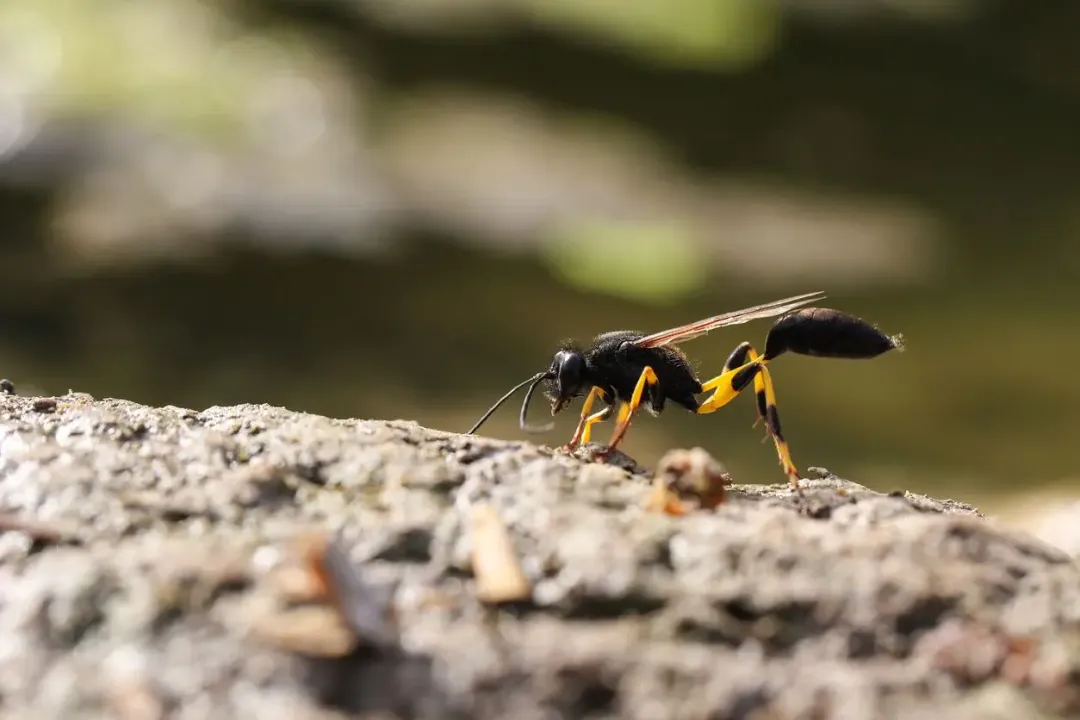
Spotting termites with the naked eye often hinges on which termite you happen to encounter, as a colony is organized into distinct castes, each serving a specific function and possessing a unique physical appearance. While homeowners often fear the silent, hidden damage these insects cause, the first step in defense is knowing what the enemy looks like when it is visible. The most common image people form is of the pale, hidden workers, but the ones that actually venture into plain sight—the swarmers—look remarkably different.
# Caste Appearance
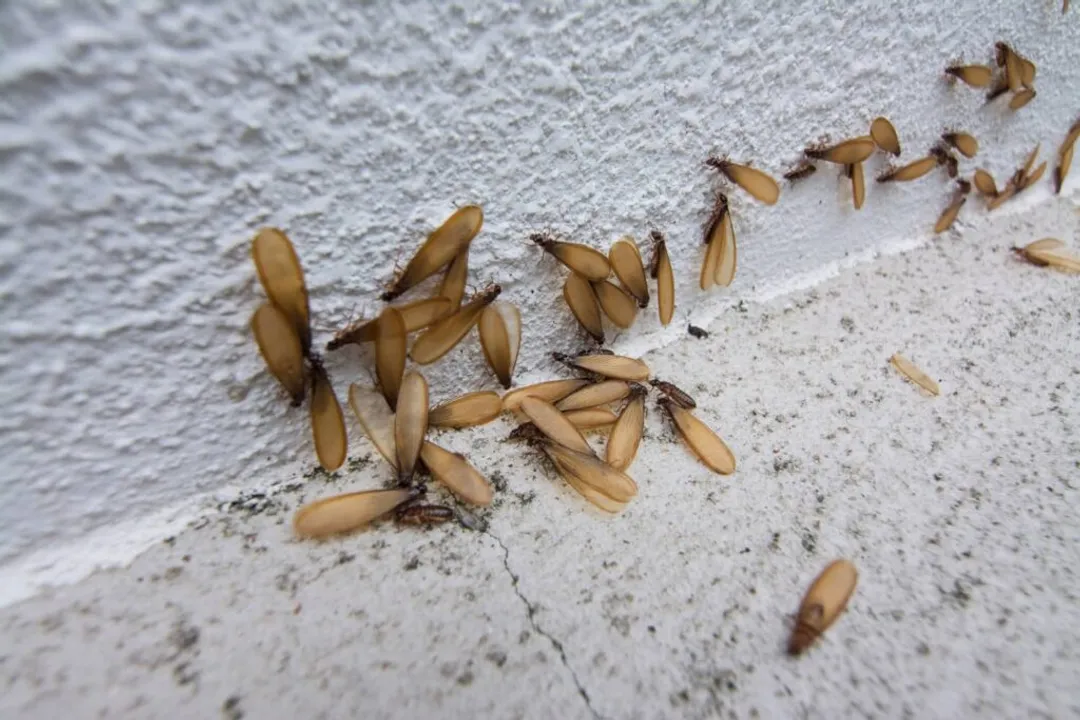
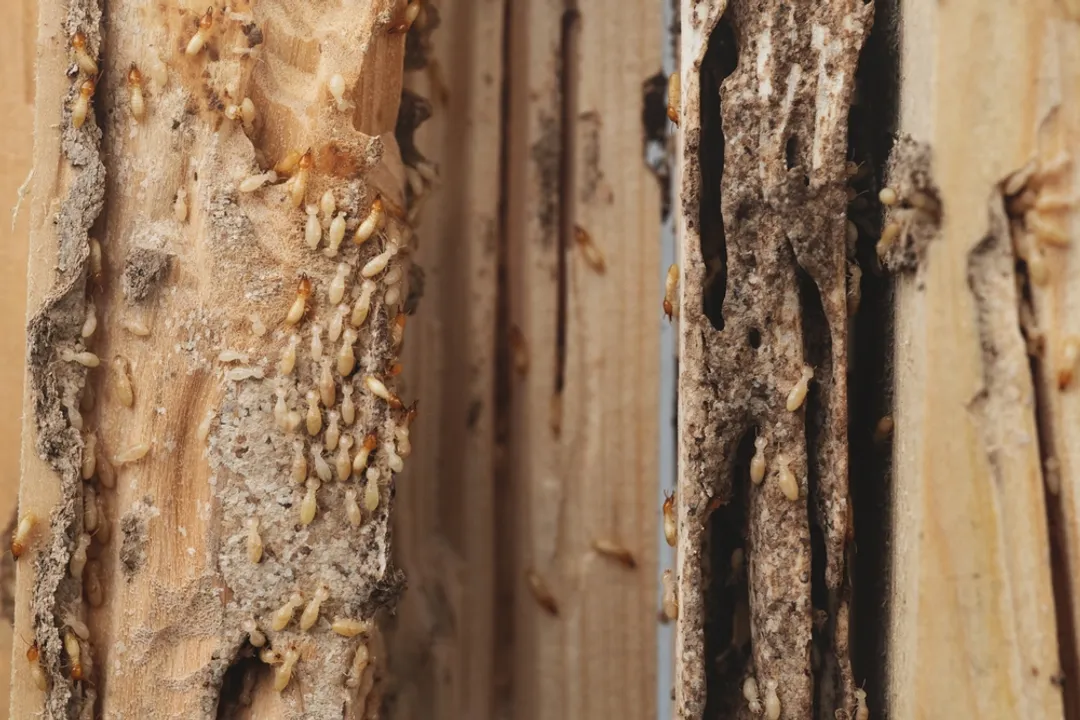
A termite colony is a structured society divided into three main types: workers, soldiers, and reproductives (swarmers). The vast majority of the colony consists of workers, yet they are the ones least likely to be seen by a homeowner unless wood is actively disturbed.
The worker termite is the pale, soft-bodied laborer. Their color often ranges from creamy white to a light tan or even brown. These are the smallest termites, sometimes described as resembling tiny, moving grains of rice when viewed in a group. They are wingless and focused entirely on foraging for cellulose, maintaining the nest, and caring for the young. Because they lack external protection, they are highly susceptible to drying out and are rarely found outside the protection of soil or wood.
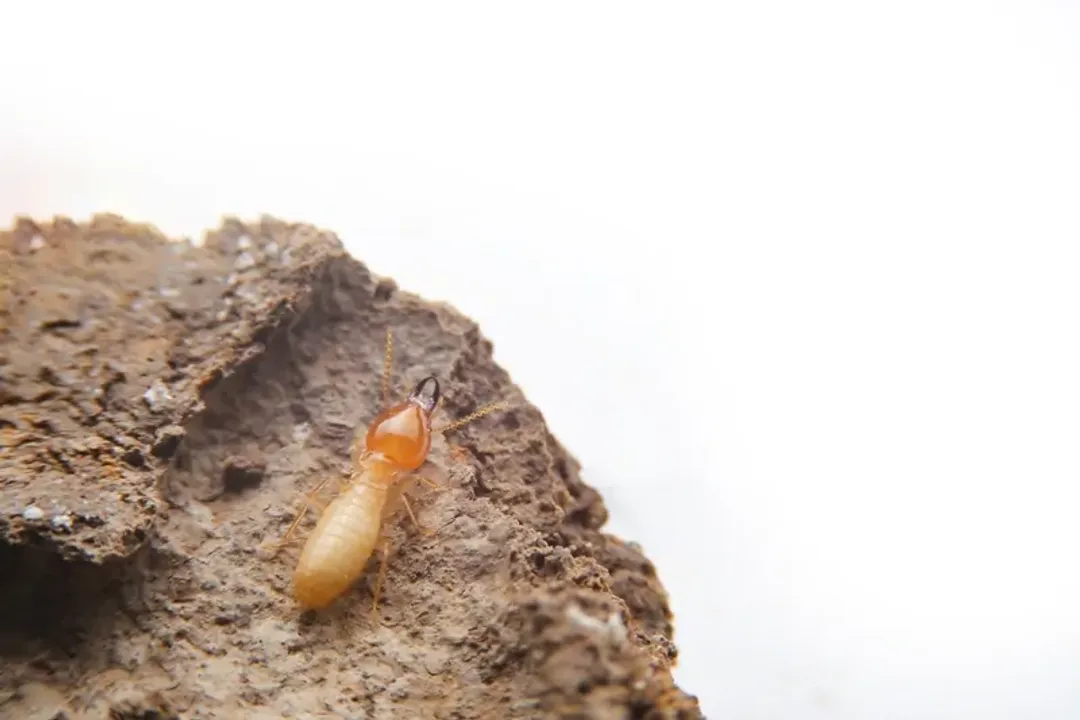
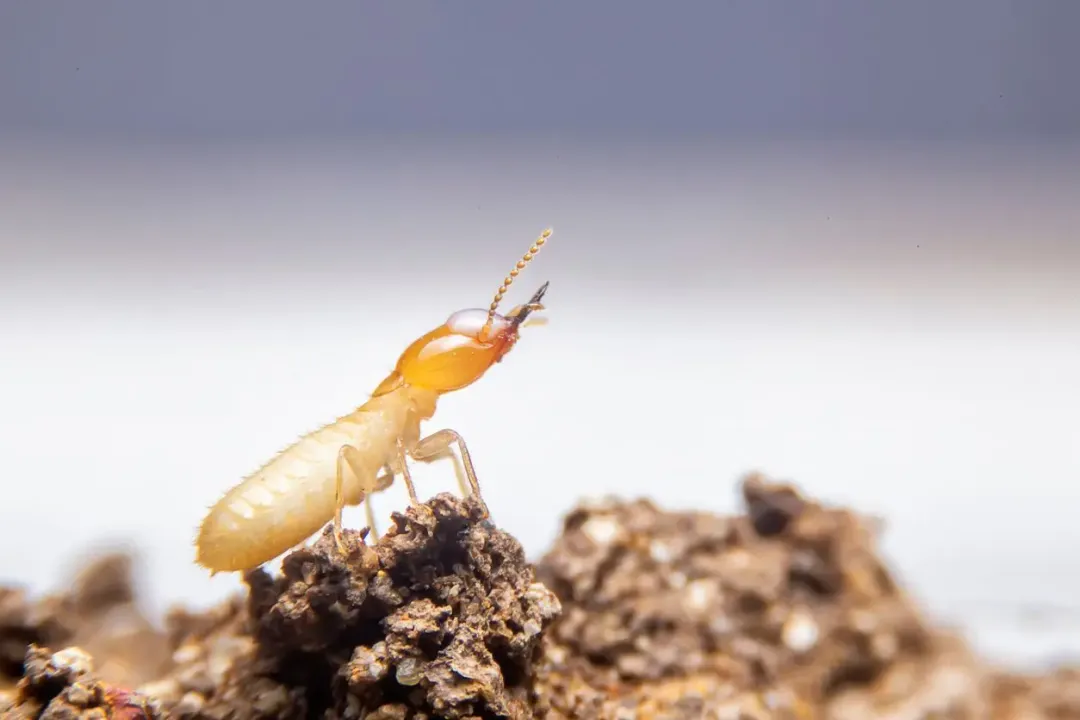
Next are the soldier termites, tasked with defending the colony from intruders like ants. They share the soft body structure of the workers but are easily distinguished by their heads, which are often darker in color and feature large, dark, pincer-like mandibles used for fighting.
Finally, there are the reproductives, or swarmers (also called alates), which are the primary source of homeowner confusion because they are winged and often mistaken for flying ants. Swarmers are generally darker than the other castes, frequently appearing dark brown or black. They possess two pairs of wings that are uniform in size and shape, and these wings are noticeably long, often extending well past the length of their body.
# Essential Features
When you manage to get a close look at an individual termite, certain anatomical details can help confirm its identity, particularly when trying to distinguish it from its notorious lookalike, the ant.
Termites possess a body structure that is often described as straight and lacking segmentation between the thorax and abdomen—they do not have the distinct "wasp waist" that ants exhibit. Their overall body shape appears broader and more uniform or cigar-shaped when compared side-by-side with a constricting-waisted ant.
Another key identifier involves the antennae. Termites feature straight, often beaded antennae, which contrast sharply with the bent or "elbowed" antennae characteristic of ants. While the very small worker termites may be difficult to examine closely, catching a swarmer often presents a clear view of these straight antennae. Furthermore, except for the reproductive members, most termites are functionally blind, relying on chemical cues and touch, unlike ants which typically possess better vision.

# Winged Misidentification
The appearance of winged termites, or swarmers, frequently coincides with ant swarms, making the visual distinction critical for homeowners hoping to avoid unnecessary panic or, conversely, ignoring a genuine threat. Beyond the antennae and waist differences, the wings are perhaps the most telling feature of a swarmer when compared to a winged ant.
Termite swarmers have two pairs of wings that are equal in size and shape. If you are examining a winged insect and notice that the front pair of wings is clearly longer or larger than the rear pair, you are almost certainly looking at a flying ant, not a termite. To give you a quick way to compare, consider this breakdown:
| Feature | Termite (Swarmer) | Flying Ant |
|---|---|---|
| Antennae | Straight | Elbowed/Bent |
| Waist | Broad, Thick, Uniform | Pinched, Skinny |
| Wings (Pairs) | Two pairs of equal length | Front pair longer than back pair |
| Body Profile | One segment (broad) | Three distinct segments |
| [8][5] |
It is worth noting that a key behavioral difference, while not strictly a visual characteristic of the insect itself, is the presence of shed wings. Flying ants do not shed their wings after mating flights; however, a large pile of discarded, clear, equal-sized wings on a windowsill or near an exit point is a fairly reliable indicator that termite swarmers have recently visited and potentially established a colony nearby. It is a stark visual cue that demands immediate attention.
If you spot a winged insect that fits the termite description—straight antennae, thick waist, equal wings—but the insect is not near an exit point, observe its behavior. Termites generally seek darkness and moisture, whereas ants are often seen more openly traveling in visible foraging trails.
# Hidden Evidence
Given that workers make up the bulk of the colony and are dedicated to staying concealed underground or within wood, seeing the actual insect is often a sign of a mature, advanced infestation. For instance, subterranean termites spend most of their lives in contact with soil, utilizing mud tubes for travel, meaning a homeowner may never see the pale worker caste unless they physically break open a mud tube or infested wood. This reality means that visual identification often relies on recognizing the byproducts of their presence rather than the insects themselves.
When inspecting wood, you might notice that what should be solid timber sounds hollow when tapped, indicating the interior structure has been consumed, leaving an empty shell. Another crucial visual sign, particularly for drywood termites, is frass. Frass is the term for termite droppings, which appear as small, distinct, wood-colored pellets that can accumulate in piles resembling sawdust or coffee grounds near feeding sites.
For subterranean termites, the telltale sign is the mud tube, which they construct from soil, saliva, and feces to create a protected highway between their underground colony and the cellulose food source. These pencil-sized passageways are often found running up exterior walls, along foundation lines, or across baseboards. Breaking one open to see if it's active—by checking for live termites or seeing if the damage is repaired days later—is an excellent field test to confirm an active threat.
It's interesting to consider the scale of the creatures relative to the damage they cause. A mature colony of Formosan termites, for example, can consume significant amounts of wood daily, meaning that even if the visible termite itself is tiny—sometimes no larger than a grain of rice for the workers—the resultant structural sagging or buckling indicates a massive, unseen biomass at work. The sheer volume of wood eaten over time, often going undetected for months or years, is what makes the visual identification of their evidence such a high-priority task for homeowners.
If you see any of these signs—swarmers, shed wings, mud tubes, or hollow-sounding wood—the next visual step is to look at paint or drywall near suspect areas. Termites, especially drywood types, can cause subtle indications like paint that appears slightly bubbled or cracked as the wood beneath hollows out.
Ultimately, while knowing the physical traits of each termite caste provides the expertise to make a correct identification, the fact that the most common caste (the worker) is designed to remain out of sight means that the most powerful visual evidence for the average person is often the evidence of activity—the mud tubes, the piles of frass, or the scattered wings. If you can clearly differentiate a swarmer from an ant, you've won the most common visual identification battle, but persistent signs of their work inside your structure warrant professional investigation regardless of whether a live specimen is ever observed.
Related Questions
#Citations
Spotting Termites with the Human Eye: What to Look For | Smithereen
What Do Termites Look Like To The Human Eye - A Guide
What Do Termites Look Like To The Human Eye? - Honor Services
What Does a Termite Look Like? - Dodson Pest Control
What Do Termites Look Like To the Human Eye? | ABC Blog
What Do Termites Look Like - Dave's Pest Control
What Do Termites Look Like? Identify Signs & Types
What Do Termites Look Like & How to Identify Them? - My Plantin