What does a green June beetle look like?
This metallic insect, known commonly as the Green June beetle (Cotinis nitida), immediately captures attention with its vibrant coloration, distinguishing it from several look-alikes. It belongs to the scarab beetle family, specifically the group referred to as fruit and flower chafers, or Cetoniinae. You will find this native species thriving across the eastern United States and Canada, generally being most numerous in the southern regions.
# Color and Sheen
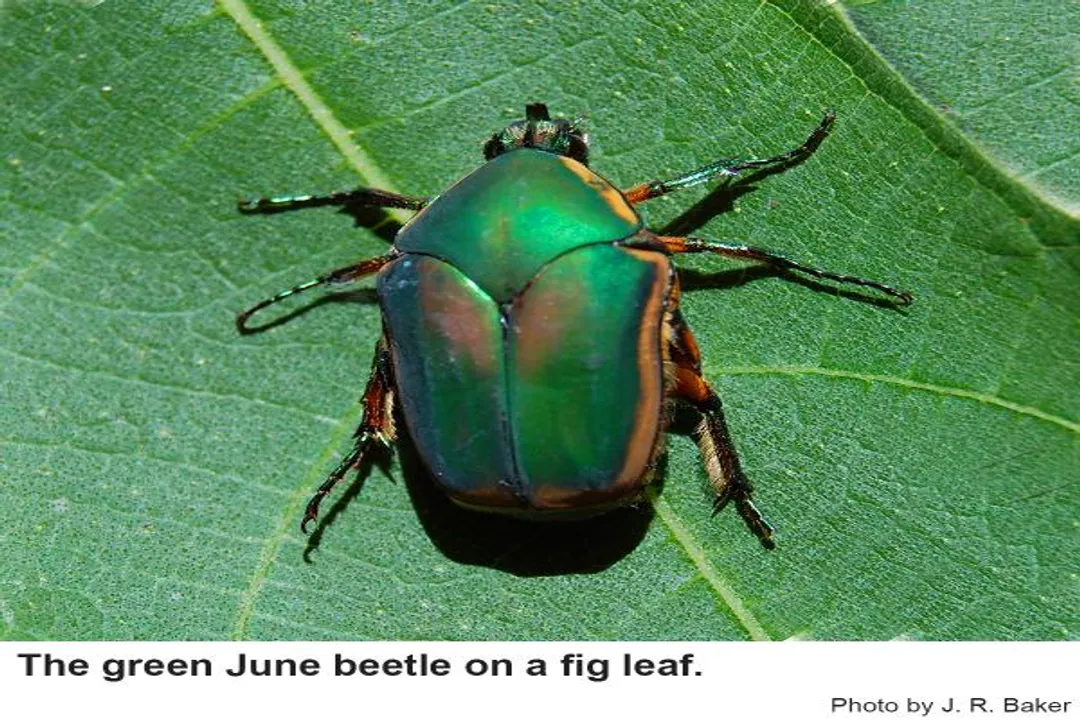
The adult beetle showcases a striking appearance, primarily characterized by its dull, metallic green wings. This signature green hue is often what draws the most notice, but the coloration can be variable, ranging from a uniform, velvety green to a dull brown with distinct green striping.
The margins of the beetle—the edges of the hardened outer wings (elytra)—are typically described as gold or sometimes a lighter bronze or yellow-orange. This contrast beautifully frames the main body color. The underside of the beetle, including its head and legs, shines with a very bright, shiny green or gold coloration. When seen up close, the overall impression is one of jewel-toned iridescence, especially under bright sunlight, though the overall green can sometimes appear muted or dull.
A key characteristic used to differentiate it from the infamous Japanese beetle is the lack of the distinctive white, feathery-looking spots on the sides that mark the Japanese beetle (Popillia japonica).
# Size and Shape
The Green June beetle is easily identified by its size, which is noticeably larger and more robust than the common brown May/June beetle. Adults typically measure between 15 to 22 millimeters (about 0.6 to 0.9 inches) in length, and about 12 millimeters (0.5 inches) in width. Compared to its close, less-damaging relatives, the Cotinis nitida possesses a stouter body and slightly shorter legs.
When observing them in flight, their size contributes to a sound and pattern that can be startling. They are strong, fast fliers that can zoom around quite close to the ground, often leading people to mistake them for large bumble bees due to their buzzing sound. This erratic, buzzing flight style is characteristic, and they are known for sometimes flying directly into people or startling them with their speed near face-height. An interesting anatomical feature allowing their unique flight is that they don't fully spread their hard outer wings (elytra) like many other beetles; instead, they simply lift them to allow the membranous hind wings to deploy for takeoff.

# Distinguishing Features
Beyond general size and color, a few specific anatomical points help confirm the identification of C. nitida.
# Head Structure
Male Green June beetles possess a defining feature separating the Cotinis genus: a small horn on the lower portion of the face, known as the clypeus. This slight horn is visible upon close inspection of the head capsule.
# Comparison with Relatives
It is very common for homeowners to confuse the Green June beetle with the Japanese beetle, which is significantly smaller (around 1/2 inch long) and typically has brown wing covers margined with green, rather than the uniform green body of C. nitida. Another cousin, the figeater beetle (Cotinis mutabilis) found in the Southwest, is similar but generally considered less destructive than C. nitida. For those in areas where populations overlap, distinguishing between these two Cotinis species is important.
If you see a similar-looking beetle that is color-shifting green, brown, or purple, and perhaps has caused painful encounters (biting has been reported by startled individuals), it might be wise to double-check the exact species, though C. nitida itself is generally described as harmless to humans.
# The Larval Stage Appearance
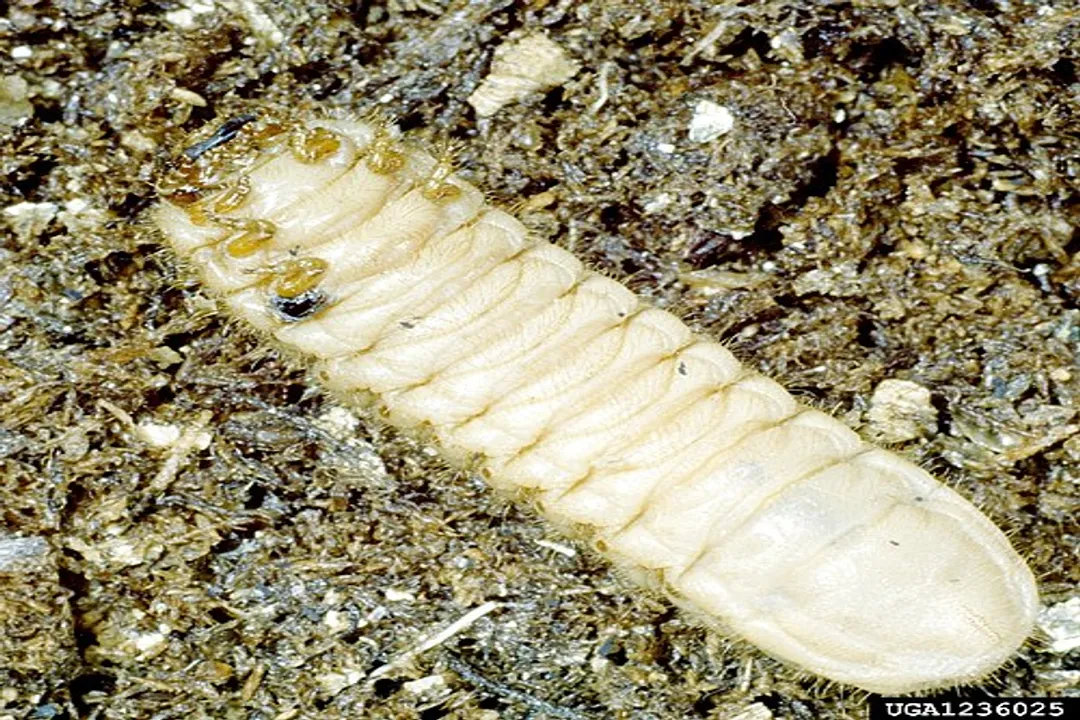
While the adult beetle’s metallic sheen is memorable, much of the ecological impact comes from the larval stage—the white grub. A crucial point for identification, especially when digging in the lawn, is that these grubs are unusually large compared to other white grubs, growing up to 1.5 or even 2 inches long when fully mature.
# Grub Color and Shape
The mature grub is characterized by a cream-colored or glassy yellowish-white body. They possess a distinct brownish-black head and short thoracic legs. Along the upper surface of the abdomen, they have series of stout hairs.
One of the most reliable field identifiers for the Green June beetle grub, which takes expertise to spot without specialized knowledge, is its unusual method of movement. Unlike most white grubs that curl into a tight 'C' shape and rely on their legs, C. nitida larvae often roll onto their backs when above ground. They then move using peristaltic motions, with the stiff dorsal hairs providing traction against the surface. If you find a large white grub "back-stroking" or wiggling rapidly on its back across a patio or sidewalk after a rain, you are almost certainly looking at Cotinis nitida.
Another distinguishing factor often cited in entomology is the pattern of hairs on the posterior end of the larva, which differs from other scarab grubs, though this requires digging the specimen up for inspection.
When comparing these grubs to those of the Japanese beetle, both can damage turf roots, but the sheer size of the C. nitida grub is a significant visual difference. If you are sampling your turf, a grub reaching an inch and a half is leaning heavily toward being a Green June beetle larva rather than a smaller, more destructive relative.

# Life Stage Visuals Summary
For gardeners monitoring their landscape throughout the year, tracking the visual changes across the life cycle can be helpful:
| Life Stage | Typical Appearance | Key Visual Trait |
|---|---|---|
| Egg | Small, round, white when laid, absorbing moisture | Elliptical initially, becoming more spherical |
| Larva (Grub) | Large, C-shaped (when resting), glassy yellowish-white body | Crawls on its back above ground using stiff dorsal hairs |
| Pupa | Brown, developing within a packed soil cell | Turns a greenish tint just before the adult emerges |
| Adult | Metallic green to dull brown-striped | Stout body, distinct bright metallic green underside, small horn on the male's head |
# Integrated Viewpoint and Practical Observation
Observing the Green June beetle in different contexts reveals slight variations in what you might see. For instance, while the standard description emphasizes metallic green, the fact that the coloration can lean toward a dull brown with green stripes suggests that ambient light and individual variation play a large role in field identification. This variability, especially when coupled with the fact that their margins can vary from light brown to orange-yellow, means that even experienced observers might pause to confirm the identity, particularly if they are accustomed to seeing only the most brightly colored specimens.
Furthermore, the adult beetles are not confined solely to feeding on thin-skinned fruits like figs, berries, and grapes; they have also been documented congregating to sip on fermenting exudates oozing from wounded trees. If you notice a slow-moving beetle on a tree wound in mid-summer, a closer look at the coloration might confirm it is a C. nitida enjoying a sugary treat, which is an observation far more common than spotting them on ornamental foliage. This attraction to fermentation is interesting because while the grubs are detritivores feeding on decaying matter, the adults show a preference for sugar sources, often overlapping with the harvest season for many fruits. This dual dietary preference across life stages means their visible presence is strongly tied to the availability of organic matter in the soil during spring/early summer (for grubs) and ripening/fermenting fruit in mid-to-late summer (for adults).
The dramatic, loud flight behavior observed in males searching for mates in the bright morning sun is a crucial visual cue that sets them apart from their more subtle, ground-dwelling relatives. Their aerial antics are far more conspicuous than the damage caused by their grubs during the night, meaning the visual signature of the adult in flight is often the first, and most dramatic, confirmation of their presence in the landscape.
Related Questions
#Citations
Cotinis nitida - Wikipedia
Green June Beetle in the Landscape
Not Quite a Japanese Beetle: The Green June Bug
Green June beetles in flight! #science #insects - YouTube
Green June Beetle - Oklahoma State University Extension
Let's talk about green June beetles! : r/nashville - Reddit
Lawn zoomers: Green June Beetle, <i>Cotinus nitida</i>
Green June Beetle - Penn State Extension