How does the Midget Faded Rattlesnake's ground color relate to its immediate surroundings?
Answer
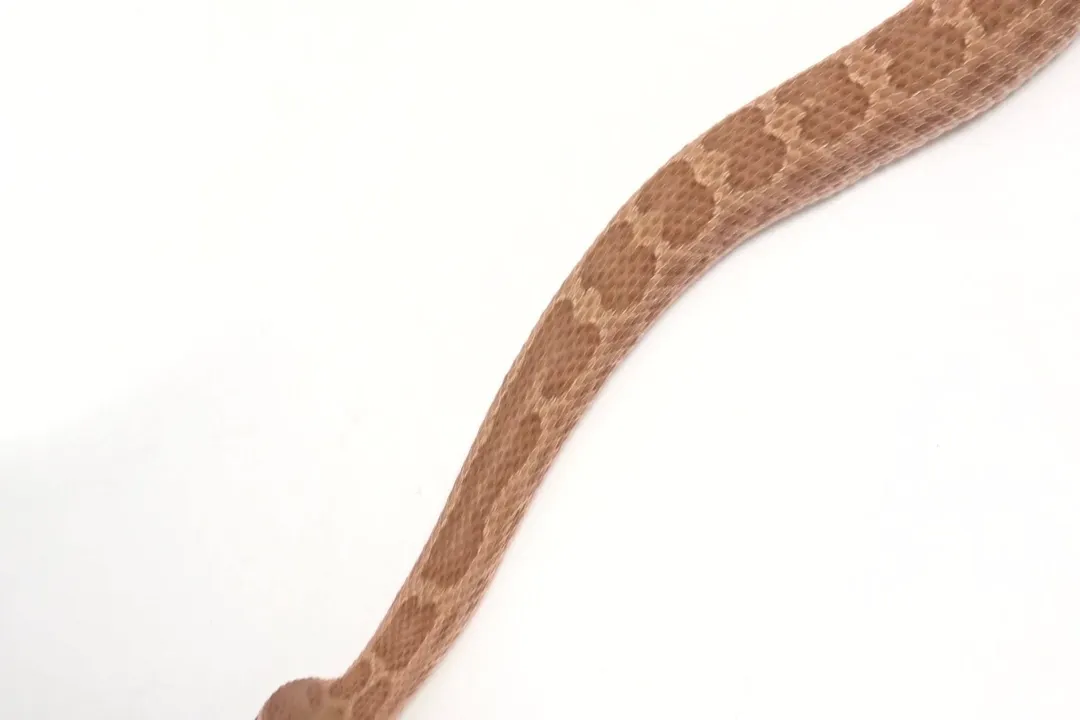
The coloration reflects the soil, sand, or rock upon which it lives, leading to regional variations.
The coloration is rarely vibrant; instead, it reflects the local environment, meaning a snake in dusty, grayish regions might look starkly different from one near reddish sandstone formations.
Related Questions
What is the most reliable visual characteristic of *Crotalus concolor* across its known range?What texture do the scales of the Midget Faded Rattlesnake exhibit due to their structure?How do the dorsal markings generally differ between juvenile and adult Midget Faded Rattlesnakes?What does the descriptor 'faded' primarily refer to regarding the snake's coloration?What head feature can sometimes aid in identification, although it may be faint?If a snake exhibits intensely black, sharp-edged blotches against a pale background, is it likely a Midget Faded Rattlesnake?What is generally true regarding the size profile of *Crotalus concolor*?What characteristic of the dorsal markings usually results in the overall 'faded' appearance?How does the Midget Faded Rattlesnake's ground color relate to its immediate surroundings?What distinct feature is often found on the rattle of a very young Midget Faded Rattlesnake?