What do baby southern black racers look like?

The appearance of a baby Southern Black Racer (Coluber constrictor priapus) often surprises people familiar only with the sleek, uniform black of the adults. If you expect a miniature version of the adult, you will be looking at the wrong snake entirely for the first year or two of its life. The juveniles look dramatically different, a vital adaptation that helps them survive their most vulnerable period.
# Juvenile Coloring
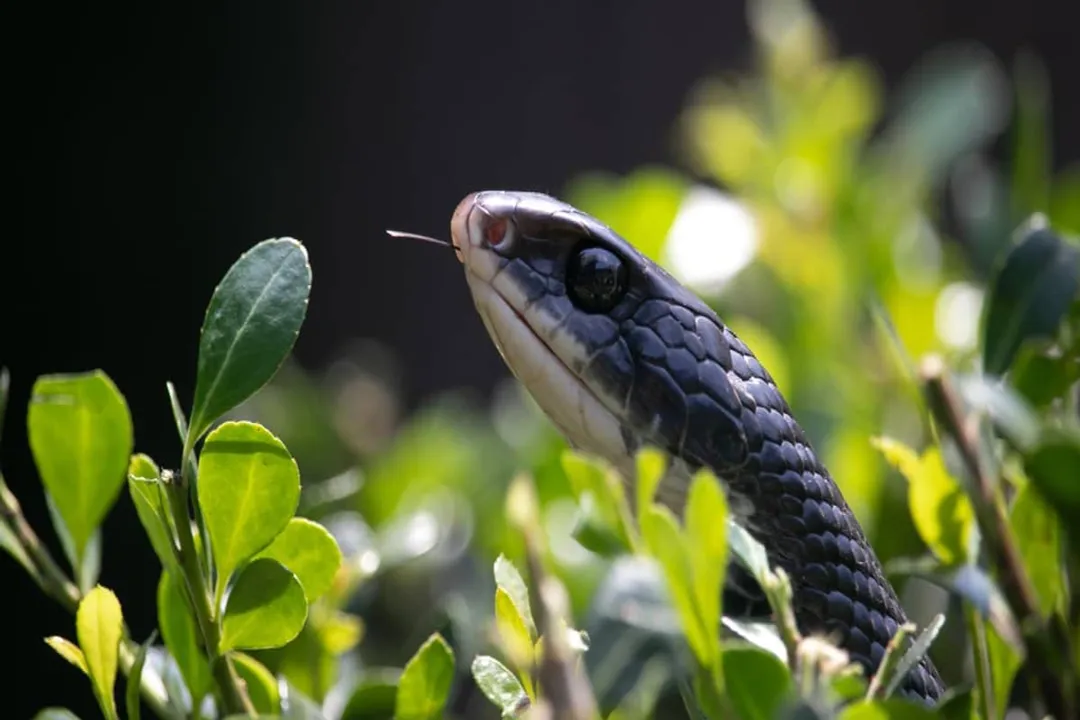
The key takeaway for identifying a young Southern Black Racer is that they are not black. Instead of a solid, dark coat, hatchlings and juveniles sport a highly contrasted, patterned look. Their ground color is typically described as brownish, grayish, or sometimes olive-toned. Layered over this lighter base are prominent markings.
These markings usually take the form of dark spots, blotches, or saddle-like patterns running down the length of their backs. This mottled or blotched appearance provides excellent camouflage in the leaf litter and dappled sunlight of their habitat, offering protection from predators that might ignore a solid black snake. Observing these babies, especially when they are very small, reveals a completely different strategy for survival compared to their mature counterparts.
# Eye Markings
One of the most consistent and reliable features on a juvenile racer, even when the body pattern seems variable, is the marking around the eye. A distinct dark stripe or band runs horizontally across the eye, often extending back toward the neck. This dark eye stripe is a signature trait that aids identification when trying to differentiate them from other patterned young snakes in the Southeast.
# Size and Hatchlings
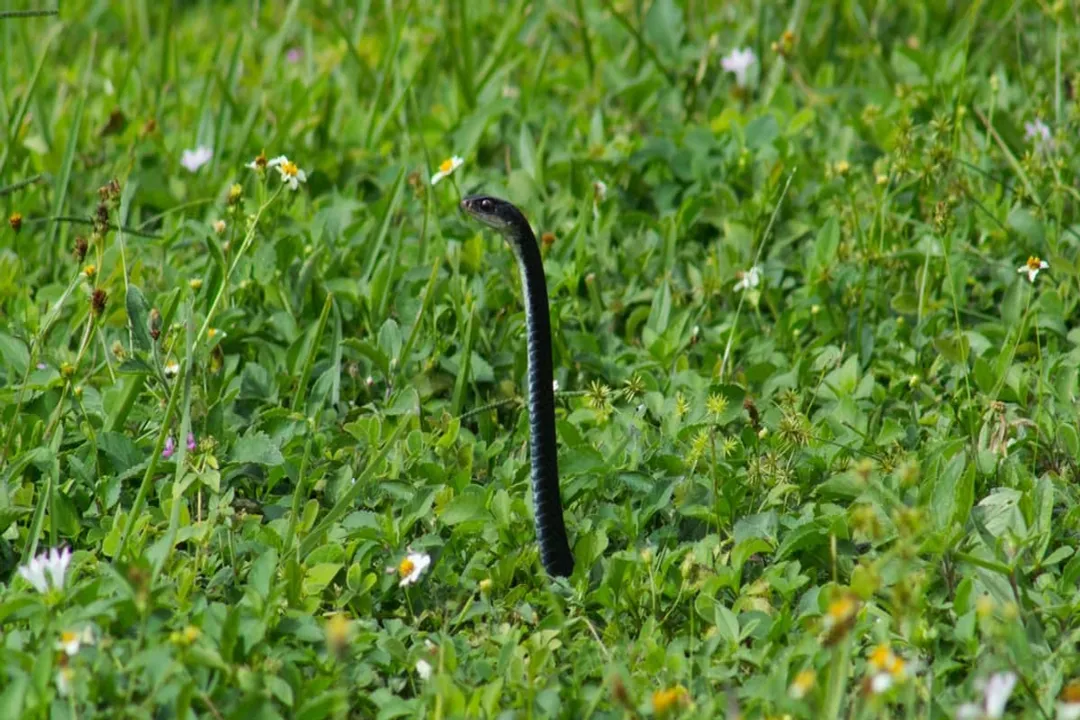
When these snakes first emerge, they are relatively small, marking the beginning of a rapid growth phase. Hatchlings are typically reported to measure in the range of 10 to 14 inches in length. This size means they are quite slender and delicate in appearance compared to the robust adults that can exceed three feet. Being small means they are more susceptible to predation by birds, mammals, and larger snakes, making their cryptic (camouflaged) pattern essential immediately upon hatching.

# Life Cycle Pattern Shift
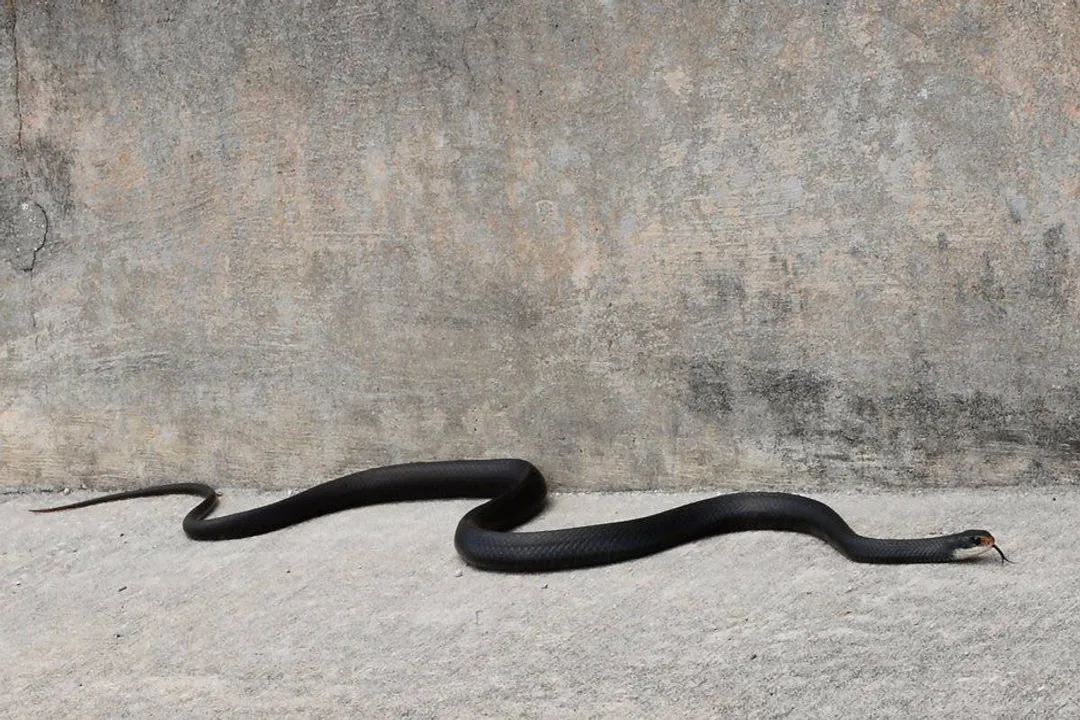
The patterned phase is temporary, marking the juvenile stage of the Southern Black Racer. These young snakes maintain their blotched, light-and-dark coloration as they grow through their first year or longer. The transition to the familiar, uniform black color is gradual.
As they mature, the dark blotches begin to spread and coalesce, merging with the lighter background color until the snake appears uniformly dark or black. This process is not instantaneous; it’s a transition period where an observer might find a snake that is mostly dark but still shows faint remnants of the juvenile pattern, particularly on the belly or lower sides. Understanding this gradual shift is crucial; otherwise, a young snake that is half dark might be mistaken for a different species altogether, rather than simply a sub-adult racer.
| Feature | Juvenile Appearance | Adult Appearance |
|---|---|---|
| Dorsal Color | Grayish, brownish, or olive | Uniform glossy black |
| Pattern | Dark blotches or saddles | None (solid coloration) |
| Eye Stripe | Distinct dark stripe present | Absent |
| Length | 10–14 inches at hatching | Can exceed 3 feet |
# Contextual Identification
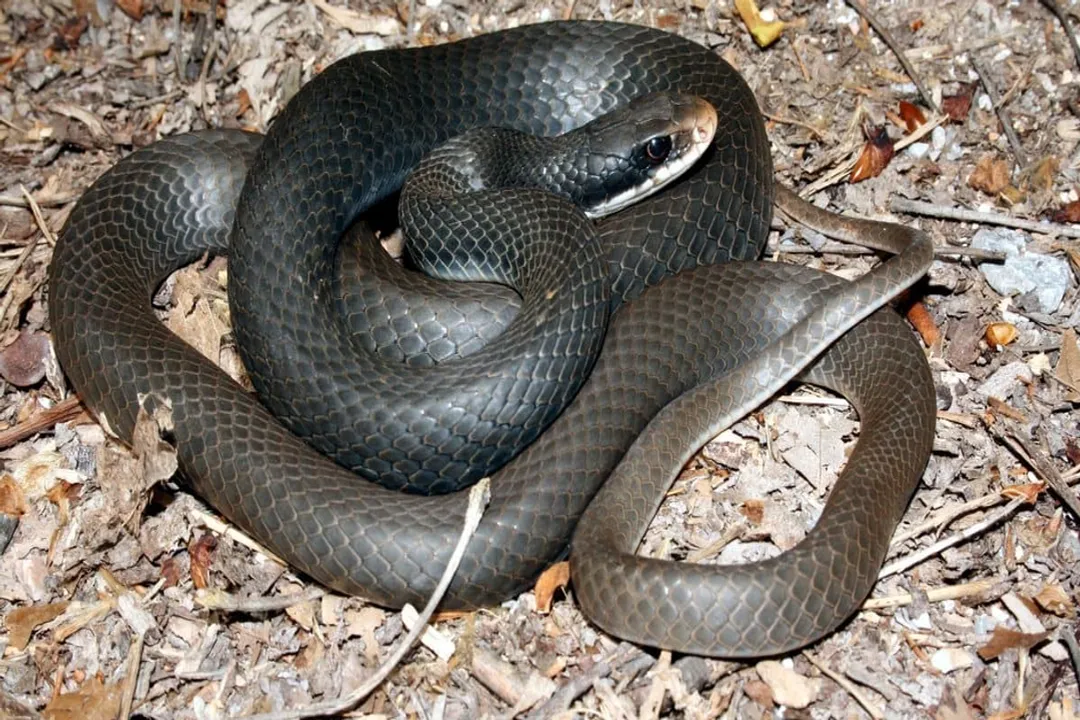
While the pattern is specific, the location where the snake is found can also help confirm identification, especially since these snakes are fast movers across various habitats, from fields to wooded areas. If you encounter a small, patterned snake in Florida or the southeastern US that possesses that distinct dark band through the eye, you have a high degree of certainty you are looking at a young Southern Black Racer, regardless of the specific shade of brown or gray on its body.
Thinking about their ecological needs, the shift from patterned to solid black is a fascinating adaptation strategy. Juveniles rely on blending into heterogeneous environments like leaf litter, where a solid black object would stand out against shadows and sunlight. Once they reach a size where they are less vulnerable to smaller predators, their solid black coloration likely becomes more effective, perhaps serving as a warning (even though they are non-venomous) or simply becoming less of a camouflage target in more open, mature environments.
For those interested in observing them safely without disturbance, remember that while they are known for their speed—hence the name "Racer"—they will generally try to flee rather than stand their ground when encountered in the open. If you spot a small, patterned snake moving quickly through low vegetation in the region, taking a moment to check for that telltale eye stripe confirms a sighting of a young Coluber constrictor priapus before it sheds its juvenile coat. It's worth noting that while some very young racers might display a slight reddish tint on their tails, the primary visual hallmark remains the dark blotching against the light background.
#Videos
Baby Black Racer (vs pygmy rattlesnake) - YouTube
Related Questions
#Citations
Finding An Adorable Baby Black Racer Snake! - YouTube
Black Racer or Blacksnake - UF Wildlife
Is this a baby southern black racer? - Facebook
3-4 of them on my property/ in house in last week. They look like ...
Southern Black Racer - Snake Snap
Southern Black Racer - Coluber constrictor - A-Z Animals