What color is a mangrove snapper?
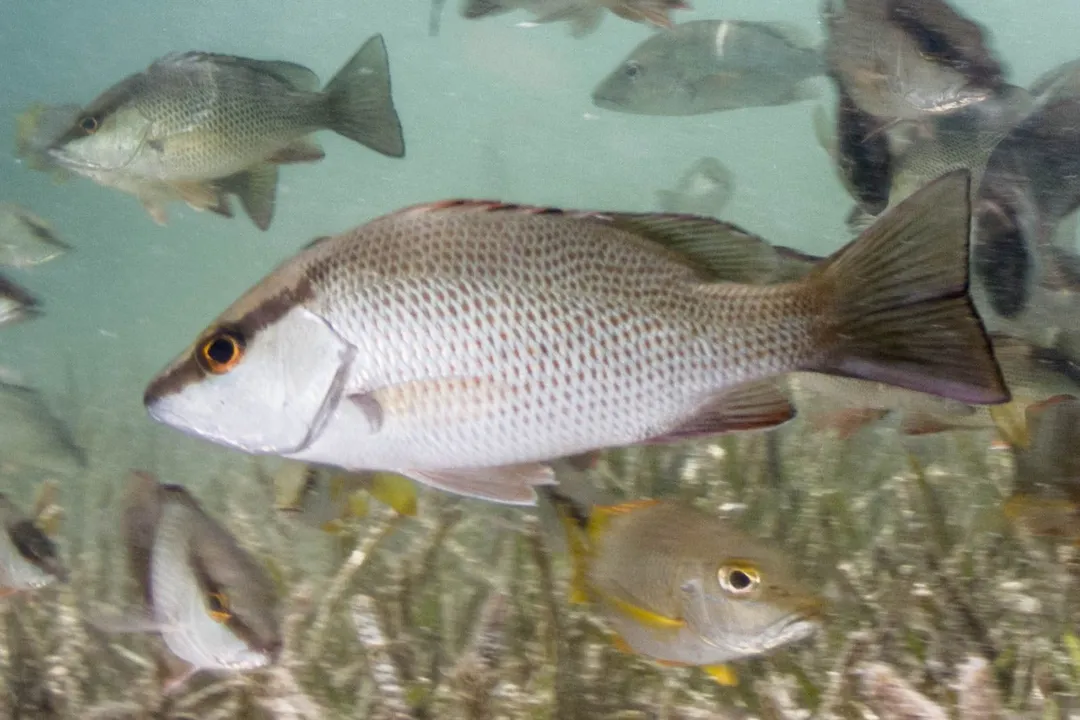
The coloration of the mangrove snapper, often known by its alternative name, the gray snapper, presents a fascinating study in aquatic camouflage and variation. While the name gray snapper might suggest a singular, uniform shade, the reality is far more nuanced. For anglers and marine enthusiasts, understanding the typical palette of this fish is key to both identification and appreciating its adaptability within its environment.
# Typical Hue
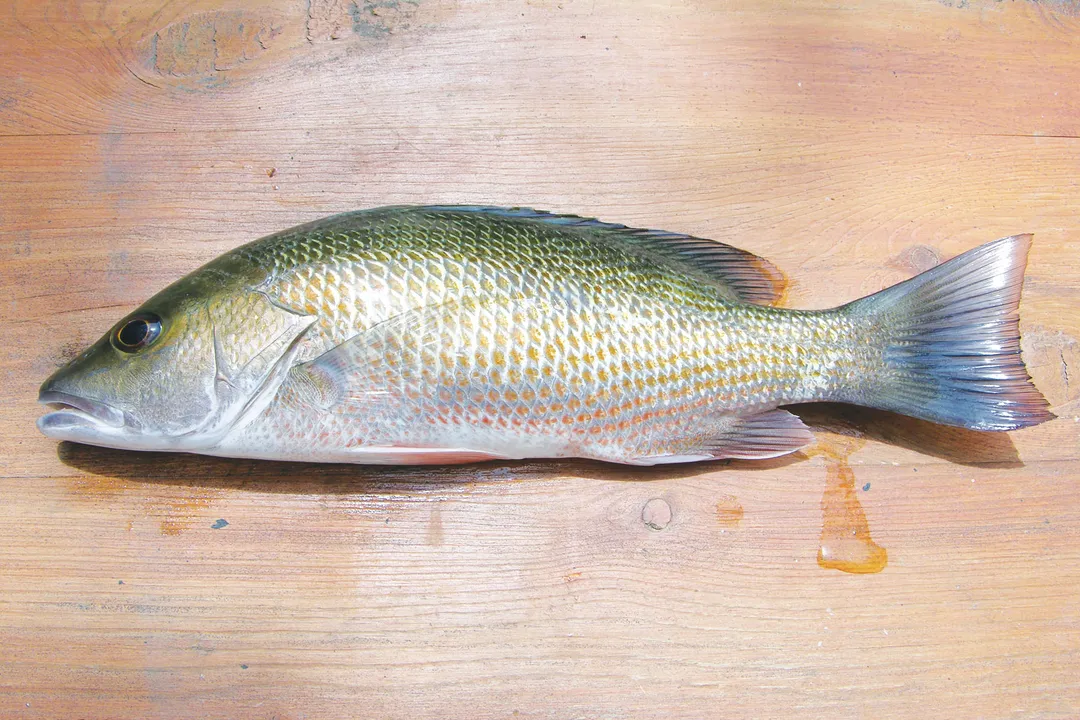
When observing a mangrove snapper in its natural setting, one will usually encounter a spectrum leaning toward earthy tones. The fish typically displays an olive-green or somewhat reddish-brown pigmentation across its back, or dorsal area. This darker coloring smoothly transitions as you move down the flanks, where the sides become noticeably lighter. The fish’s underside, or ventral region, is characteristically whitish. This countershading—dark on top, light on the bottom—is a common survival mechanism, helping them blend in both when viewed from above against the dark bottom and from below against the bright surface light. Some descriptions lean toward a more general brownish-gray base color for the species.
# Color Shifting
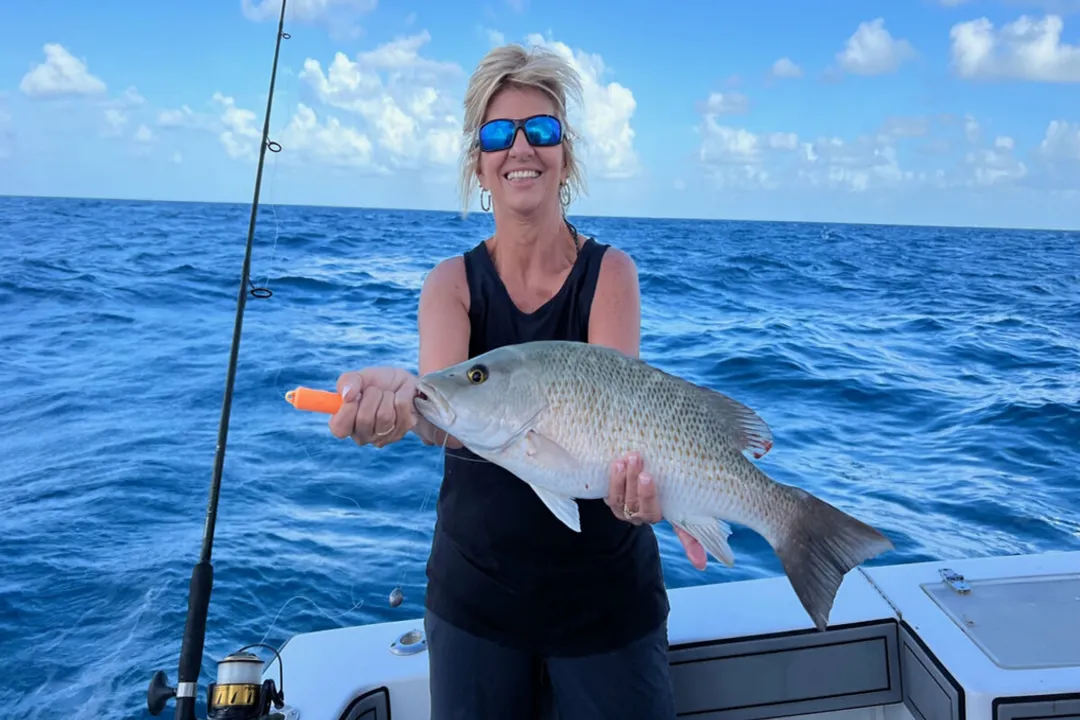
What makes these snappers particularly interesting is their capability to alter their appearance. Mangrove snappers are known for their ability to change color, often rapidly, to better match their immediate surroundings. This adaptability is vital for an inshore species that navigates diverse backgrounds, from sandy bottoms to the dark, shadowed areas beneath docks or the dense structure of mangrove roots. Young fish, for example, tend to exhibit darker coloration compared to their adult counterparts. This dynamic quality means that a picture taken of a mangrove snapper one day, or even one minute, might show a distinctly different shade than another specimen caught nearby, making a single color description insufficient for certain identification.

# Key Markings
Beyond the general body tones, a highly consistent feature helps in identifying this species: a stripe running through the eye. This distinctive line is generally described as being red or yellowish in color. While the overall body color can be deceiving due to environmental blending, this specific ocular marking often remains a reliable indicator for confirming the species, even when the fish is slightly stressed or recently caught. One source notes that the similar-looking gray snapper might share this trait, suggesting a close relationship or, perhaps, that the common names refer to the same highly variable fish across different regions.
# Habitat Tone
It is worth pausing to consider how the habitat directly influences the color we perceive. The "mangrove" in mangrove snapper isn't just a geographical descriptor; it speaks to the primary environment where many of these fish mature or reside. Fish living deep within the tangled, dark root systems of mangroves are likely to express the darker end of their color spectrum—more of that olive-green or deep reddish-brown—to break up their outline against the shadows. Conversely, a mangrove snapper that has moved out to a brighter, open-water patch over a lighter, shell-laden bottom might exhibit a paler, more grayish or silver cast to its flanks, even while retaining that characteristic eye stripe. This interplay between inherited potential coloration and immediate environmental signaling shows that the fish’s appearance is a snapshot of its current conditions, not a fixed trait.
# Color Summary
To aid in quick visual confirmation, organizing the general descriptions can be helpful, especially when dealing with the similar appearance of various snapper types inhabiting coastal waters. The mangrove snapper’s color profile generally adheres to this pattern:
| Area of Body | Common Color Range | Consistency Level |
|---|---|---|
| Dorsal (Back) | Olive-Green to Reddish-Brown | High |
| Lateral (Sides) | Lighter than the back, fading | Medium |
| Ventral (Belly) | Whitish or Light Gray | High |
| Eye Markings | Faint to distinct Red or Yellow stripe | Very High |
When looking at fish caught in Texas waters, for instance, they might appear more uniformly grayish or brownish, sometimes displaying faint stripes or spots, suggesting regional variations in the dominant expression of their camouflage genetics. If you are actively fishing near structure, a fish that darkens significantly right after being hooked, even if its initial color was pale, is showing a classic stress response common to these fish, confirming its sensitivity to background and stress levels. A useful tip for an angler determining if they have landed a mangrove snapper versus a different inshore species is to immediately check for the intensity of that eye stripe; while many fish share brown/green tones, the specific yellow or red line through the eye remains a standout feature. This initial observation, even before netting the fish, can guide your immediate identification efforts.
Related Questions
#Citations
Gray Snapper - FWC
All About Mangrove Snapper – Florida Keys Gray Snapper Facts
Mangrove Snapper - Florida Springs Institute
Mangrove Snapper | Inland Foods
Ultimate Guide to Catching Gray "Mangrove" Snapper in Destin, FL
Mangrove - The Other Snapper! - Texas Saltwater Fishing Magazine
Gray Snapper – Discover Fishes - Florida Museum of Natural History
MANGROVE SNAPPER - Bimini Biological Field Station
Mangrove Snapper - Take Me Fishing