What are the predators of royal penguins?
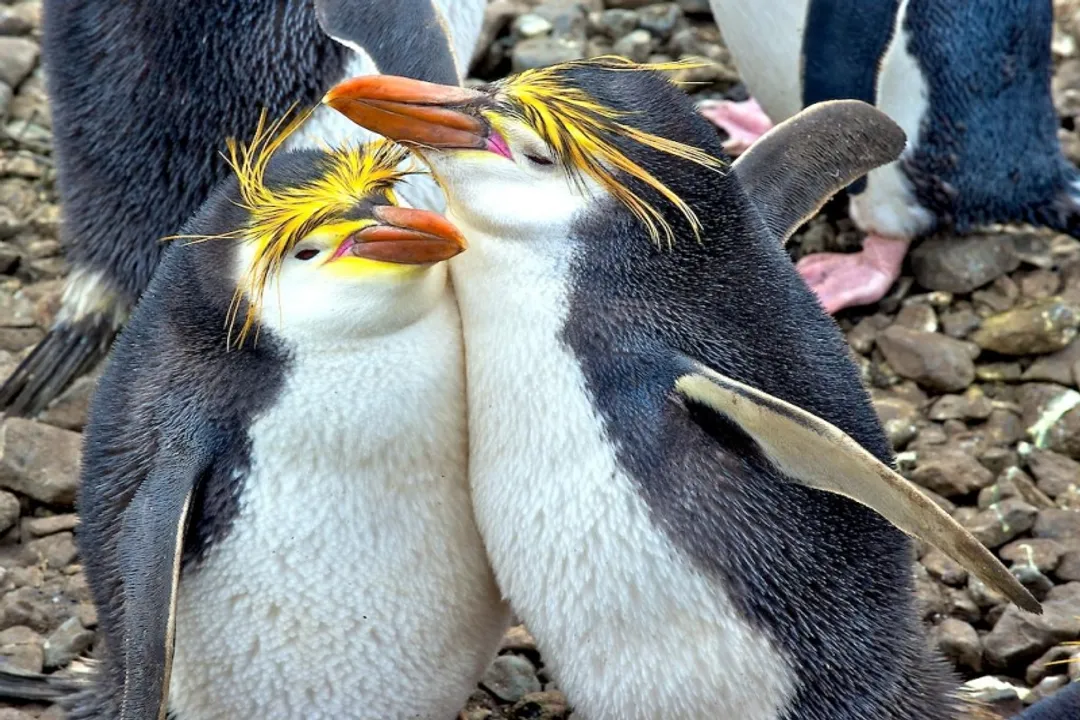
The vibrant, crested Royal Penguin, often recognized by its stunning orange-gold ear patches, navigates a world fraught with danger from the moment it leaves the colony until it returns to feed its young. While these birds command respect with their appearance, their life cycle in the remote subantarctic environment is a continuous negotiation with forces looking to make them prey. Understanding who hunts the Royal Penguin—Eudyptes schlegeli—requires looking both into the deep, cold waters where they spend most of their adult lives and onto the shores of their primary breeding grounds, Macquarie Island. [4][5]
# Marine Hunters
The vast Southern Ocean, which forms the hunting grounds for Royal Penguins seeking krill and small fish, is also home to the ocean’s apex predators. When these penguins are at sea, their primary concerns center on creatures capable of matching their speed and endurance underwater. [3]
# Killer Whales
The Orca or Killer Whale (Orcinus orca) represents one of the most formidable threats in the marine environment. [3][5] These intelligent, highly social predators are generalists, meaning they consume a wide variety of prey, including many species of seals and penguins. [3] While specific, large-scale predation events targeting Royal Penguins are not as frequently documented as those against other penguin species, the sheer size and cooperative hunting tactics of Orcas mean that any lone Royal Penguin far from the safety of the ice edge or colony is potentially at risk. [5] They are masters of ambush and are known to hunt near the surface and in deeper waters alike. [3]
# Leopard Seals
Perhaps the most infamous predator of penguins across the Antarctic zone is the Leopard Seal (Hydrurga leptonyx). [3][5] These powerful, serpentine seals are specialized predators that patrol coastal areas and ice floes where penguins congregate, rest, or enter/exit the water. [3] Leopard Seals rely on speed and surprise, often waiting near the water's edge or beneath floating ice, lunging out to seize penguins as they surface or come ashore. [3] A Royal Penguin attempting to come ashore after a long foraging trip is highly susceptible to this tactic. [5] The seal’s powerful jaws and sharp teeth are perfectly adapted for grabbing and tearing the medium-sized birds. [3]
It is interesting to note the difference in the hunting style between these two main sea threats. The Orca often operates in pods, employing coordinated strategies that can flush or corner prey, whereas the Leopard Seal acts as a solitary, opportunistic ambush predator, making the moment a Royal Penguin hits the water after a dive the most dangerous phase of its day. [5]
# Aerial Threats
When Royal Penguins return to the relative safety of their dense breeding colonies, the threat shifts from large marine mammals to opportunistic birds of prey. [5] The breeding stronghold of the Royal Penguin is primarily Macquarie Island, which historically has few native land-based mammalian predators, placing a heavy emphasis on avian dangers to the young and eggs. [1][4]
# Skuas and Petrels
The skies above the rookeries are patrolled by birds known for their predatory habits toward smaller seabirds. [5] Skuas, large, powerful seabirds, are perhaps the most persistent threat. [5] They target the weakest links in the colony: unattended eggs and very young chicks. [5] A momentary lapse by a parent during the incubation or brooding phase can result in the loss of the egg or chick to a descending Skua. [5]
Similarly, Giant Petrels present a serious danger. [5] These large, scavenging, and predatory birds are capable of taking larger chicks than many Skuas might attempt. [5] Their scavenging nature means they are drawn to any sign of weakness, mortality, or disturbance within the colony, making them an ever-present hazard during the crucial chick-rearing period. [5]
For the Royal Penguin chick, survival often depends on reaching a certain size threshold quickly, effectively growing "too big to eat" for smaller aerial threats, while also benefiting from the sheer protective density of the colony. [5] The concentration of thousands of individuals nesting closely together is both a benefit (safety in numbers) and a drawback (a concentrated food source for airborne predators). [5]
# Vulnerability by Life Stage
The risk profile for a Royal Penguin changes dramatically depending on where it is in its annual cycle, highlighting different predator vulnerabilities at sea versus land. [5]
# Nesting Vulnerability
The reproductive cycle demands long periods ashore. Adults must spend significant time incubating eggs and then brooding or guarding chicks. [4] During this stationary period, the adults themselves are safe from the major sea predators, but their dependence on the colony means they are exposed to aerial predators. [5] For the eggs and the very young chicks, protection relies heavily on parental vigilance and the proximity of neighbors. [5] Once chicks reach the "crèche" stage—where they gather in large groups while both parents forage—their vulnerability shifts again. They are less attended to individually, increasing the success rate for opportunistic hunters like Skuas and Petrels. [5]
# Molting Season
A particularly perilous time for adult Royal Penguins is the annual catastrophic molt. [4] For several weeks, the penguins are completely confined to land because they must replace all their feathers simultaneously and cannot enter the water until the new plumage is fully grown and waterproof. [4] During this mandatory fasting period, they are entirely defenseless against any terrestrial or low-flying predator threats and are unable to escape to the ocean if threatened. [4] While Macquarie Island is relatively free of land mammals that prey on adult birds, any stressor during this demanding, immobile period can prove fatal. The energetic cost of molting while fasting is immense, making them metabolically vulnerable even without a direct physical attack. [4]
# Contextualizing the Threat
It is important to recognize that Royal Penguins are currently listed as Vulnerable on the IUCN Red List. [4] While the precise impact of each predator is difficult to quantify across the entire population, the sum of these threats contributes to population fluctuations. [4] Unlike some penguin species that breed across multiple, geographically separate islands, the Royal Penguin's reliance on a single major location for breeding means that a localized ecological event, such as a severe increase in Skua numbers or a localized bloom of Leopard Seals near a major colony entrance, could have disproportionately large consequences for the entire species' reproductive success. [4] This high degree of geographic specialization elevates the importance of maintaining the health of the predator-prey balance on Macquarie Island itself. [4]
The dynamics of these threats suggest that successful breeding years rely on a combination of large initial population size—to dilute individual risk—and favorable environmental conditions that limit the number or effectiveness of predators during the narrow windows of chick vulnerability. [5] The life of a Royal Penguin is a testament to adaptation against constant, multifaceted danger, demanding endurance at sea and vigilance on land. [5]
Related Questions
#Citations
Royal Penguins - Eudyptes schlegeli
Royal Penguin | Happy Feet Wiki - Fandom
Knowing penguin predators - Penguins International
Royal penguin - Wikipedia
Royal Penguin - The Animal Files
Predators - Royal penguins
Royal Penguin - "OCEAN TREASURES" Memorial Library
The basic law of the sea is that “Big Fish Eat Little F - Facebook
Eudyptes schlegeli (royal penguin) - Animal Diversity Web