What are some fun facts about royal penguins?
The Royal penguin, often mistaken for its slightly larger relative, the King penguin, is a charismatic seabird with a remarkably concentrated life story. These medium-sized penguins are instantly recognizable due to their striking head markings, setting them apart from many other Antarctic and sub-Antarctic species. [1][3] They belong to the Eudyptes genus, which groups together the crested penguins, identifiable by the ornate plumes adorning their heads. [8]
# Distinctive Markings
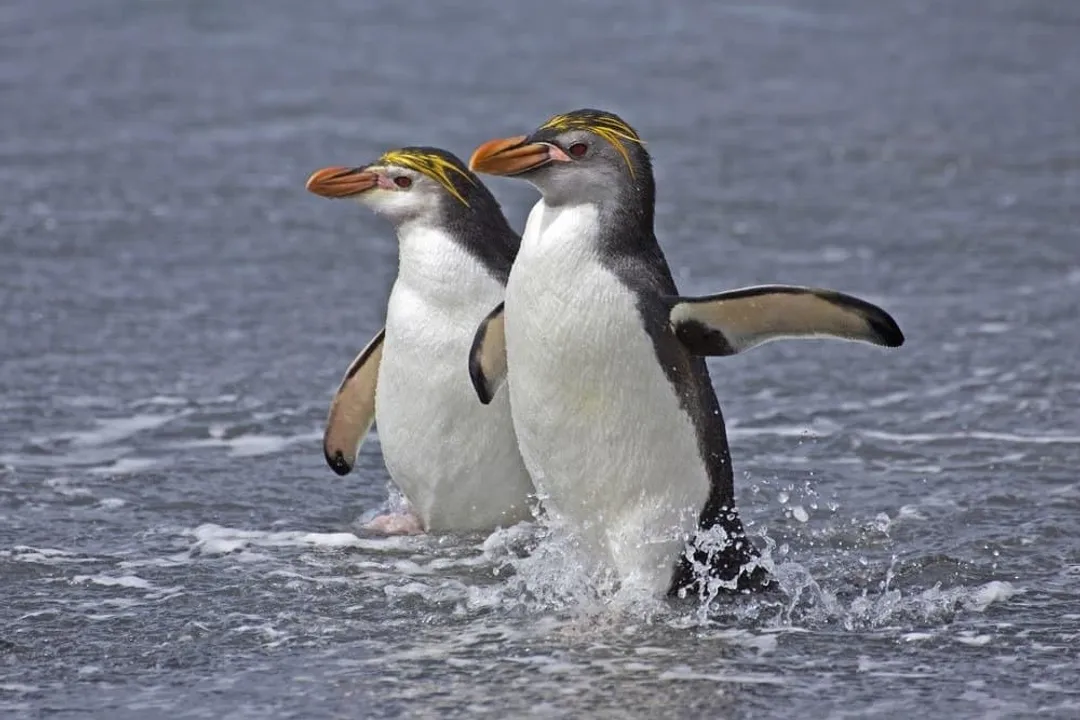
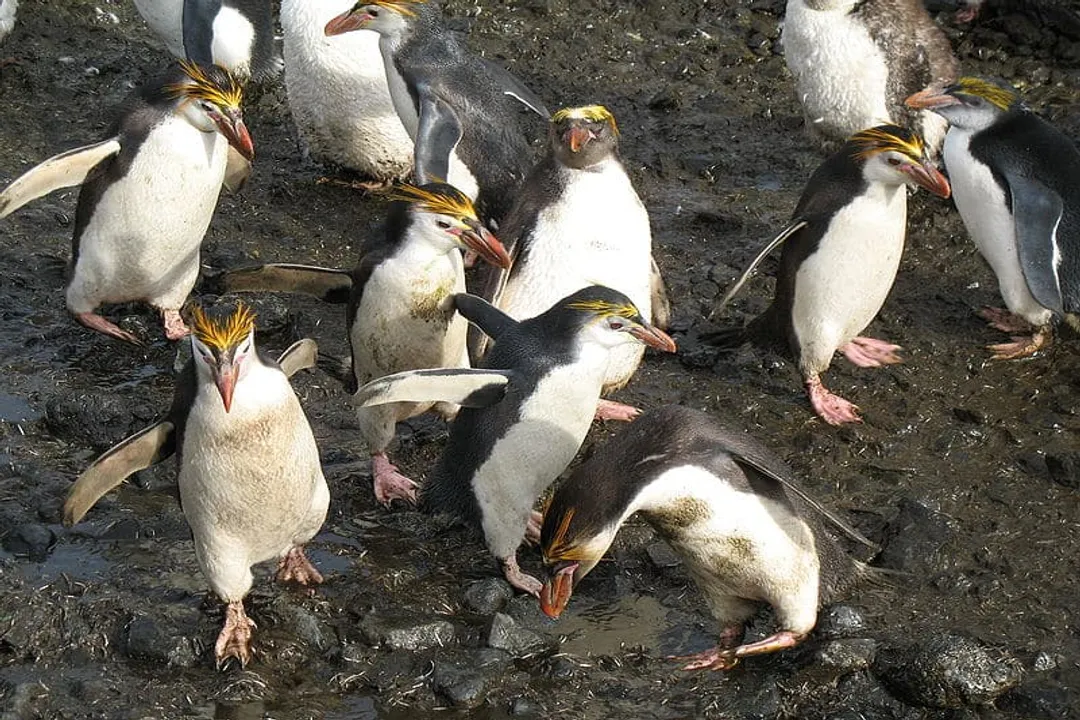
What truly sets the Royal penguin apart visually are the patches of bright yellow-orange feathers located on the sides of their heads, extending back like flamboyant ear patches. [2][3][8] While King penguins possess a prominent orange-yellow tear-drop shape on their neck/cheek, the Royal penguin’s coloration is more concentrated on the auricular area. [2] Another subtle but critical identifier, particularly useful for researchers distinguishing them in the field, is the base of their lower bill, which is typically a noticeable pinkish-orange color, contrasting with the darker bill of the King penguin. [2][3]
In terms of physical dimensions, Royal penguins are of moderate stature, generally measuring between 66 and 78 centimeters in height. [2] Their weight usually falls in the range of 10 to 18 kilograms. [2] Like many penguins, their bodies are characterized by the classic countershading: a sleek, dark black back and head that blends into the dark ocean depths when viewed from above, paired with a clean white belly that helps conceal them from predators swimming below. [2]
# Singular Home
Perhaps one of the most fascinating aspects of the Royal penguin is its extremely localized geographic distribution. Unlike penguins that sprawl across multiple continents, the Royal penguin population is overwhelmingly concentrated in one place: Macquarie Island. [2][3][4] This dependency on a single, relatively small sub-Antarctic island creates a unique conservation profile. [4] While currently listed as Least Concern on a global scale, this extreme focus means that any significant environmental disturbance—such as major changes in ocean currents or localized pollution events—could have an outsized impact on the entire species. [1][4]
It's interesting to consider the ecological implications of such a dedicated single-island strategy. Many highly successful species diversify their breeding grounds to hedge against regional catastrophes. The Royal penguin's commitment to Macquarie suggests either an incredibly stable localized environment over evolutionary time or a powerful adherence to specific, narrow breeding requirements that only that island perfectly meets. [4] When studying these birds, researchers are essentially studying the health of one specific ecosystem, making monitoring intensely focused. [4]
# Naming Confusion
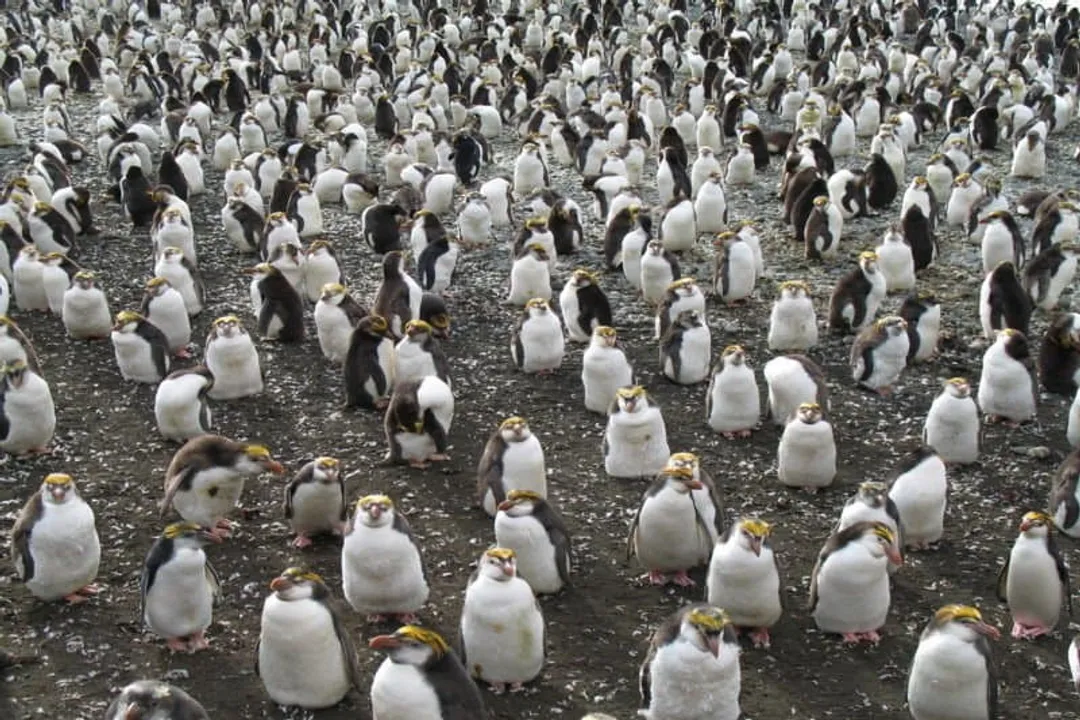
The classification of the Royal penguin often causes taxonomic debate, which speaks to its close evolutionary relationship with another famous species. Some historical or broader classifications group the Royal penguin as a subspecies of the King penguin (Aptenodytes patagonicus). [2] However, contemporary ornithology often recognizes it as a distinct species, Eudyptes schlegeli. [2]
The difference in classification often hinges on the color of the facial plumage and the lower bill—the very features that make them visually distinct. [2][3] If you were to look at a mature Royal penguin next to a King penguin, the King would show less extensive yellow/orange coloration on the head, and its bill would lack that signature pinkish hue at the base. [2] This subtle genetic divergence, leading to such marked visual differences, offers a good case study in speciation within the penguin family.
# Sustenance and Schedule
The diet of the Royal penguin largely reflects the resources available in the rich, cold waters surrounding Macquarie Island. Their menu consists primarily of small crustaceans, most notably krill, though they also consume small fish and squid. [2][8] Being efficient swimmers, they dive deep and swim long distances to secure the high-energy food required to fuel their large bodies and demanding breeding endeavors. [1][8]
The breeding cycle is where the Royal penguin truly earns its reputation for slow and steady commitment. Unlike some shorter-cycle species, Royal penguins undertake a remarkably long breeding period, often spanning between 14 to 16 months from the start of courtship until the chick is fully fledged and independent. [4]
To put that extended timeframe into perspective, if a human began a major, life-defining project, like completing a demanding university degree requiring intensive focus, it would take approximately the same amount of time as one Royal penguin couple spends raising a single chick. [4] This extremely slow reproductive rate underscores the species’ vulnerability; they cannot rapidly rebound from population losses because of the multi-year commitment required to bring a new generation to maturity. Compare this to, say, a Gentoo penguin, which can often complete a breeding cycle in under five months. [2] This extended schedule means that successful breeding only happens roughly once every year and a quarter, demanding high fidelity and survival from the parents during that entire period.
# Crested Kin
Because the Royal penguin is part of the Eudyptes genus, it shares ancestry with other visually spectacular penguins, such as the Macaroni and Erect-crested penguins. [8] While they all share the characteristic yellow or orange plumes, the specific arrangement and intensity distinguish them. For instance, Macaroni penguins have much longer, denser crests that form a fuller 'eyebrow' than the Royal's defined patch. [8] Understanding which penguin family a bird belongs to helps situate its behavioral patterns; crested penguins often exhibit similar courtship displays and nesting habits, even if their coloration varies wildly. [8]
Observing these medium-sized specialists reminds us that the Antarctic and sub-Antarctic regions support a diversity that goes far beyond the giant Emperors or Adélies. The Royal penguin, with its unique coloration, singular geographic stronghold, and long breeding commitment, is a colorful testament to specialized evolution in a harsh environment. [1][2][4]
#Videos
Royal Penguin facts found on the sub-Antarctic Macquarie Island ...
Related Questions
#Citations
Royal Penguin | Oceana
Royal penguin - Wikipedia
Royal penguin Facts for Kids
Royal Penguins
Meet the Royal Penguin - Facebook
Royal Penguin facts found on the sub-Antarctic Macquarie Island ...
Top 10 facts about Emperor penguins - WWF-UK
Royal Penguin Bird Facts - Eudyptes schlegeli - A-Z Animals