What are the pink-necked green pigeons predators?
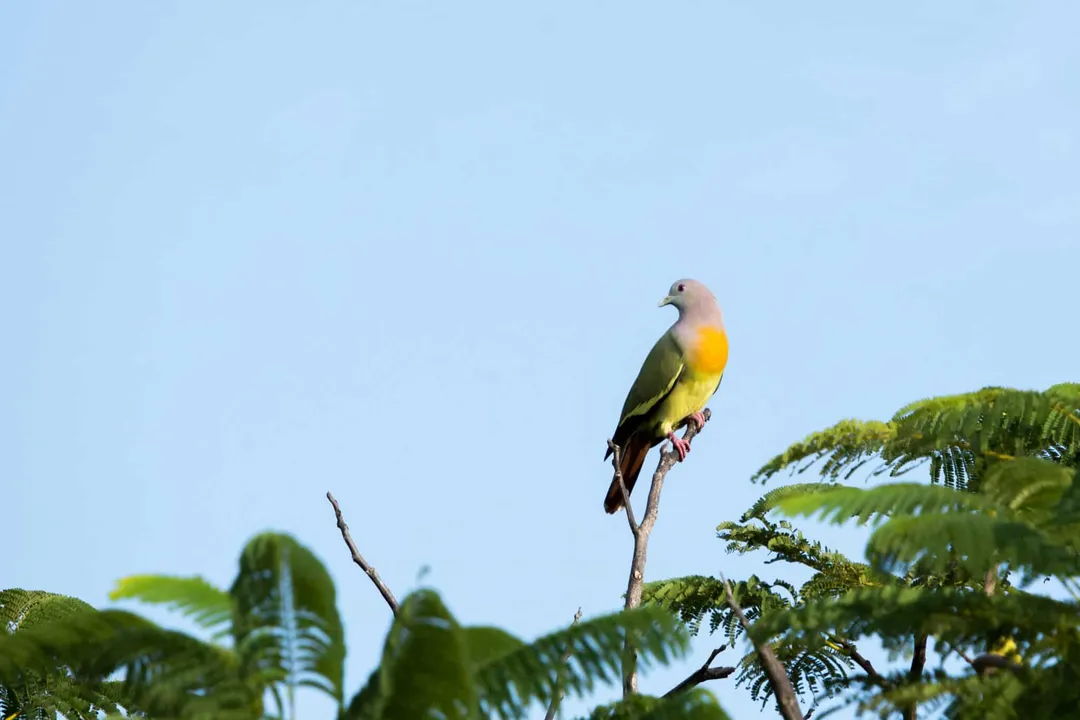
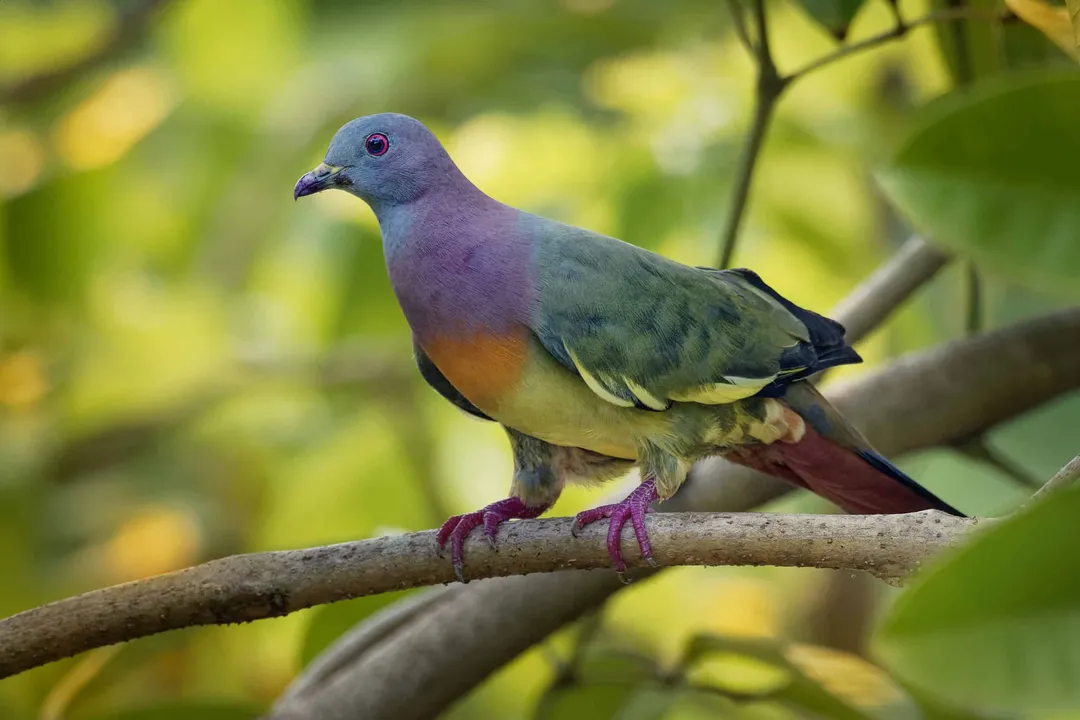
The vibrant Pink-necked Green Pigeon, a common sight across Southeast Asia, wears brilliant plumage of green, grey, pink, and orange, colors that serve a vital function in its daily life. While their beauty might suggest a life free from worry, like all wild birds, they face a constant pressure from creatures seeking a meal. Determining the full roster of threats involves looking at both confirmed predators and the general dangers faced by pigeons within their specific ecological niche.
# Confirmed Hunters
The primary natural adversaries for the Pink-necked Green Pigeon belong to the avian predators, known collectively as raptors. Among these aerial hunters, the White-bellied Sea Eagle and the Peregrine Falcon have been specifically identified as main threats to this species. This suggests that while they spend much of their time within the forest canopy, they are vulnerable to attacks from above, particularly when moving between feeding patches or while crossing open ground.
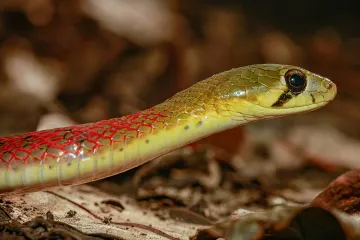
Discussions surrounding pigeons in general hint at a broader spectrum of aerial danger. Other birds of prey that target pigeons, though not specifically confirmed for the Treron vernans in these sources, include various hawks and even larger falcons. The mention of hawks and snakes as general predators highlights the risks faced by the species wherever they occur in their tropical and subtropical forest edge habitats. Considering that these pigeons are fast flyers, capable of reaching speeds up to 77 mph, only the most skilled or opportunistic predators can successfully make a capture.
It is also worth noting the different attack styles that can differentiate predators. For instance, when analyzing a potential kill site, the condition of the feathers can offer clues. Raptors like falcons typically pluck feathers, leaving the breastbone and sometimes wing bones attached, whereas mammalian predators, such as foxes, might bite through the feather shafts. While foxes are not explicitly named as predators of the Pink-necked Green Pigeon, understanding these methods helps in interpreting any evidence of predation found in the field.
# Canopy Camouflage
The striking coloration of the Pink-necked Green Pigeon is not merely decorative; it is a crucial element of its survival strategy. The mix of olive green, yellow, and grey helps the bird blend into the foliage of the fruit trees they favor, making them difficult for predators to spot among the leaves. This form of visual defense is especially important since their diet locks them into specific feeding locations.
These pigeons are fundamentally frugivores, relying on a diet rich in fruit, with figs being a particular favorite. They also consume shoots and seeds. To access this food, they forage actively in the mid-canopy of the forest, often clinging skillfully to fine branches at the ends of limbs. This necessary exposure while feeding creates moments of high vulnerability. If camouflage fails, the bird must rely on speed and agility, something these pigeons possess in spades.
It is an interesting ecological trade-off: the pursuit of a high-energy fruit diet, which can require them to consume up to two-thirds of their body weight daily, necessitates frequent exposure in the trees, even as their very colors work to keep them hidden. A key to navigating this risk is their social feeding structure.
# Social Defense
The Pink-necked Green Pigeon is far from a solitary creature when it comes to meals. They prefer to feed in small groups or sometimes in much larger flocks, numbering up to 70 individuals. This flocking behavior provides a form of dilution effect; in a group of seventy, the mathematical probability that any single individual will be the target of a successful attack is significantly reduced. Furthermore, safety in numbers allows more eyes to be on the lookout for approaching raptors. When a flock is moving, the sudden disturbance and movement of many birds at once can confuse a fast-moving predator like a falcon, making target acquisition more difficult. This cooperative vigilance, combined with their bright colors blending into the complex, sun-dappled canopy, forms a powerful deterrent against the major aerial threats they face.
# Nesting Vulnerability
While adults have speed and camouflage, the youngest birds require parental defense. The nest itself is typically a simple platform of twigs, placed in a tree, shrub, or hedge, often relatively close to the ground. During the 17-day incubation period, parental roles are shared, with females handling the night shift and males taking the day shift. More actively, once the chicks have hatched, mothers have been observed actively using their wings to shield the nest contents from potential predators, a direct, physical defense against threats approaching the immediate nesting site. Though nestlings fledge quickly, leaving the nest around ten days old, this vulnerable period relies heavily on parental concealment efforts.

# Human Interaction
Beyond the natural threats posed by eagles and falcons, the Pink-necked Green Pigeon faces pressure from human activities across its range in Asia, which includes countries from Southern Myanmar to the Philippines. In specific locations, such as Thailand and Malaysia, the species suffers threats from hunting and the cage bird trade. While the overall IUCN status remains "Least Concern" due to a large, stable population, these localized pressures can significantly impact smaller or more accessible populations.
The bird's adaptation to urbanization—being found in gardens and farmlands—is a double-edged sword. While it increases their proximity to human structures, it also puts them closer to human-created risks, whether through incidental disturbance or deliberate capture for the pet market. The fact that they frequently utilize disturbed habitats, like secondary forests and edges, means they are encountering human influence more regularly than birds confined strictly to primary, untouched jungle.
# Summary of Risk Factors
A Pink-necked Green Pigeon's survival depends on a blend of inherent traits and behavioral choices. Its exposure to predation risk can be generally summarized by examining its daily routine:
| Activity | Primary Defense Mechanism | Associated Risk Factor |
|---|---|---|
| Foraging | Cryptic plumage, Clinging to branches | Exposure in the mid-canopy, specialized diet |
| Traveling | High flight speed (up to 77 mph) | Open airspace between feeding/roosting sites |
| Socializing | Flocking behavior (up to 70 birds) | Larger group size attracts higher-level predators |
| Nesting | Parental wing shielding | Static position of eggs/chicks, proximity to ground |
The overall prognosis for the species remains positive due to its adaptable nature and wide distribution. However, for any individual bird, avoiding the specific attentions of a White-bellied Sea Eagle or a Peregrine Falcon requires constant vigilance, especially when they are not securely hidden within the thickest parts of the forest.
Related Questions
#Citations
Pink-Necked Green Pigeon Bird Facts - Treron Vernans - A-Z Animals
Pink-Necked Green Pigeon Facts & Photos | Wowzerful
Here's another pink-necked green pigeon absolutely inhaling a ...
What raptors, other than Peregrines, kill pigeons? - BirdForum