What are the physical characteristics of a Basenji?
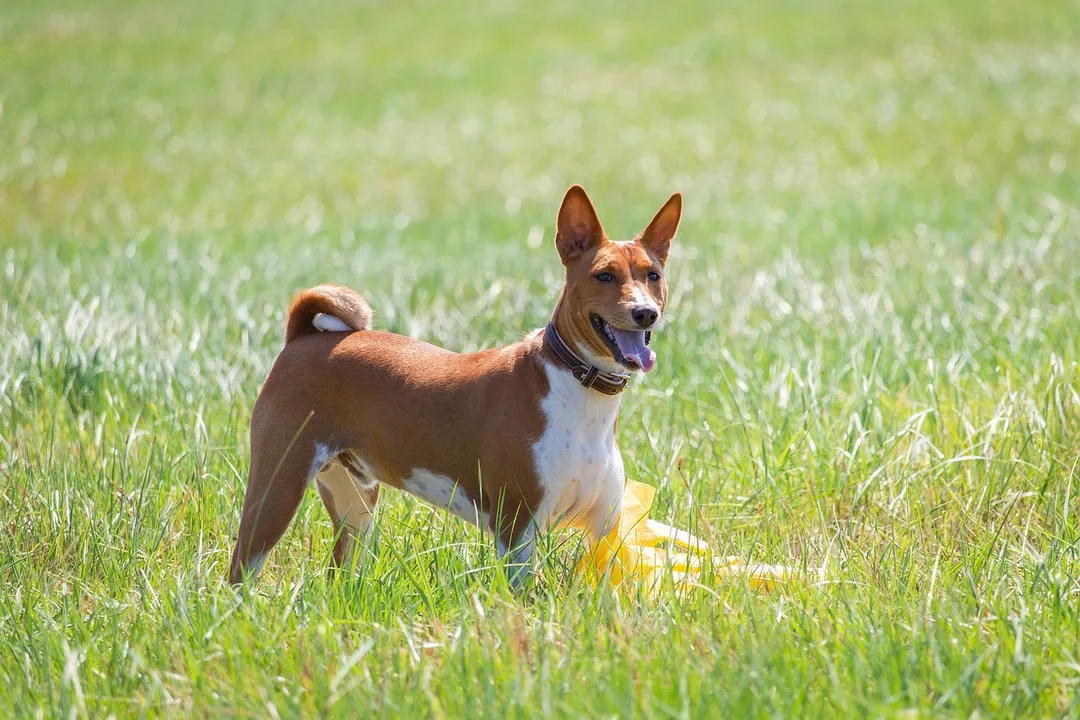
The Basenji presents an immediately striking silhouette, one that speaks to its ancient lineage and unique adaptations. Often described as a graceful, compact dog, its physical presentation is one of alertness and refinement, setting it apart from many other hound types. [1][5] They possess a short, fine coat that lies close to the body, enhancing the clean lines of their build. [2][3] Observing a Basenji, one is immediately drawn to their intelligent, almost mischievous expression, which is largely influenced by the structure of their head and eyes. [1] This physical packaging houses a dog known for its high energy and innate independence, making the connection between their lithe body and their spirited nature quite clear. [6]
# Stature Balance
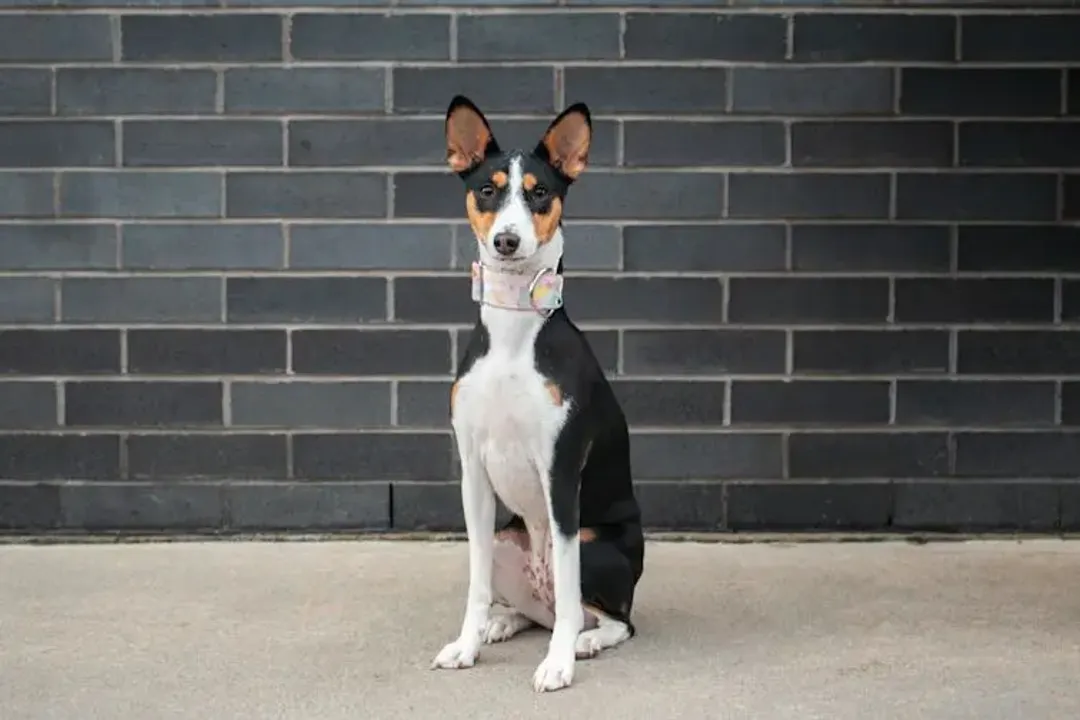
The overall impression of the Basenji is one of moderate size and fine bone, yet conveying strength. [4] In terms of height, the general expectation is a dog that stands roughly between 16 and 17 inches at the shoulder for males, with females typically being slightly smaller, perhaps around 15 inches. [1][3] This size range places them firmly in the small to medium category, a dimension that aids their agility and their historical role in navigating dense terrain. [5]
Weight contributes to this sense of balance; a healthy adult male usually weighs in the neighborhood of 24 pounds, while females might tip the scales closer to 22 pounds. [1][3] It is important to note that these are averages, and slight variations are accepted within breed standards, provided the overall proportions remain correct. [4] A key characteristic noted in breed descriptions is the body being slightly longer than it is tall, though this difference is subtle, contributing to a somewhat "square" appearance when viewed from the side, emphasizing balance over length. [4][5] Their chests are moderately broad and deep, offering ample room for heart and lung capacity necessary for an active breed. [2] The loin is short and strong, rising slightly to the croup, which maintains a taut, athletic look to the hindquarters. [4]
When considering how they carry themselves, the breed standard emphasizes elegance. Their movement should suggest effortless speed and coordination. [4] A common observation among long-time owners is that despite their moderate frame, the Basenji's low body fat percentage and powerful musculature mean they often feel surprisingly dense and solid for their size—a characteristic you only truly appreciate when handling one or watching them transition quickly from a standstill. [7] This dense quality is a product of generations of selective breeding for stamina in harsh African environments. [5]
# Head Detail
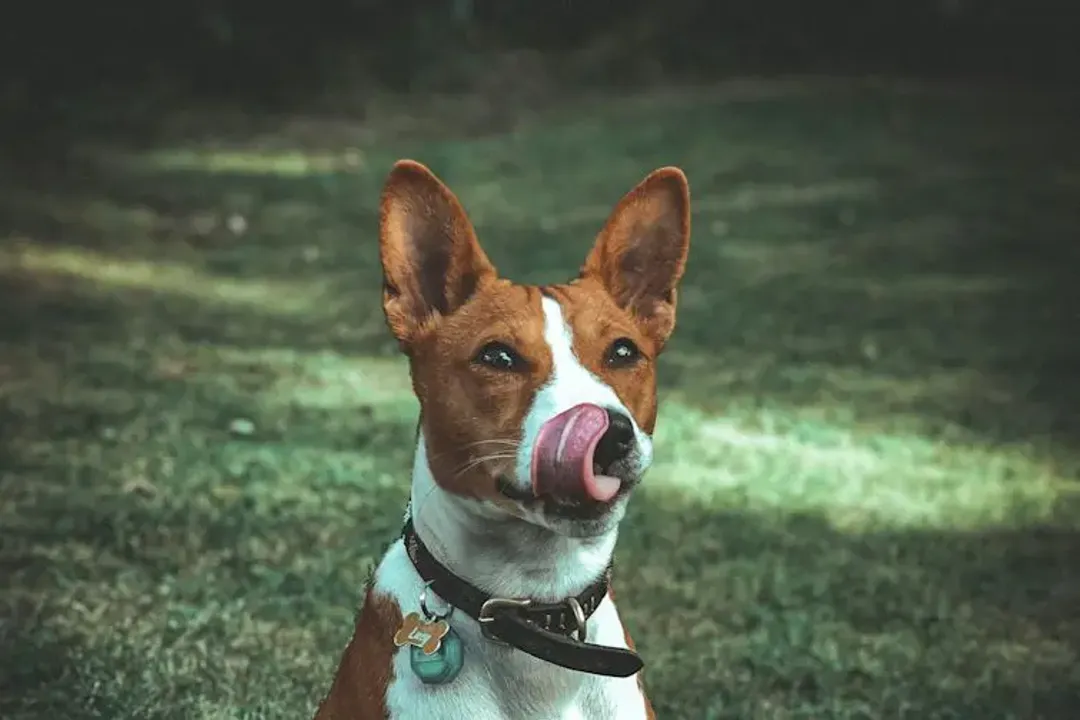
The head structure of the Basenji is perhaps one of the most defining physical aspects, second only to its tail. [4] It is finely chiseled, neither blocky nor excessively pointed, possessing a refined quality that contributes significantly to their distinctive expression. [1][3]
# Skull and Muzzle
The skull is relatively flat on top and moderately broad between the ears, tapering toward the muzzle. [4] A particularly noteworthy feature, and one that aids in conveying that famous intelligent look, is the presence of wrinkles on the forehead. [1][3] These wrinkles are often pronounced when the dog is alert or curious, and they are considered a hallmark of the breed’s look. [5]
The muzzle itself is long and fine, blending smoothly into the skull without an abrupt stop. [4] The lips are tight, ensuring a neat appearance around the mouth, and the jaws are strong, meeting in a scissors bite. [1] When examining the length of the muzzle relative to the skull, the balance is crucial; the muzzle should not look too short or snipey, but rather proportionate to the overall head length. [4]
# Eyes and Ears
The eyes are very characteristic: somewhat almond-shaped, obliquely set, and dark in color. [1][3] This shape and depth contribute to their intelligent and inquisitive gaze. [5] The way the eyes are set can give the appearance of deep thought or mild skepticism, often amusing to their owners. [6]
The ears are another non-negotiable feature of the Basenji's appearance. They are set rather high on the head, small, thin, and distinctly pricked. [1][4] A subtle but important detail is that the ears tend to angle slightly forward, which adds to their alert posture. [3] They are often described as sitting up like sharp triangles atop the head, rarely drooping or folding. [5]
# Coat Markings
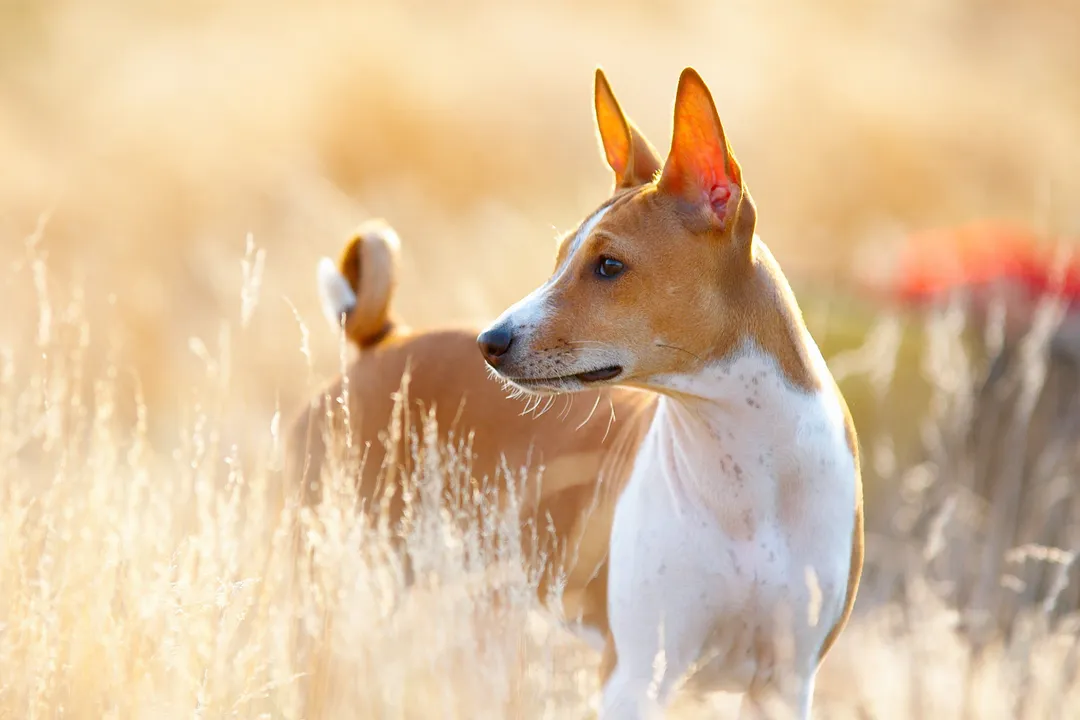
The Basenji's coat is short, fine, smooth, and glossy when healthy. [1][2] This sleek nature means they shed very little, which is a benefit for keeping homes tidy, though they do still go through seasonal shedding periods. [3][6] The short coat also contributes to their remarkably clean habits, as they often self-groom, much like a cat. [2]
The coloration of a Basenji is specific and quite limited according to the accepted standards. [4] The primary acceptable colors are:
- Red and White: Ranging from a pale reddish-tan to a deep, rich chestnut red. [1]
- Black and Tan: A deep black body with tan markings on the legs, muzzle, and under the tail. [4]
- Tricolor: Patches of black and tan mixed with white markings. [1]
- Black: A solid black color, though less common than the others. [5]
A universal requirement across all acceptable colors is the presence of white markings. [4] White is required on the feet, chest, and the tip of the tail. [1][3] Additionally, white markings may appear on the legs, muzzle, or blaze on the face. [4] A dog presenting with other colors, or lacking the required white trim, would typically be disqualified in a conformation show setting, highlighting the importance of these specific physical identifiers. [4] Brindle patterning, while sometimes seen, is not usually permitted under standard definitions. [5]
# Curled Tail
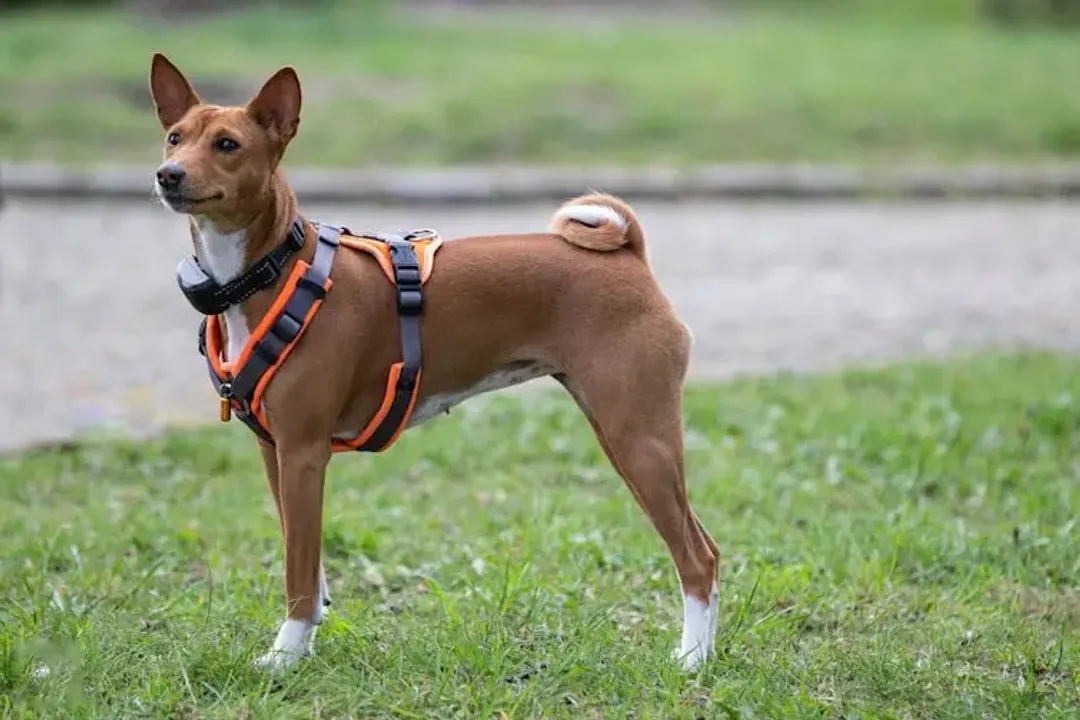
If the head offers the expression, the tail provides the signature flourish for the Basenji. [4] It is one of the breed's most distinguishing characteristics. [1] The tail is set low, then carried high and tightly curled, resting directly over the dog's back. [3] Ideally, the curl should be a single, tight coil. [4]
This physical feature is persistent; even when the dog is relaxed or resting, the tail tends to maintain its curl, though perhaps less tightly than when they are excited or moving. [5] This curled tail is a direct link back to their primitive origins, sharing a trait with breeds from ancient lineages. [5] If the curl is loose, double-coiled, or fails to rest neatly over the loin, it deviates from the perfect standard, yet it remains a defining physical trait that separates them instantly from most other breeds. [1][4]
# Movement Style
The way a Basenji moves is a direct reflection of its powerful, balanced build. [4] Their gait should be light-footed, smooth, and effortless. [2] They cover ground well, demonstrating good reach in the forequarters and strong drive from the rear. [4]
When trotting, the Basenji's movement is often described as tireless, characterized by a springy, driving action. [1][3] They do not paddle or single-track excessively, showing good coordination between the front and rear assembly. [4] This gait enables them to transition quickly from a standstill to a sprint, a necessity for their historical hunting methods, which relied on flushing game rather than long, sustained tracking. [5] Watching a Basenji at a full run reveals a dog built for bursts of speed and sharp changes in direction, perfectly utilizing their short back and strong loins. [4]
# Profile Analysis
The collective physical characteristics of the Basenji paint the picture of an elegant, almost exotic hound built for efficiency. The combination of the slender muzzle, the wrinkled brow, the small erect ears, and the tight curl of the tail creates an overall appearance that is unique in the canine world. [1][3]
One subtle observation for potential owners is how their physical structure dictates their personality expression. The deep-set, almond eyes and the pronounced forehead wrinkles mean that their facial communication is surprisingly complex for a breed often labeled as stoic or aloof. [6] A slightly raised brow or a squint can convey volumes of thought, often before any characteristic vocalization (or lack thereof) occurs. [2] Furthermore, their clean, fine coat, while aesthetically pleasing, demands minimal grooming effort regarding brushing, making maintenance relatively easy, though their active nature means they still require regular bathing to manage dirt accumulated from their explorations. [3] This low-maintenance coat is a practical adaptation passed down from their ancestral environment, making their physical upkeep quite manageable compared to long-coated breeds.
The interplay between their light build and powerful structure means that while they look graceful, they possess surprising resilience. They are not bulky but are surprisingly hard to tire on a brisk walk or play session. [6] It’s essential to remember that the seemingly delicate bone structure supports a dog capable of high-impact activity, which is something new owners often underestimate based solely on the breed's height and weight statistics. [5] Their compact size should not be mistaken for frailty; it is engineered for endurance in a lean package. [4] The physical form is perfectly matched to a dog that is intelligent, quick to react, and deeply energetic.

# Key Measurements Summary
To visualize the desired physical appearance, comparing the key measurable traits against the standard helps solidify the mental image of the breed.
| Characteristic | Male Range (Approx.) | Female Range (Approx.) | Standard Requirement |
|---|---|---|---|
| Height (at shoulder) | 16 - 17 inches | 15 inches | Moderate, slightly longer than tall [1][4] |
| Weight | Around 24 pounds | Around 22 pounds | Fine bone, balanced proportion [3] |
| Coat | Short, fine, smooth | Short, fine, smooth | Lies flat, glossy when healthy [2] |
| Tail | Tightly curled over back | Tightly curled over back | Single, tight curl is preferred [4] |
The commitment to these specific physical traits—from the forward slant of the ear to the exact placement of the white socks—shows the intensity of the standard preservation efforts, ensuring that the essential, ancient characteristics of the Basenji remain dominant in every succeeding generation. [4] The physical dog is a living testament to its history as a primitive, specialized hunter and companion from Central Africa. [5]
Related Questions
#Citations
Basenji Dog Breed Information - American Kennel Club
Basenji Dog Breed Information | Purina UK
Basenji Dog Breed - Hill's Pet Nutrition
General Appearance - Basenji Club of America
Basenji - Wikipedia
Basenji: Dog Breed Characteristics & Care - The Spruce Pets
Barkless Dogs: Basenji's Characteristics, History, and More
Basenji | VCA Animal Hospitals
Basenji Facts - Dog Breeds - Wisdom Panel
Dog Breed Basics: Your Guide to Basenjis - Embark