What are the characteristics of the Ocellated Turkey?
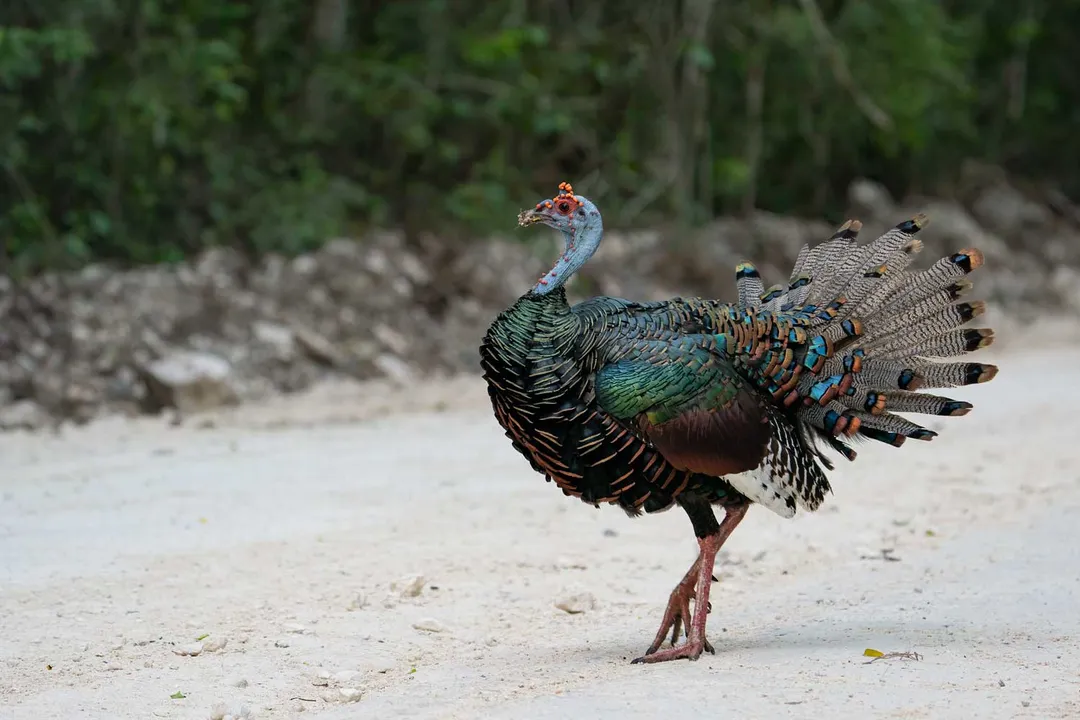
The Ocellated Turkey, Meleagris ocellata, [4] stands out immediately among game birds due to its truly magnificent, almost metallic plumage, setting it apart from its more commonly known North American cousin, the Wild Turkey. [6][8] It is frequently noted as one of the most stunning birds in the world, drawing attention from birdwatchers and hunters alike who seek it out across its limited range. [7] While sharing the genus name, the Ocellated Turkey possesses distinct physical traits and a specific geographical preference that define its characteristics. [1][4]
# Plumage Color
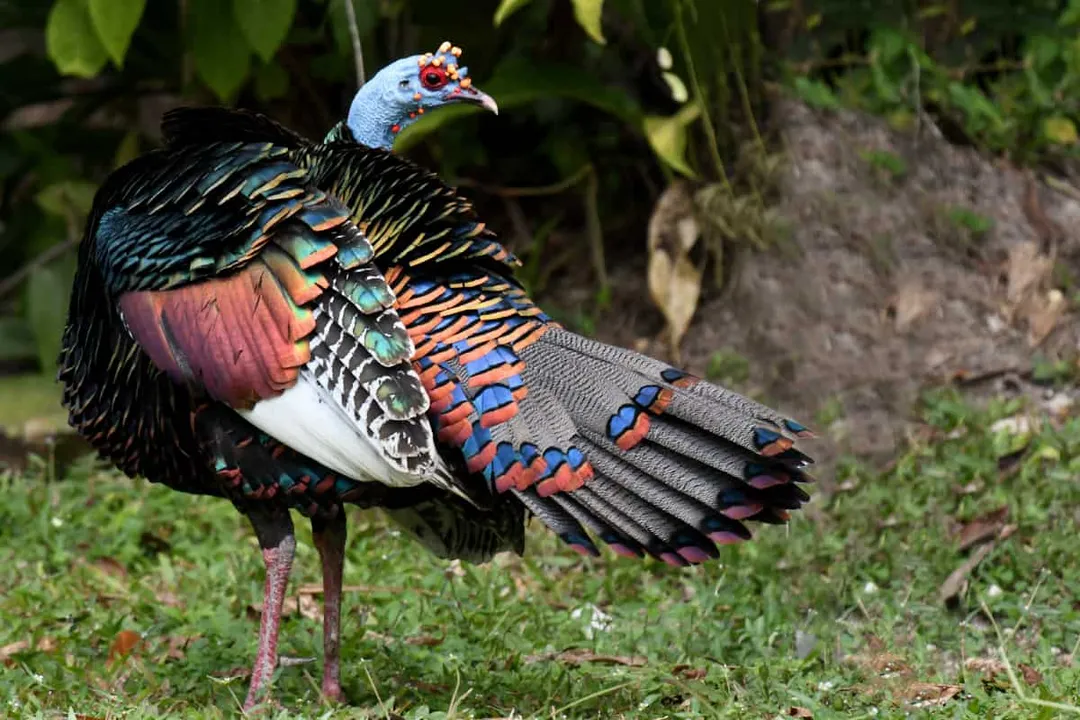
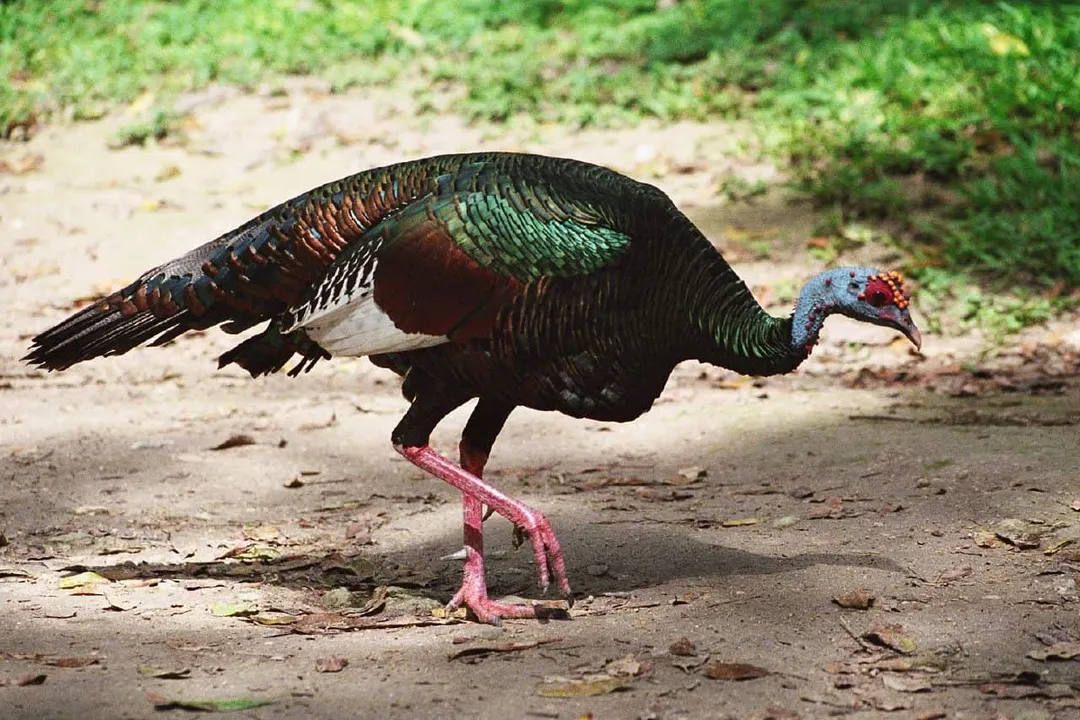
The most striking feature of this turkey is the male's coloration. Its body feathers exhibit a brilliant, highly iridescent bronze or green sheen, catching the light in a dazzling way that makes it difficult to mistake for any other bird in its environment. [2][6] This metallic brilliance covers the body, but the true signature lies on the tail feathers. [1]
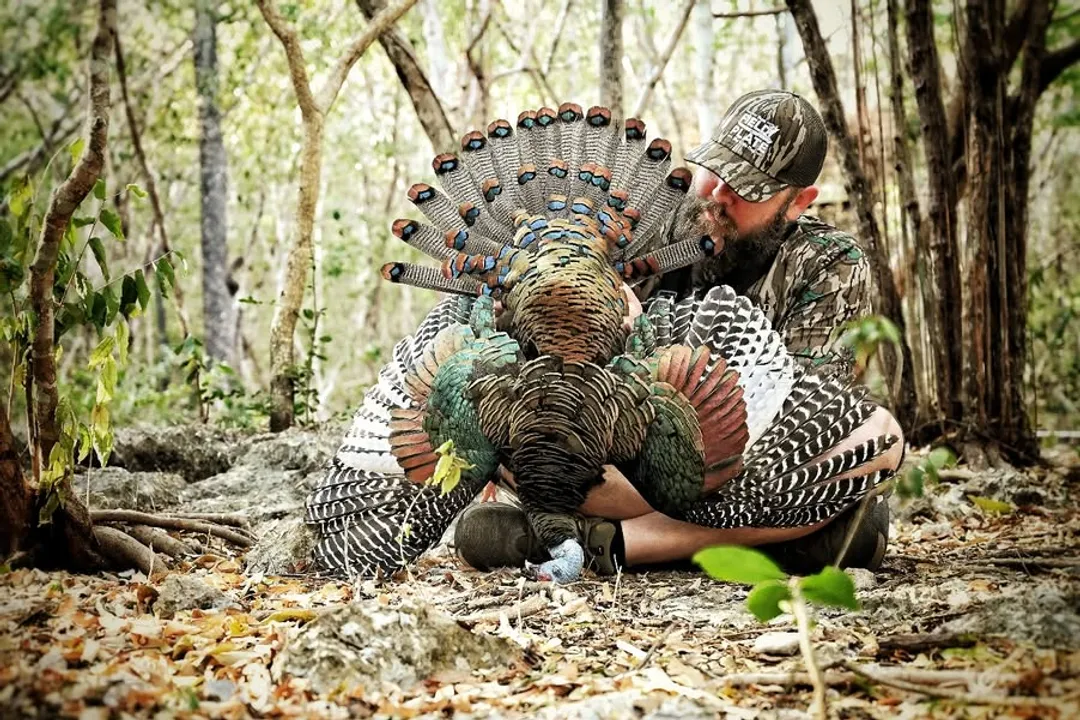
The tail is a major distinguishing mark. Unlike the brown-banded tail of the Wild Turkey, the Ocellated Turkey features dark, metallic blue-green spots, known as ocelli, prominently displayed on its tail feathers. [1][2] Each of these spots is encircled by a bright, vibrant blue or green ring, giving the bird its common name. [1] Adding another layer of contrast, the tips of these tail feathers are banded with white. [1][2] Furthermore, the skin covering the head and upper neck is bare, presenting a vivid palette of blue and orange or red caruncles, which can become significantly more colorful during breeding periods. [1]
In contrast to this male splendor, the female Ocellated Turkey is far more subdued. Her plumage tends toward duller shades of brown and gray, offering better camouflage in the dense understory where she spends most of her time tending to the nest and young. [1] If one were observing a flock in dappled forest light, the male’s iridescent quality might seem muted until he moves into a patch of direct sun, where the metallic surfaces flare into intense color—a biological adaptation that must be incredibly effective at signaling fitness, yet still allow for moments of near-invisibility when stationary. [1][9]
# Range Habitat
Geographically, the Ocellated Turkey is confined to a relatively small area in Central America, primarily inhabiting the Yucatán Peninsula. [1][2][8] Its distribution spans southeastern Mexico, parts of Belize, and regions of northern Guatemala, particularly the Petén region. [1][5][8]
The preferred environment for this species is tropical and subtropical lowland deciduous forest. [4] They generally favor elevations that are quite low, often found in areas situated between sea level and about 300 meters. [9] They are closely associated with these forested environments, though they may sometimes be found near sources of water. [6] Because their entire distribution is restricted to this specific ecosystem, understanding their environmental needs is critical to their survival. [5] Being endemic to this region means that any localized deforestation or habitat alteration has a disproportionately large impact on the species as a whole. [5]
# Feeding Habits
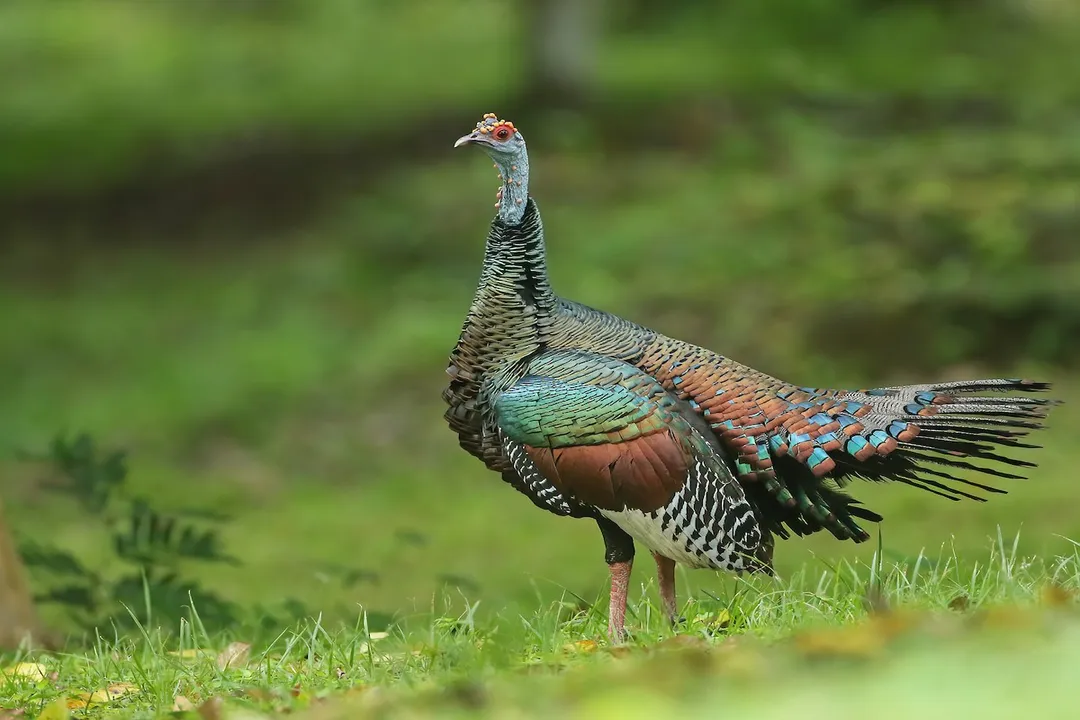
Like other turkeys, the Ocellated Turkey is considered an omnivore, adapting its diet based on seasonal availability. [4] Their diet involves foraging on the forest floor for a variety of food items. [9]
Key components of what they consume include:
- Plant matter, such as leaves. [9]
- Seeds. [4][6][9]
- Various fruits found in the understory. [4][9]
- Invertebrates and insects. [4][6]
This dietary mix plays an important ecological role within their native habitat. [5] By consuming fruits and seeds and subsequently dispersing them through their droppings, the Ocellated Turkey contributes to the regeneration and maintenance of the forest structure. [5] Observing the ratio of seeds to insects consumed throughout the year could provide insight into localized resource fluctuations; for example, during a poor fruit season, an increase in insect consumption would likely be noted, indicating a shift in foraging priority. [4][9]
# Mating Display
Ocellated Turkeys exhibit a social structure characterized by seasonal polygyny, meaning one male mates with several females during the breeding season. [9] During this time, the males engage in elaborate displays intended to attract females.
The display ritual involves several key actions:
- Strutting: The male moves around in a deliberate, impressive manner. [4]
- Fanning the Tail: He spreads his spectacular tail feathers wide, showcasing the signature ocelli. [1][9]
- Vocalization: The bird produces a low, loud gobbling sound. [4][9]
- Physical Inflation: The skin on the neck and upper body is puffed up, often intensifying the existing blue and orange coloration. [9]
Interestingly, while the most vigorous display activity peaks during the breeding season, the characteristic gobbling sound is reported to be audible throughout the year, suggesting ongoing social signaling even outside the primary mating period. [9]
# Status Concern
Despite its striking appearance, the Ocellated Turkey faces conservation challenges across its relatively small geographic range. [5] The species is currently listed as Near Threatened. [2][8]
The primary pressures contributing to this status are twofold:
- Habitat Loss: Ongoing destruction and fragmentation of the lowland tropical forests they depend on significantly reduces their available living space. [5]
- Hunting: Local subsistence and sport hunting also pose a threat to the population stability. [5]
Because the bird is endemic to the Yucatán Peninsula region, these pressures directly impact the entire global population, making localized conservation efforts particularly important for the species' long-term viability. [5][8]
Table 1 summarizes the key physical and distributional features for quick reference.
| Characteristic | Male Description | Female Description | Range Highlight |
|---|---|---|---|
| Body Color | Highly iridescent bronze/green [2][6] | Duller brown/gray [1] | Yucatán Peninsula [2] |
| Tail Feature | Metallic ocelli with white tips [1][2] | Less pronounced display features | Tropical Lowland Forest [4] |
| Head Skin | Bare, blue/orange caruncles [1] | Less vivid coloration | Near Threatened Status [2] |
Related Questions
#Citations
Ocellated turkey
Ocellated Turkey
What are the characteristics of the ocellated turkey?
Meleagris ocellata (ocellated turkey) | INFORMATION
Ocellated Turkey
Ocellated Turkey Bird Facts - Meleagris ocellata
Wild Relatives: The ocellated turkey
Behavior - Ocellated Turkey - Meleagris ocellata