What are the characteristics of a lumpfish?
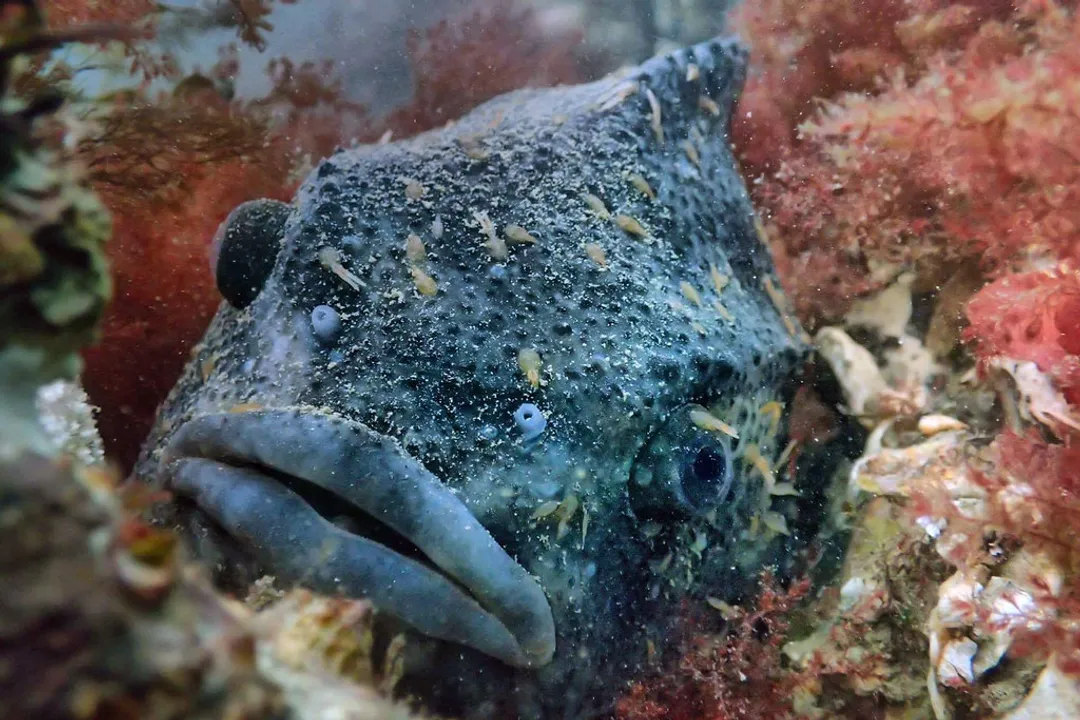
The lumpfish, scientifically known as Cyclopterus lumpus, immediately distinguishes itself from most other fish with a form that is better described as ball-shaped than streamlined. Its robust body is thick, almost stocky, and its most striking features are the numerous lumps, bumps, and ridges covering its skin. These are not scales, but rather fleshy knobs and bony protrusions—specifically, three rows of large, bony tubercles running along each flank. The first dorsal fin is unique; it is buried under a thick layer of skin, forming a high, long crest that gives older specimens a distinctly humped back.
Its scientific genus name, Cyclopterus, literally translates from Greek as “ring fin,” a direct reference to one of its most crucial adaptations. The pelvic fins are not used for standard propulsion but have evolved into a powerful, adhesive sucking disc situated between the pectoral fins. This disc allows the fish to anchor itself firmly against rocks, kelp, or other structures, effectively preventing it from being swept away by strong currents—a behavioral adaptation that complements its specialized anatomy perfectly, especially considering it lacks a swim bladder. In terms of coloration, the lumpfish is generally drab, ranging from shades of blue, grey-blue, or greenish-brown, which helps it camouflage against the seabed. However, this camouflage breaks down dramatically during the breeding season when mature males adopt striking orange-reddish hues on their fins and belly to attract mates.
# Size and Dimorphism
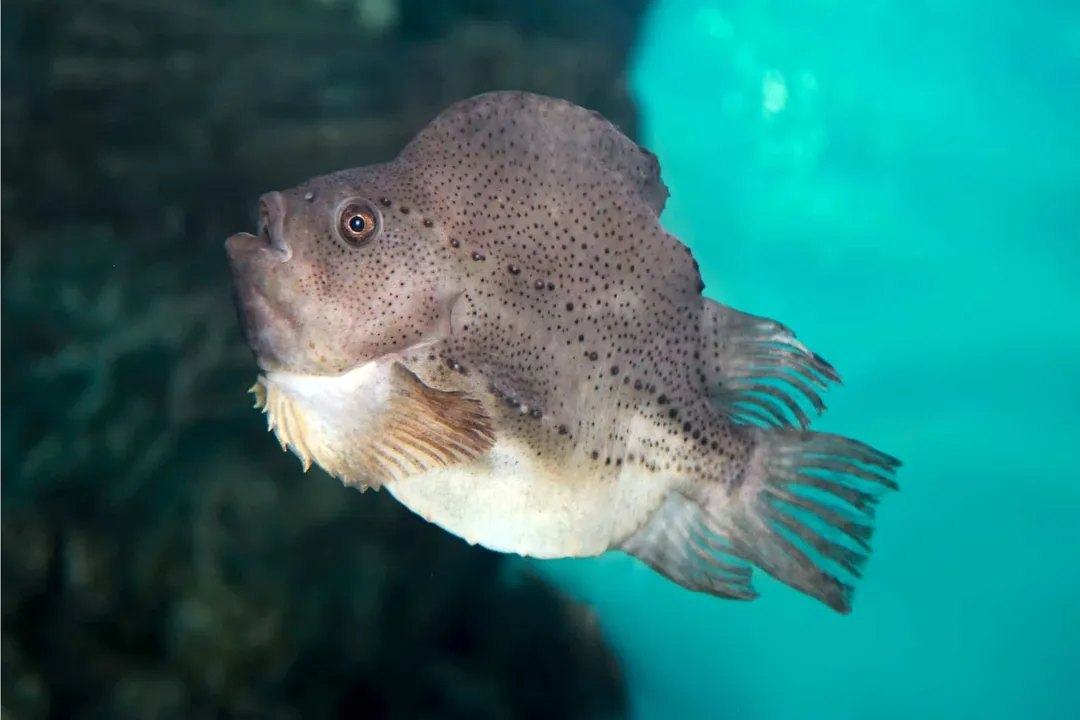
Lumpfish exhibit marked sexual dimorphism, meaning males and females look different, primarily in size. Females grow significantly larger and heavier than their male counterparts. A typical female might reach lengths of up to 50 to 60 cm and weigh around 5 to 10 kg. Conversely, males usually top out around 30 to 40 cm in length. The largest recorded specimen approached 61 cm in length and weighed close to 9.6 kg. Interestingly, the physical features associated with attachment and movement also differ: the head and pectoral fins of males are relatively larger and stronger than those of females. For the general observer, distinguishing the sexes requires a close look at size and, during breeding, coloration.
# Ocean Life
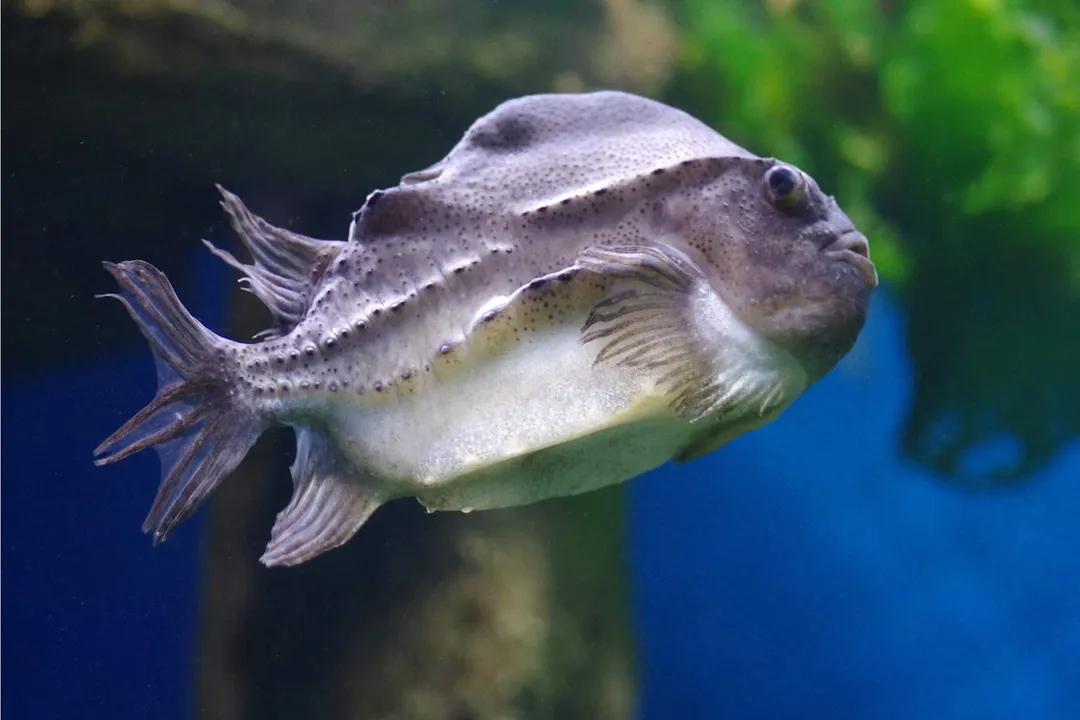
As a true marine inhabitant, the lumpfish is strictly saltwater and generally resides in cold, deep waters offshore, primarily favoring rocky or pebble bottoms as an adult. It is considered a semi-pelagic or bentho-pelagic species, meaning it moves between the bottom (benthic) and the water column (pelagic). Tagging studies, particularly off Iceland, have confirmed that adults undergo diel vertical movements; they spend more time swimming in the upper water column at night and return to associations with the seabed during the day.
Juveniles, however, inhabit the near-surface waters, often found clinging to or hiding under floating seaweed clumps where they feed on plankton. This lifestyle shift—from near-surface juvenile to deeper-dwelling adult that feeds on bottom-dwelling prey and mid-water jellies—illustrates a significant lifestyle transition within their first year or two. The species has a wide distribution across the North Atlantic, occasionally found as far south as the Chesapeake Bay in the US and rarely near Spain in Europe. They clearly prefer colder temperatures; in the Northwest Atlantic, their highest concentrations are often observed where bottom temperatures hover between -1.9ºC and 2.0ºC, suggesting they actively select the cooler end of the available thermal range.

# Diet and Reproduction
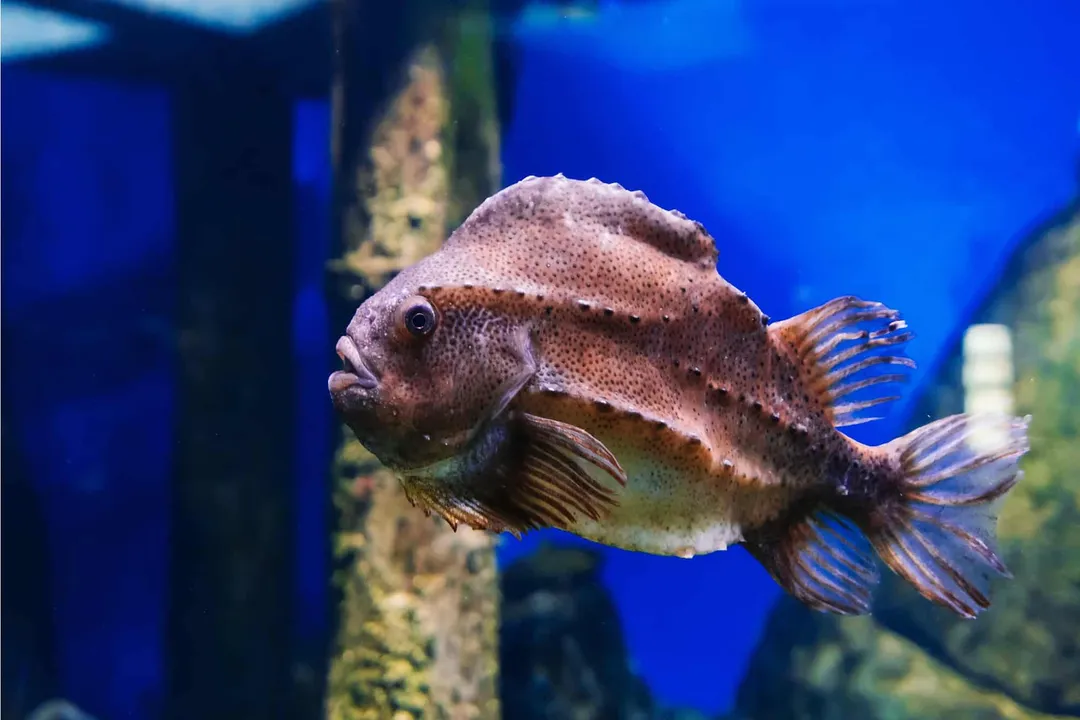
The lumpfish is a carnivorous feeder. Its diet is varied and reflects its dual existence in the water column and near the bottom. Juveniles feed heavily on near-surface plankton, such as copepods and amphipods found near drifting seaweed. Adults consume larger pelagic organisms like jellyfish (medusa and comb jellies) and small fish, but they also browse on benthic organisms, including worms and crustaceans.
Reproduction is a solitary affair, with individuals typically not schooling. When the breeding season arrives in the spring or early summer (May to June in some Canadian areas), mature adults migrate inshore to shallow, rocky areas. The male is solely responsible for nest preparation and parental care. He selects a rocky crevice or depression, where the female deposits her large batch of eggs—sometimes numbering up to 220,000. After fertilization, the female departs immediately, leaving the male to guard, fan, and aerate the eggs for the entire incubation period, which can last one to two months depending on the water temperature. While some early theories suggested lumpfish were short-lived, single-time spawners, tagging studies suggest that many individuals, particularly the larger females, spawn at least twice, though the overall reproductive lifespan remains uncertain.
# Value and Risk
The lumpfish holds considerable economic importance, largely due to its eggs, or roe. Historically, the roe was dyed black to imitate more expensive sturgeon caviar, but it is now valued as an affordable substitute product. In addition to the caviar market, the flesh itself is consumed in Scandinavian countries. A more recent, high-value commercial application has emerged in aquaculture: lumpfish are intentionally introduced to salmon farms as "cleaner fish" because they effectively consume parasitic sea lice that plague farmed salmon stocks.
Despite its utility, the species faces conservation challenges. Globally, the IUCN lists the Northeast Atlantic population as Near Threatened. In Canada, the situation is more acute; COSEWIC designated the population as Threatened in 2017. This designation is largely driven by a sharp decline—estimated at about 58% in abundance over 19–20 years—observed in the core Canadian range off Southern Newfoundland. This decline occurred despite high market demand for roe, strongly suggesting resource depletion rather than market fluctuation is the proximal cause. The directed fishery, which targets the large, egg-bearing females using gillnets in shallow, coastal areas during spawning, has been implicated in the selective removal of large, gravid females, potentially impacting the southern Newfoundland population specifically. While abundance appears stable in areas like the northern Gulf of St. Lawrence, the overall trend in the center of historical abundance points toward significant decline. This situation raises an important observation: where commercial landing data showed a sharp drop after 2005, survey data confirmed a corresponding abundance decrease, indicating the fishery's collapse followed, rather than caused, the initial resource decline—a common pattern in largely unregulated harvesting efforts.
# Behavioral Adaptations
The lumpfish’s body structure suggests it is not built for speed or sustained swimming. Lacking a swim bladder, which normally assists with neutral buoyancy, the lumpfish compensates by using its powerful sucker disc to maintain position against strong bottom currents. This reliance on attachment suggests that in very high-flow environments, even a brief moment of detachment could result in being swept far offshore. Considering that spawning occurs in relatively shallow, turbulent inshore waters, this adhesive capability is perhaps the single most important physical characteristic ensuring reproductive success for the guarding male, whose behavior keeps him tethered near the nest site for weeks. Furthermore, observations show that the males use their fins to fan the eggs, a precise, energy-intensive behavior that demands they remain stationary at the nest site for extended periods during incubation. This dedication to the nest, even going without food, represents an extreme investment in paternal care, a characteristic that contrasts sharply with the species' generally slow and inactive appearance outside of the breeding cycle.
Related Questions
#Citations
Lumpfish - Chesapeake Bay Program
Cyclopterus - Wikipedia
Lumpfish Fish Facts - Cyclopterus lumpus - A-Z Animals
Lumpfish | Space for life
[PDF] Lumpfish, Cyclopterus lumpus - Wildlife, plants and species