What are the ancestors of the English Springer Spaniel?
The lineage of the English Springer Spaniel is a long and layered narrative, deeply rooted in the hunting traditions of the British Isles and continental Europe. While we see a distinct, recognizable breed today, its ancestry lies in a time when classification was based more on function than fixed kennel club standards. [1][2] The Springer, as we know it, evolved from the broader category of setting dogs and land spaniels used for flushing game ahead of fowling pieces. [3][6]
# Ancient Spaniel Forms
The earliest ancestors of virtually all modern spaniels, including the ESS, are generally believed to trace back to the Iberian Peninsula, specifically what is now Spain and Portugal. [3] These dogs were brought to England by traders or noblemen centuries ago. [3] Once established in Britain, these early dogs were categorized by their size and purpose, primarily the distinction between water dogs and land dogs. [1][4] The ancestors of the Springer fell squarely into the latter group—the Land Spaniels. [4][9]
These early spaniels were not the distinct breeds recognized today; they were a general type valued for their drive, scenting ability, and their unique action of "springing" game—causing birds hidden in dense cover to take flight so that hunters could shoot them. [1][6] Before the advent of modern firearms, the goal was often to flush game close enough for nets or falcons, highlighting the dog's role as an intermediary in the hunt. [3] Over time, breeders focused on refining these characteristics, leading to specialized regional variations. [2][3]
# Land Spaniel Type
The common ancestors of both the English Springer and the Cocker Spaniel were once grouped together under the general umbrella term of "Land Spaniels". [1][2][9] There was no strict separation based on size in the very earliest records; rather, litters might produce both larger and smaller dogs, all performing the same flushing work. [3][5] The smaller dogs became known as Cockers (specializing in flushing woodcock), and the larger dogs would eventually become the Springers. [2][9]
A significant landmark in this shared history involves the Norfolk Spaniel. This breed, now extinct, is widely considered the direct progenitor of the modern English Springer Spaniel. [3][4] The Norfolk Spaniel was favored in the county of Norfolk and was valued for its stamina and size, making it highly effective in the field. [1][4] Dogs described as Norfolk Spaniels were typically larger than the Cocker types of the same era. [3] The decline of the Norfolk Spaniel as a separate breed name is intrinsically linked to the rise of standardized sporting dogs in the 19th century. [4]
# The Norfolk Predecessor
The Norfolk Spaniel represents a crucial historical checkpoint before the formal split of the Springer line. [3] For a time, breeders recognized both the Norfolk Spaniel and the Welsh Springer, though the latter maintained its own distinct lineage and color pattern. [2][4] In the late 19th century, the types that would become the English Springer Spaniel were often simply referred to as 'Springing Spaniels' or sometimes still linked to the Norfolk name, depending on the kennel or region. [3][4]
It is important to note that the early history is somewhat fluid. For instance, some historical accounts suggest the Duke of Gordon played a role in developing a specific strain of spaniel, though the modern ESS line often traces its standardization to later efforts. [2][3] The key takeaway is that the function—springing game—was the defining characteristic for the ancestors of the ESS, regardless of the specific regional name they carried at the time. [6]
# The Size Separation
The formal distinction that cemented the English Springer Spaniel as its own breed hinged almost entirely on size, which was dictated by specialization in game type. [1][5] The separation became official in the late 19th and early 20th centuries when kennel clubs began to register types more rigorously. [2][3]
Initially, the dividing line was generally established around the weight of 25 pounds. [5] Dogs weighing under this threshold were registered as Cocker Spaniels, and those weighing over were classified as Springer Spaniels. [1][2][9] This distinction wasn't purely arbitrary; it reflected the environment in which the dogs were expected to work. [6] A smaller Cocker was better suited for dense cover, like thickets where woodcock hid, while the slightly larger Springer had the reach and stamina for broader fields and larger ground game. [1][6]
This focus on weight meant that a litter could potentially produce both breed types, which explains why the genetic pool shared a very recent common ancestor. [3] Think of it this way: if a hunter needed a versatile dog that could handle different terrains, they might intentionally select a mid-sized dog, knowing it would be registered differently depending on which side of that arbitrary 25-pound line it fell on weighing day. [2] Considering that the first official registration distinction happened around 1892 when the Kennel Club recognized them separately, it highlights how recently these lines truly diverged from a shared pool of Land Spaniels. [3][4]
| Historical Spaniel Group | Defining Trait (Pre-1900s) | Modern Descendant |
|---|---|---|
| Land Spaniel (Small) | Flushing Woodcock | Cocker Spaniel |
| Land Spaniel (Large) | Flushing Larger Game | English Springer Spaniel |
| Norfolk Spaniel | Direct predecessor of larger type | ESS (largely absorbed) |
| Welsh Springer | Distinctive red/white coloring | Welsh Springer Spaniel |
| [3][4][9] |
# Standardization and Breed Identity
The final push toward the modern English Springer Spaniel breed came with the establishment of breed clubs dedicated solely to the larger flushing spaniel. [4] The Kennel Club in England officially recognized the Springer Spaniel as a distinct breed in 1902. [3][4] This recognition followed a period where the Norfolk Spaniel, as a distinct registry, faded, its successful bloodlines being incorporated into the newly defined Springer type. [4]
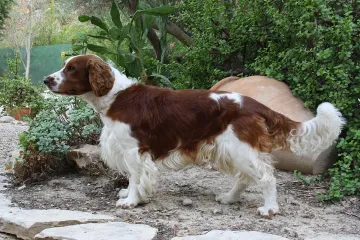
It is interesting to note that while the modern ESS is heavily associated with England, the Welsh Springer Spaniel maintained its own separate identity, characterized by its distinctive liver/white or red/white coat patterns. [2][4] This separation, though based on coat color and slight type differences, reinforces the idea that the English Springer's ancestry is tied to the non-red variety of the Land Spaniel tradition. [4]
An analytical observation here is that the very success of the ESS as a field companion—its energy, drive, and intelligence—is a direct inheritance from the necessity of its ancestors to be true all-day workers rather than just show dogs. [6] When breeders began standardizing the English Springer, they prioritized retaining the drive and springing action over purely aesthetic traits, which is why their working heritage remains so strong today compared to some other spaniel lines that may have emphasized conformation earlier in their development. [1][6] The breed club's early efforts were aimed at preserving the functional characteristics that made the older Norfolk types so effective in the game fields. [4]
# Comparing Welsh and English Lines
While the focus is on the English Springer, briefly looking at its close cousin, the Welsh Springer Spaniel, helps define the English line's ancestry. [4] Both dogs share the common Land Spaniel roots originating from the Iberian types. [3] However, the Welsh line maintained a more closed and distinct path over time, preserving its specific coat color (red and white) and type. [4] The English Springer, conversely, drew heavily from the broader, predominantly liver/white or black/white spaniel populations that were prevalent in English hunting estates, essentially absorbing the best of the Norfolk lines as they faded. [1][3] This absorption solidified the ESS's identity as the predominant large flushing spaniel in England. [4]
# Modern Inheritance
What do these ancestors mean for the contemporary English Springer Spaniel owner? The dog’s ancestors were bred for stamina and utility, not couch comfort. [6] The inherited traits include a high energy level, an intense desire to work, and excellent scenting capabilities. [5][6] If you look at a modern ESS, you are looking at a dog whose blueprint was established by centuries of field utility, refined through the Norfolk type, and crystallized when the 25-pound threshold separated it from its smaller kin. [1][2] The ancestral requirement to enthusiastically "spring" concealed birds explains the breed’s trademark eagerness and sometimes boundless energy that still needs channeling today. [3][6] The dedication of early breeders to function over form ensured that the core spirit of the Land Spaniel remained intact, even as kennel names and standards evolved. [4]


Related Questions
#Citations
The History of English Springer Spaniels
English Springer Spaniel History: Where the Breed Originated
Breed History | English Springer Spaniel Club
Breed History - English Springer Spaniel Club of Canada
English Springer Spaniel Guide | Full Breed & Care Information
English Springer Spaniel: Breed Characteristics, Abilities, and History
Gulf Coast English Springer Spaniels
Breed History - NTSSC
English Springer Spaniel | Origin, History, Personality & Care Needs