Welsh Springer Spaniel Scientific Classification
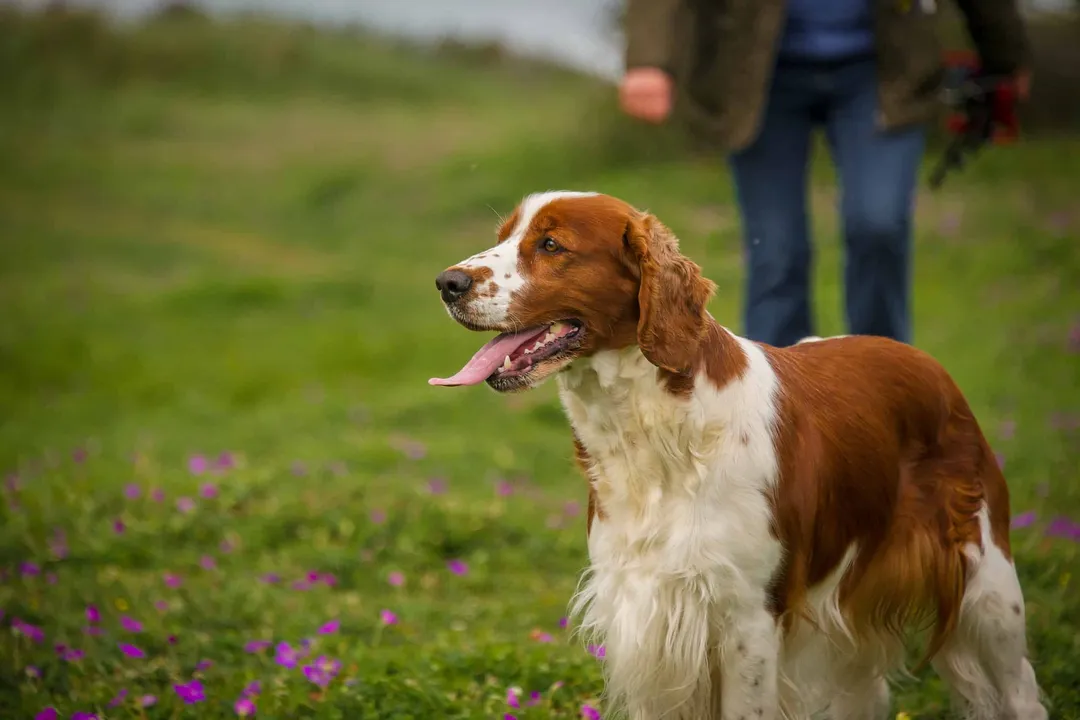
The Welsh Springer Spaniel, a vibrant, red-and-white sporting dog with deep historical roots in Wales, occupies a very specific place in the biological world, defined by rigorous scientific categorization that traces its lineage back through millions of years of evolution. Understanding this classification—from the broadest kingdom down to the specific breed—helps illuminate not only its ancestry but also the fundamental instincts hardwired into its DNA. [2][4] This dog is not merely a pet; it is a member of the species Canis lupus, often designated as the subspecies Canis lupus familiaris. [2]
# Taxonomic Rank
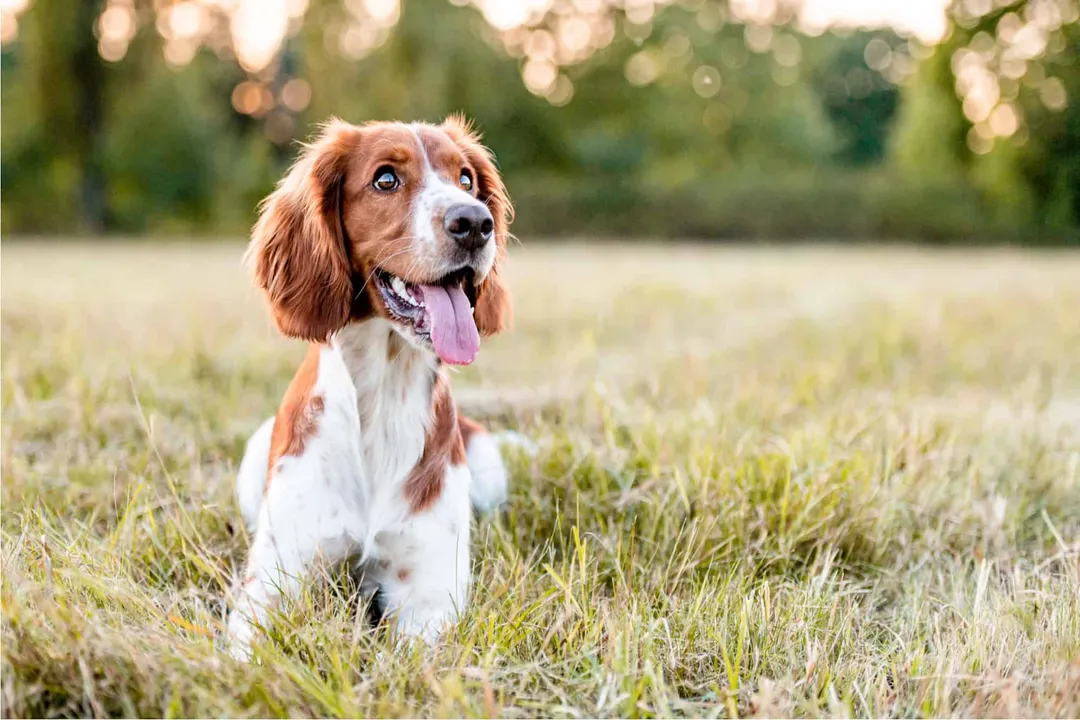
The formal scientific classification of the Welsh Springer Spaniel begins with the highest level of organization. Biologically, every living thing is sorted into a hierarchy that reflects shared characteristics and evolutionary distance. [2]
At the top is the Kingdom: Animalia. This immediately places the Welsh Springer Spaniel among multicellular, heterotrophic organisms—creatures that must consume other organisms for energy. [2] Following this, it belongs to the Phylum Chordata, signifying that, at some stage in its development, it possessed a notochord, a dorsal nerve cord, and a post-anal tail. [2]
Moving down the ladder, the dog falls into the Class Mammalia. This group is defined by having fur or hair, being warm-blooded, and, crucially for reproduction, nourishing their young via mammary glands. [2] This classification is shared with humans, bats, whales, and nearly every other common domestic animal. The Order is Carnivora, a group characterized by adaptations for meat-eating, even if a modern domestic dog’s diet is omnivorous. [2] Within this order, the Welsh Springer Spaniel is placed in the Family Canidae. [2][5] This places it alongside wolves, foxes, jackals, and coyotes. [2] This family grouping explains the instinctive pack mentality, strong scenting abilities, and characteristic vocalizations like barking and howling often seen in the breed. [2]
The final steps of this biological sorting bring us to the Genus Canis and the Species familiaris or lupus. [2] While some systems classify the domestic dog as Canis familiaris, the prevailing view, reflecting its direct descent from the grey wolf (Canis lupus), often identifies it as Canis lupus familiaris. [2] The Welsh Springer Spaniel is, therefore, a breed—a specific, recognizable, and relatively genetically uniform population within that subspecies. [2]
# Canine Kinship

The placement within the Canidae family is particularly telling when considering the breed's history and function. Spaniels, in general, are distinct from breeds that separated earlier from the wolf ancestor, such as the Basenji or Siberian Husky, though all share the same genus. [2] The Welsh Springer is most closely related genetically and phenotypically to the English Springer Spaniel, sharing a common ancestral pool before they were selectively bred into two distinct breeds recognized by kennel clubs. [8][1]
The shared heritage within Canis means that the fundamental physical structure supporting a high-energy, endurance hunting dog remains consistent across the spaniel types. For instance, the deep chest required for lung capacity during long days in the field is a trait inherited directly from the general Canis structure adapted for sustained pursuit, even if the Welsh variety was historically favored for retrieving in rugged Welsh terrain. [1][8]
When looking at the broader Canidae family, the differences become starker. A fox, belonging to the genus Vulpes, possesses a more slender build and specialized hunting techniques that differ significantly from the cooperative flushing and retrieving work expected of a Welsh Springer Spaniel. The scientific classification clearly separates the cooperative, enduring hunter (Canis) from the solitary, often ambush predator (Vulpes). [2]
# Breed Grouping

While the Linnaean system classifies based on genetic evolution, breed clubs utilize functional groupings that reflect human-directed selection over the last few centuries. In this context, the Welsh Springer Spaniel is firmly categorized within the Gundog group. [6] This grouping reflects its historical purpose: working alongside hunters to locate (flush) game birds and then retrieving the fallen quarry. [1][6]
This functional classification often dictates the standards used by organizations like the Royal Kennel Club. [6] The standard is a description of the ideal physical manifestation of that functional classification. For example, the breed's medium size, weighing around 12 to 18 kilograms, and its build—solid, active, and not heavy—are explicitly tied to the need for agility in varied terrain, such as the dense cover of Welsh woodlands. [1] The alert, intelligent expression also reflects the need for a dog capable of taking hand signals and working closely with its handler. [1]
It is fascinating to note that while the English and Welsh Springers share the Canis lupus familiaris classification and the Gundog functional group, the persistent separation by kennel clubs suggests a phenotypic drift substantial enough, likely involving coat texture, color purity, and subtle skeletal differences, to warrant distinct breed recognition. [8] This divergence shows how human selection can create stable, recognizable variations within a single biological species.
# Standard Structure
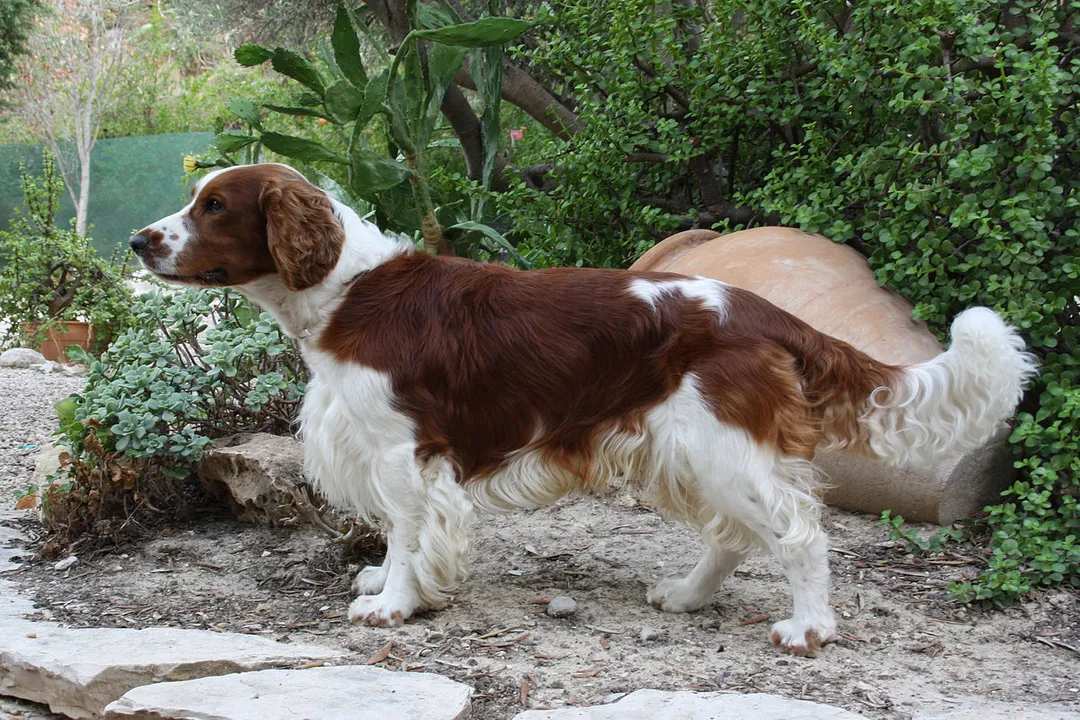
The physical description provided in a breed standard acts as a secondary, descriptive classification system, detailing the expected morphology based on the dog’s function. The Welsh Springer Spaniel is defined by its solid, rich red and white coloring, which is a key identifier. [1][4] Unlike some other breeds where color can be highly variable, the Welsh Springer has a comparatively restricted palette, emphasizing the dominance of this specific coloration through selective breeding. [1]
Key structural measurements also serve as classification markers for the breed:
| Feature | Typical Range (Approximate) | Classification Relevance |
|---|---|---|
| Height at Withers | 18–19 inches | Medium stature, optimized for ground-level scent work [1] |
| Weight | 25–40 pounds (12–18 kg) | Balanced power and endurance; less taxing than larger setters [1] |
| Coat | Flat or slightly wavy, dense | Weather resistance, necessary for working in wet climates [1] |
The structure is built for stamina. The moderate length of the leg ensures the dog stays close to the ground to scent effectively, yet provides enough clearance to move swiftly through undergrowth. [1] If one were to chart the average size and build of all Canis lupus familiaris, the Welsh Springer would occupy a niche slightly smaller and perhaps lighter than the average Labrador Retriever, but sturdier than a Beagle, perfectly fitting the profile of a tireless, mid-sized sporting companion. [1]
One practical insight derived from this structural classification is regarding coat maintenance relative to climate. The dense, medium-length double coat, while excellent for shedding water and protecting against briars in its native, often damp Welsh environment, requires thoughtful grooming when kept as a pet in warmer, drier climates. Owners must recognize that this coat is functional, not just decorative, and managing seasonal shedding becomes critical to maintaining the dog’s comfort and preventing overheating, a necessity often overlooked when judging a dog purely on its appearance in a show ring. [1]
# Behavioral Taxonomy
While the physical structure defines what the dog looks like, its behavioral tendencies, deeply rooted in its Canis and Spaniel classification, define how it interacts with the world. The breed is noted for being intelligent, eager to please, and sensitive. [4] These traits are hallmarks of many breeds selectively bred for close partnership with humans, differentiating them from more independent canids like the Siberian Husky, which shares the species classification but not the intensive cooperative history of the spaniels. [2]
The drive to flush and retrieve, stemming from its gundog grouping, manifests even in domestic settings. A Welsh Springer Spaniel often exhibits a strong desire to carry objects, a behavior that fulfills its innate retrieving drive. [1] This is a direct, observable link between its functional historical classification and its modern household conduct.
Considering the dog's close genetic relationship to other spaniels, an interesting point arises concerning breed-specific health concerns, which can be seen as a classification of vulnerability. While both Welsh and English Springers belong to the same species, their distinct breeding histories mean specific health panels might differ slightly in emphasis. For example, breeders focused on the Welsh lineage may pay close attention to certain orthopedic predispositions common within their specific lineage, even if the broader Canidae family does not universally share those exact risks. Understanding the specific genetic drift between the two Springer types—despite their shared Canis lupus familiaris classification—is vital for responsible ownership, ensuring that the unique characteristics preserved in the Welsh line are maintained healthily. [1][8]
# Genetic Distinctions
When looking at genetic testing services that utilize DNA analysis, breeds are often categorized by clusters representing shared ancestry. The Welsh Springer Spaniel consistently clusters tightly with other European sporting breeds. [7] Wisdom Panel data, for example, often places the Welsh Springer in a group showing clear distinction from ancient breeds or primitive types, confirming its status as a relatively modern, highly refined breed developed for specific tasks. [7] While the core scientific classification remains Canis lupus familiaris, DNA analysis shows that the breed has a clear identity, separated from its English counterpart by specific genetic markers that influence phenotype, temperament, and conformation. [7][8]
This genetic evidence provides a modern layer to traditional classification. It confirms that the physical separation recognized by kennel clubs is underpinned by measurable genetic divergence, even if that divergence is insufficient to warrant a separate species designation. It means the dog you bring home is not just a spaniel, but a specific, curated expression of the canine genome, shaped by Welsh valleys and centuries of hunting tradition. [1][6]
Related Questions
#Citations
Welsh Springer Spaniel Dog Breed Complete Guide - A-Z Animals
Welsh Springer Spaniel - Wikipedia
Welsh Springer Spaniel - Discover Animals
Welsh Springer Spaniel Breed Information & Insights | Basepaws
Welsh Springer Spaniel Facts for Kids
Spaniel (Welsh Springer) | Breed Standards - The Kennel Club
Welsh Springer Spaniel Facts - Dog Breeds - Wisdom Panel
Welsh Springer Spaniel - All About Dogs | Orvis
Welsh Springer Spaniel | Veterinarian in Glendale, AZ
[PDF] Welsh Springer Spaniel - dogs.net.au