What are the Swedish Vallhunds ancestors?

The Swedish Vallhund is a breed shrouded in the misty history of Scandinavia, often called the "Little Viking Dog," a moniker that hints at its deep, ancient roots. [2] Pinpointing the exact single ancestor for a breed whose history stretches back over a millennium can be challenging, as is often the case with truly old landrace dogs. [3] However, the consensus among breed historians and enthusiasts points toward a clear lineage associated with the Viking Age, linking this sturdy herder to the dogs that sailed and settled across Europe. [1][2]
# Ancient Spaniel Type
The Vallhund is classified as a Spitz-type dog, a grouping that encompasses many northern breeds known for their thick double coats, prick ears, and often curled tails. [3] This classification immediately places it in a broad category of ancient working canines. [3] While the precise genetic origin before their arrival in Sweden is complex, the breed's long presence in the country suggests they adapted to the local environment and farming needs over centuries. [1] The name itself is quite literal: Vallhund translates directly from Swedish to mean "herding dog". [7] This utility—managing livestock—was the defining characteristic of their ancestors on the farmstead. [5][7]
# The Viking Connection
The most compelling and widely accepted theory regarding the Swedish Vallhund’s direct ancestry places them alongside the Norsemen during their expansive travels. [1][2] It is believed that Vikings brought these dogs with them as they settled in the British Isles and throughout Scandinavia. [3] These dogs served essential roles aboard the longships and on the new settlements, acting as companions, alarms, and workers. [2] They were necessary members of the Viking household, helping to manage livestock, which was vital for survival in new territories. [5]
This connection suggests the breed shares common heritage with other spitz-type dogs that followed the Vikings across their trade and conquest routes. They were not merely pets; they were indispensable working partners whose genetic stock was likely refined by necessity rather than specific human selection for aesthetic traits alone. [2][5]
# Myth Busting
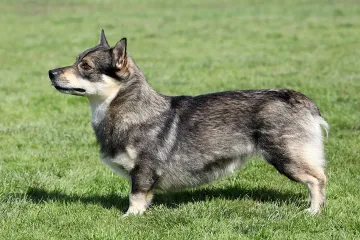
If you look at a Swedish Vallhund standing next to a Pembroke or Cardigan Welsh Corgi, the superficial resemblance—the low-slung body, the prick ears, and the frequent appearance of a naturally bobbed or completely absent tail—leads many observers to assume a direct ancestral link. [3][6] It is an easy and common assumption to make, especially given the geographical overlap in historical claims. [5]
However, breed historians and kennel clubs are quite firm on this point: the Swedish Vallhund does not share ancestry with the Corgi. [3][6] While both breeds are short-legged herders and developed functional similarities due to similar environmental pressures (needing to stay low to avoid kicks while driving cattle), their evolutionary paths diverged long ago. [3][6] The Vallhund's true heritage lies clearly within the Viking dog lines, making the Corgi similarity a case of convergent evolution in function, not shared parentage. [3] It is worth noting that while the Corgi ancestry link is often refuted, there are other less detailed theories about their origin that sometimes surface, perhaps involving ancient native European dogs. [8]
# Herding Roots
To understand the ancestral function of the Vallhund is to understand why they look and behave the way they do today. Their ancestors were primarily used to herd cattle across the Swedish countryside. [5][7] They were low to the ground, which allowed them to nip at the heels of stubborn cattle to move them along without getting kicked in the head, a behavior inherited from their working forebears. [7]
This herding requirement shaped the breed over centuries. They needed to be intelligent, highly trainable, alert, and physically resilient to manage the often harsh Scandinavian climate. [1] A dog that couldn't keep up or wasn't sharp enough to react to a spooked herd would not have been allowed to pass on its genes. This process of local, practical selection ensured that only the hardiest and most effective workers survived to produce the next generation of dogs. [1]
When considering how to train a modern Vallhund, it’s helpful to remember this ancestral requirement. That instinct to nip at heels when excited or when a fast-moving object passes by is not necessarily bad behavior; it is a deeply ingrained echo of what their ancestors were paid to do on a Swedish farm. Recognizing this drive allows an owner to redirect that energy into appropriate outlets like structured herding games or vigorous fetch, rather than allowing it to manifest as inappropriate nipping toward children or guests. [7]
# Near Extinction and Purity
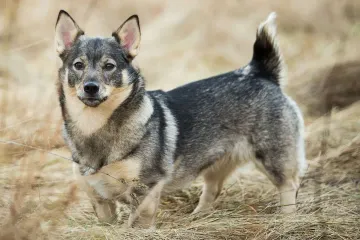
The role of the ancient ancestors is also tied to the breed's near disappearance. As farming modernized in the 20th century, the need for traditional, all-around farm dogs diminished significantly. [1] The breed faced oblivion by the 1940s. [1]
The fact that dedicated Swedish breeders managed to revive the breed from a handful of remaining individuals is remarkable and speaks to the value placed on preserving that specific genetic line. [1] The revival programs focused on maintaining the breed’s historical working characteristics and conformation, which intrinsically meant preserving the traits passed down from those Viking-era dogs. [1] This intensive, controlled breeding following the near-extinction helps confirm the established lineage, as the focus was on recovery, not on introducing unrelated stock to boost numbers. [1]
# Ancestral Profile Summary
While we cannot point to a single dog in a 10th-century field and declare it the ancestor, we can construct a profile of the genetic pool that formed the breed based on evidence and breed history. [1][3]
| Characteristic | Likely Ancestral Trait | Implication for Today |
|---|---|---|
| Type | Spitz/Nordic | Double coat, vocal tendencies, high intelligence [3] |
| Primary Role | Herding Cattle/Farm Guard | Need for mental stimulation and physical activity [7] |
| Appearance | Short legs, sturdy build | Adaptation for low-profile work around large livestock [2] |
| Geographic Origin | Brought via Viking routes to Scandinavia | Shared genetic background with other ancient northern dogs |
This combination of inherited traits—the alertness of a northern Spitz, the low carriage of a herding specialist, and the hardy nature needed for Scandinavian farm life—defines the Swedish Vallhund's ancestral makeup. [3][7] They are not a recent cross between established modern breeds; they are a surviving fragment of a much older working canine tradition. [1]
If we consider the long, consistent history in Sweden, it implies that once the Viking dogs arrived, the breed stabilized relatively quickly into a functional type suited for Swedish farm life. Unlike breeds developed recently in show rings, the Vallhund's look was dictated by its owner’s need for a reliable, versatile farm helper for centuries, essentially making the local environment the first editor of the breed standard long before any official registry existed. [1] This prolonged period of function-first selection is what gives the breed its distinct, almost ancient appearance and robust character today. [5]
Related Questions
#Citations
Breed History | SVCA, Inc. - Swedish Vallhund Club of America
Swedish Vallhund History: Little Viking Farm Dogs
Swedish Vallhund - Wikipedia
Swedish Vallhunds - Dog Breeds - Embark
Swedish Vallhunds do not share corgi ancestry, but ... - Reddit
Swedish Vallhund | Dog Breeds | PEDIGREE UK®
The Ancient Swedish Vallhund Dog Was Almost Lost to History
There are theories about the origins of the Vallhund. Some maintain ...
Swedish Vallhund History and Photos