Welsh Springer Spaniel Physical Characteristics
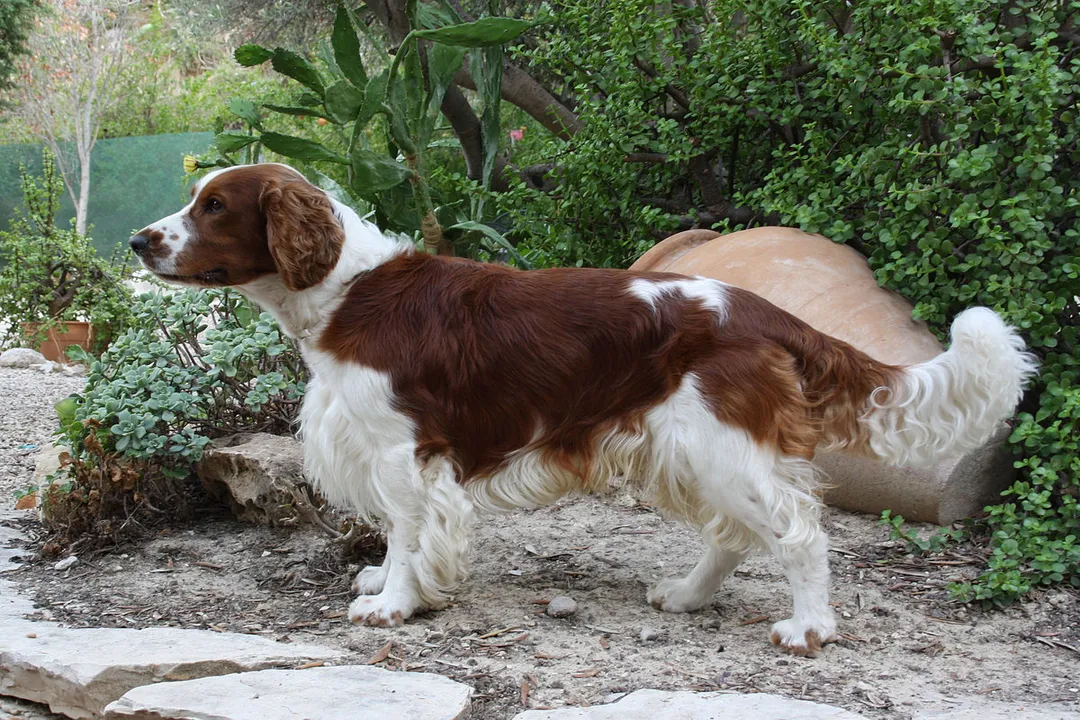
The Welsh Springer Spaniel, a distinct and ancient breed hailing from Wales, presents a picture of athletic capability married with undeniable good looks. [3] Unlike some breeds that have diverged into separate show and field types, the Welshie maintains a singular, functional appearance, bred for hard work and stamina in the coverts. [3][4] To truly appreciate this dog, one must look closely at the details that set it apart from its more numerous English cousin and other spaniels. [1][3]
# Size and Stature
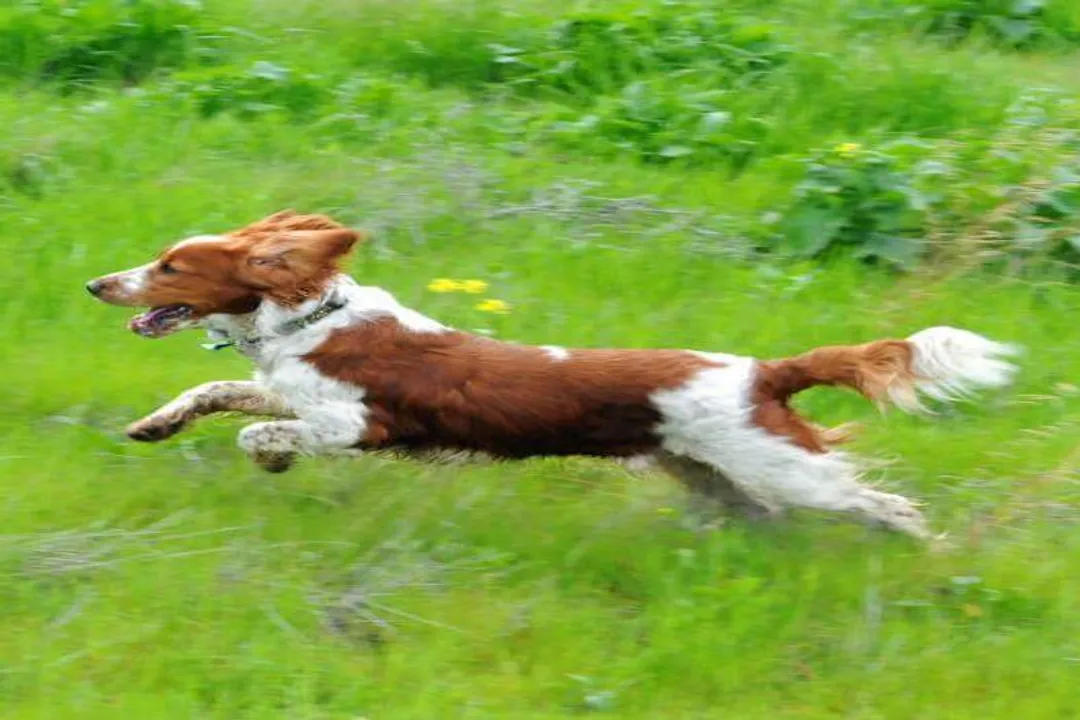
The Welsh Springer Spaniel falls squarely into the medium-sized category, a stature described by enthusiasts as being of "handy size". [2][6][7] They are intentionally balanced to be slightly bigger and stronger than a Cocker Spaniel but remain smaller than the English Springer Spaniel. [2] This build is key: the dog is meant to be compact and solidly put together, designed for endurance rather than bulk. [3][4]
When assessing proportion, the ideal Welshie leans slightly toward being longer than it is tall, meaning its length from the withers to the base of the tail is very slightly greater than its height measured to the ground at the withers, preserving a rectangular silhouette. [3][4] A dog that is taller than it is long is penalized in the show ring. [3] Height at the withers generally ranges from 17 to 19 inches. [2][3][6] Weight should complement this frame, balancing the dog’s overall structure. Standards suggest a weight range commonly centering around 16 to 20 kilograms (35 to 45 pounds), though some sources indicate males can reach up to 55 pounds and females around 40 to 50 pounds, depending on the exact lineage and lifestyle. [1][3][6][8] A keen eye on condition is important, as some individuals, regardless of sex, can be prone to gaining weight if their activity needs are not met. [2][4][8]
The overall conformation reflects its history as a tireless working companion. Its forequarters are obliquely angled, and the hindquarters are well developed. This setup is what allows the dog to move with the necessary burst of power. Considering the breed’s job—flushing game from dense undergrowth—this slight elongation combined with the angulation translates into a lower, driving gait, ensuring they can cover ground quickly without appearing leggy or unbalanced for the task at hand. [3][4]
# Distinctive Coloration
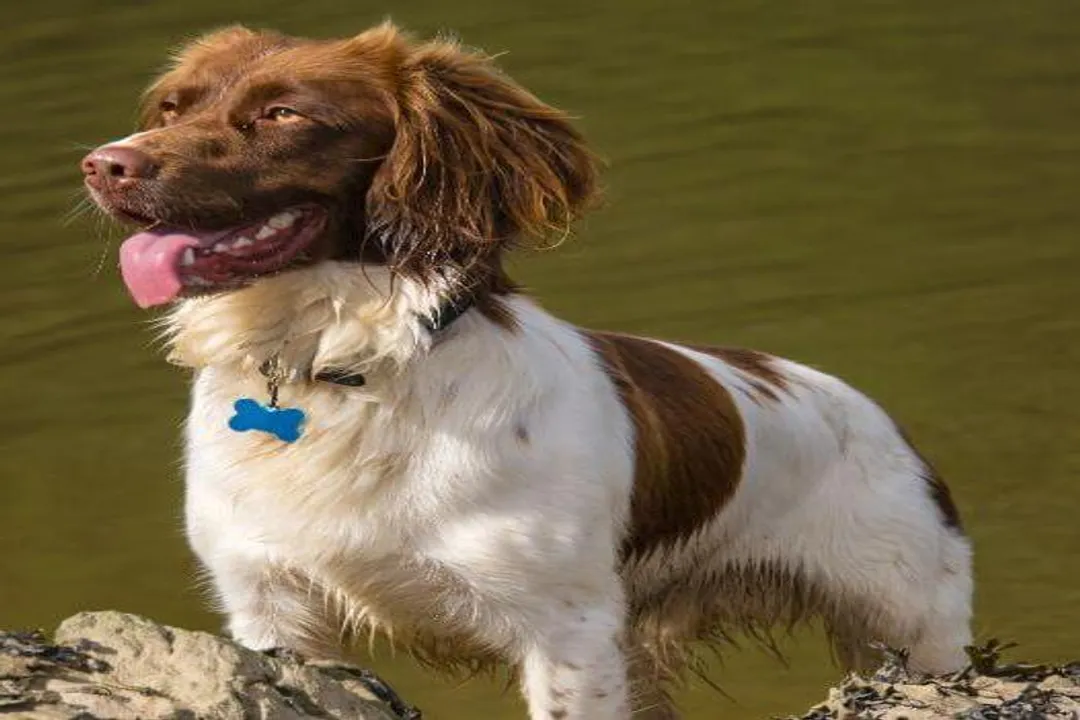
Perhaps the most immediate physical identifier for the Welsh Springer Spaniel is its striking coat color. This breed is exclusively rich red and white. [1][3][4][8] There is no allowance for black or liver markings, which immediately separates it from the English Springer Spaniel. [1][3]
The markings can appear in any pattern—often referred to as piebald—across the body. [1][3] A characteristic detail often noted in the standard is that any white area may be flecked with red ticking. [1][4][8] This means small red dots or spots can appear on the white parts of the coat, which is perfectly acceptable and adds to the individual dog’s charm. [4][8]

# Head Features
The Welsh Springer Spaniel possesses a head that is deliberately unique, intended to distinguish it from other spaniel varieties. [3][4] The overall balance of the head is paramount. The skull should be of medium length and appear slightly domed, yet it must be well chiseled underneath the eyes to avoid a coarse look. [4] The top plane of the skull should diverge very slightly from the muzzle, but crucially, it must not appear down-faced. [4] A head that is described as "short" or "chubby" is considered highly objectionable in breed assessment. [4]
The eyes are oval in shape and should convey a soft expression, with colors ranging from dark to medium brown. [4] A preference exists for a darker eye, though lighter shades of brown are often tolerated, while distinctly yellow or "mean-looking" eyes are heavily penalized. [1][4]
The ears are another defining characteristic. They are comparatively small and pendulous, meaning they hang suspended close to the cheeks. [1][3][4] They are shaped somewhat like a vine leaf, gradually narrowing toward the tip, and feature light feathering. [3][4] In terms of structure, the ears are set on at approximately eye level. [4] Below the eyes, the muzzle is shaped to be fairly square and straight, free from excessive flews (hanging lip), with the length of the muzzle being approximately equal to, but never exceeding, the length of the skull. [4] The nostrils must be well developed and pigmented black or brown; a pink nose is a fault that should be severely penalized in show specimens. [1][4] When assessing the bite, a scissors bite is preferred, while an undershot jaw is considered a severe fault. [1][4]
# Coat Texture and Maintenance
The Welsh Springer’s coat is perfectly engineered for its history as a sporting dog that worked in all terrains and weather. [3][6] The texture is key: it must be naturally straight, flat, and soft to the touch. [1][4][8] Any hint of a wiry or wavy texture is contrary to the standard. [1][3] Despite its softness, the coat is dense enough to provide necessary protection, being described as waterproof, weatherproof, and thornproof. [3][4] Coat length is generally described as medium. [6][8]
Feathering—longer hair that provides protection and aesthetic appeal—is found in specific areas. The back of the forelegs, the chest, and the underside of the body carry moderate feathering, while the ears and tail are only lightly feathered. [4][8] However, the standard cautions against excessive coat growth that could impede the dog’s work in the field; obvious trimming, or barbering, is discouraged. [4]
Owners should recognize that this protective, dense coat is a magnet for debris when the dog engages in its favorite outdoor activities. A practical step for owners is to make a habit of thoroughly inspecting the feathering on the legs and underside after any rugged walk or romp through wet grass or woods, rather than sticking rigidly to a calendar schedule for brushing. This targeted inspection prevents debris from matting into uncomfortable knots, which is especially important in the lower leg feathering. [5] A weekly brushing with a soft brush, using a metal comb or slicker brush to work through any developing tangles, generally keeps the coat in good order, with a monthly bath sufficing for most households. [2][6]

# Movement and Tail Carriage
The physical framework of the Welsh Springer Spaniel is designed to move with efficiency and power. The gait should be smooth, powerful, and ground-covering, which shows clear drive originating from the rear quarters. [4][6] When viewed from the side, the dog’s reach should be strong, minimizing wasted energy in its forward stride. [4] As the dog increases speed, the feet tend to converge toward a centerline, but the legs should move forward without interference or crossing over when viewed from the front. [4]
The tail is considered an extension of the topline. [4] In many regions and historically, the breed was traditionally docked. [3][4] When the dog is alert or excited, the tail is carried nearly horizontal or slightly elevated, often displaying a lively, characteristic wag. [4] This whole picture of movement showcases a dog built not just for looks, but for the sustained, hard work of finding and flushing game.
# Distinctions from Related Breeds
A significant part of understanding the Welsh Springer Spaniel’s physical presentation involves knowing what it is not. [1] It is often confused with the English Springer Spaniel, but the differences are quite marked. [1][3] While both are hunting spaniels that "spring" game, the Welshie is generally smaller and lighter than the English Springer. [2][6] Most conclusively, the Welshie sports its signature red and white pattern exclusively, whereas the English Springer carries liver or black markings on white. [1][3] Furthermore, the Welshie’s head is distinctively tapered compared to its English counterpart. [2][6] Though they share ancestry derived from the ancient Land Spaniels of the Iberian Peninsula, the Welsh Springer Spaniel has maintained its separate identity through focused breeding. [3]
If you look closely at a Welshie, you are observing a medium-sized, athletic dog whose physical traits are intrinsically linked to its purpose as a versatile, enduring hunting partner. [6] From its color palette restricted to red and white to its unique, tapering head, every element contributes to the identity of this less common, highly engaging companion. [2][3]
Related Questions
#Citations
Welsh Springer Spaniel - Dog Breeds - American Kennel Club
Welsh Springer Spaniel Dog Breed - Hill's Pet Nutrition
Welsh Springer Spaniel - Wikipedia
Breed Standard - WSSCA - Welsh Springer Spaniel Club of America
Looking to get a Welsh Springer Spaniel! Am I making the ... - Reddit
Welsh Springer Spaniel - All About Dogs | Orvis
Welsh Springer Spaniel Dog Breed Information | Purina UK
About the Breed - The Welsh Springer Spaniel Club