What are some interesting facts about Japanese macaques?
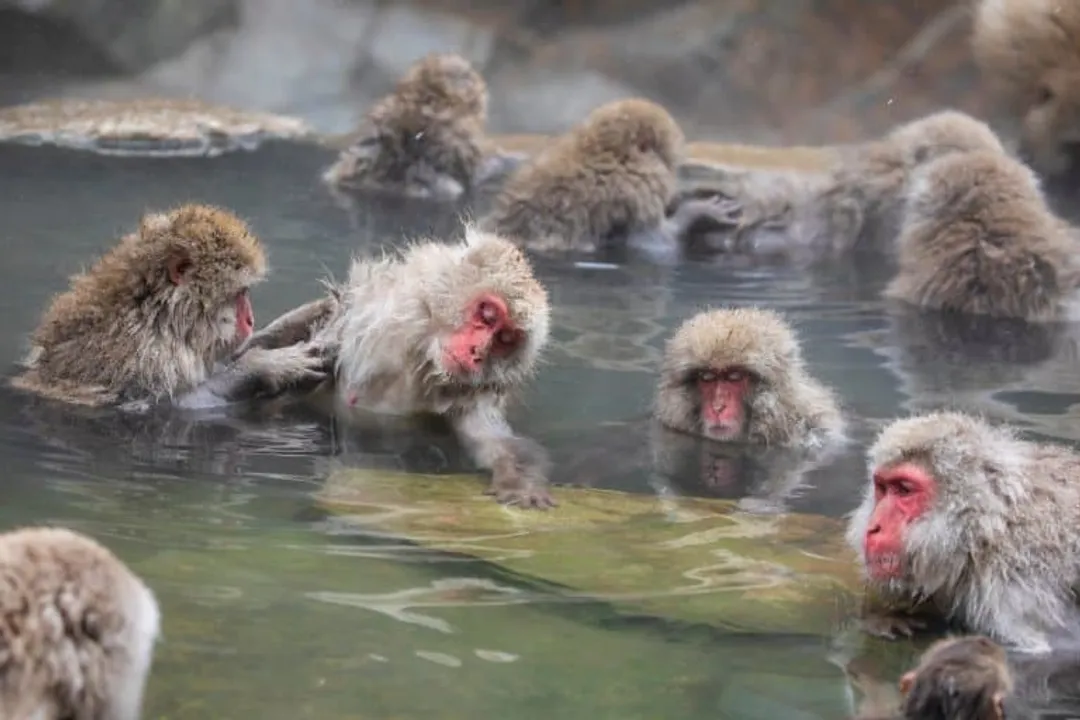
The Japanese macaque, often affectionately known worldwide as the snow monkey, presents a fascinating study in primate resilience and social complexity, thriving in conditions that would push most tropical primates far past their tolerance limits. These monkeys, scientifically named Macaca fuscata, are famous for their striking ability to endure harsh, snowy winters, a trait that sets them apart in the primate world. [3][8] They are not merely surviving the cold; they have developed intricate cultural behaviors to manage the severe seasonal changes of their island home. [3]
# Primate Status
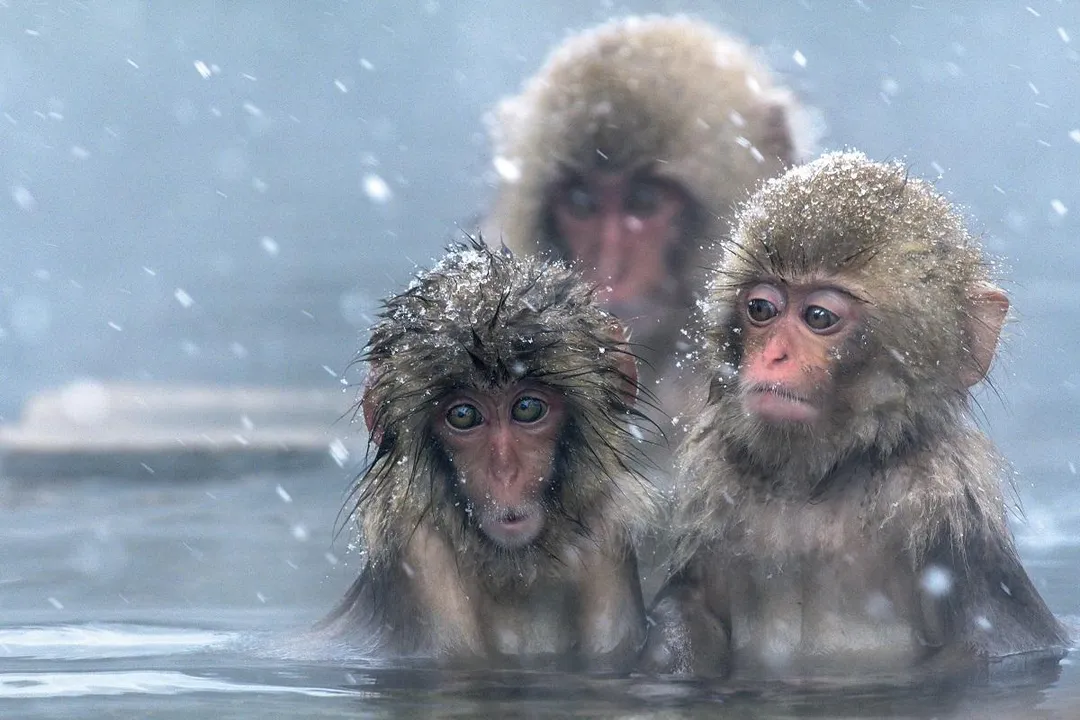
The Japanese macaque belongs to the Old World monkey family, Cercopithecidae, and specifically the macaque genus, which includes many successful and widespread species across Asia and North Africa. [8] Within Japan, these monkeys hold a unique distinction: they are the most northern-living non-human primate found anywhere on Earth. [1][8] Their natural habitat spans across the main islands of Japan, including Honshu, Shikoku, and Kyushu, although they are absent from Hokkaido. [8] Their adaptability has allowed them to colonize a vast range of environments, from subtropical lowlands to high-altitude mountainous regions, though the snowy areas are what they are most renowned for. [1][2]
Physically, they are quite robust creatures. Adults generally weigh between 10 and 14 kilograms, with males being significantly larger than females. [2][4] They possess thick, brown or grayish-brown fur, which becomes noticeably denser and shaggier in the colder northern regions, providing essential insulation against the elements. [1][3] Their faces and rumps are characteristically reddish. [4] Another key identifying feature is their relatively short tail, often less than 10 centimeters long, which is somewhat unusual for a macaque species. [2][8] This combination of thick fur and stocky build is a direct evolutionary response to the demanding temperate climate they inhabit. [8]
# Cold Adaptation
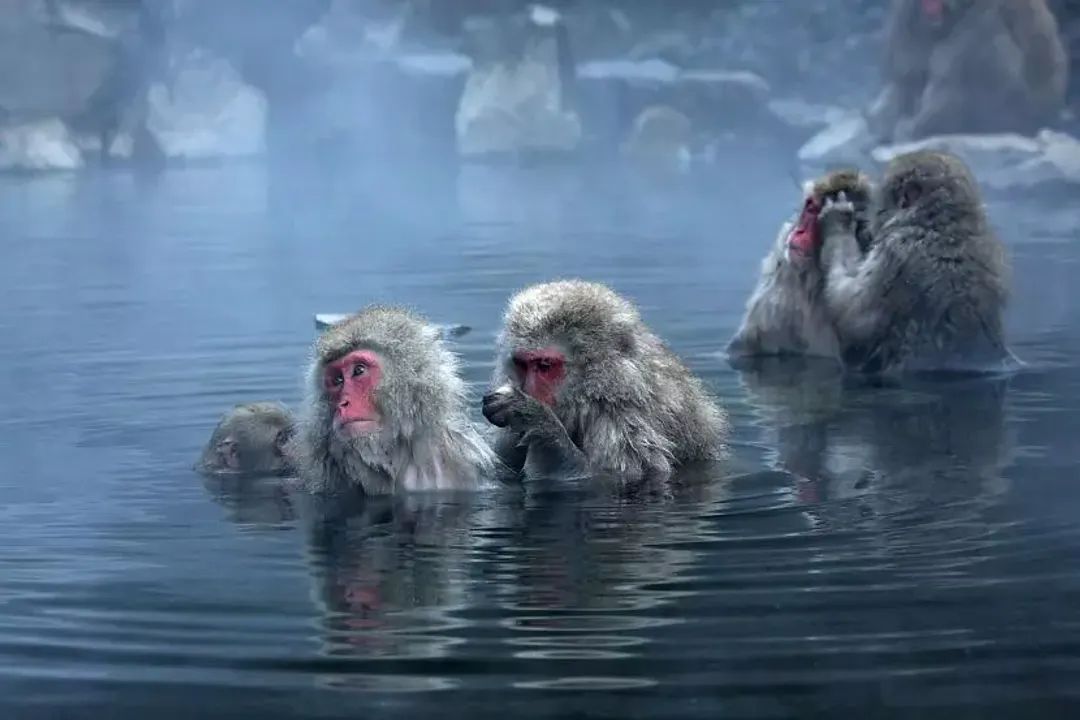
The ability of the Japanese macaque to cope with freezing temperatures and heavy snowfall is perhaps their most captivating attribute. [3] In some regions, snow cover can persist for up to four months of the year, and temperatures frequently drop well below freezing. [8] This extreme environment has driven the development of remarkable behavioral adaptations. [1]
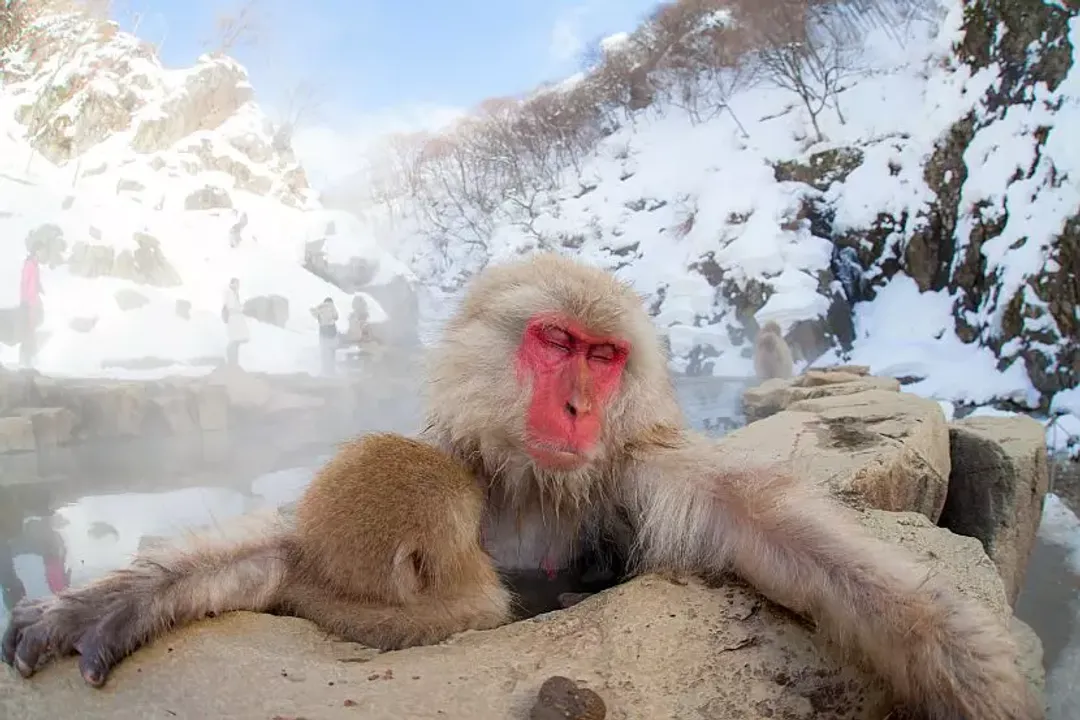
The most iconic of these behaviors is the deliberate bathing and soaking in natural hot springs, or onsen, which are abundant in volcanic Japan. [3][9] Troops residing near these geothermal features have learned to use them as literal warm refuges during the coldest months. [3] This isn't an innate, universal behavior across the entire species, but rather a learned cultural practice that spreads through social learning within specific groups, particularly evident in areas like the Jigokudani Monkey Park. [3][9] Observations show that monkeys will spend significant time submerged, often displaying relaxed facial expressions while water laps over their ears, suggesting genuine comfort and thermoregulatory benefit. [3]
Beyond the hot springs, other cold survival strategies are employed by troops living in non-onsen areas. They rely heavily on finding sheltered locations, such as caves or tree hollows, to huddle together for communal warmth during the bitterest nights. [8] Furthermore, their activity patterns shift; they spend more time foraging for food in the warmer midday hours and reduce energy expenditure when temperatures plummet. [1] The effectiveness of this learned behavior—using the hot springs—provides a clear example of how behavioral flexibility can override genetic limitations in adapting to a harsh environment. Consider that while their physiology is adapted with dense fur, the choice to enter hot water is cultural, a learned shortcut to conserving precious metabolic energy that would otherwise be spent just trying to stay warm. [3] This cultural knowledge transmission in response to environmental stress highlights a sophistication rarely seen outside of hominids.
# Social Structure
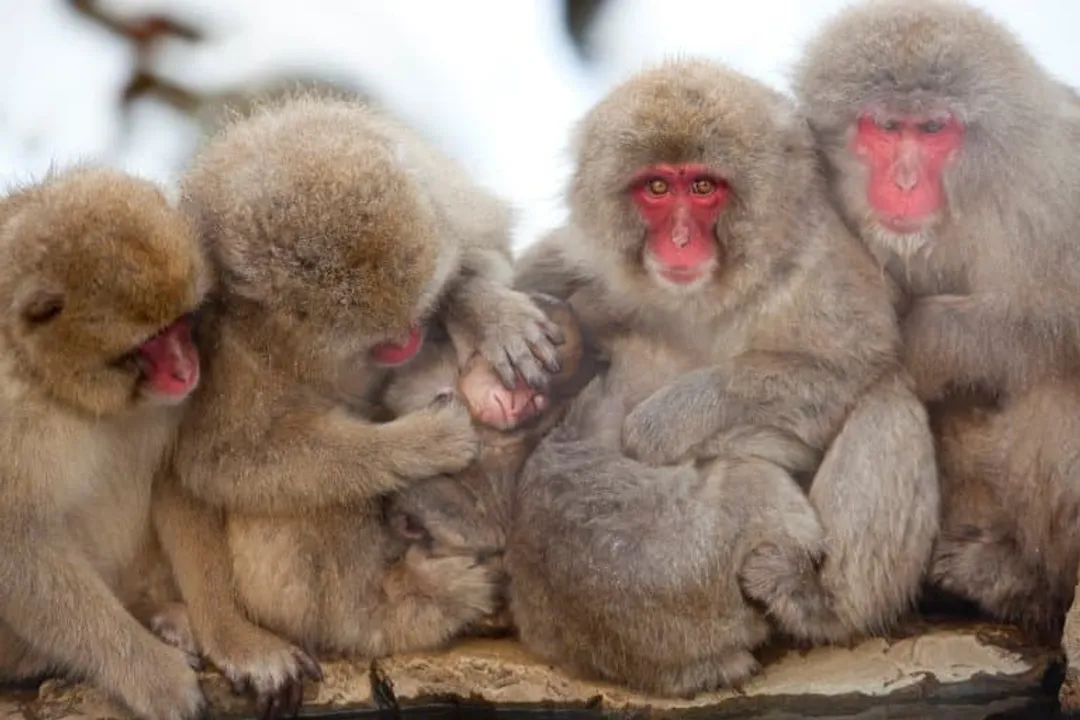
Japanese macaques live in complex, multi-male, multi-female social groups, often referred to as troops, which can range in size significantly, sometimes numbering over 100 individuals. [4][8] These groups exhibit a distinct hierarchical social structure that dictates access to resources, mates, and social comfort. [4]
The hierarchy is strictly matrilineal, meaning that the social rank of a female is determined by the rank of her mother. [4][8] A daughter will inherit a rank directly above her mother, and this ranking system establishes precedence and order within the troop for decades. [4] Males, while potentially holding higher ranks than females generally, must still defer to higher-ranking females descended from more senior maternal lines. [8] Male rank is established through dominance contests, often involving aggressive displays, and is generally more fluid than the fixed ranks of the females. [4]
Social bonding is critical for survival, particularly in harsh conditions. Grooming is the primary activity used to reinforce these bonds, reduce tension, and maintain hygiene. [4] High-ranking individuals receive more grooming, which serves as a social currency. [8] These relationships influence everything from where a monkey sits during cold weather to who gets priority access to a newly discovered food source. [4] The stability of the matrilineal structure allows for reliable social prediction within the group, which is especially vital when resources might become scarce during deep winter. [8]
# Diet and Feeding
As omnivores, the Japanese macaque exhibits a highly flexible and opportunistic diet, which is a major factor contributing to its ability to survive across such a broad geographical range. [2][8] Their feeding habits change dramatically with the seasons, reflecting availability. [1]
In warmer months, their diet leans heavily toward vegetation. This includes leaves, seeds, fruits, bark, flowers, and buds. [2][4] They are known to consume over 150 different plant species. [8] They are quite adept at foraging, turning over stones or digging in the soil to find underground roots and insects. [2]
When winter sets in and the ground freezes and vegetation dies back or becomes inaccessible under heavy snow, their diet shifts to whatever can be scavenged or located. [1][8] This might include bark, buds, and occasionally small vertebrates or invertebrates they manage to catch. [2] Their ability to utilize a vast pantry of food sources, rather than specializing in one or two, provides a strong buffer against localized food shortages common in temperate climates. [8] This dietary plasticity is a key component of their northernmost distribution. [1] It is interesting to note that troops that have become habituated to human feeding, even if it’s just the occasional tourist feeding them fruit, often show a temporary shift in foraging effort, dedicating less time to natural substrate foraging than their wilder counterparts. [9] This suggests that while they are highly adaptable, learned artificial food sources can subtly alter natural behavior patterns.
# Life History
The life cycle of the Japanese macaque follows patterns typical of Old World monkeys, though constrained by the temperate climate. [2] Gestation periods are relatively long, lasting about six months. [2][5] Typically, a female gives birth to a single infant. [2] The mother-infant bond is intense and crucial for the juvenile's development, as the young macaque relies entirely on its mother for protection, warmth, and learning vital social skills for the first year or more of life. [8]
Infants are born with lighter fur than adults, which darkens as they mature. [7] The development of social skills is closely tied to the mother’s rank; infants belonging to higher-ranking mothers often have better survival rates and social integration due to the protection afforded by their lineage. [4][8] Lifespans vary depending on the environment and social standing, but in the wild, they can live into their late twenties. [2] In protected settings or where food is abundant and risks are low, they may potentially live longer. [2][5]
# Biomedical Role
A significant, though perhaps less publicly visible, aspect of the Japanese macaque's existence involves their role in scientific research. [6] Macaca fuscata is one of the most commonly used non-human primate models in biomedical research globally. [6] This selection is driven by several factors related to their biology and accessibility. [6]
Their genetic makeup and physiology share sufficient similarities with humans to make them relevant models for studying human diseases and testing new treatments. [6] They are particularly important in areas such as neuroscience, immunology, and vaccine development, including research related to HIV/AIDS and other infectious diseases. [6] Furthermore, their robust nature and ability to thrive in captivity, coupled with the fact that they are genetically distinct from the rhesus macaque (another common research model), makes them invaluable for specific comparative studies. [6]
The population management and sourcing for these research facilities are highly regulated, often drawing from established captive-bred colonies to minimize impact on wild populations, though historical collection did impact wild numbers. [6] Understanding the baseline health and behavior of these animals is crucial for ensuring research validity and ethical standards. [6]
# Human Interaction
Due to their historical presence throughout the Japanese islands, encounters between Japanese macaques and humans have been occurring for centuries, leading to complex relationships that range from viewing them as pests to celebrating them as cultural icons. [9] In agricultural areas, they can sometimes be perceived as nuisances due to crop raiding, leading to necessary management strategies to protect both primates and human livelihoods. [8]
Conversely, in designated tourist areas, they are a major draw. [9] The aforementioned Jigokudani Monkey Park is the most famous example, where visitors can observe the monkeys using the hot springs, especially during the snowy season. [9] It is essential for visitors to remember that despite their seemingly quaint behavior in the hot springs, these are still wild animals. [9] Respecting boundaries is paramount for safety and for the animals' well-being. [9] Feeding them is generally discouraged or prohibited in managed areas because it disrupts their natural foraging behaviors and social structures, leading to aggression or over-dependence on human food sources. [9]
When navigating areas where they live, such as hiking trails or rural towns, one must recognize their hierarchy and not interfere with troop dynamics. [1] While they appear docile when bathing, they possess strong physical capabilities and will defend themselves or their troop members if they feel threatened or cornered. [4] Their adaptability is matched only by their need for a respectful distance from human observers. The success of their continued existence near human settlements, even in developed areas, hinges on managing these interactions delicately, preserving their wild nature while acknowledging their cultural status within Japan. [8][9]
Related Questions
#Citations
Japanese macaque, Macaca fuscata
Japanese Macaque - Facts, Diet, Habitat & Pictures on Animalia.bio
Snow monkey facts - The Great Projects
15 Japanese Macaque 'Snow Monkey' Facts - Fact Animal
Japanese macaque facts and figures - AAP English
Japanese Macaques (Macaca fuscata) in Biomedical Research
Japanese macaque Facts for Kids
Japanese macaque - Wikipedia
Japanese Macaque Monkeys: The Fascinating Snow Monkeys of ...