What are some interesting facts about Beagles?
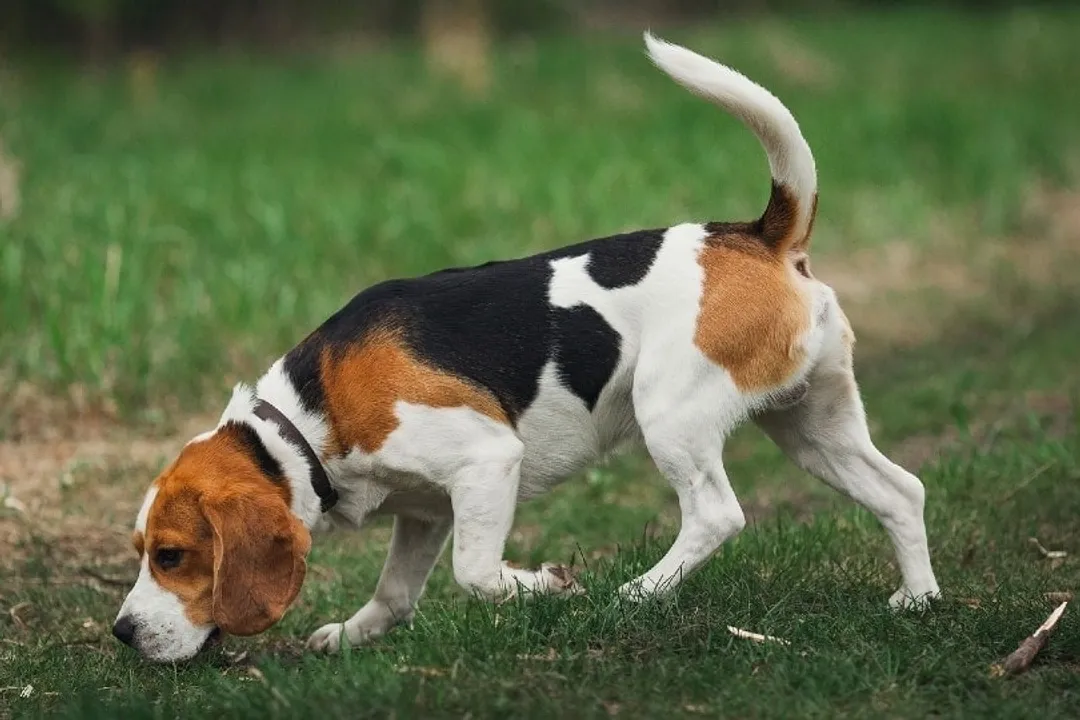
The Beagle is instantly recognizable, a happy-go-lucky hound whose floppy ears and soulful eyes have charmed dog lovers for centuries. [1][5] While most people associate them with being cheerful companions, these dogs possess a fascinating history and a set of physical traits geared entirely toward their original purpose: tracking. [7] Their history is deeply intertwined with the hunt, often being bred to run with hunters who pursued game on foot rather than on horseback, meaning the dogs needed to be sturdy enough for long treks but small enough to follow through dense undergrowth. [7]
# Hunting Roots
The exact lineage is somewhat murky, but Beagles are thought to descend from hounds like the St. Hubert’s Hounds or various types of small scent hounds present in England. [8] The name itself might derive from the Old French word begle, meaning "loud-mouthed," or the Anglo-Saxon word beag, which translates to "large throat," both pointing toward their vocal nature as hunters. [8][7] Unlike larger hounds requiring riders to keep pace, Beagles were historically used by hunters who walked alongside them, necessitating a smaller, durable dog. [7] This historical role heavily influences their modern personality, particularly their relentless drive when a compelling scent is located. [4]
In the United States, Beagles gained significant popularity, often employed for hunting hare and rabbit, a pursuit where their exceptional nose and stamina truly shine. [1] This heritage means that modern Beagles often carry an inherent, powerful urge to follow a trail, sometimes overriding everything else, including their owner's calls. [4]
# Olfactory Prowess

When discussing Beagles, their nose deserves its own spotlight; it is truly world-class. [1] Ranked among the very best scent hounds, their olfactory capabilities are so acute that they are frequently employed by government agencies. [5] The most famous example of this working partnership is the Beagle Brigade, a team of scent-detecting dogs, often Beagles, used by the United States Department of Agriculture (USDA) at airports to sniff out prohibited agricultural items brought in by travelers. [1][2][5]
It’s not just about contraband; their tracking ability extends into incredible biological feats. There are documented accounts suggesting that Beagles have been trained to detect human illnesses, such as certain cancers, or even dangerously low blood sugar levels in diabetic individuals. [5] This precision is rooted in their physical structure. Consider their large, velvety ears; these aren't just for looks. When a Beagle lowers its head to track, those long ears actually sweep the ground, helping to stir up scent particles and funnel them directly toward the nose, effectively creating a miniature scent vacuum. [2] This anatomical specialization is a significant reason why they excel where other breeds might struggle to stay focused on a trail. [1]

# Size Variation

One interesting point about the breed standard is that Beagles are categorized into distinct size varieties recognized by the American Kennel Club (AKC). [1] While many people picture a uniform dog, there are actually two main height classes for Beagles showing preference in conformation events. [1] The first group measures under 13 inches at the shoulder, and the second group measures between 13 and 15 inches tall. [1] Generally, the average weight for an adult Beagle falls somewhere in the range of 20 to 30 pounds. [10] This moderate size is part of what made them so adaptable for hunting on foot, as they were large enough to keep up but small enough to navigate thickets and brush without issue. [7]
# Temperament and Sound
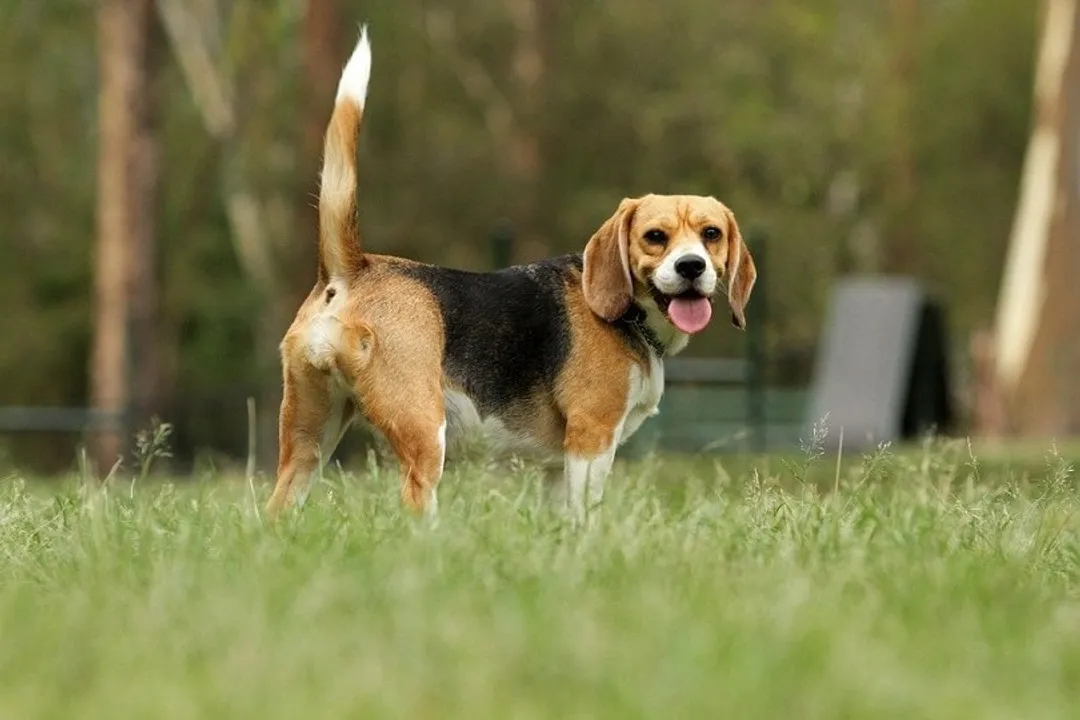
Beagles are renowned for their friendly, merry, and affectionate disposition, making them excellent family pets. [1][10] They generally thrive on human companionship and are usually great with children, earning them a reputation as wonderful additions to households with kids. [5][10] They are often described as pack animals, meaning they usually prefer not to be left alone for long periods and often do well with other dogs. [3]
However, this sociability contrasts interestingly with their independent streak, which manifests most clearly when their nose takes over. [3] Owners often note that while they are loving, training, especially recall training when off-leash outside a secure area, can be exceptionally difficult because their desire to follow a smell trumps their desire to obey. [4]
Their vocalizations are also distinctive. While they do bark, Beagles are perhaps more famous for their unique howl or bay. [3] This baying sound is a deep, musical call used historically to alert hunters to the location of the pack or the quarry. [1] A Beagle singing its song can carry quite a distance, which is something new owners should be prepared for. [3] Living in close quarters with neighbors requires an understanding that this breed is naturally vocal, and managing that tendency is part of responsible ownership. [4]

# Color and Appearance
While the classic image of a Beagle is often the tri-color—black, white, and tan—they can actually appear in any recognized hound color. [5] Common variations include lemon and white, red and white, or simply bi-color patterns. [5] What unites them, visually, aside from their sturdy build, are those expressive, soft eyes and, as mentioned, those scent-trapping ears. [2]
If you are considering adding a Beagle to your home, knowing their scent-driven nature offers a great starting point for positive training techniques. Instead of focusing solely on punishment when they ignore a command to follow a squirrel, it’s far more effective to channel that drive constructively. For instance, scent-work games—hiding treats around the house or yard and teaching them to find it on command—can satisfy their instinctual need to track while simultaneously strengthening the bond and teaching them to work with you, rather than against your verbal cues. [4] This turns a potential frustration point into a fun, confidence-building activity. [1][2]
# Pop Culture Paws
Beagles have also secured a firm place in popular culture. Perhaps the most famous Beagle of all time is Snoopy, the cartoon dog created by Charles M. Schulz, who often assumes the persona of a World War I flying ace atop his doghouse. [2] This association has only added to the breed's lovable image. [2]
In a less whimsical, but equally notable historical role, Beagles have even ventured into space. Reportedly, NASA sent several Beagles on scientific missions aboard U.S. space flights, making them some of the earliest dogs to see orbit. [7]

# Beagle Ownership Considerations
Because Beagles are so social and motivated by their noses, they require diligent management regarding safety and environment. [4] Due to their fixation on scents, they should virtually never be trusted off-leash in an unsecured area. [3] Their powerful urge to trail a scent can cause them to slip collars or simply ignore commands once they are "on the job," leading them far from home. [4] Fences must be secure, and their curiosity often means they are also excellent escape artists capable of digging or squeezing through small gaps. [3]
Their maintenance needs are relatively straightforward compared to some highly demanding breeds. They generally require moderate exercise—a good daily walk or supervised playtime—but owners must ensure they are getting enough mental stimulation to prevent boredom, which can lead to destructive behaviors. [10] A bored Beagle can become a noisy or mischievous one. [10]
In summary, the Beagle is a charming paradox: a loving, cheerful companion that also possesses the hardwired instincts of a tireless, single-minded hunter. [1][5] Understanding that the floppy ears and endearing face belong to a dog bred to trust its nose above all else is the key to successfully sharing your home with one of these wonderful hounds. [3][4] They are truly a breed whose charming personality is inseparable from its fascinating history and potent senses. [7][8]
#Videos
9 Facts About Beagles you didn't know! - YouTube
Related Questions
#Citations
Beagle Facts You May Not Know - American Kennel Club
5 Fun Facts You Probably Didn't Know about Beagles
Fun Facts About Beagles | Wadsworth Animal Hospital
what things i should know before having a beagle? - Reddit
24 Incredible Vet-Verified Facts About Beagles - Dogster
9 Facts About Beagles you didn't know! - YouTube
Beagles: Facts, Temperament, Size & Character
Beagle - Wikipedia
Four Fun Facts About Beagles - National Kennel Club
What to Know About Beagles - WebMD