What are some fun facts about the aardwolf?
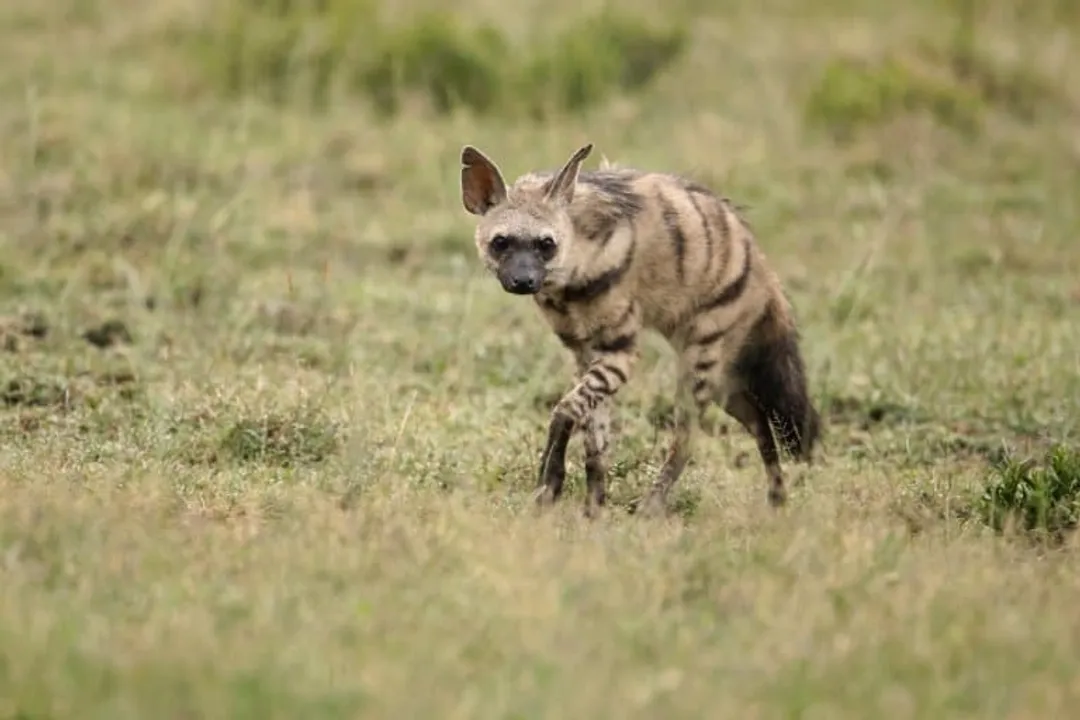
The creature often called the "earth wolf," derived from its Afrikaans and Dutch name, is one of the most misunderstood residents of the African plains. Far from being a canine, the aardwolf (Proteles cristata) is actually the smallest and perhaps most peculiar member of the Hyaenidae family, placing it in the company of the much more formidable spotted, striped, and brown hyenas. This diminutive stature and specialized lifestyle have allowed it to carve out a unique ecological niche, avoiding direct competition with its larger, carrion-eating relatives. Despite sharing a family name, the aardwolf sits on a very ancient branch of that lineage, believed to have split from the other hyenas perhaps 15 to 32 million years ago. The genus name, Proteles, translates roughly to "complete in front" in Greek, a nod to its unique foot structure: five toes on the front limbs and only four on the hind ones. The species name, cristatus, refers quite directly to its most noticeable feature—the prominent mane running along its back, meaning "provided with a comb" in Latin.
# Slender Build
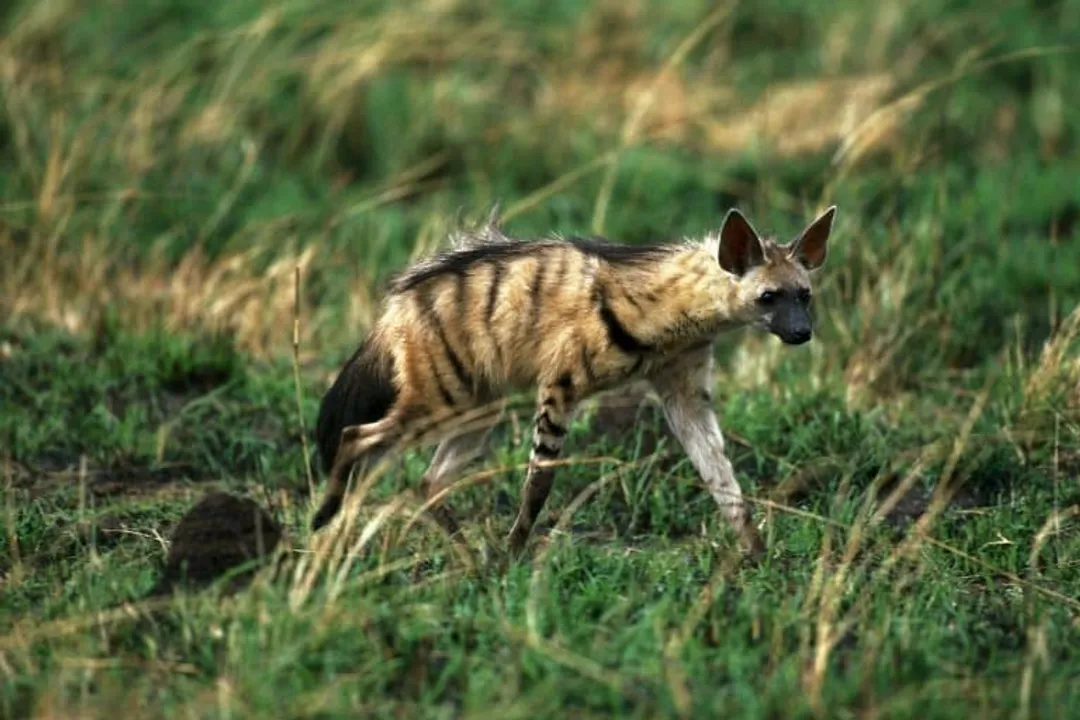
The appearance of the aardwolf is certainly arresting and easily confused with the striped hyena from a distance, though closer inspection reveals key differences. It possesses a generally slender body, a more elongated muzzle compared to its cousins, and notably large, pointed ears. The coat itself is typically a yellowish or cream base color, heavily marked with distinctive black vertical stripes across its torso and legs. Black markings also accent its tail tip and muzzle. From shoulder height, an adult aardwolf usually stands between 40 to 50 centimeters tall. In terms of overall size, body length generally falls between 55 and 80 cm, with a bushy tail adding another 20 to 30 cm. Weight is modest, usually resting between 7 and 15 kilograms (about 15 to 33 pounds). While males and females look nearly identical in appearance, some evidence suggests southern African aardwolves might be slightly smaller than their eastern African counterparts. Adding to its distinct look is the thick mane that runs down its neck and back, which the animal can deliberately raise when feeling threatened, effectively making itself look up to 70% larger than it truly is.
# Dental Divide

Most carnivorans gain renown for powerful jaws and shearing teeth, but the aardwolf presents a fascinating physiological divergence. While it maintains strong canines, these are primarily weapons for fighting and self-defense rather than hunting implements. The true spectacle of its adaptation lies in its cheek teeth. Unlike the robust, meat-grinding teeth of other hyenas, the aardwolf’s cheek teeth have been significantly reduced, evolving into small, flattened pegs specifically suited for crushing insects. This specialized dentition is a classic example of extreme niche partitioning within a single mammalian family. By evolving into an obligate insectivore, the aardwolf ensures that its feeding strategy—and therefore its diet—does not overlap with the scavenging and predation habits of the spotted or brown hyenas, allowing all four hyena species to coexist in shared habitats without intense conflict over major food sources.

# Termite Focus
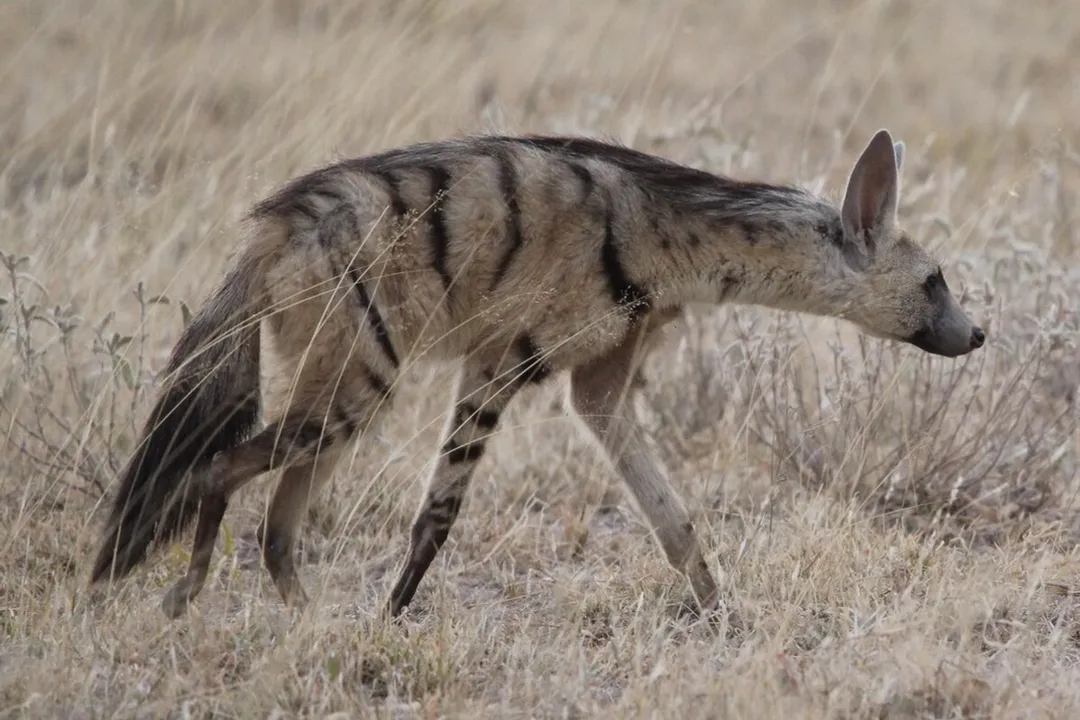
The aardwolf's reliance on insects, particularly termites, is absolute. It is often called the "termite-eating hyena" precisely because of this dietary obsession. The primary menu item consists overwhelmingly of harvester termites, particularly species belonging to the Trinervitermes genus across its range. An individual aardwolf is capable of an astounding feat of consumption, estimated to lap up between 200,000 and 300,000 termites in a single night. To achieve this, the aardwolf employs a long, sticky, and broad tongue to delicately lick the insects off the ground, often memorizing the location of nests and returning to them every few months. This contrasts sharply with the aardvark, which actively digs into the mounds, allowing the aardwolf a more sustainable, continuous food supply by leaving the nest structure intact. Furthermore, the aardwolf possesses a genetic trait that grants immunity to the noxious chemical defenses secreted by soldier termites. During leaner times, such as the cold of midwinter or when primary termites become scarce, they may switch to other seasonal termites like Hodotermes mossambicus, which are sometimes active during the afternoon, explaining occasional diurnal foraging. If termites are truly unavailable, they may consume other insects, larvae, or even beetles found on carrion, though they conspicuously do not scavenge meat like their relatives. This diet is so vital that it also supplies nearly all the necessary water intake, meaning aardwolves rarely need to seek out open water sources. The sheer volume of insects consumed means that a great deal of sand is swallowed in the process; about 50% of an aardwolf’s dung is composed of this ingested sand, which acts as a necessary abrasive to aid digestion in the absence of heavy-duty chewing teeth.
# Nocturnal Dens

Aardwolves are strictly nocturnal creatures, spending the daylight hours resting underground to avoid the intense heat of the African sun. They are not proficient diggers themselves, so they typically select and enlarge existing subterranean dwellings dug by other animals like aardvarks, porcupines, or springhares, or they might utilize natural rock crevices. A breeding pair maintains a substantial territory, often spanning 1 to 4 square kilometers, and within this area, they may maintain up to ten different dens. This rotation is key to survival; using a den for only a few weeks before moving on helps to avoid alerting rivals or potential predators to their exact location. While they forage primarily alone at night, they form strong, monogamous pair bonds for rearing young. During the initial weeks after the one to four cubs are born—eyes open but helpless—the father often remains close to the den, sometimes for hours each night, while the mother undertakes foraging trips. Once the pups are older, they begin supervised foraging excursions, eventually leaving to establish their own territories around their first year. This reliance on established, usable shelter means that habitat destruction is doubly damaging; it removes their primary food source (termite mounds) and forces them to either create new dens from scratch or venture into less secure, exposed areas, which could be especially problematic for a relatively slow-moving animal.

# Scent Territory
Communication in the world of the aardwolf relies heavily on chemical signals, making them prolific scent-markers. Both sexes possess anal glands that secrete a distinctive black, musky substance. This potent fluid is smeared onto foliage, grass stalks, or rocks to delineate territory boundaries and advertise readiness to mate. The odor has been compared to particularly bad human sweat, and these marks can sometimes persist for years. When patrolling their territory, the frequency of marking increases dramatically, with an individual placing a new mark every 50 meters, potentially leaving over 200 individual marks in a single night. Scent glands are also present on the forefoot and penile pad, adding further layers to their chemical signature. When an intrusion does occur, particularly during the mating season when fights between rival males can happen, the aardwolf will first try to scare the intruder off non-vocally. If chased, they might flee, but if cornered or confronted, they resort to raising their mane and releasing that foul-smelling liquid from their anal glands as a final deterrent. Vocalizations—which include soft clucking, hoarse barking, or even a type of roar—are reserved for these direct confrontations.
# Population Status
Despite the historical issue of being shot by farmers due to a widespread, incorrect belief that they preyed on livestock, the aardwolf is currently listed as a species of Least Concern by the IUCN. This positive status reflects that populations remain healthy and widespread across their range in eastern and southern Africa. The shift in perception has seen some farmers now recognize the ecological benefit of having aardwolves around, as they help manage termite numbers and also consume grasshopper nymphs that can damage crops. Their secretive, nocturnal nature, however, makes it difficult to get accurate population counts, and they naturally occur at a low density, perhaps no more than one individual per square kilometer where food is abundant. While they face few predators as adults—lions and leopards being the main threats—the cubs are vulnerable to larger predators like jackals and other hyenas. Although the precise wild lifespan is unconfirmed, related species often live for 15 years or more, and in captivity, one individual was documented living for nearly 19 years. Their unique adaptations, which allow them to thrive on a diet inaccessible to virtually all other carnivores, are the very reason this "earth wolf" continues to persist across the savannas.
Related Questions
#Citations
The Creature Feature: 10 Fun Facts About the Aardwolf
Aardwolf | National Geographic
13 Amazing Aardwolf Facts - Fact Animal
Aardwolf - Wikipedia
Aardwolf - Proteles cristata - A-Z Animals