Why is *Procoptodon*'s high degree of binocular vision theorized to be advantageous?
Answer
Crucial for navigating dense scrub or precisely selecting leaves
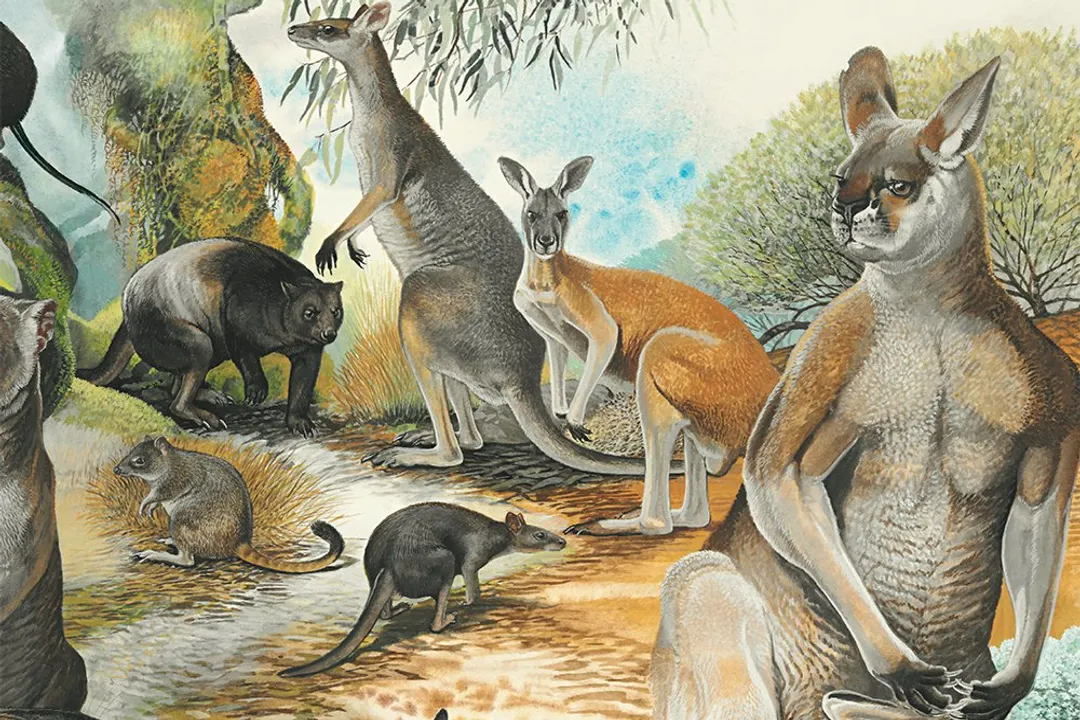
The forward eye placement resulting in excellent depth perception is theorized to have been vital for tasks requiring precision, such as navigating dense scrub or choosing specific leaves from branches.
Related Questions
Approximately how tall was a fully grown *Procoptodon*?What feature gave *Procoptodon* the nickname "short-faced kangaroo"?How did the eye placement in *Procoptodon* differ from modern kangaroos?Which best describes the specialized hind feet of *Procoptodon*?What type of locomotion was *Procoptodon* likely adapted for?How many grinding teeth were generally present in each quadrant of a *Procoptodon*'s jaw?What does the specialized dentition of *Procoptodon* suggest about its primary diet?Approximately when did *Procoptodon* disappear from the Australian megafauna record?What role might the sturdy forelimbs of *Procoptodon* have played during movement?Why is *Procoptodon*'s high degree of binocular vision theorized to be advantageous?