What are some facts about queleas?
The Quelea quelea, commonly known as the Red-billed Quelea, holds a unique and somewhat infamous title in the avian world: it is widely considered the most abundant wild bird species on the planet. [4] These small, sparrow-like birds inhabit vast areas of sub-Saharan Africa, and their population dynamics are so extreme that they frequently shift from being a fascinating natural spectacle to a severe agricultural problem. [5] Understanding the facts surrounding this creature requires looking past its modest size and appreciating the sheer scale of its existence. [3]
# Physical Traits
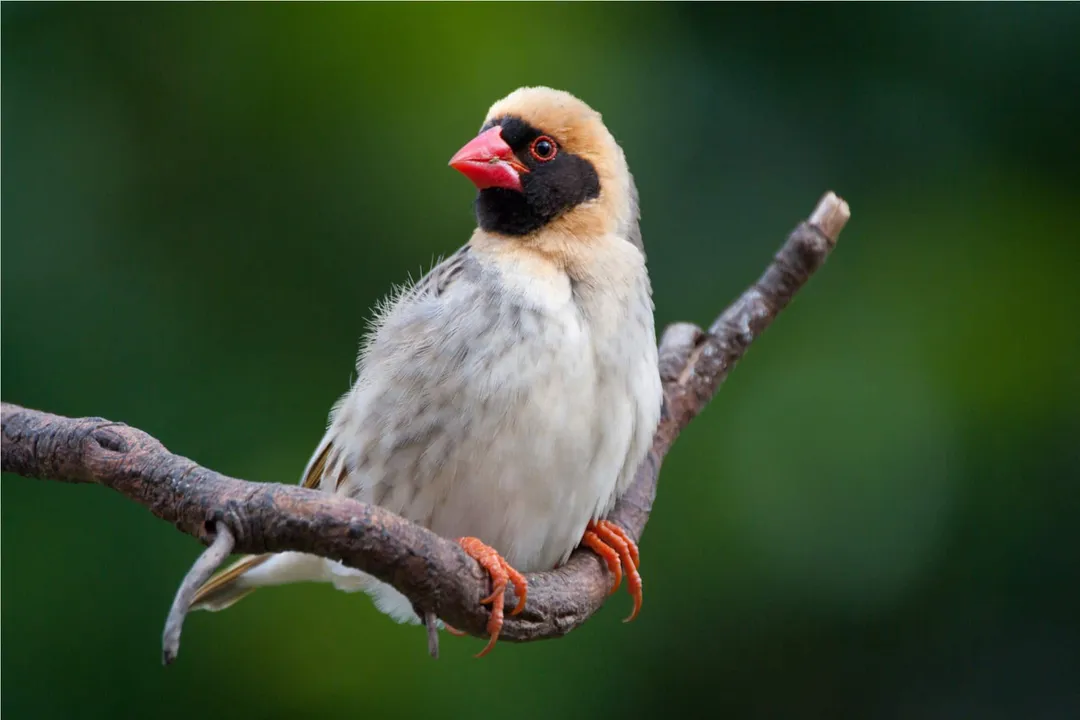
The Red-billed Quelea is a small passerine bird, generally measuring around 12 to 13 centimeters in length. [3][9] Like many bird species, there is noticeable sexual dimorphism, meaning males and females look different, particularly during the breeding season. [2]
The non-breeding male possesses a rather dull, streaky brown plumage, making it look very similar to the female. [3][9] However, when the breeding season arrives, the male undergoes a transformation, growing a bright yellow crown and a striking black face, contrasting sharply with its pale breast and back. [3][9] The namesake feature, the bright red bill, is present in both sexes year-round, although its shade can vary slightly. [3][9] In contrast, the female retains her streaky brown appearance throughout the year, providing better camouflage. [9]
If you were to compare this species to other common small birds, such as a house sparrow, the Quelea is slightly smaller and more slender in build. [9] Their general coloration provides excellent camouflage when they are feeding on the ground among dry grasses and seed heads. [9]
# Vast Numbers
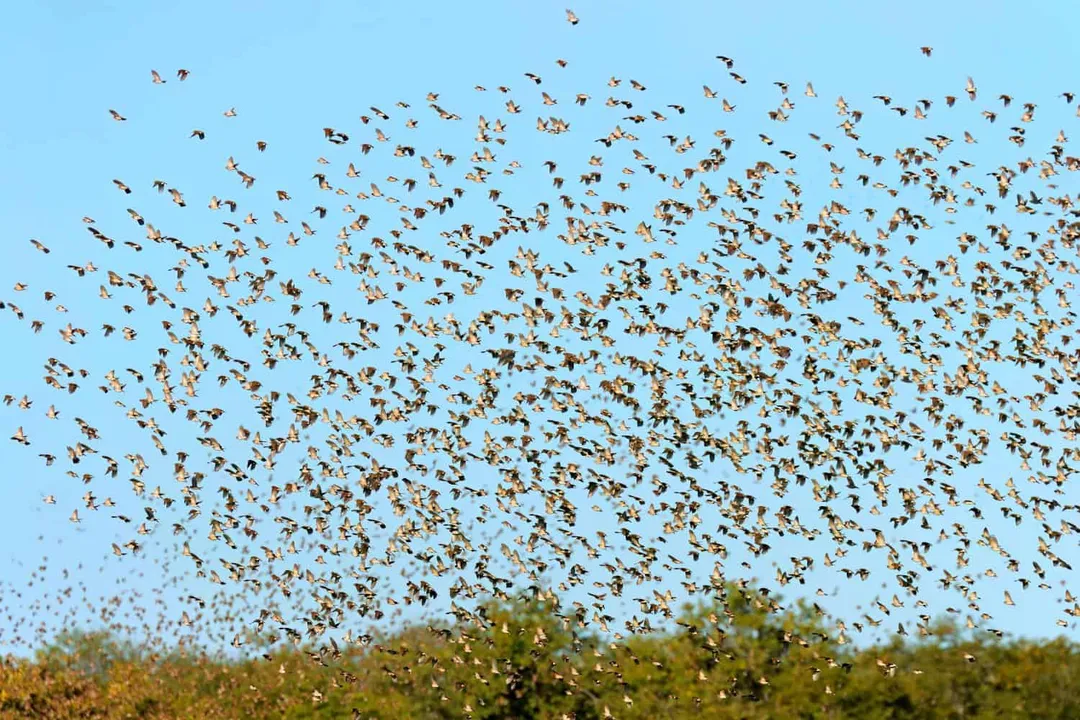
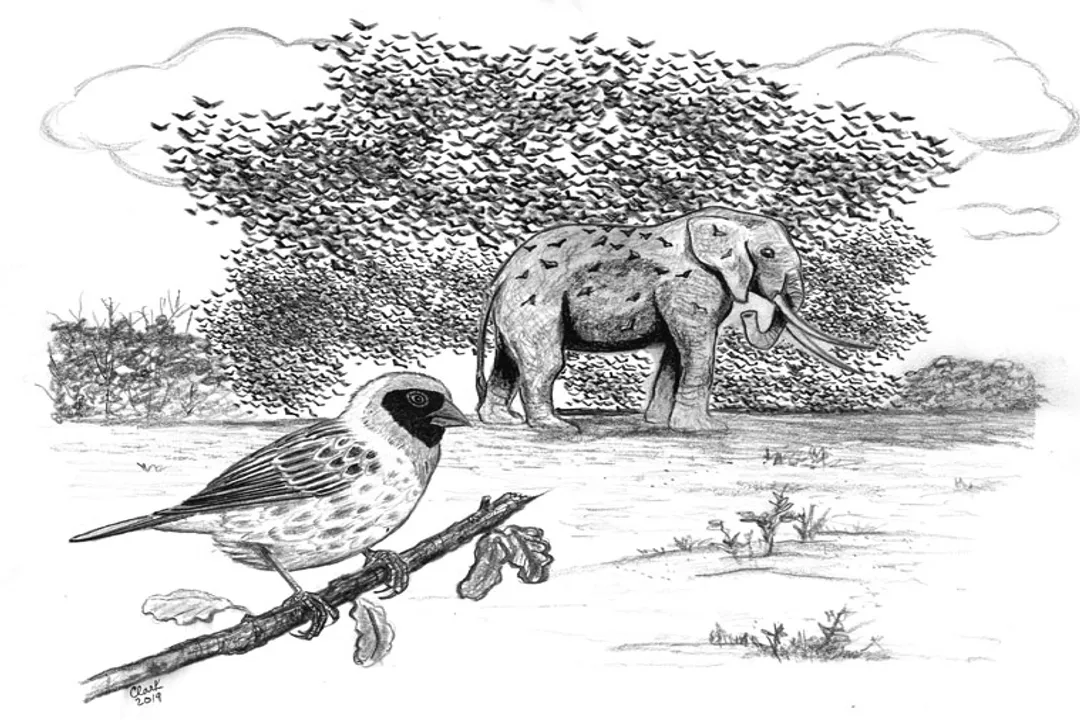
The most compelling fact about the Red-billed Quelea is the staggering size of its population, which dwarfs that of any other wild bird. [4] While exact counts are impossible for such a mobile and numerous species, estimates often place their total numbers in the hundreds of millions, sometimes even reaching into the billions. [2][4] Some observations suggest that the population might fluctuate between 1.5 billion to as many as 10 billion individuals, depending on environmental conditions and breeding success. [2][4]
To put this into perspective, if we consider the lower end of the billion-scale estimate, and conservatively assume an average adult mass of about 20 grams per bird, the total biomass represented by these flocks is immense. [2] It suggests that in certain regions, the density of Queleas during migratory or feeding periods can create ecological pressures far exceeding those exerted by larger animal populations in the same area. The species classification often lists it as the most numerous bird, belonging to the family Ploceidae, which encompasses the weavers. [7]
It is important to note that while the Red-billed Quelea is the most famous and numerous, the genus Quelea contains other species, such as the Ethiopian Black-winged Quelea (Quelea saintoinoyei) and the Red-headed Quelea (Quelea erythrops), though the Red-billed variant dominates in sheer numbers and widespread impact. [7]
# Colonial Life
Queleas are intensely gregarious birds, living and moving in massive flocks that are best described as swarms. [2] These flocks can number in the tens of thousands, or even hundreds of thousands, creating astonishing spectacles when they fly overhead. [2] When thousands of these birds move simultaneously, the sound of their wings can resemble the sound of a strong wind or rushing water. [2]
Their social structure extends deeply into their nesting habits. Queleas are colonial breeders, constructing their nests in dense, sometimes chaotic, colonies within trees or large shrubs. [2] They build dome-shaped nests woven intricately from grass and reeds. [2] These colonies can sometimes cover an entire grove of trees, with nests packed closely together. [2] In an area of high density, one might observe nests positioned only inches apart in the available vegetation. [2]
This colonial nesting behavior is a key survival mechanism. While it concentrates risk from predators or localized disease, the sheer numbers offer protection through vigilance and confusion. [2] Furthermore, the collective activity of building and defending the nesting site is a group endeavor, though individual pairs construct their own separate nests within the communal space. [2]
# Feeding Habits
The diet of the Red-billed Quelea is highly specialized, focusing almost entirely on grass seeds. [1] They are particularly fond of the seeds of cultivated grains, which brings them into direct conflict with human agricultural interests. [1][5] They are known to be capable of stripping a field of grain within a very short period, consuming seeds directly from the stalk before harvest. [5]
Their feeding style is opportunistic, shifting based on what seeds are available, but their preference for small, easily harvested grains makes crops like millet, sorghum, and wheat particularly vulnerable. [1] While they do consume wild grass seeds during the non-cultivation seasons, their population explosions often coincide with the maturity of cash crops across the African savanna. [5]
The sheer scale of their consumption is what causes the economic damage. An individual bird eats a substantial amount relative to its body size daily, and when multiplied by a billion individuals, the effect on local food security can be devastating. [4] Managing this species often involves sophisticated, localized strategies aimed at repelling flocks from specific fields rather than attempting widespread eradication, which is ecologically impossible given their numbers. [5] It is fascinating to observe how a bird this small can exert such significant influence over regional agricultural output simply by existing in such staggering profusion. [4]
# Breeding Cycle
The timing of the breeding cycle for the Red-billed Quelea is highly dependent on the onset of the rains. [2] They are highly sensitive to environmental cues, initiating breeding only after substantial rainfall has occurred, ensuring that there will be sufficient food resources (new grass growth and seeds) for the offspring. [2]
Once the rains arrive, breeding activity can commence rapidly. [2] As mentioned, males assume their bright breeding plumage to attract mates. [3] The nests are built by the pair, taking about two weeks to complete. [2] Females typically lay between two and five eggs per clutch. [2] The incubation period is relatively short, and the chicks fledge quickly, often within two weeks of hatching. [2] This rapid turnover allows colonies to potentially raise multiple broods within a single favorable rainy season, further contributing to their massive population growth potential. [2]
The synchronization of breeding with the rains is a testament to their adaptability. By responding immediately to water availability, they maximize the window of opportunity to reproduce successfully before the dry season returns and seed sources diminish again. [2]
# Classification Basics
The Red-billed Quelea belongs to the order Passeriformes, which includes perching birds. [7] Its specific family is Ploceidae, the weavers. [7] This places it in the broader group that includes familiar species like the common weaver. [8]
The classification is crucial because it links the Quelea to a family known for complex nesting structures and highly social behaviors. [7] While many weaver species build elaborate, hanging nests, the Quelea focuses its weaving expertise on creating dense, communal structures optimized for high-density breeding rather than intricate individual design. [2] Their scientific name, Quelea quelea, reflects this identification within the avian order. [2]
Related Questions
#Citations
Quelea | African, Red-Billed, Ploceidae | Britannica
Red-billed quelea - Wikipedia
Red-Billed Quelea - Facts, Diet, Habitat & Pictures on Animalia.bio
The Most Abundant Bird in the World The Red-billed Quelea
BIRDNOTE®: The World's Most Abundant Bird - Living on Earth
Red-billed quelea facts, distribution & population - BioDB
Red-billed weaver Facts for Kids
Red-Billed Quelea Bird Facts - A-Z Animals