Western Lowland Gorilla Evolution
The evolutionary story of the Western Lowland Gorilla, Gorilla gorilla gorilla, is a narrative deeply etched in the ancient forests of Central Africa, shaped by continental shifts and punctuated by dramatic environmental pressures. While these magnificent apes are known today as the smallest of the four recognized gorilla subspecies, their lineage connects them to the broader evolutionary arc that includes humans. Understanding their path requires looking back millions of years to the split from their eastern cousins, and more recently, to the subtle dance between isolation and gene flow within the western group itself. [4]
# Ape Family
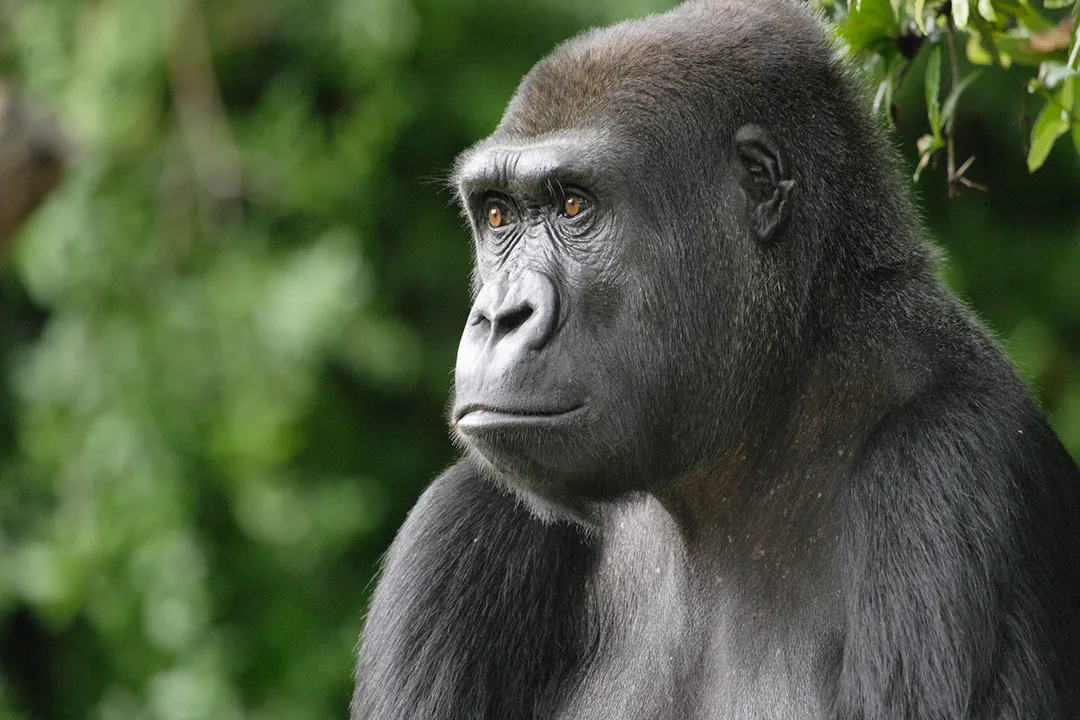
Gorillas are classified within the Hominidae family, making them our closest living relatives after chimpanzees and bonobos. [3] The genus Gorilla comprises two main species: the Western Gorilla (Gorilla gorilla) and the Eastern Gorilla (Gorilla beringei). [1][4] The Western Lowland Gorilla belongs to the former, holding the trinomial designation Gorilla gorilla gorilla. [3] This subspecies inhabits a broad range across the Congo Basin, covering countries like Gabon, the Republic of the Congo, Cameroon, Angola, Equatorial Guinea, and the Central African Republic. [3][5]
The initial divergence separating the ancestors of western gorillas from eastern gorillas occurred quite some time ago, estimated to be between 0.9 and 1.6 million years ago. [4] This deep evolutionary split established the geographic and genetic separation that defines the two species today. [4] Within the western grouping, two distinct subspecies exist: the widespread Western Lowland Gorilla and the much rarer Cross River Gorilla. [4]
# Lowland Split
While the separation between eastern and western lineages is ancient, the evolutionary split leading to the distinct populations of Western Lowland Gorillas and Cross River Gorillas happened much more recently. [4] Genetic evidence suggests this divergence took place around 17,800 years ago, deep within the Pleistocene era. [4] This timing is significant, falling within the span of dramatic climatic fluctuations that characterized that epoch. [4]
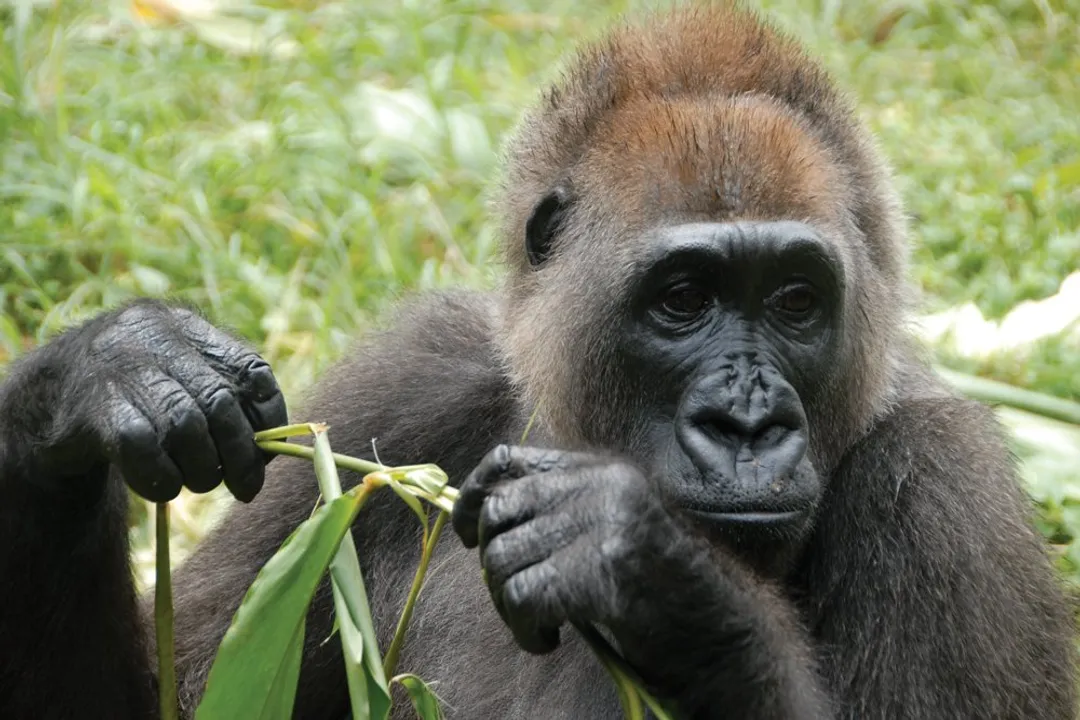
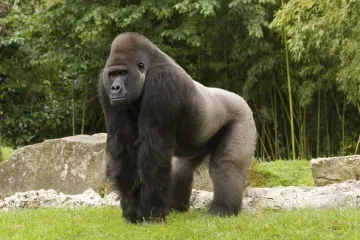
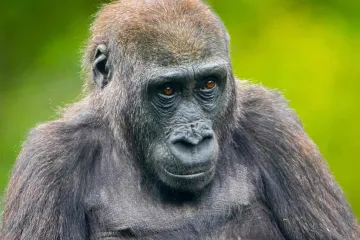
The Western Lowland Gorilla is recognizable by several physical traits that distinguish it from the mountain gorilla, such as having a wider and larger skull. [3] Adult males, known as silverbacks, are substantial, averaging around 300 pounds (136.1 kg) in the wild and standing up to 6 feet (1.8 meters) tall, though they possess shorter legs relative to their arms, necessitating knuckle-walking for ground movement. [3][5] Their coat is typically black, with the characteristic silver saddle appearing on mature males. [5] Infants possess a small white tuft on their rump to help mothers keep track of them in the dense forest. [5]
A curious piece of evolutionary data arises from the study of an albino Western Lowland Gorilla named Snowflake, the only known individual of this type. Genetic analysis revealed that Snowflake’s albinism stemmed from a recessive allele inherited from an uncle and niece who were both carriers, providing the first documented evidence of inbreeding within wild Western Lowland Gorilla populations. [3]
# Climate Dynamics
Climate change was a primary sculptor of the recent evolutionary landscape for western gorillas. [4] During the Pleistocene, fluctuating ice ages caused cycles where forests expanded and contracted. [4] When forests expanded, they allowed Western Gorillas to spread their range. Conversely, when the forests contracted, populations became geographically isolated. [4]
This cycle created the conditions for the Western Lowland and Cross River populations to separate. [4] Interestingly, the divergence was not immediate or absolute. The evolutionary model constructed using genetic markers from living and museum specimens indicates that even after separating, the two subspecies continued to interbreed intermittently. [4] This ongoing gene flow suggests that ecological corridors occasionally opened or populations overlapped enough for mixing before they were separated again by subsequent forest contractions. [4]
This complex back-and-forth continued for millennia. Gene flow between the subspecies is estimated to have finally ceased only about 420 years ago. [4] The long period of intermittent connection followed by recent final separation provides a fascinating case study in how climate variability can slow or accelerate speciation events, allowing for genetic exchange long after initial isolation. [4]
# Ghost Genes
While the Western Lowland Gorilla line experienced its own unique pressures, evolutionary mixing was a theme across the wider gorilla group. Genomic sequencing has illuminated how interbreeding events with extinct groups, often termed "ghost populations," have left their mark. [1]
For example, a genetic investigation into eastern gorillas revealed that approximately 3% of their genome is composed of DNA traces from a ghost population that separated from the common ancestor of all gorillas over three million years ago. [1] This ancient admixture, estimated to have occurred around 40,000 years ago, mirrors the historical interbreeding seen between modern humans and Neanderthals or Denisovans. [1] While this specific ancient admixture is noted in eastern gorillas, Western gorillas do not share this feature, illustrating a divergence in their subsequent evolutionary trajectories. [1]
One tangible result of this ancient admixture in eastern gorillas involved a gene related to taste perception, potentially offering a survival advantage by helping them avoid bitter or poisonous foods. [1] This underscores how genetic legacies from long-extinct ancestors can persist and retain functional significance in modern populations. [1]
It is worth noting that while the ghost population event seems absent in western lineages, genetic diversity studies within the Western Lowland population itself show a moderate substructure, and they display a deficit of rare alleles, which can offer insights into their demographic history. [3]
The history of genetic exchange versus isolation in the western group, culminating in the final cessation of gene flow between the Lowland and Cross River subspecies around 420 years ago, suggests that more recent human expansion and habitat modification may have finalized the separation that climate first initiated. [4]
If we consider the relative vulnerability of the Cross River population, which has seen a 60% decline over the last three centuries, one can infer that the final, sustained isolation may have occurred just as human impact intensified, severely restricting the ability for any new gene flow to occur and simultaneously shrinking the available diversity. [4] This recent bottleneck, compared to the ancient climatic shifts, presents an immediate evolutionary threat to their viability. [4]
# Complex Society
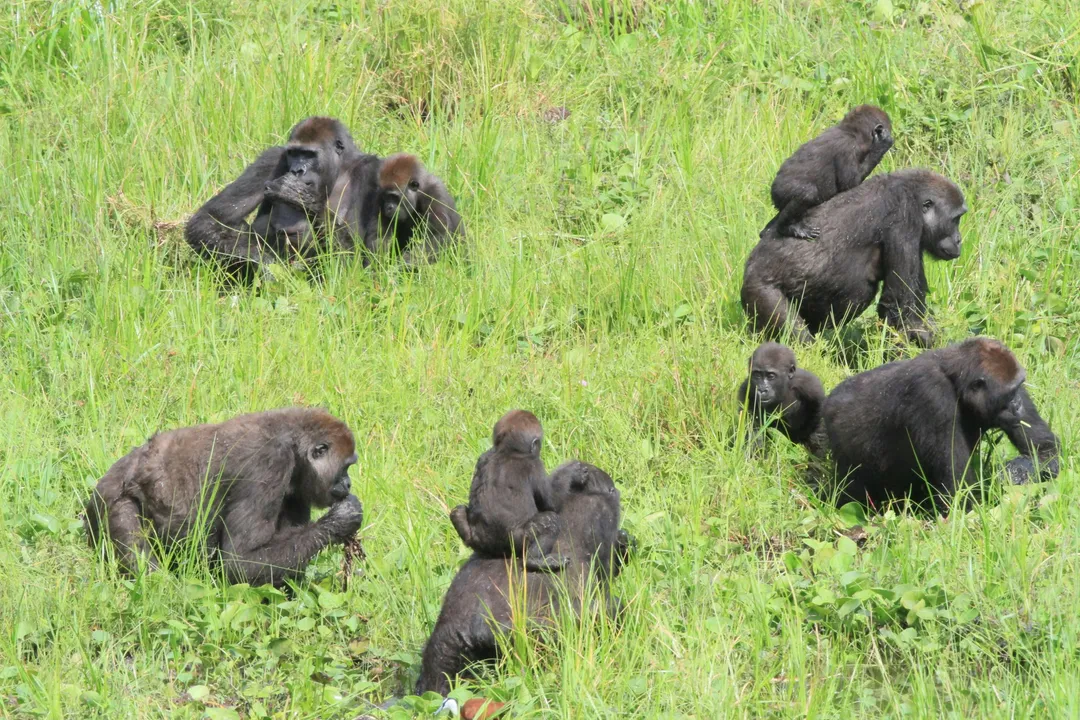
Evolutionary divergence is not just about genetics; it's about adaptation to environment, which profoundly shapes behavior and social structure. Western Lowland Gorillas are generally characterized as quiet and peaceful animals, living in relatively small troops averaging about five individuals, often led by a dominant silverback. [3][5]
However, recent extensive research on their social lives reveals a far more intricate web of relationships than previously understood, suggesting deep roots for human-like social evolution. Scientists analyzing long-term data, often gathered by observing gorillas in swampy forest clearings where they congregate to feed, uncovered distinct social tiers beyond the immediate family unit.
These tiers include:
- Immediate Family: The core group led by the silverback, including associated females and offspring. [3]
- Dispersed Extended Family: A secondary tier involving an average of about 13 gorillas who engage in regular interaction, analogous to aunts, grandparents, or cousins in human societies.
- Aggregated Group: A broader association of around 39 gorillas that gather together without necessarily being closely related, comparable to a small human settlement or tribe.
The structure that supports this complexity is thought to be tied directly to resource tracking. Western gorillas rely heavily on seasonally fruiting trees whose fruit production is unpredictable. To successfully forage for these hard-to-find, high-energy resources, collaboration and collective memory are advantageous. This reliance on idiosyncratic food sources, requiring long-term social networks to track, might be a key reason why their social complexity evolved so early, potentially before the split from the hominin lineage. This contrasts with the social systems of chimpanzees, whose alliances are often more volatile and aggressive.
When analyzing the bonds between silverbacks—the leaders who often challenge each other—it was noted that over 80% of close associations occurred between distantly related or seemingly unrelated males. This suggests that social bonds formed during periods of dispersal or bachelorhood can become strong, long-term friendships that aid group stability and resource acquisition, further bolstering the theory that the need to track scattered, unpredictable food drove the evolution of these layered social networks.
# Modern Threats
The evolutionary pressures of deep time—climate shifts and ancient admixture—have been replaced by contemporary, anthropogenic challenges. The Western Lowland Gorilla is now classified as Critically Endangered. [5]
Disease has been a catastrophic recent factor. Ebola outbreaks in specific regions, such as the Lossi sanctuary and Odzala-Kokoua National Park in the Republic of the Congo, decimated local populations. One outbreak saw a population drop from 377 individuals to just 38 within two years. [3] This highlights a severe threat to the ongoing genetic health and survival of the subspecies. [3]
Furthermore, habitat destruction via logging and the growth of human settlements facilitate increased hunting for the bushmeat trade. [3][5] Loggers build roads that allow hunters deeper access into the forest, increasing poaching rates, which can see five percent of the subspecies killed annually in some areas. [3][5] Gorillas are crucial seed dispersers for the rainforest ecosystem; their extinction could thus have ripple effects throughout their environment. [3]
The survival of these critically endangered populations depends heavily on conservation efforts in the Congo Basin, including enforcing hunting restrictions and establishing protected management programs. [3][5] The evolutionary story of the Western Lowland Gorilla is currently being written by human activity, demanding that conservation efforts prioritize maintaining the genetic health and broad geographic distribution that has characterized their survival through past millennia of climatic upheaval. [4]
Related Questions
#Citations
New insights into the evolutionary history of gorillas
Western lowland gorilla - Wikipedia
Climate change and evolution of Cross River gorillas
Western lowland gorilla - National Zoo
Gorillas found to live in 'complex' societies, suggesting deep roots of ...