Weimaraner Physical Characteristics
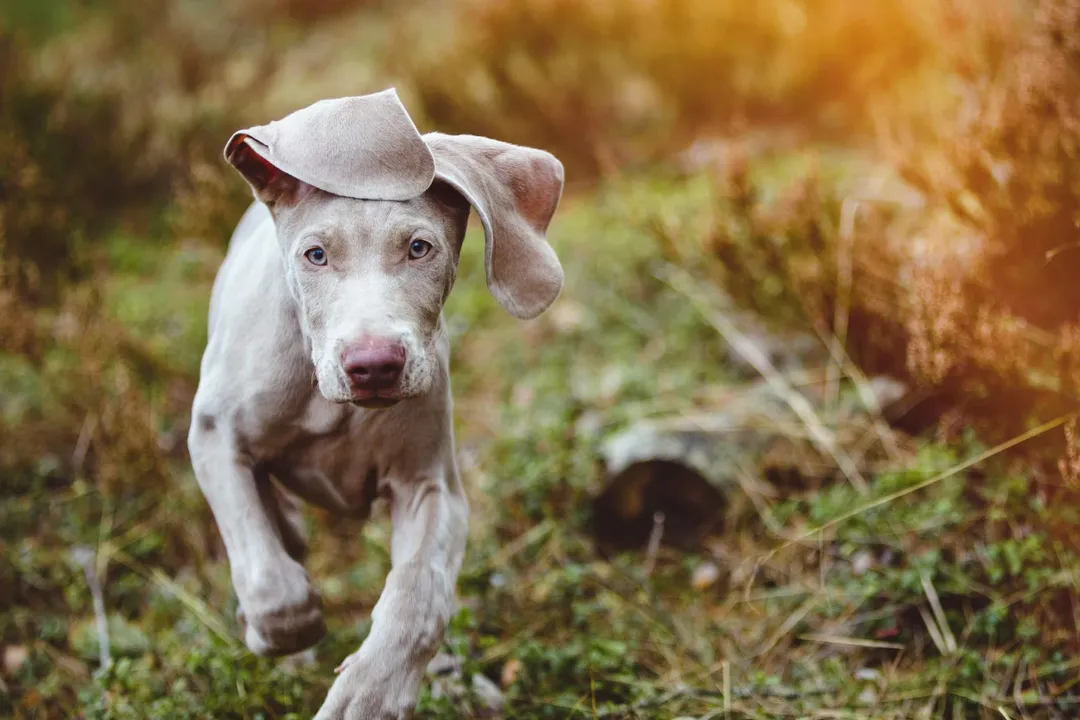
The Weimaraner presents an immediate, striking profile often described as aristocratic or regal. Their most distinguishing feature is undoubtedly their unique coat color, a sophisticated blend of gray tones that sets them apart from many other breeds. This sleek, short coat covers a lean, muscular, and athletic frame built for endurance and speed, reflecting their history as versatile hunting dogs developed in Germany. [1][2][5] From the set of their eyes to the length of their stride, the physical characteristics of the Weimaraner speak to their purpose as high-energy gundogs. [2][4]
# Size Structure
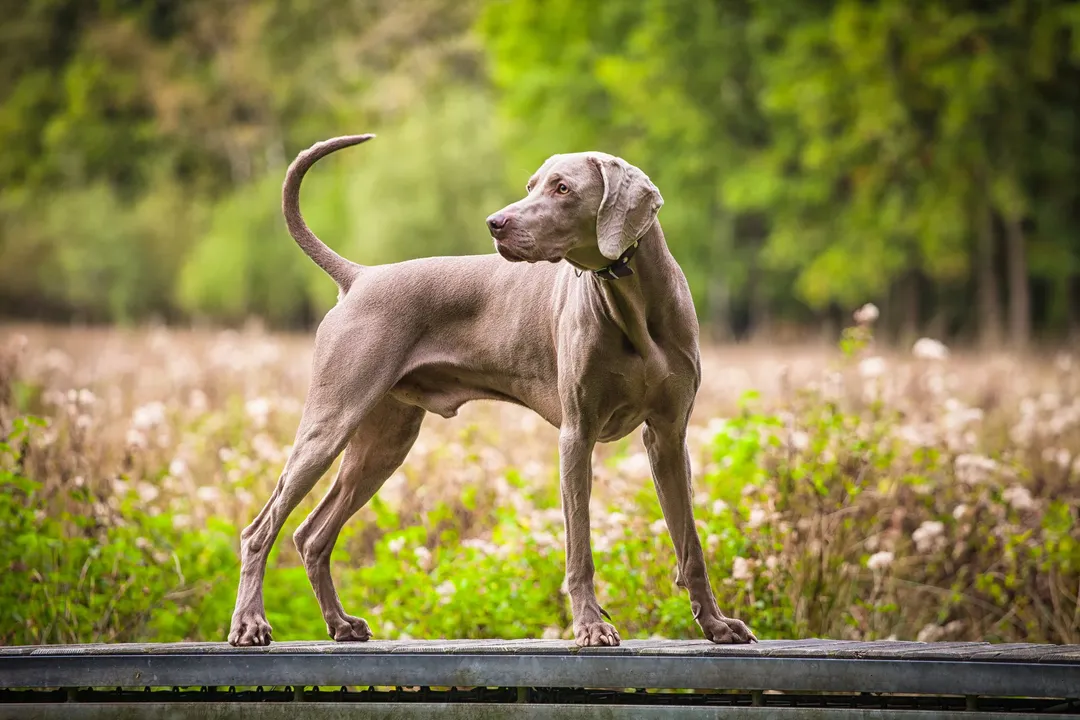
Weimaraners are considered medium-to-large dogs, possessing an elegant appearance that belies their underlying power. [2] Males typically stand between 23 and 25 inches tall at the shoulder, while females are slightly smaller, ranging from 21.5 to 23 inches. [5][7] In terms of weight, a mature male generally weighs between 70 and 90 pounds, with females falling into the 55 to 75-pound range. [5][7] It is important to note that while these are the accepted standards, variations do occur, and slight deviations in height or weight are not necessarily faults unless they significantly detract from the breed's overall balance. [1] The structure should convey substance without being cumbersome; they are built for the field, meaning they must be hardy enough for long days but agile enough to maneuver quickly. [6]
The overall impression should be one of good proportion and balance, neither too short in leg nor too long in body. [6] A Weimaraner that appears overly bulky or too fine-boned deviates from the established physical ideal for this capable breed. [2]
# Coat Color

The color is perhaps the most famous physical trait, universally described as a shade of gray. [2][5] This color is not a simple solid gray; rather, it encompasses a spectrum ranging from light mouse-gray to a richer silver-gray. [1][6] The coat should be uniform in color across the entire body, though very slight variations can sometimes be found on the coat itself. [6] Some dogs may carry a small patch of white on the chest, which is permissible under some standards, though excessive white markings are generally discouraged. [6][7]
The Weimaraner coat is exceptionally short, dense, and smooth to the touch, offering minimal resistance to brush or water. [2][6] This sleekness contributes significantly to their racy look, but it also means they lack the insulating undercoat found in many other breeds. [1] If you are observing a Weimaraner in a colder, wetter climate, you quickly realize that their elegant appearance demands extra consideration; their thin coat offers very little protection against severe cold or rain, meaning owners often need to invest in practical, warm coverings for outdoor activities in winter months to maintain their comfort. [4] The color is also described as "fadeless," meaning it should retain its characteristic shade throughout the dog’s life. [1]

# Head Features
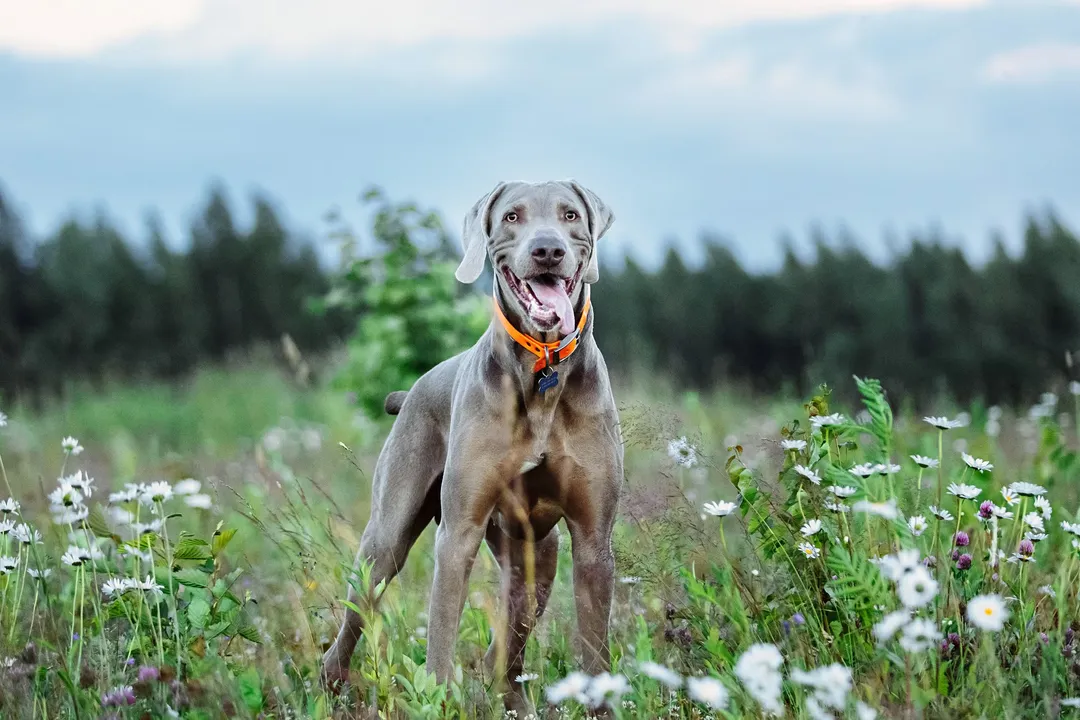
The head of the Weimaraner is noble, with well-defined proportions that contribute to their intelligent expression. [6] The skull is moderately broad between the ears and should possess a distinct but not overly pronounced stop—the indentation where the muzzle meets the forehead. [6][7] The muzzle itself should be long, straight, and strong, with well-developed jaws. [6]
The eyes are remarkably expressive, contributing heavily to the breed's unique look. [2] They are typically set obliquely and are medium-sized. [6] The color is a key identifier, generally ranging from light amber to gray or blue-gray in puppies, maturing to a light amber or grayish-amber in adulthood. [1][7] The intensity of the eye color should harmonize with the shade of the gray coat. [6]
Another characteristic feature is the long, velvety ears, which are set high and hang close to the cheeks, framing the face when alert. [2][7] When the dog is relaxed or interested, these ears often drift slightly backward. [1] The lips should be tight and not pendulous, covering the teeth completely. [6]
# Body Construction

The Weimaraner’s body is sculpted for powerful, smooth movement, typical of a dog bred for hunting over varied terrain. [5] The neck is strong and moderately long, cleanly set into the shoulders. [6] The shoulders should be long and well-laid-back, providing excellent reach for a long stride. [6]
Looking at the back, the topline should be firm, slightly sloping away from the high point of the withers down to the loin. [6] The loin itself should be short and muscular, leading into a well-muscled croup that slopes gently toward the tail set. [6] The chest needs to be deep, reaching down to the elbows, with well-sprung ribs to allow for full lung capacity required for sustained running. [2][7] They should exhibit a definite tuck-up in the abdomen, further emphasizing their lean, athletic build. [6]
# Tail and Limbs
Historically, the tail of the Weimaraner was often docked to a specific length, traditionally about six inches, to prevent injury while working in thick brush. [1][7] However, many breeders and owners now prefer the natural, undocked tail, which should be carried level with the back or slightly below when the dog is relaxed. [4] A natural tail is carried somewhat low, tapering to a fine point. [6]
The forequarters and hindquarters are built for propulsion. The legs should be straight and strong, set well under the body. [6] They possess moderately short pasterns—the joint just above the foot—which act as flexible springs during movement. [6] Their feet are compact, with tight, well-arched toes and thick pads, essential for protection and traction on rough ground. [6]
# Movement Analysis
The characteristic gait of the Weimaraner is one of smooth, efficient power. When trotting, their movement should be steady, balanced, and effortless, covering ground with long, reaching strides. [6] They should move straight, neither paddling nor crossing their legs in front or behind. [6] A key indicator of proper structure is that the forelegs and hind legs move in parallel planes, which translates to an economical use of energy for long hours afield. [1] The overall impression of their movement should be one of confidence and readiness, a smooth extension that perfectly matches their streamlined physique. [5] Watching a Weimaraner move is often an exercise in observing efficiency; there should be minimal wasted motion, only forward drive. [2]

# Comparison of Standards
While the general physical description is consistent across many sources, some focus more heavily on the ideal structure as dictated by the breed club, whereas others offer more general descriptions suitable for pet owners. [5][6] For instance, the Weimaraner Club of America standard provides highly specific measurements and angles regarding the shoulder layback and stifle angulation, necessary for conformation judging. [6] General profiles, like those found on veterinary or general pet sites, tend to emphasize the key takeaways: gray color, athletic build, and the signature eye color. [2][7]
When evaluating a Weimaraner, the discerning eye looks for the harmony between these parts. A dog with a perfect head but overly bowed legs does not meet the standard, just as a perfectly proportioned body with weak, flat feet is equally flawed. [6] The physical traits are intrinsically linked to the breed’s historical working capability; the density of the coat relates to weather resistance, the deep chest relates to stamina, and the structure of the legs relates to agility. [1][5] This integration of form and function is what defines the Weimaraner’s physical identity.
Related Questions
#Citations
Dog Breed Profile: Weimaraner - Woof
Weimaraner Dog Breed Health and Care - PetMD
Weimaraner Facts - Dog Breeds - Wisdom Panel
Weimaraner breed standard and history - Facebook
Weimaraner Standards
WCA Illustrated Standard - Weimaraner Club of America
Weimaraner Dog Breed Information | Atlas Pet Hospital
Weimaraner: Dog Breed Characteristics & Care - The Spruce Pets
What to Know About Weimaraners - WebMD