Wasp Scientific Classification
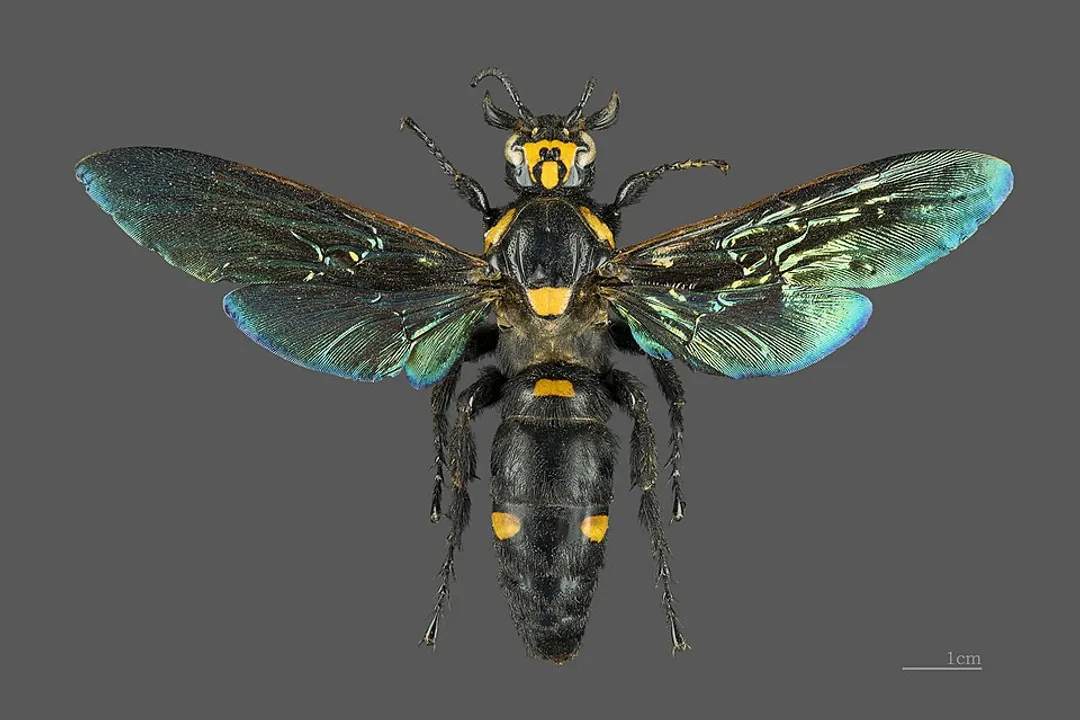
The term "wasp" acts more like a catch-all descriptor in common language than a precise scientific grouping, which can make tracking its precise scientific classification feel like navigating a branching maze. [1] To truly understand what a wasp is, we must start at the highest relevant level: the Order Hymenoptera. [9][10] This massive order encompasses all wasps, as well as ants and bees. [9][10] When scientists examine the defining characteristics, they look for shared anatomy, such as chewing mouthparts, two pairs of membranous wings where the forewings are larger than the hindwings, and a distinctly narrow connection between the thorax and abdomen, often referred to as a "waist". [1][9][10]
# Order Hymenoptera
The foundational grouping for wasps is the Order Hymenoptera, which translates roughly to "immembrane-winged". [10] This order is incredibly diverse, containing an estimated 150,000 species, a number that reflects its evolutionary success. [9] While the common name for wasps often conjures images of stinging insects with painful encounters, the taxonomic reality is broader. [1]
Hymenopterans are further divided into two main suborders, which represent a significant split in lifestyle and morphology. [1][10] The first is Symphyta, which primarily contains the sawflies, generally regarded as the more ancestral group, notably lacking the characteristic narrow waist of their relatives. [1][10]
The second, and far more relevant suborder for wasps, is Apocrita. [1][10] Apocrita is characterized by the presence of a pronounced "wasp waist" (petiole) between the first two abdominal segments. [1] This suborder is vast and includes wasps, bees, and ants. [10] The stinging apparatus found in many wasps, bees, and ants is actually a modified ovipositor, a structure used for egg-laying. [10]
# Apocrita Infraorders
Within Apocrita, the path to the familiar stinging wasp involves moving into the infraorder Aculeata. [3] This group is defined by insects that possess a sting rather than an ovipositor for defense or paralyzing prey. [1] While some parasitic wasps (Ichneumonoidea) are within Apocrita, they typically retain the ovipositor and are not generally what people refer to when using the common term "wasp". [1] Thus, the majority of insects commonly identified as wasps belong to the Aculeata group within Apocrita. [1][3]
The sheer diversity within Hymenoptera, where ants and bees share the same order classification as wasps, illustrates an important evolutionary point: common names obscure deep evolutionary divergence. For instance, the predatory life strategy so common among wasps is not a requirement for being in Hymenoptera, which also contains many herbivores (like sawflies) and social insects (like ants and honeybees). [9][10]
# Family Vespidae
Focusing on the groups that fit the traditional wasp profile, one of the most well-known families is Vespidae. [3] This family is large and includes many of the social wasps that build exposed paper nests, such as hornets and yellowjackets. [3] Vespidae wasps are predominantly predatory, feeding their young insects or spiders. [3]
The classification within Vespidae shows a split between the highly social species and those that maintain solitary or semi-social lifestyles. [3] This distinction is crucial because it often dictates nest structure, defensive behavior, and the seasonal life cycle of the colony. [3]
For those trying to identify a wasp encountered in their garden or near their porch, recognizing the family level is a good starting point. Vespidae wasps often have distinct color patterns, like bright yellow and black banding, although color alone is never sufficient for a definitive ID. [3]
# Paper Wasps
The genus Polistes provides an excellent case study within Vespidae. [6] These are the insects commonly known as paper wasps. [5][6] Their taxonomy places them firmly within the family Vespidae, though they are sometimes separated into the subfamily Polistinae. [6]
Polistes wasps are recognized for their distinctive nesting habits. They construct open, umbrella-shaped combs made from a material created by mixing saliva with wood fibers. [4][6] These nests are typically attached to sheltered structures, such as under eaves or branches. [4] A fascinating aspect of their life cycle is that the founding female often builds and defends the initial nest herself, showcasing a degree of independence not seen in highly eusocial species. [6]
From an ecological standpoint, Polistes wasps are highly valued as biological control agents. [5] As predators, they actively hunt caterpillars, flies, and other soft-bodied pests, making them beneficial occupants in agricultural and garden settings. [5] Their predatory behavior is a key feature that separates them from purely parasitic wasp groups.
# Yellowjackets and Hornets
Contrastingly, the insects often identified as yellowjackets or hornets frequently belong to genera like Vespula within the Vespidae family. [4] While they are also social wasps and share the Vespidae classification with Polistes, their nesting behavior marks a significant difference. [3][4]
Yellowjackets often build nests that are fully enclosed within a papery envelope. [4] Unlike the open comb of the paper wasp, the Vespula nest is hidden, commonly found underground in abandoned rodent burrows, or sometimes within wall cavities. [4] This difference in nest construction—an exposed comb versus an enclosed, concealed structure—is a major identifier when trying to distinguish between these two common groups of social wasps. [4]
If you are observing a wasp colony, observing the nest structure—whether the cells are open to the air or covered by a protective outer shell—can quickly guide you toward the correct genus classification, even if the exact species remains uncertain. [4] This functional grouping based on nesting material and location is an accessible way for the general reader to apply taxonomic knowledge practically.
# Constructing the Hierarchy
To appreciate the classification fully, one must see the ranks mapped out. While the common name "wasp" spans multiple families, the following structure outlines the placement of the widely recognized Vespidae members discussed above, moving from the broadest group down to the genus level: [3][6][10]
| Taxonomic Rank | Classification Example (Common Wasp Path) | Defining Trait Summary |
|---|---|---|
| Kingdom | Animalia | Multicellular organisms |
| Phylum | Arthropoda | Segmented body, exoskeleton, jointed appendages |
| Class | Insecta | Three body parts, six legs |
| Order | Hymenoptera | Chewing mouthparts, one pair of membranous wings [9][10] |
| Suborder | Apocrita | Presence of a narrow "wasp waist" [1][10] |
| Infraorder | Aculeata | Possesses a sting (modified ovipositor) [1][3] |
| Family | Vespidae | Many are social, build paper nests (variable structure) [3] |
| Genus | Polistes | Open, umbrella-shaped comb nests [6] |
| Genus | Vespula | Enclosed paper envelope nests (often subterranean) [4] |
This table highlights how a wasp moves through several major evolutionary checkpoints before landing in a genus where specific behaviors, like nest construction, become reliably defined. [3][4][6]
# Identifying Key Features
The physical characteristics used by entomologists to precisely classify wasps go far deeper than just the presence of a waist or whether the nest is paper or mud. For instance, researchers examining the wing venation or the precise structure of the antennae can differentiate between families that look nearly identical to the untrained eye. [9]
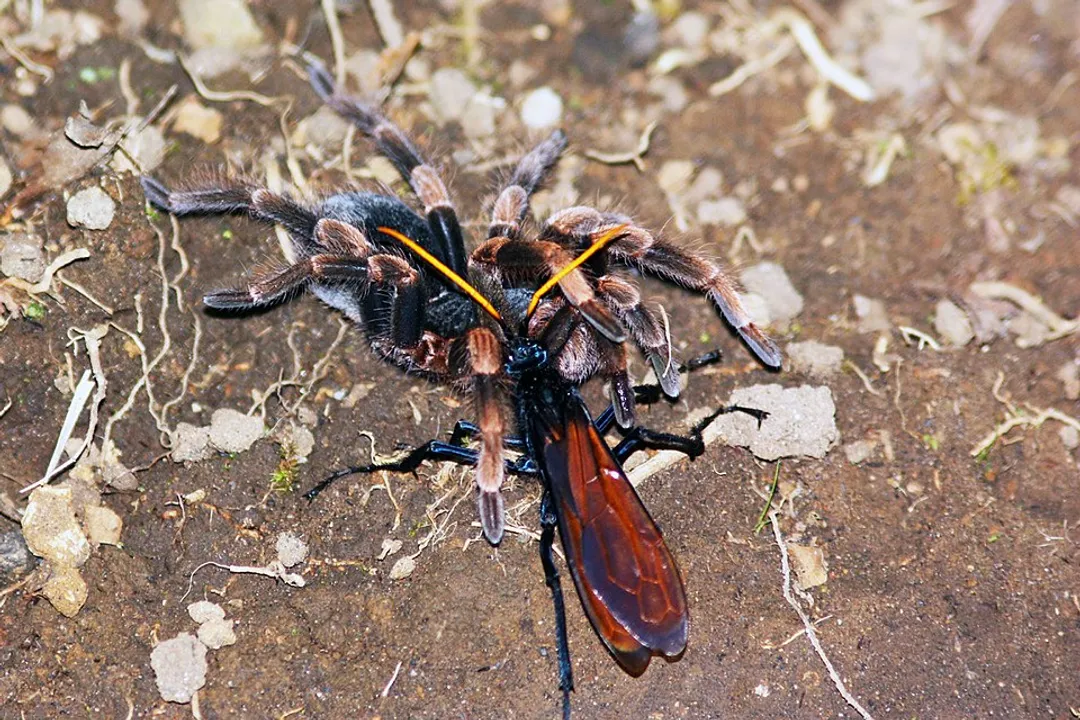
For example, while all true wasps have membranous wings, the specific pattern of veins on those wings—how the individual veins branch and connect—is a critical feature separating families within the Hymenoptera order. [9] Furthermore, the way the first abdominal segment articulates with the thorax, which forms the 'waist' (petiole), varies significantly even among stinging wasps. [1] In some families, the petiole is long and slender, while in others, like the spider wasps, it might be shorter or more robust, leading to different groupings within the Apocrita suborder. [1]
When dealing with the vastness of the order, it is easy to fall into the trap of assuming all stinging insects are related simply because they sting. However, the Aculeata infraorder contains groups that evolved stinging ability independently, a classic example of convergent evolution. [3] While Vespidae is a prime example of this group, other families, like Pompilidae (spider wasps), also fall under Aculeata but have dramatically different life histories and predatory targets than the social Vespids. [1] This underscores the need to rely on the established hierarchy rather than superficial similarities.
# Practical Application of Taxonomy
For the average person concerned with managing insects in their yard, the scientific classification offers more than just academic knowledge; it informs action. Knowing that Polistes wasps are primarily predators of caterpillars means that eradicating them aggressively might lead to increased pest damage from those caterpillars. [5] In contrast, a subterranean yellowjacket nest (Vespula) might pose a greater immediate safety risk due to its defensiveness when disturbed, necessitating different control strategies. [4]
The decision to manage or tolerate a wasp population often hinges on understanding its functional role—predator, parasite, or pollinator—which the classification system attempts to map. While the formal classification is strictly hierarchical, a useful secondary classification for practical purposes involves grouping wasps by their style of parasitism or predation. [2] Some are solitary parasitoids, laying eggs inside or on a single host, ensuring the larva consumes that host entirely, while others, like many Vespids, are social predators that bring multiple prey items back to feed a growing colony. [2][3] Understanding which group you are observing allows for context-specific responses, moving beyond simply reacting to the presence of a stinger. [5]
Therefore, when we discuss Wasp Scientific Classification, we are really discussing the structure of the immense Order Hymenoptera, tracing a path through the Apocrita suborder, and focusing mainly on the Aculeata infraorder, culminating in families like Vespidae, which showcases fascinating variations in social structure and nesting habits between genera like Polistes and Vespula. [1][3][4][6]
Related Questions
#Citations
Wasp - Wikipedia
Wasps - Agricultural Biology - CSU College of Ag Sciences
Wasp identification » Manaaki Whenua - Landcare Research
Paper Wasp | NC State Extension - Entomology
Polistes (paper wasps) | INFORMATION - Animal Diversity Web
Wasps and hornets | Research Starters - EBSCO
Classification of Hymenoptera - WaspWeb
Wasps, Ants, and Bees (Hymenoptera) - Smithsonian Institution
Bees, Wasps, Ants - Hymenoptera - Britannica