Waimanu Physical Characteristics
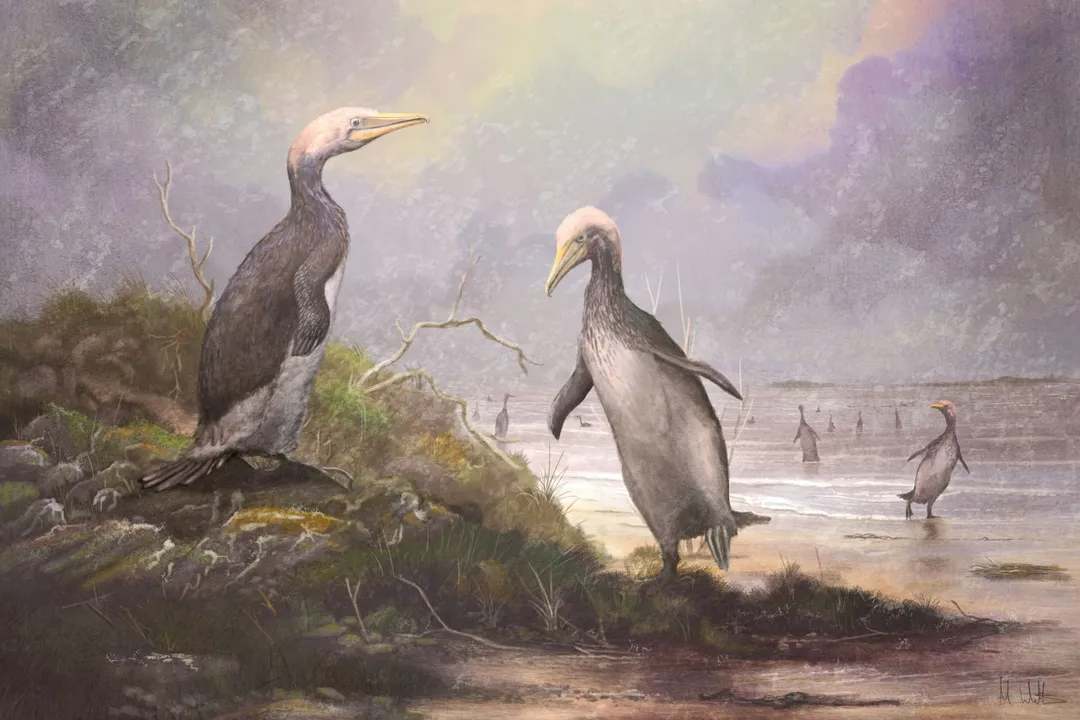
The early penguin lineage offers a fascinating glimpse into avian evolution, a time when birds were rapidly adapting to new ecological niches following the end of the dinosaurs. Among the most important fossils documenting this shift is Waimanu, a genus representing some of the very first penguins known from the fossil record. These creatures swam the waters surrounding ancient New Zealand during the Paleocene epoch, roughly 60 million years ago. Unlike the streamlined, flightless birds we recognize today, Waimanu possessed a suite of physical characteristics that mark it clearly as an ancestral form, even while clearly belonging to the penguin family.
# Early Lineage
Waimanu is significant because it helps scientists pinpoint when penguins fully committed to their aquatic lifestyle. Its existence in the Paleocene confirms that penguins were established relatively soon after the mass extinction event that cleared the way for mammals and birds to diversify. While the genus is generally represented by two recognized species, Waimanu manneringi and Waimanu tuatahi, they both share fundamental characteristics placing them at the base of the penguin tree. The very name Waimanu is reflected in local geography, as the Waimanu Valley in New Zealand is named in recognition of this important fossil find. An illustration depicting Waimanu tuatahi shows them resting on a Paleocene New Zealand beach, emphasizing their terrestrial connection despite their aquatic adaptations.
# Size Extremes
One of the most striking aspects of the Waimanu genus is the sheer variation in size between its known species, suggesting different ecological roles or stages of development within the early penguin group.
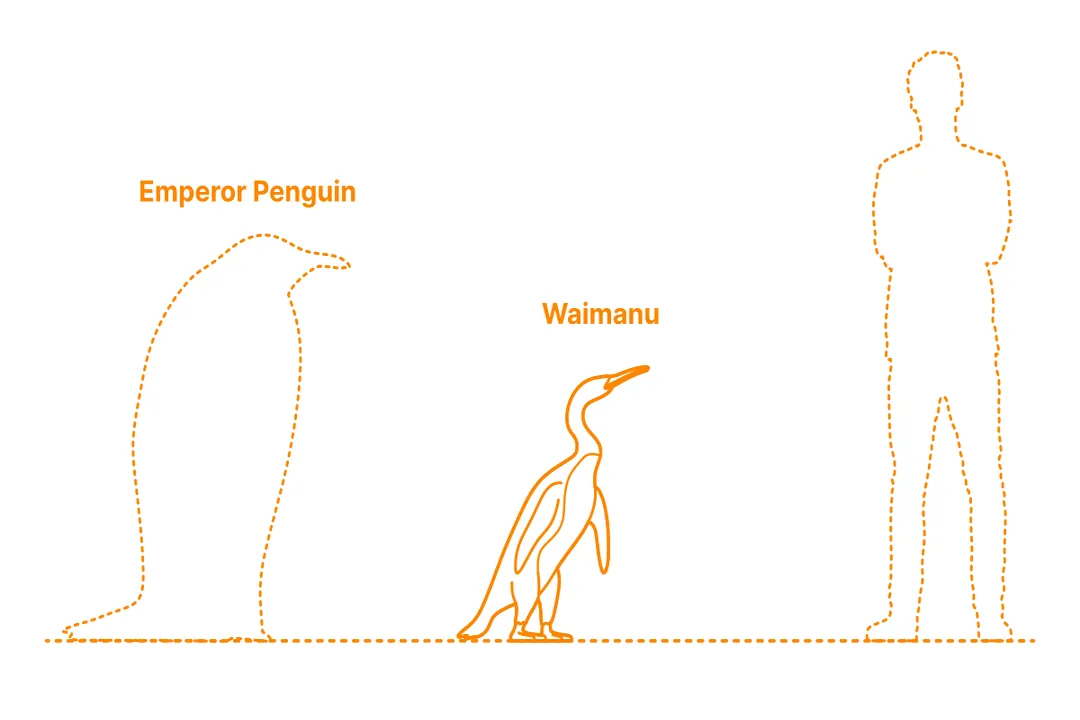
Waimanu manneringi, for instance, was a giant compared to its contemporary, and even when stacked against many modern penguins. Estimates suggest this species could have reached heights approaching 6 feet tall. To put this into perspective, the largest living penguin today, the Emperor Penguin (Aptenodytes forsteri), rarely exceeds four feet in height. The fact that an ancestor could attain such a stature so early in the penguin evolutionary history is remarkable, hinting at an environment with abundant food resources and potentially fewer large, competing marine predators initially.
In contrast, the other known species, Waimanu tuatahi, appears to have been considerably smaller. While specific dimensions for W. tuatahi are less frequently cited than the towering W. manneringi, its smaller stature suggests that the trend toward gigantism seen in some ancient forms was not universal across the genus. This size disparity between the two species, occurring perhaps in the same geographical area at similar times, implies a degree of ecological partitioning even among the earliest members of the order Sphenisciformes.
| Species Name | Approximate Size Relative to Modern Penguins | Geological Period |
|---|---|---|
| Waimanu manneringi | Very Large (up to 6 feet) | Paleocene |
| Waimanu tuatahi | Smaller | Paleocene |
If we consider the rapid diversification suggested by these size differences, it suggests that the foundational evolutionary blueprint for being a highly specialized marine predator was established very quickly. An ancestral lineage exhibiting a six-foot frame, like W. manneringi, suggests that the aquatic food web was robust enough to support such massive, warm-blooded divers almost immediately after the environment stabilized.
# Limb Structure
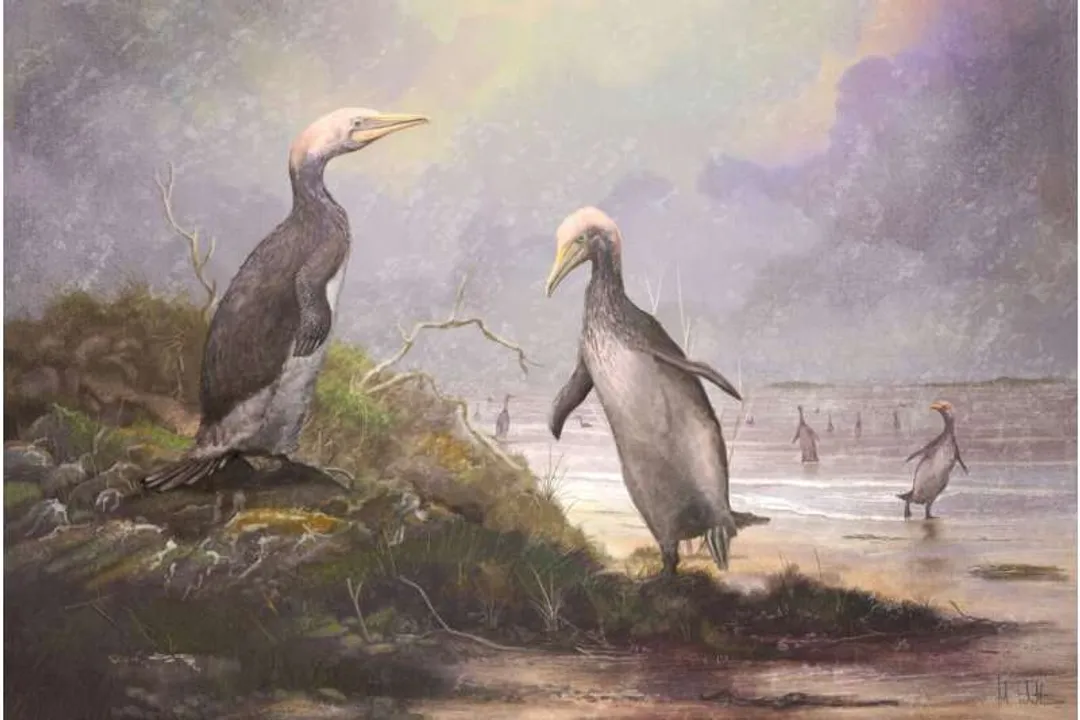
Perhaps the most significant physical difference between Waimanu and any bird living today lies in its limbs. Modern penguins have forelimbs that have evolved into powerful, rigid wings modified exclusively for underwater propulsion—true flippers. Their hindlimbs serve primarily as props for walking and as rudders in the water.
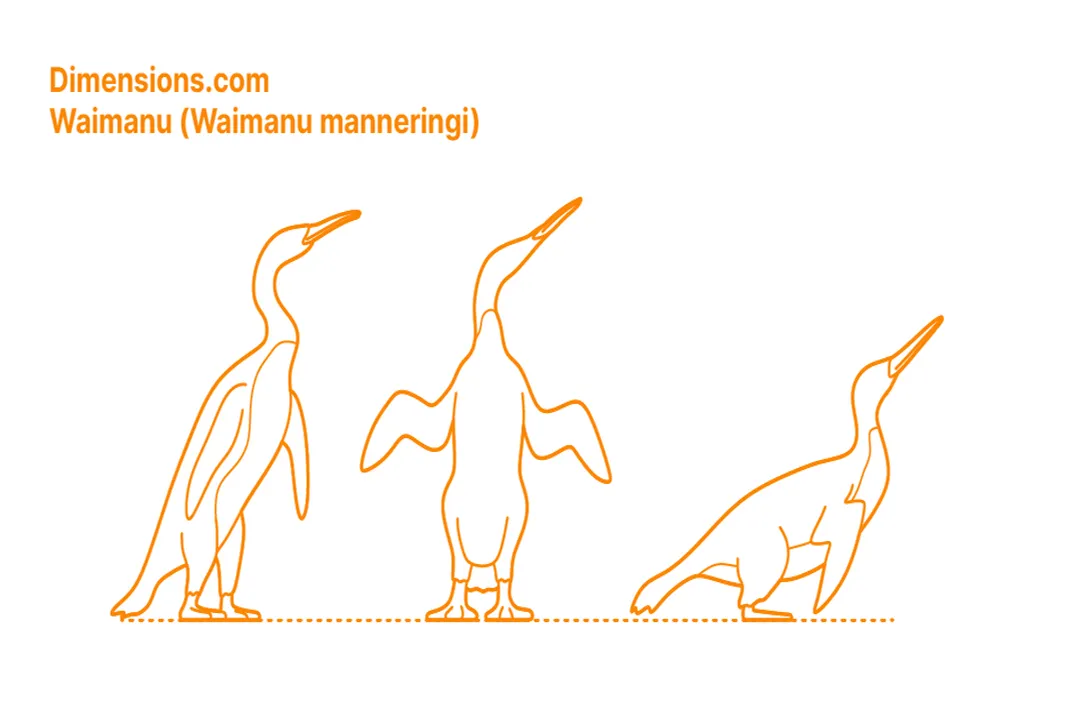
Waimanu, however, retained a more generalized, though still adapted, limb structure. The fossil evidence indicates that Waimanu possessed four flippered limbs. This means that both the forelimbs and the hindlimbs were already modified for swimming, acting in concert to push the animal through the water. This arrangement is unlike modern penguins where the hindlimbs are distinctly separate in function from the modified wings.
This four-flippered condition is interpreted as an evolutionary intermediate stage. It implies that the early aquatic locomotion of Waimanu likely involved a different kind of movement than the powerful downstroke of modern penguins. Instead of relying solely on the forelimbs for the primary thrust, propulsion may have been shared across all four limbs, possibly resembling a sort of underwater flight using all four appendages, though with the forelimbs already taking on a more primary, paddle-like role. This would result in a swimming gait very distinct from the efficient, two-winged propulsion system seen in extant species.
# Other Features
Beyond the limbs, the general appearance of Waimanu would have been recognizable as an ancestral penguin, but certain other traits might have differed from its modern cousins. Although the details are often reconstructed based on skeletal morphology, the creature possessed a relatively small head compared to the overall body size of the larger species. Furthermore, the wings, while clearly moving toward the stiff, flattened flipper shape characteristic of penguins, were still part of a system utilizing four limbs for movement.
The presence of these early, highly specialized marine birds in New Zealand waters indicates that the evolutionary split between penguins and their closest flying relatives was already complete by the time Waimanu was thriving. The adaptations for marine life—losing flight capability in favor of powerful underwater swimming—were already firmly locked into their physical makeup.
The study of these creatures, such as Waimanu tuatahi, being found on New Zealand beaches during the Paleocene provides vital geographical context for understanding their specialization. The stable, relatively warm waters around ancient New Zealand likely served as a cradle for these early, large avian specialists before they dispersed more widely as the climate changed over subsequent millions of years. The existence of such large, specialized forms so early in the fossil record suggests that the environmental pressures driving avian specialization in the marine environment were intense and immediate following the extinction event.
Related Questions
#Citations
Waimanu Animal Facts
Waimanu, the first penguin - March of the Fossil Penguins
Waimanu (Waimanu manneringi)
Three individuals of Waimanu tuatahi on a New Zealand ...
Waimanu Valley
Waimanu, Hawaiÿi
New Zealand's ancient monster penguins had northern ...
Today's post is the #repost of Waimanu! Suggested by @ ...
3. Waimanu valley water falls, Hawaii