Volpino Italiano Scientific Classification
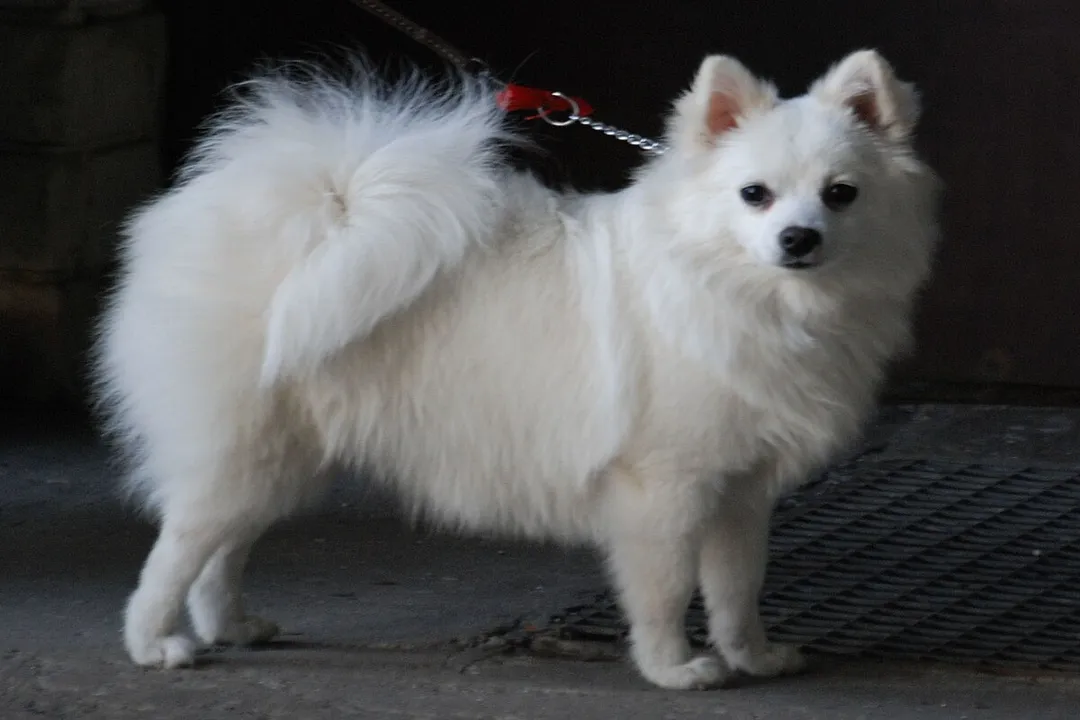
The Volpino Italiano, a diminutive Italian native, holds a distinct, if sometimes obscure, place in the vast canine family tree. Understanding its scientific classification is key to appreciating its deep historical connection to the broader Spitz lineage, placing it firmly within the structure of mammalian life while distinguishing it from its contemporary cousins. This classification moves from the broadest domain down to the specific species assigned to the modern domestic dog.
# Taxonomic Ranks

The scientific nomenclature that governs all life places the Volpino Italiano, as a domestic dog, within a highly specific sequence. The highest level of classification, the Kingdom, is Animalia, representing all multicellular, eukaryotic organisms that ingest other organisms for sustenance. Moving down, the breed belongs to the Phylum Chordata, encompassing animals with a notochord, though in adult dogs this manifests as a vertebral column.
The next steps define its physiological class and primary lifestyle: it falls under Class Mammalia—warm-blooded vertebrates that nurse their young—and Order Carnivora, reflecting its ancient dietary and predatory heritage. The family level is where things start to narrow significantly for dog enthusiasts: Family Canidae, which groups it with wolves, foxes, and jackals.
The genus level brings us to the immediate biological grouping: Genus Canis. Within this genus, the specific scientific name assigned to the domesticated canine, and thus the Volpino Italiano, is most commonly designated as Canis lupus, with the Volpino being a subspecies, Canis lupus familiaris. Some older or alternative systems might simply list the species as Canis familiaris. This designation confirms that, scientifically speaking, the Volpino Italiano is simply a highly specialized population of the gray wolf, Canis lupus.
# Canine Genus

The placement within the Canis genus is instructive because it speaks to the breed’s antiquity and its relationship to wild canids. The Volpino Italiano is closely related to the Pomeranian and the German Spitz. [3] These breeds share common ancestry, suggesting they diverged from a shared European Spitz forebear long ago. [3][6] The designation Canis lupus—the gray wolf—means that, biologically, the traits that define the Volpino, such as its thick double coat and keen guarding instinct, are ancient adaptations preserved through selective breeding.
This shared genetic root means that if one were to compare the DNA of a Volpino Italiano against other Spitz-type dogs like the Akita or the Chow Chow, they would find markers placing them within the broader Spitz and Sled Dog Lineage, suggesting adaptations for colder climates, even though the Volpino developed in Italy. It is this deep, ancient background that explains why kennel clubs often group them with other primitive types, despite their small stature. [6]
It is interesting to consider that while the FCI places the Volpino Italiano in Group 5, Section 4 (European Spitz), [6] the breed itself is often associated with traits found in the Toy or Utility groups in other registries, underscoring the divergence between strict biological classification and functional/historical breed grouping by kennel clubs. For instance, the United Kennel Club (UKC) historically placed the Volpino Italiano in the Northern Breed Group. [5] This difference highlights that scientific classification captures what the dog is related to evolutionarily, whereas kennel grouping addresses what the dog was historically used for or what physical traits it shares with contemporary breeds. [7] The modern Italian standard prefers solid white, but recognizes red or black, contrasting with the German Spitz and Pomeranian relatives who often feature a wider color spectrum. [3]
# Breed Recognition

While the Canis lupus designation is fixed by science, the Volpino’s status changes depending on which kennel club is doing the recognizing, which affects how its "official" classification is viewed by the public and exhibitors. [5][6] The breed standard was first formalized in Italy by the Ente Nazionale della Cinofilia Italiana (ENCI). [3] Internationally, the Fédération Cynologique Internationale (FCI) fully accepted the breed in 1956. [3] The UKC recognized the breed later, in 2006. [5] In the United States, the American Kennel Club (AKC) initially placed the Volpino Italiano into its Foundation Stock Service (FSS) program, a stepping stone toward full recognition, which occurred later. [7] The FSS designation is a functional classification indicating that the breed has a small existing population, often maintained by dedicated enthusiasts, that is being evaluated for breed consistency and health prior to full recognition.
The population dynamic of the breed itself adds a layer to its classification context. The Volpino almost vanished by the 1960s, saved only by focused breeding efforts starting in the 1970s. [3][6] This near extinction event means that, genetically, the breed has experienced a severe population bottleneck. When a breed passes through such a bottleneck, the effective gene pool shrinks drastically, making the descendants—even when recognized as a distinct Canis lupus familiaris—genetically less diverse than their ancient ancestors. The current average registration in Italy being around 160 per year from 2011 to 2019 suggests that while preserved, it remains numerically precarious. [3]
# Ancestry Markers
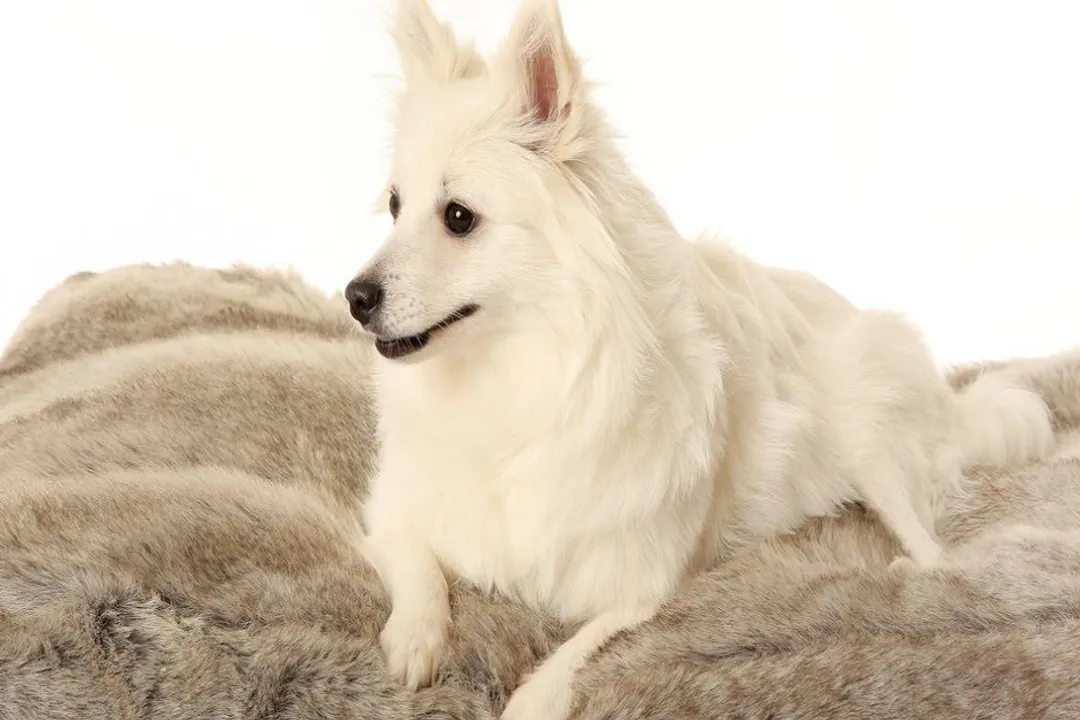
Genetic testing can offer deeper insight into the Volpino’s placement, often confirming its closeness to other Northern Spitz types. These dogs, defined by adaptations like a dense double coat, trace their origins to ancient Arctic and subarctic regions, despite the Volpino’s later refinement in Italy. This suggests that the ancestors of the Volpino were brought south from these original Northern populations many centuries ago, likely adapting to the Italian climate over time while retaining the physical characteristics of their northern relatives. The breed’s historical presence, documented in paintings as early as 1502, supports a very long, established history in the region, predating many modern kennel club classifications by centuries. [3][6] The name itself, Volpino Italiano, translates to "little Italian fox," a nod to its appearance, which is a phenotypic classification rather than a strictly genetic one. This fox-like look—wedge-shaped head, pointed muzzle—is a classic Spitz feature shared across the genus. [3][6]
Observing the health data related to this classification further illustrates the breed's specific genetic profile. For instance, U.S. breeders often screen for Primary Lens Luxation (PLL), an eye disease, while Italian breeding lines may not share this standardized screening protocol for all conditions. [7] This variation in selective pressure across different national registries, even within the same scientific subspecies, demonstrates how human choice diverges from immutable biological classification over time. When assessing the Volpino, one must look not only at its Canis lupus structure but also at the specific genetic traits—like the tendency towards PLL—that have become concentrated in the isolated populations that survived the breed’s near extinction. This combination of ancient lineage markers and modern, specific hereditary conditions defines its contemporary biological reality.
Related Questions
#Citations
Volpino Italiano - Wikipedia
Dog Breed
Breed Standards : Volpino Italiano | United Kennel Club (UKC)
Volpino Italiano
Volpino Italiano - Dog Breed Information - American Kennel Club
Volpino Italiano Dog Breed Complete Guide - A-Z Animals
Volpino Italiano Breed Information & Insights - Basepaws