Viperfish Facts
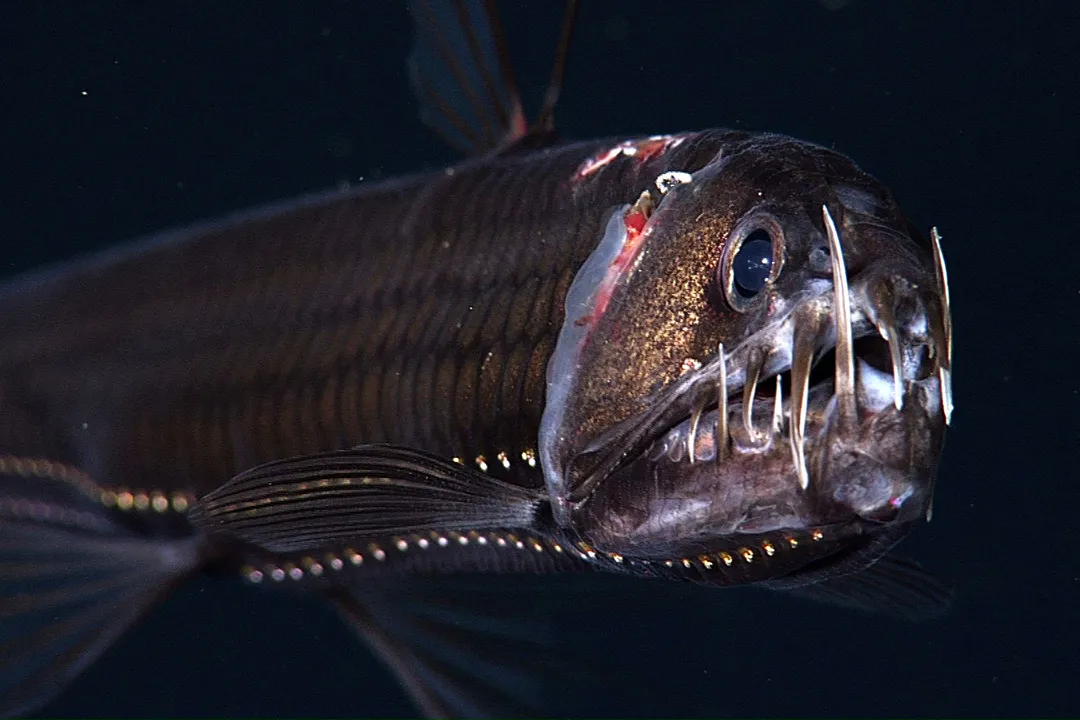
The viperfish belongs to the genus Chauliodus, encompassing nine recognized living species of marine fish found throughout the world’s tropical and temperate oceans. Their name, which originates from the Greek chaulios meaning "open-mouthed" and odus meaning "teeth," hints at their most striking feature. These deep-sea dwellers are rarely encountered by humans, primarily due to the extreme depths where they reside, often necessitating deep-water trawls to study them.
# Deep Dwellers
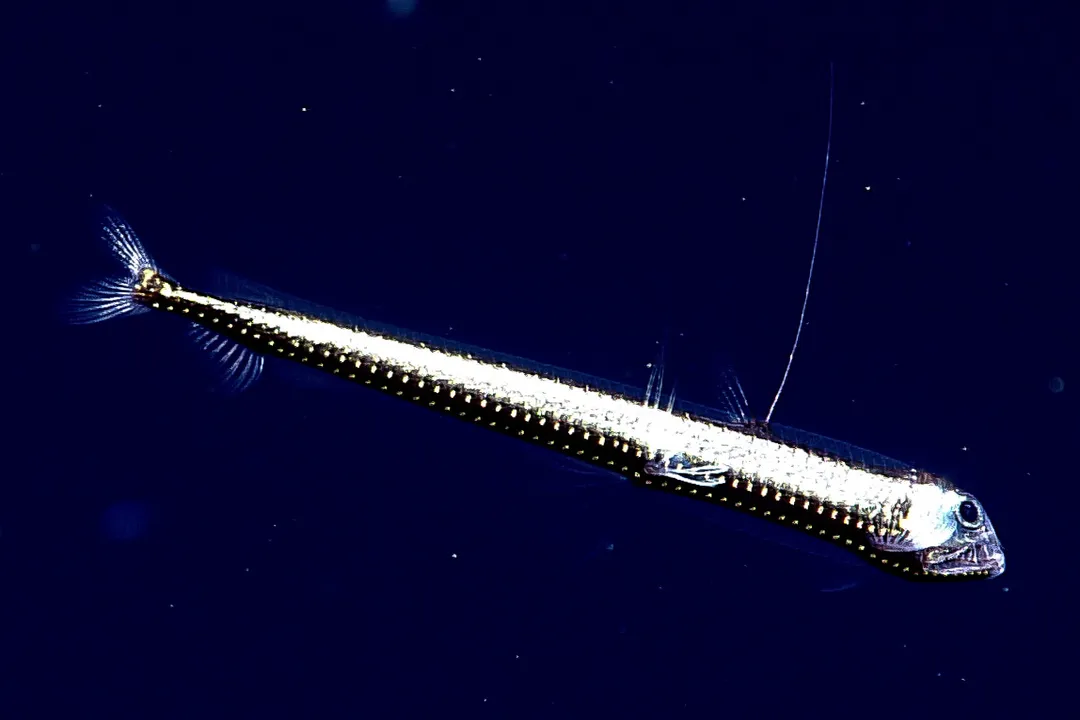
Viperfish make their home in the perpetual twilight of the mesopelagic zone and the dark expanse of the bathypelagic zone. Their depth range is considerable, generally spanning from about 655 feet (200 meters) down to potentially 13,000 feet (4,700 meters), with collection records showing C. sloani down to 2,800 meters. In the open ocean, this translates to depths where sunlight is severely diminished or entirely absent.
A defining aspect of viperfish life is their diel vertical migration. Each day, these creatures participate in a mass movement pattern: ascending toward shallower, more productive waters during the night to feed, and retreating to greater depths as daylight penetrates the upper ocean layers. However, not every individual participates every night. Scientists suggest that this partial participation may be linked to their slow metabolism—they simply might not need to feed daily. For Chauliodus sloani, migration patterns appear influenced by thermal conditions; in tropical waters, they tend to remain below 400 meters year-round, whereas in temperate regions, they interact more frequently with epipelagic predators in superficial waters.
An interesting observation regarding size and habitat suggests a depth differential based on mass for some species: individuals with lower mass are found at shallower depths, while larger ones reside deeper than 500 meters, though larger fish can move shallower at night. These fish can withstand significant daily temperature fluctuations, sometimes as much as , having been recorded in waters ranging from to . Furthermore, certain deep-sea locations seem particularly favorable; viperfish have been observed dominating submarine calderas, such as the Kurose Hole, which records the highest known density of Chauliodus globally.
# Fang Structure
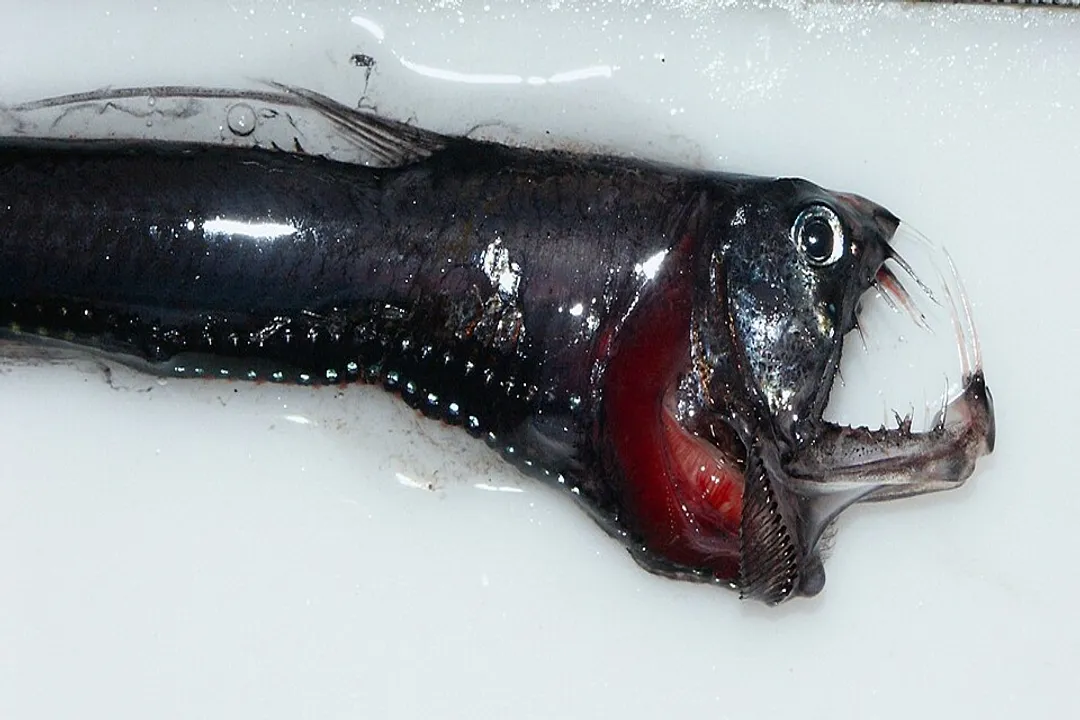
The physical adaptation most immediately noticeable on any viperfish is its dentition. The teeth are described as long, needle-like, and capable of piercing flesh. These fangs are so disproportionately large that they often do not fit inside the mouth when closed. In many species, the longest teeth, typically the two on the lower jaw, jut upward and can curve back towards the fish's own eyes.
To accommodate this impressive armament, viperfish possess a highly specialized jaw arrangement typical of the Stomiidae family, often referred to as a "loosejaw" configuration. This allows for an enormous gape, sometimes opening up to $90$ degrees, enabling the fish to engulf prey significantly larger than itself—in some cases, prey $20%$ to over $50%$ larger than the predator. The feeding mechanics are further enhanced by unique skeletal adaptations. Research on C. sloani points to a specific ventral jaw muscle, the A, which contributes to the speed and force of jaw closure. Even more remarkable is the modification of the first vertebra immediately behind the skull. This bone has evolved to function as a shock absorber, cushioning the impact of the powerful, high-speed bite or the force generated when impaling prey. Considering how energy-efficient these creatures are, this kinetic system is an ultimate adaptation for maximizing caloric return from infrequent feedings. The ability to rotate the skull upward also aids in manipulating large prey into the throat.
Viperfish are covered in scales arranged in five longitudinal rows, though these scales are prone to shedding or dissolving in preservation fluids, leading to historical descriptions of them being scaleless. Their skin beneath the scales features hexagonal pigment patterns and an opalescent, slimy coating. They also lack a swim bladder, a characteristic common to many deep-sea residents, hypothesized to be necessary to cope with pressure changes during vertical migrations, though low lipid content suggests some mechanism for buoyancy exists.
# Light Use
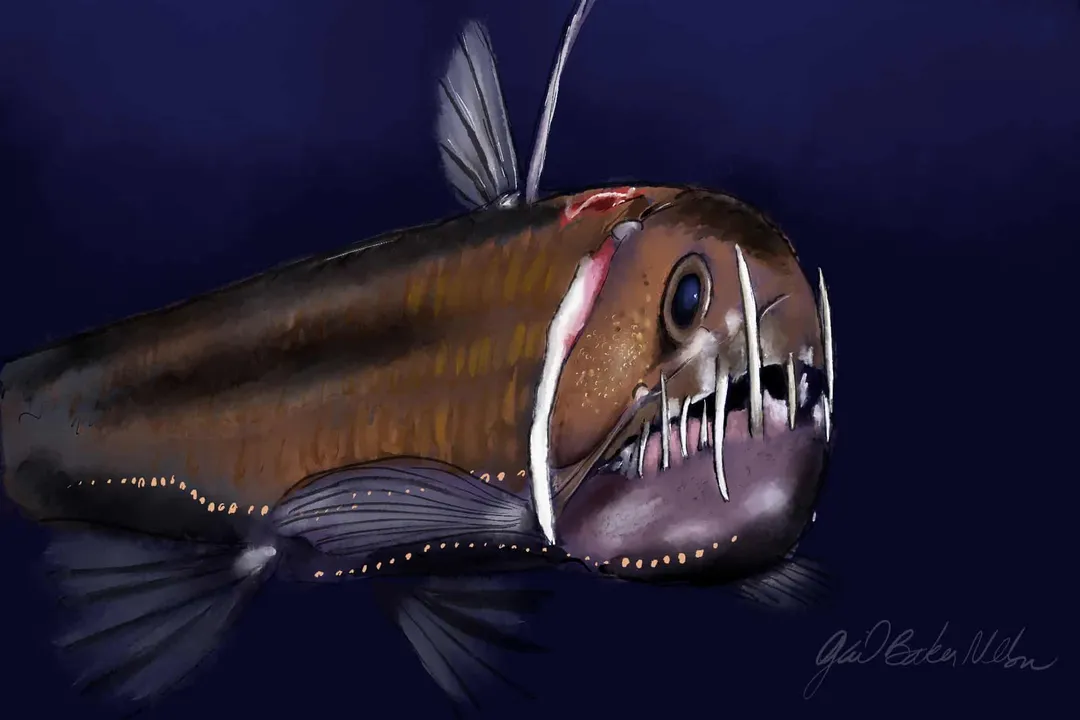
Like many inhabitants of the ocean's dimmer zones, viperfish employ bioluminescence for survival and hunting. They possess photophores—light-producing organs—situated along the ventral (belly) side of their bodies. The light emitted is typically blue-green or yellow.
The ventral photophores serve a critical defensive function known as counter-illumination. By producing light downward that closely matches the intensity of the faint, filtered sunlight penetrating from above, the fish effectively masks its silhouette from any predators viewing it from below. This camouflage renders them nearly invisible in the low-light environment. The light production in C. sloani is thought to be controlled by an adrenergic nervous system and may involve bioluminescent microbes within the visceral organs.
In addition to this defensive lighting system, the viperfish employs a specific predatory light show. The first soft ray of the dorsal fin is elongated, hinged, and flexible, positioning a light organ at its tip directly in front of the mouth like a lure. The viperfish can flash this lure to attract unsuspecting prey closer before snapping shut its jaws. The presence of distinct anatomical features for these two light functions—ventral photophores for camouflage and the dorsal lure for predation—highlights the distinct evolutionary pressures of life in the deep.
# Feeding Strategy
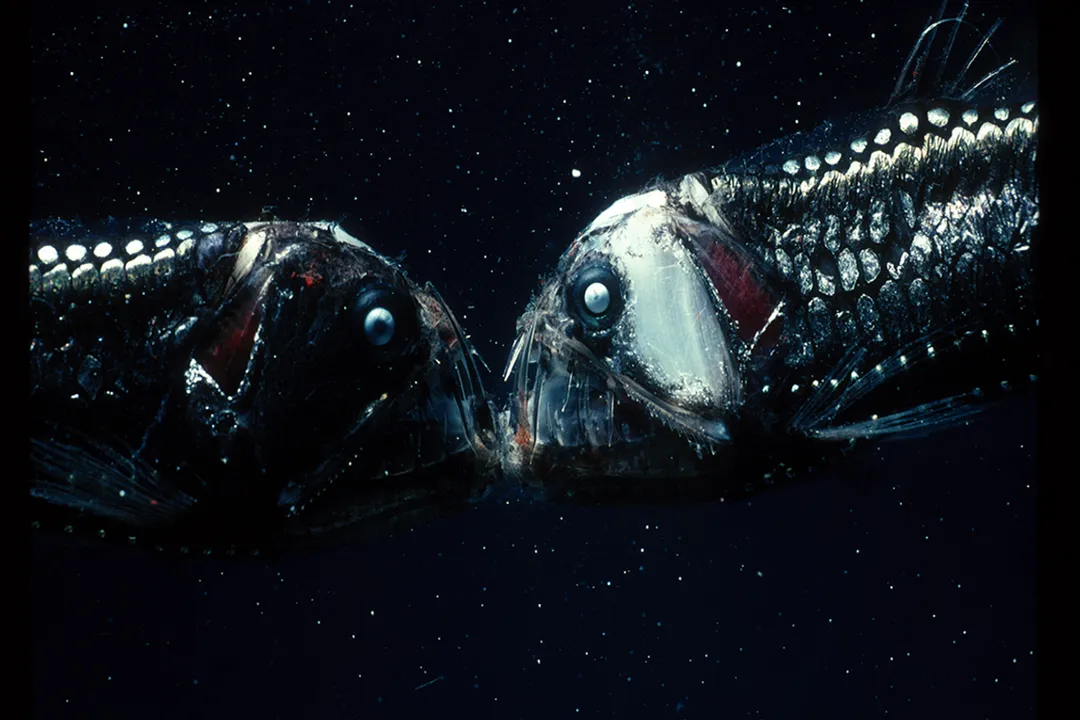
Viperfish are classified as carnivores, with a significant portion of their diet consisting of fish, making them piscivores, especially as they grow larger. Their primary targets are species that migrate vertically, most notably the small, bioluminescent lanternfish (Myctophids). Other items identified in stomach contents include small crustaceans, bristlemouths, copepods, krill, and fish eggs.
The hunting sequence is built around extreme energy conservation punctuated by explosive action. The viperfish often remains motionless, saving energy, while dangling its dorsal lure. When prey approaches the light, the viperfish executes its attack, rapidly unhinging its skull and jaw to capture the meal, sometimes impaling the victim on its needle-like teeth. Because food sources can be scarce in the deep, the strategy focuses on consuming infrequent but large meals to maximize caloric intake. This is reflected in their low basal metabolic rate, allowing them to survive for days between successful feeding events. The reliance on these large, rare feeding opportunities is a direct driver for the evolution of their massive mouth and specialized skeletal structure. It is a highly specialized kinetic feeding system, contrasted with the slow, constant foraging strategies of some other deep-sea bottom feeders.
# Lifespan Mystery
Information regarding the reproductive ecology and lifespan of viperfish remains scarce, largely because the necessary research specimens—mature adults—are seldom successfully captured and rarely survive the ascent to the surface environment. In the laboratory, viperfishes typically perish within a few hours, or up to 18 hours in some recorded instances.
However, scientific estimates for their longevity in the wild, derived from studying growth bands on the otoliths (ear bones), suggest a surprisingly long lifespan of between 30 to 40 years for some species. It must be noted that the reliability of these bands as strictly annual markers is sometimes questioned.
Reproduction is presumed to follow patterns seen in related dragonfishes. Viperfish are gonochoristic (having separate sexes). The general scientific belief points toward external spawning, where the female releases eggs into the water column for external fertilization by the male. Spawning activity is thought to occur year-round, although peak numbers of larvae have been observed between January and March. The larvae themselves are very small, around 6 millimeters at hatching, and resemble the leptocephalus larvae of eels before developing pectoral and caudal fins.
# Species Diversity
The genus Chauliodus includes nine currently recognized extant species, showcasing a wide geographic distribution across the world's major oceans.
| Species Name | Common Name (If listed) | Primary Distribution | Noteworthy Detail |
|---|---|---|---|
| C. sloani | Sloane's Viperfish | Cosmopolitan (Tropical/Temperate) | Most common species studied. |
| C. macouni | Pacific Viperfish | North Pacific Ocean | Ranges from Central America to Alaska. |
| C. pammelas | Indian Ocean | Exclusive to this ocean basin. | |
| C. schmidti | Atlantic Ocean | Found between Africa and South America. | |
| C. vasnetzovi | Deep waters off Chile | Restricted range in the southeast Pacific. | |
| C. danae | Dana Viperfish | Atlantic Ocean and SE Pacific | Known to migrate closer to the surface. |
| C. dentatus | Near French Polynesia | Has one of the smallest known geographic ranges. | |
| C. minimus | South-central Atlantic | One of the smaller species, reaching about 7.5 inches. | |
| C. barbatus | Pacific Ocean | Lives only in the Pacific. |
Fossil evidence shows that viperfish have been present in the marine environment for a long time, with at least two species known from Late Miocene fossils: Chauliodus eximus found in California, and Chauliodus testa from Western Sakhalin Island.
While the genus has a global distribution, specific species occupy distinct ecological niches. For example, C. pammelas is confined to the Indian Ocean, which suggests that while the overall family thrives globally, local environmental conditions or historical oceanic separation created distinct speciation boundaries, much like islands separate terrestrial species. It’s fascinating to consider how the evolution of the shock-absorbing vertebra—a feature noted specifically in the Pacific species—might differ in adaptation or necessity across the various populations occupying the distinct deep-sea environments of the Atlantic versus the Indian Ocean. Research confirms that viperfishes function as higher-trophic-level predators, playing a significant role in controlling populations of myctophids, thus acting as important links in the deep-sea food web.
Related Questions
#Citations
Viperfish - Wikipedia
Pacific viperfish | Animals - Monterey Bay Aquarium
Viperfish Facts for Kids
Creature Feature: Sloane's Viperfish - The Ocean Twilight Zone
Viperfish Fish Facts - Chauliodus sp. - A-Z Animals
Viper Fish are Fierce Predators - Kids Fun Science
Pacific viperfish - MBARI
Chauliodus sloani (Manylight viperfish) - Animal Diversity Web
Viperfish | Deep-Sea, Anglerfish, Bioluminescence - Britannica