Viper Shark (dogfish) Evolution
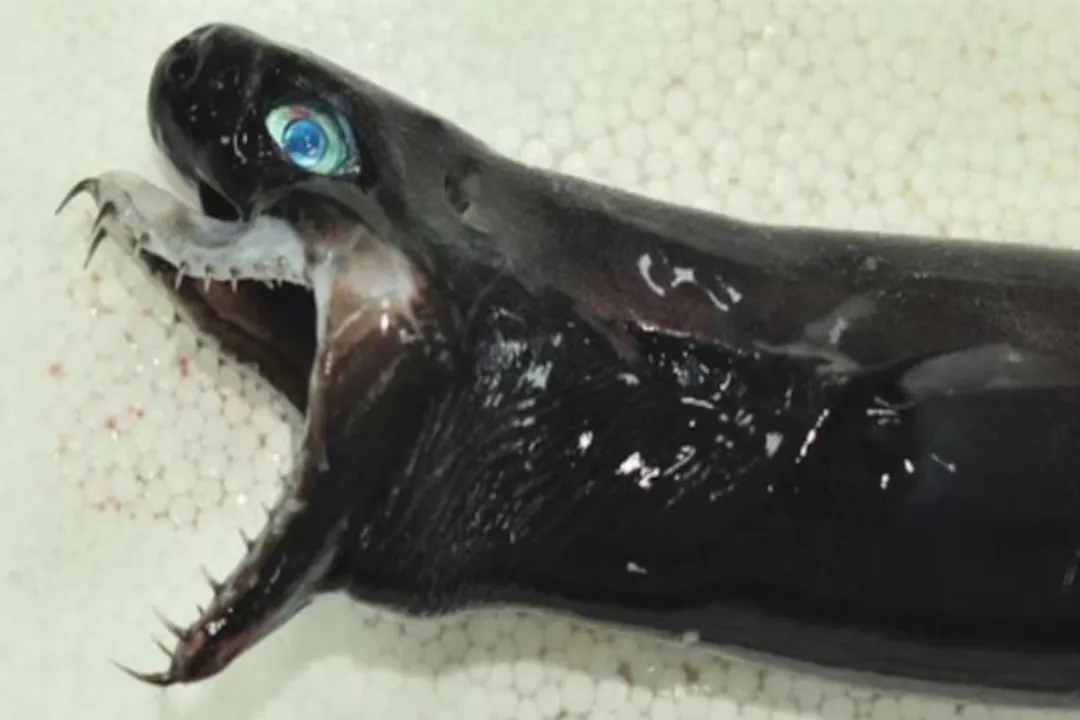
The Viper Shark, scientifically known as Trigonognathus kabeyai, presents a genuinely startling image when viewed by humans, earning it comparisons to something from science fiction rather than the familiar ocean depths. [4][8] This relatively small, slender deep-sea shark is characterized by its jet-black coloration and a truly remarkable set of teeth. [1][3][9] Existing in the perpetual twilight zone of the ocean, its life history remains somewhat mysterious, yet its unique morphology offers clear evidence of extreme adaptation to its environment. [7] Understanding this creature requires looking not just at its startling appearance today, but tracing its lineage within the larger shark family tree to grasp the evolutionary pressures that shaped such an unusual predator. [1][7]
# Deep Sea Finds
The formal introduction of this species to science was a relatively recent event, placing it firmly in the modern era of marine biology discovery. [1][3] The first recorded specimen of what would become the Viper Shark was captured near the Ogasawara Islands, Japan, in 1986. [1][6][10] It took another four years for the species to be formally described by scientific consensus in 1990. [1][6] Its specific epithet, kabeyai, pays homage to Seiichi Kabeya, who first collected the unique specimen. [1][10] Although now recognized, confirmed sightings and captures have remained sporadic, suggesting a life spent far from the surface and human observation. [7]
The shark's classification places it within the order Squaliformes, commonly known as the dogfish sharks. [1] More specifically, it belongs to the family Etmopteridae, which is comprised of the lanternsharks. [1][7] This grouping is significant because lanternsharks are well-known for inhabiting deeper waters and possessing bioluminescent capabilities. [1][6] Being categorized here immediately suggests a shared evolutionary heritage centered around life in the aphotic zone. [7]
# Jaw Design
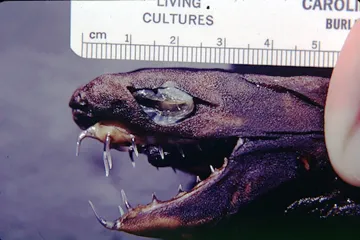
The most immediately striking feature of the Viper Shark is its mouth, which gives rise to both its common and scientific names. [1][2][4] The genus name, Trigonognathus, translates from Greek, meaning "triangular jaw," a descriptor that perfectly captures the shape of its dental apparatus when viewed head-on. [1][6]
This shark possesses an unnerving array of interlocking, razor-sharp teeth. [2][4][9] Unlike many sharks whose teeth are replaced rapidly or arranged in multiple rows, the Viper Shark’s teeth fit together so tightly that they form a continuous, blade-like edge. [1][4] When the mouth opens, these serrated structures are prominently displayed, giving the animal an almost metallic or otherworldly look, which is likely why it has been frequently nicknamed the "alien shark". [2][8]
It is fascinating to consider the selective pressures that molded such extreme dentition. In the deep ocean, encounters with prey are infrequent, meaning that when a feeding opportunity arises, the strike must be decisive and effective. [7] This interlocking, blade-like jaw suggests an adaptation for minimizing slippage and maximizing the cutting action upon impact, potentially allowing the shark to secure soft-bodied prey or sever portions of larger, scarce meals quickly. [4] This specialized dental morphology, when compared to the more typical serrated or pointed teeth found in many shallower-dwelling Squaliformes, highlights an evolutionary divergence focused purely on securing calories in a food-limited habitat. [1]
# Light Tactics
Life in the deep sea, generally below 200 meters, means navigating an environment devoid of sunlight. [6] The Viper Shark has evolved the classic deep-sea adaptation of producing its own light—bioluminescence—which is essential for its survival. [1][3]
Like its lanternshark relatives, T. kabeyai is covered in light-producing organs called photophores. [1][3] These are strategically positioned along its ventral (underside) surface. [6] The primary function of these lights is believed to be counterillumination. [1] In the faint, downwelling residual light that penetrates the upper layers of the bathypelagic zone, an animal silhouetted from below would be easily spotted by predators looking up. [3] By emitting a faint light matching the ambient conditions, the shark effectively erases its own shadow, rendering it invisible to threats from below. [1]
While counterillumination is likely the main driver for the ventral photophores, lanternsharks sometimes exhibit photophores in other patterns that may be used for species recognition, attracting mates, or even luring unsuspecting prey closer into the range of that formidable jaw. [3][6]
# Physical Profile
The Viper Shark is a relatively small fish, generally reaching lengths of only about 25 centimeters, or roughly 10 inches. [1][4][9] This petite stature is common among deep-sea sharks, possibly related to the energetic constraints of their sparse environment. [4] Its body is slender and streamlined. [1][3]
Coloration is uniformly dark—typically described as black or very dark brownish-black—which serves as excellent camouflage in the deep scattering layer where it resides. [1][3][9] Its eyes, however, are noticeably large in proportion to its head. [1][3] This indicates a high degree of visual sensitivity, necessary to detect the minute light signatures of prey or predators against the dark backdrop, making its vision perhaps its second most important tool after its specialized jaws. [1]
Geographically, the known distribution of T. kabeyai is concentrated in the western Pacific Ocean, particularly around Japan. [6][7] Documented specimens have come from depths where temperatures are consistently low, usually between 277 and 360 meters, confirming its status as a true deep-water resident. [1][7]

# Evolutionary Context
Though specific fossil records detailing the precise timeline of the Viper Shark's divergence are not widely documented, its placement within the Etmopteridae family provides a starting point for understanding its evolutionary trajectory. [7] The Squaliformes order itself is ancient, but the specialization leading to the lanternsharks—characterized by bioluminescence and often smaller sizes—represents a successful radiation into the deep pelagic niche. [1]
The evolution of Trigonognathus kabeyai appears to have been driven by an extreme focus on efficiency in this low-energy, light-deprived habitat. While most dogfish sharks maintain a generalist appearance and hunting style, the Viper Shark seems to have committed fully to the specialized traits of its immediate family while simultaneously developing its unique dentition. [1][7] If we compare the Viper Shark’s jaw to the teeth of its nearest relatives within the lanternsharks, we can see a spectrum of dental modification, but T. kabeyai's interlocking blades represent a clear endpoint of mechanical specialization for shearing or gripping in the darkness. [4] The retention of large eyes alongside the development of complex light-producing organs shows a parallel investment in sensory perception—one focused on passively receiving faint light, the other on actively manipulating the light environment around itself. [3] This dual sensory reliance speaks volumes about the intensity of the competitive pressures it faces deep beneath the surface. [1]
Related Questions
#Citations
Viper dogfish - Wikipedia
The absolutely metal viper shark/dogfish (Trigonognathus kabeyai)
March Elasmobranch of the Month: Viper Dogfish - Sharks4kids
Viper Dogfish - Sharkwater Extinction
Viper dogfish shark and its unique hunting method in deep-sea ...
Viper dogfish
Further description and notes of natural history of the viper dogfish ...
'Alien'-Like Sharks With Extendable Jaws Pulled From Deep Sea
Viper Dogfish - NatureRules1 Wiki - Fandom
The viper dogfish or viper shark (Trigonognathus kabeyai) is a rare ...