Vinegaroon Physical Characteristics
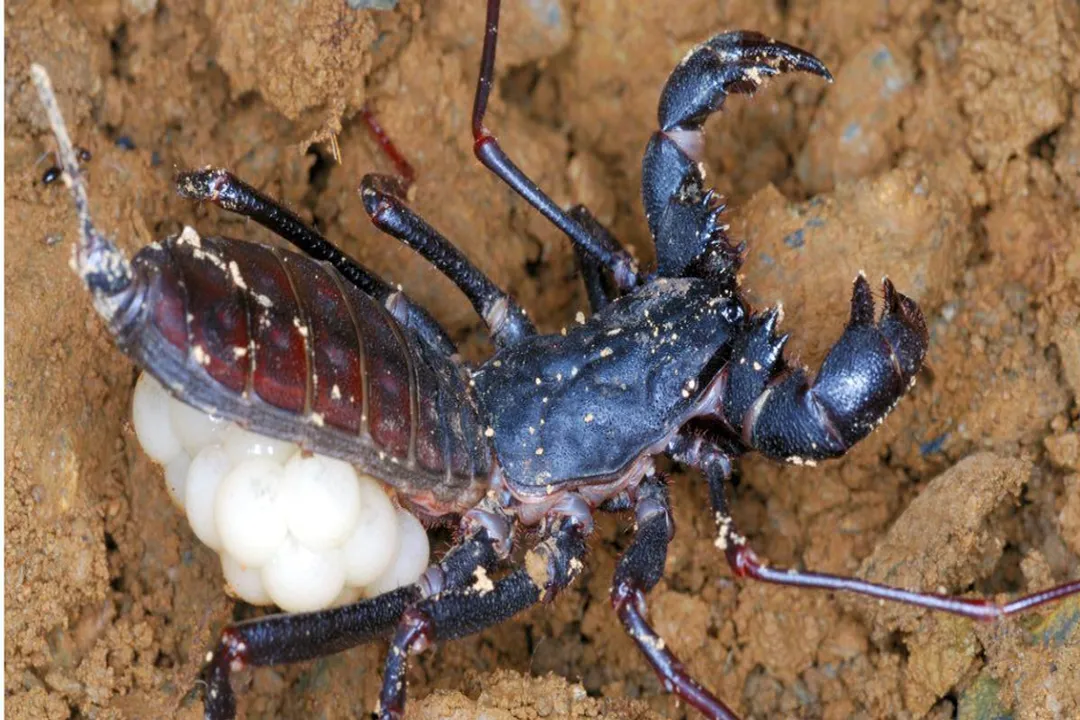
The vinegaroon, often mistaken for a true scorpion due to its intimidating appearance, is actually a distinct arachnid belonging to the order Thelyphonida. These creatures possess a fascinating array of physical attributes that distinguish them from their more famous cousins, the scorpions, particularly in how they interact with their environment and defend themselves. Understanding their morphology reveals a highly specialized predator adapted to arid and semi-arid habitats across the Southern United States and Mexico.
# Total Size
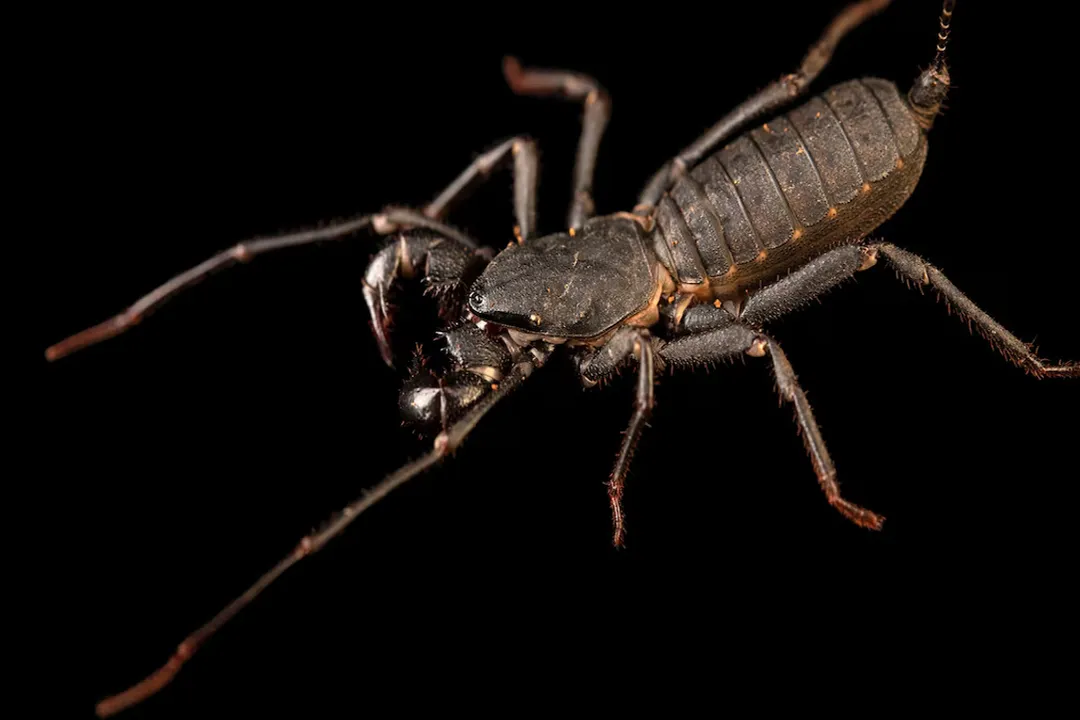
Vinegaroons are notably large arthropods, immediately commanding attention when encountered. The largest species found in the United States, Mastigoproctus giganteus, can achieve a substantial size for an arachnid. Adult specimens frequently reach lengths up to 3.5 inches overall. Some descriptions place the maximum body length for the Giant Vinegaroon at around 3.3 inches, or 8.5 centimeters. This impressive scale makes them one of the more conspicuous ground-dwelling arthropods in their native ranges. Their size, combined with their dark coloring, often leads people to assume they are dangerous, though their primary weapons are not venomous.
# Body Color
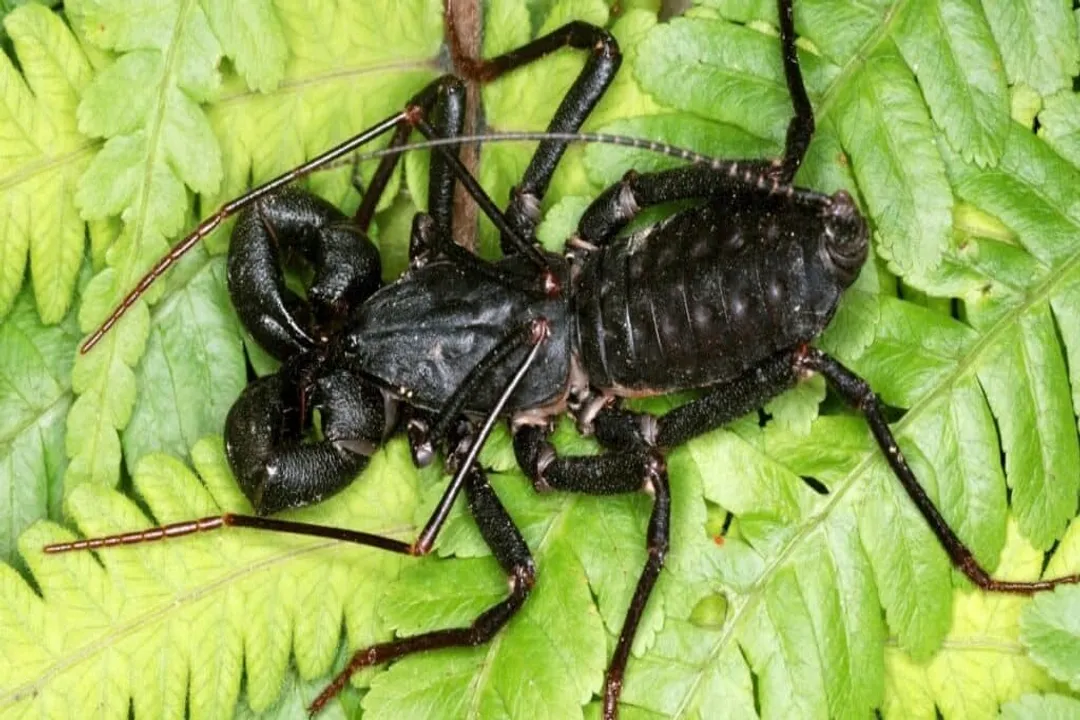
The overall coloration of the vinegaroon contributes significantly to its ominous reputation. They are typically described as being dark, often appearing reddish-brown or almost black. This deep pigmentation helps them blend into the shadowy confines of their burrows and the dark soil or leaf litter where they hunt. This uniform dark tone contrasts sharply with the segmented appearance of their body, drawing focus instead to their specialized appendages.
# Pincer Appendages
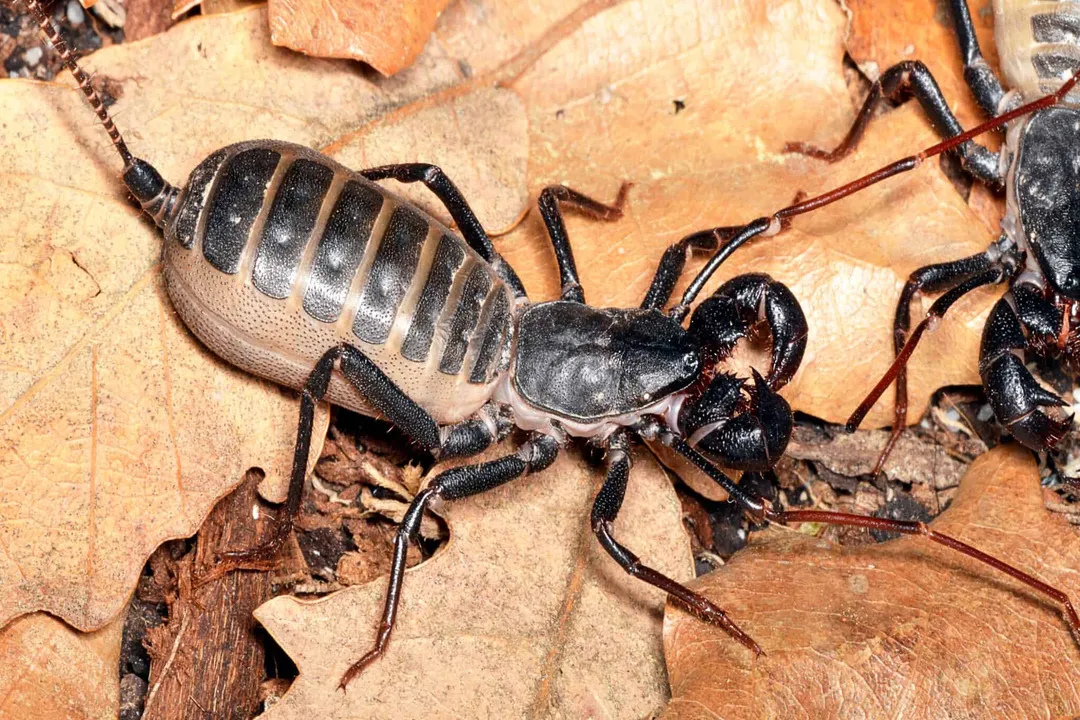
Perhaps the most visually striking feature, next to the tail, is the pair of pedipalps. These are modified into large, powerful pincers, often described as claw-like. These appendages are clearly analogous to the pincers found on scorpions, but their role in the vinegaroon's life is purely mechanical. The pedipalps are crucial tools for capturing and crushing prey, holding it firmly while the small but toothed chelicerae (mouthparts) get to work. Unlike scorpions, these pincers do not possess venom glands; they rely solely on sheer crushing power for subduing insects, spiders, and other small invertebrates.
Observing how these large pincers are used alongside the acid spray defense highlights an interesting evolutionary trade-off. A predator that invests heavily in large crushing appendages for feeding might be expected to use them primarily for defense as well, yet the vinegaroon relies more heavily on its chemical deterrent when truly threatened, suggesting the pincers are optimized more for securing a meal than for fighting off larger threats.
# Whip Tail
The most distinctive morphological feature setting the vinegaroon apart is its elongated, whip-like tail, technically known as a flagellum. This structure is segmented and contrasts starkly with the stinger-tipped tail found on true scorpions. The vinegaroon’s tail lacks any stinging capacity whatsoever. Instead of injecting venom, this long, flexible appendage serves a primary sensory function, acting as an antenna to feel the ground and surroundings as the animal moves. This dependence on tactile information from the tail is a direct consequence of their limited vision.

# Sensory Legs
While vinegaroons possess eight legs like all arachnids, the front pair is frequently specialized in a way that aids their navigation in dark environments. These anterior legs are often significantly longer and more slender than the other pairs. They are held forward and function as sophisticated feelers, essentially acting as external antennae to probe the substrate ahead of the body. In some specimens, these sensory legs can actually extend further than the length of the body itself.
When moving, particularly in confined spaces like their subterranean burrows, the vinegaroon exhibits a distinct gait where these long front legs sweep and tap the ground while the rest of the body follows cautiously. This modification provides excellent spatial awareness when visibility is near zero. If you happen to observe one moving through complex terrain—say, navigating around small pebbles or through dense leaf litter—you can appreciate how these specialized limbs allow for surprisingly fast, yet controlled, locomotion, even if they appear somewhat clumsy at first glance.
# Eyesight Poorness
The reliance on the whip-like tail and the long front legs is necessitated by the poor development of their eyes. Vinegaroons are visually impaired, possessing only a pair of simple eyes situated dorsally on the prosoma (the fused head and thorax section). Some individuals might also have a few rudimentary lateral ocelli, or simple eyes, but these provide minimal detail.
This low level of visual acuity means the vinegaroon perceives the world primarily through touch and possibly chemoreception, making the tactile organs critical for survival. They are largely nocturnal hunters, an adaptation that complements their poor eyesight by allowing them to operate when light is not a factor.

# Defense Chemistry
While the morphology centers on the powerful pincers and sensory apparatus, the defining characteristic associated with the vinegaroon's defense—and the source of its common name—is chemical. When severely provoked, the vinegaroon sprays a defensive secretion from a pair of glands located at the posterior end of the abdomen, near where the tail attaches.
This spray is a mixture of acetic acid and caprylic acid. Acetic acid is the main component of common vinegar, which accounts for the creature's moniker. The spray is directed at the threat with considerable accuracy. While it is not venomous and does not cause lasting internal harm, it is extremely irritating to the eyes and mucous membranes of predators or curious humans. The sheer force and stinging nature of this spray make it a highly effective deterrent, allowing the vinegaroon to escape potential harm without having to engage in a prolonged physical fight using its claws, which are better suited for eating.
# Segmented Body
The vinegaroon body structure is divided into two main tagmata: the prosoma (cephalothorax) and the opisthosoma (abdomen). The prosoma is covered by a hard carapace, which protects the vital sensory organs, eyes, mouthparts, and the attachment points for the eight walking legs and the pedipalps. The opisthosoma, or the larger, segmented rear section, houses the defensive spray glands near its anterior connection to the prosoma. This segmented abdomen is where the flagellum emerges, confirming its difference from true scorpions which have a narrower, post-abdominal tail ending in a stinger.
The following table summarizes some of the key morphological differences when comparing the vinegaroon to a true scorpion, which helps clarify why the common name can be misleading:
| Feature | Vinegaroon (Thelyphonida) | True Scorpion (Scorpiones) |
|---|---|---|
| Tail End | Long, flexible, sensory flagellum | Short, segmented post-abdomen ending in a stinger |
| Pincers (Pedipalps) | Large, used for crushing/capture; No venom | Large, used for defense/capture; often possess venom glands |
| Defense | Chemical spray of acetic acid mixture | Venom injection via the telson (stinger) |
| Front Legs | Often greatly elongated for tactile sensation | Typically uniform in length, used for walking/sensing |
Understanding this combination of physical traits—massive crushers, poor eyesight, sensory feelers, and a chemical deterrent—paints a picture of an animal that has prioritized sensory input and chemical defense over visual acuity and venomous striking power. It is a creature built to navigate the darkness and discourage close confrontation through potent chemistry rather than a painful sting.
Related Questions
#Citations
Vinegaroon - Field Guide to Common Texas Insects
Vinegaroon Animal Facts - A-Z Animals
Everything to know about the Vinegaroon
Giant Vinegaroon Care and Characteristics in Southwestern United ...
Mastigoproctus giganteus | INFORMATION - Animal Diversity Web
Vinegaroon | Overview, Identification & Bite - Lesson - Study.com
Vinegaroon, facts and information | National Geographic
Giant Vinegaroon Spider - Twin Falls Zoo
EENY493/IN890: Giant Whip Scorpion Mastigoproctus giganteus ...