Vinegaroon Facts
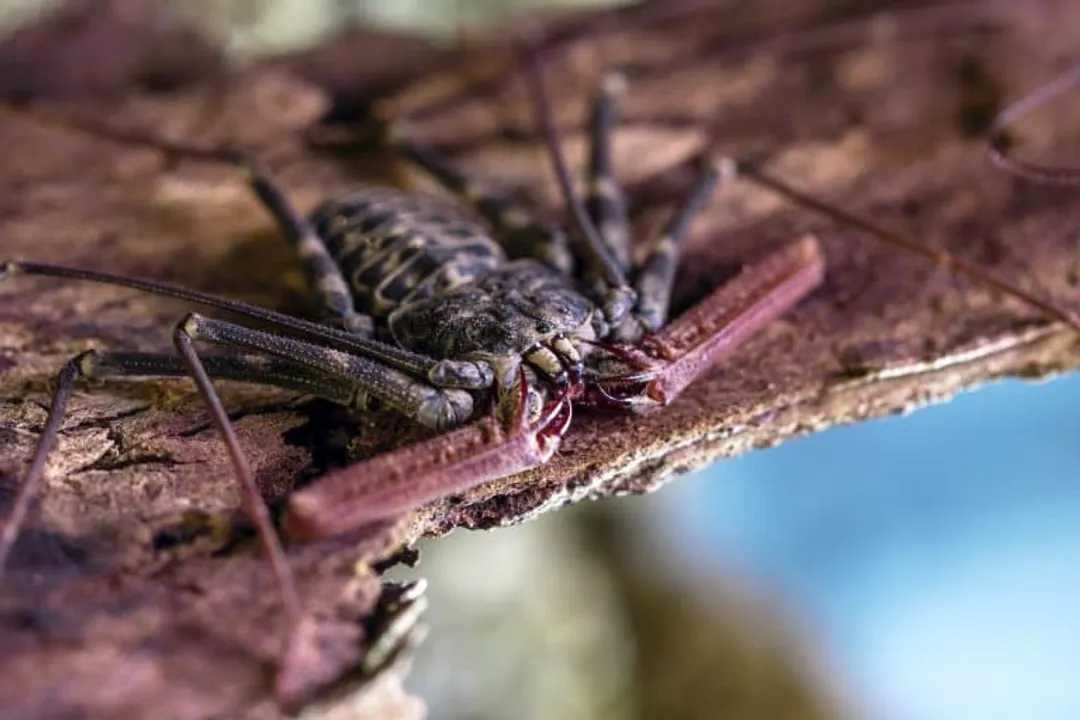
The creatures often dubbed vinegaroons strike a rather formidable first impression. With their dark exoskeletons, menacing-looking pincers, and that distinctive, whip-like tail, it is no wonder they inspire a mixture of awe and apprehension in anyone who encounters them. Despite their intimidating appearance and their famous chemical defense, these fascinating arachnids are generally quite shy and play a necessary role in their arid environments. [1][2] They are not, as their common names might suggest, true scorpions, nor do they possess venom glands, which is a key distinction for anyone unfamiliar with them. [3][9]
# Arachnid Identity
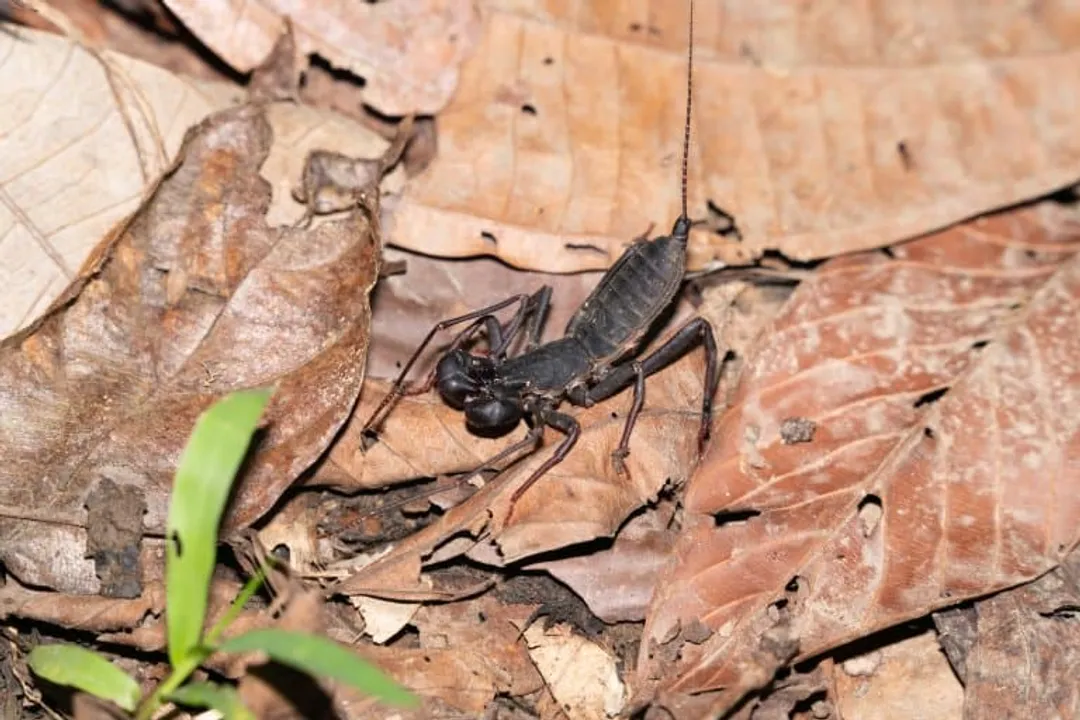
Vinegaroons belong to the order Uropygi, an older group of arachnids sometimes referred to as whip scorpions or tailless whip scorpions. [6][9] The common name "vinegaroon" itself comes directly from their primary defense mechanism, which releases a pungent spray smelling strongly of acetic acid—the main component of vinegar. [1][3] In some regions, they are also known as the Giant Vinegaroon, reflecting the potential size of certain species. [3]
It is important to clarify their placement within the larger arachnid family. They are related to scorpions and tailless whip scorpions, but they represent their own distinct lineage. [6] Unlike true scorpions, vinegaroons lack a stinger at the end of their abdomen. [2][9] They also differ from another group sometimes confusingly called "whip scorpions," which belong to the order Thelyphonida and use formic acid in their spray, whereas vinegaroons primarily use acetic acid. [6] The genus Mastigoproctus includes several well-known species, such as the Mastigoproctus giganteus, commonly known as the giant vinegaroon. [3][6]
# Physical Traits
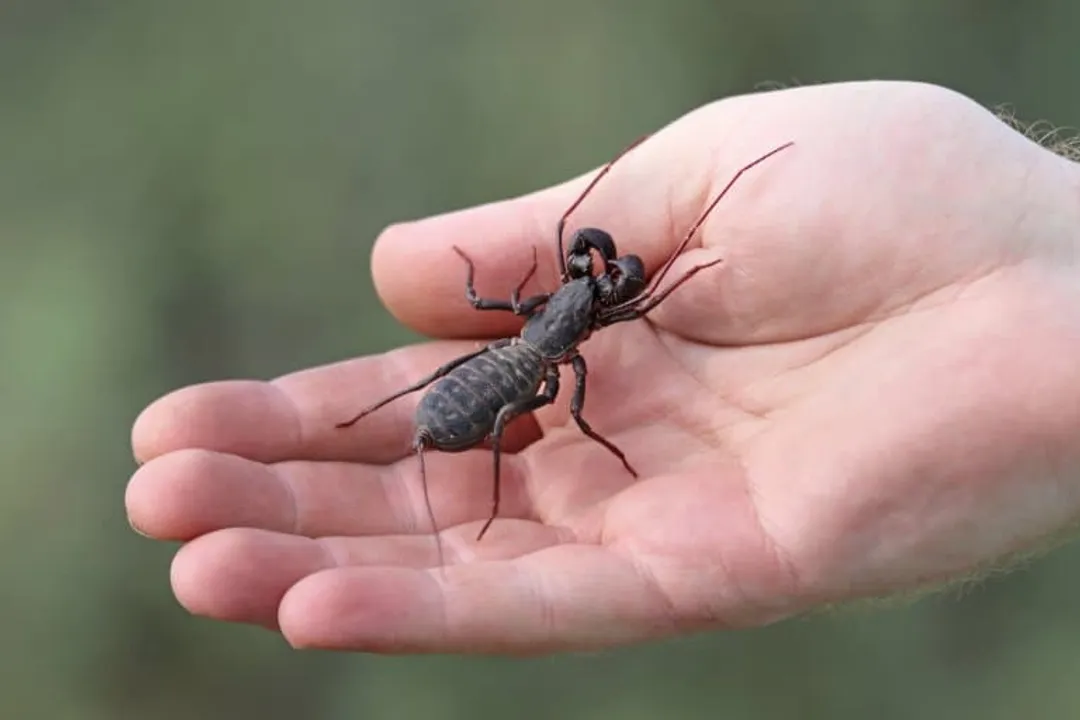
In terms of size, vinegaroons can be quite substantial for an arachnid. Some species can reach lengths of up to three inches, excluding the tail. [4] Their coloration usually ranges from deep black to dark brown, allowing them to blend effectively into the soil and debris of their habitats. [1]
The body structure is characterized by several key features. First are the pedipalps, which are modified into strong, pincer-like appendages resembling small claws. [1][2] While they look fearsome, these pincers are generally used for defense, handling prey, and digging, rather than delivering a powerful crushing blow or injecting toxins. [3][9]
Perhaps the most striking visual feature, second only to the pincers, is the elongated, whip-like tail, or flagellum. [1][6] This structure is actually the modified telson, the final segment of the abdomen, which in scorpions holds the venomous stinger. [6] In the vinegaroon, however, this tail is purely a sensory organ, used to feel the environment as they move, especially in the dark. [1]
Another observable characteristic is their pair of walking legs near the front that are greatly elongated and slender, often held forward like feelers, which aids in navigation. [1][6] The overall body appears segmented, typical of arthropods, encased in a tough, protective exoskeleton. [2]
# Acid Spray
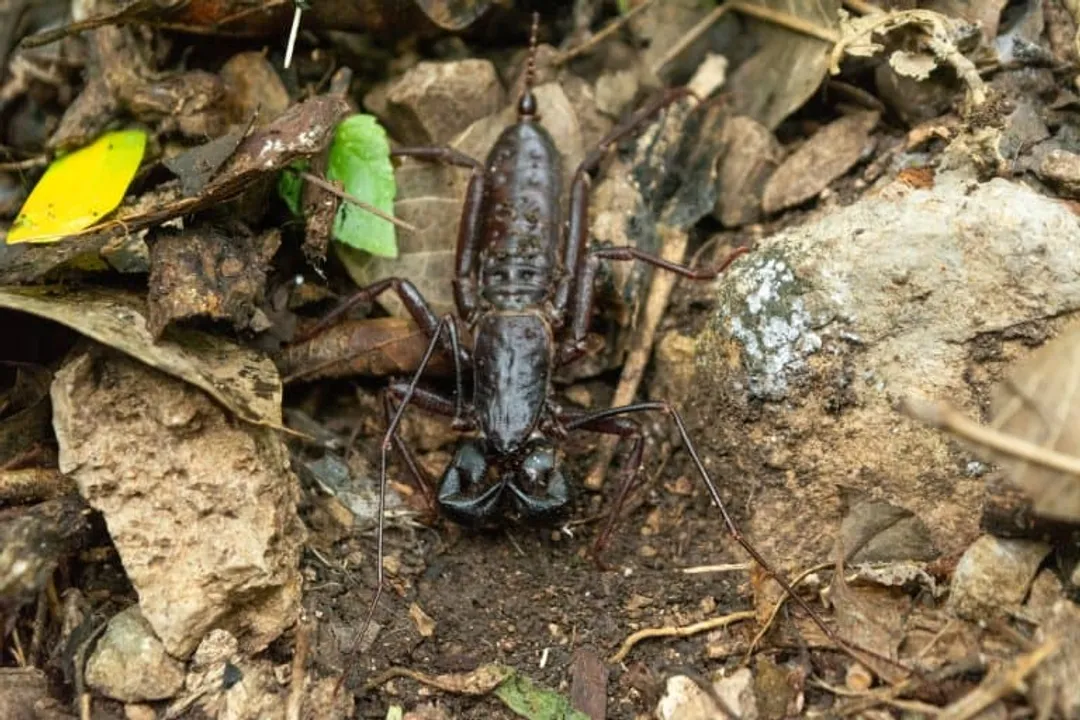
The most famous attribute of the vinegaroon is its chemical defense system, which earns it its common name. [1] When seriously threatened, the vinegaroon can forcibly eject a defensive spray from a pair of glands located near the rear of its abdomen. [1][3] This spray is mostly composed of acetic acid, which gives it the sharp, vinegary odor. [1][3]
The precision and range of this spray are impressive for an invertebrate. Depending on the species and the perceived threat, the vinegaroon can accurately aim this deterrent up to three feet away. [2] This allows it to keep a potential predator or curious human at a distance without needing to engage in physical combat. [1][3] While the spray is not inherently lethal to humans, it is a potent irritant. [3][9] Contact with the eyes or mucous membranes can cause significant burning and discomfort, necessitating immediate flushing with water. [9]
The defensive behavior often follows a pattern: first, the vinegaroon will raise its tail over its body and display its pincers in a threatening posture. [1] If the threat persists, the chemical defense is deployed. It is fascinating to note the evolutionary trade-off here: while a scorpion might use venom for defense or offense, the vinegaroon invests in a non-lethal, long-range chemical deterrent, suggesting that preserving energy and avoiding direct conflict is their preferred survival strategy. [6]
# Desert Life
Vinegaroons are primarily creatures of the arid and semi-arid regions of the southwestern United States and northern Mexico. [1][2][4] They thrive in dry habitats, including deserts, grasslands, and scrublands, where the soil consistency is suitable for their lifestyle. [1]
They are overwhelmingly nocturnal, spending the hot daylight hours hidden away from the sun and heat. [1][4] Their homes are deep burrows dug into the ground, sometimes extending quite far down to find cooler, more humid conditions. [1][4] This habit of burrowing not only offers temperature regulation but also protection from predators and dehydration. [4]
Their diet reflects their predatory nature. Vinegaroons are carnivorous and actively hunt for food after dusk. [2] Their prey consists largely of various insects, spiders, and other small ground-dwelling invertebrates. [1][2] In the case of larger species, they might occasionally tackle very small vertebrates if the opportunity arises. [2] They use their sensitive front legs and whip-like tail to navigate and locate prey in the dark before capturing it with their pedipalps. [1]
Considering their habitat preference, the longevity of vinegaroons becomes particularly relevant for ecological stability. While many common insects have short lifecycles, vinegaroons have been known to live for many years in captivity, sometimes exceeding a decade. [6] This long lifespan suggests slow growth and reproduction rates, making their populations potentially sensitive to sudden habitat disruption or significant environmental changes like prolonged drought. [6]
# Interaction Safety
For the general public, encountering a vinegaroon is usually a non-event, as they are inherently non-aggressive and will usually retreat into cover if disturbed. [3] It is the startled or cornered individual that resorts to its spray. [1]
Understanding the mechanics of their defense can significantly reduce perceived danger. Since they lack venom and their pincers are not powerful enough to inflict serious injury, the primary risk lies entirely with the chemical spray. [3][9] If you are observing one in the wild, maintaining distance is the best practice. If one is found near a dwelling, it is best to gently encourage it away from the area rather than attempting to handle it. [3]
For those interested in keeping one as an exotic pet—a practice common among arachnid enthusiasts—the safety considerations are clear: provide a secure, escape-proof enclosure that mimics their arid environment, and always allow them space when feeding or cleaning, as handling should be minimal. [9] While many sources confirm their non-venomous status, I find it useful to remember that even without venom, an animal that sprays a concentrated acid needs respect; treating them with the same caution one might give a mildly toxic plant, rather than a deadly snake, seems the most appropriate stance for managing expectations about their threat level. [9] They are, fundamentally, defense-oriented creatures whose primary goal is survival, not confrontation.
# Growth Cycles
The life of a vinegaroon involves several molts throughout its development, a process common to all arthropods as they grow out of their existing exoskeletons. [6] The nymph stage is essentially a smaller version of the adult, though the tail whip might be proportionally shorter initially. [6]
Reproduction is also characterized by parental investment, which is relatively high for an arachnid. After mating, the female typically lays a clutch of eggs. [6] Following hatching, the tiny young often climb onto the mother's back, where they remain protected while they complete their first few developmental stages. [6] This brooding behavior, where the mother actively protects the newly emerged offspring, is a significant biological investment and contributes to the species' slower reproductive output compared to more prolific but less attentive arthropods.
#Videos
Vinegaroon facts: they're not scorpions or spiders | Animal Fact Files
Related Questions
#Citations
Vinegaroon, facts and information | National Geographic
Vinegaroon Animal Facts - A-Z Animals
Giant Vinegaroon | Oakland Zoo
10 Vinegaroon Facts (aka Whip Scorpions) - Fact Animal
Vinegaroon - Field Guide to Common Texas Insects
Uropygi - Wikipedia
Giant Vinegaroon - Jonathan's Jungle Roadshow
What are Vinegaroons? All About These Creepy Arachnids
Vinegaroon facts: they're not scorpions or spiders | Animal Fact Files
Vinegaroon Fact Sheet - C.S.W.D - Critter Squad