Are kangaroo rats aggressive?
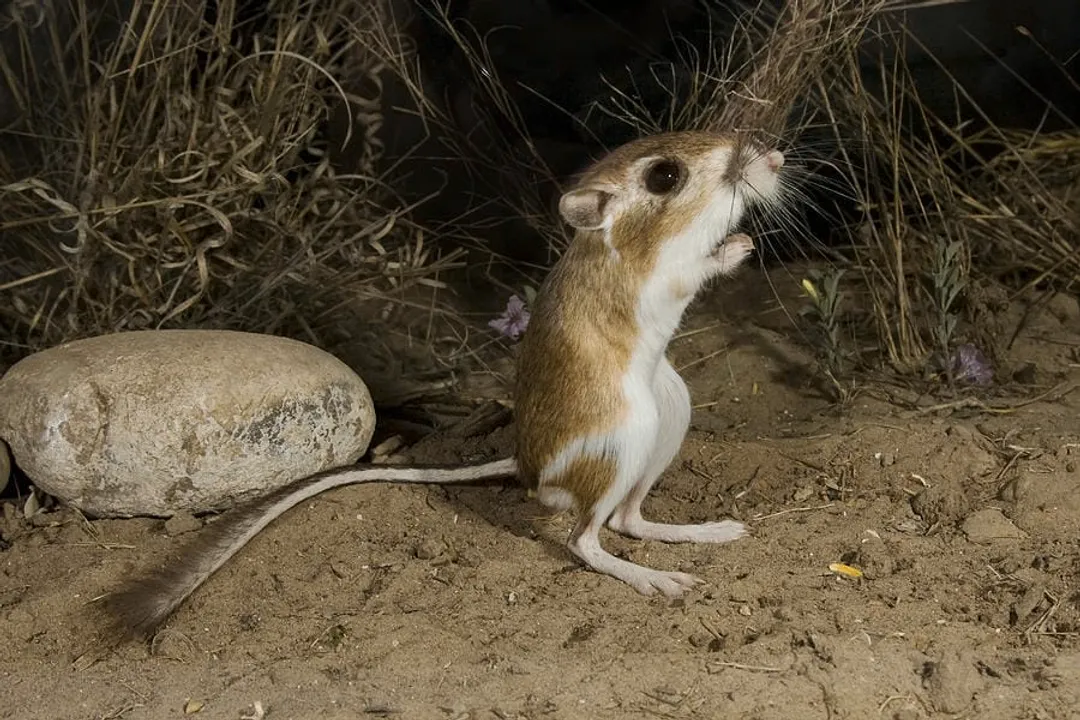
Kangaroo rats, those small, bipedal inhabitants of arid North American landscapes, often provoke curiosity about their temperament, leading many to wonder if they are aggressive animals. They are certainly creatures built for intense, high-stakes encounters, primarily focused on survival against formidable predators. While they possess remarkable physical capabilities that look confrontational when deployed, their behavior is overwhelmingly characterized by defense and evasion rather than proactive aggression toward other animals or humans. Understanding their survival strategies reveals why they sometimes appear combative when, in reality, they are simply reacting to an imminent threat.
# Snake Evasion
The most dramatic and frequently cited instances of kangaroo rat behavior involve encounters with rattlesnakes, which form a significant part of their predator profile. When a rattlesnake strikes, the rat's response is not a timid retreat but an explosive, calculated maneuver captured by high-speed video in laboratory settings. This defense involves a rapid, elastic leg extension followed by a high-speed aerial tail-whipping motion toward the snake's head.
# High Speed Performance
The purpose of this rapid leg extension and subsequent kick is not to deliver a forceful blow, but rather to create the necessary space and time to initiate an evasive jump. The kick itself acts as a propulsive distraction. Researchers observing these interactions noted that the kangaroo rat can execute this evasion sequence so fast that the snake often strikes empty air, missing the target entirely. The speed is astonishing; some movements have been recorded at over 20 miles per hour.
When the rat is close enough to the snake, it performs a powerful hind-leg extension that can send the snake's head flying away from its body, sometimes resulting in the snake hitting the enclosure wall. The high-speed footage confirms that the rat performs a rapid hind-leg movement before the snake's fangs even make contact, indicating a preemptive, reactive defense mechanism timed to the millisecond. This behavior is highly specialized and appears almost entirely reserved for life-or-death situations involving serpentine threats.
Consider this specialized response in context: most small rodents confronted by a predator might freeze or dart immediately into cover. The kangaroo rat, however, possesses an evolved, active defense because its primary hunting grounds often overlap with its main predator's territory, demanding a faster, more direct countermeasure than simple flight. The energy investment in a single, perfectly timed evasion maneuver, even if successful, must be substantial compared to a standard retreat, suggesting that this "kick" is a last resort when cover is unavailable or the strike is too close.
# Desert Life
Kangaroo rats, such as the Desert Kangaroo Rat (Dipodomys deserti), are primarily found in the arid and semiarid regions of western North America. They are nocturnal, spending the daylight hours sealed inside complex burrow systems to conserve water and avoid daytime predators. Their physiology is incredibly adapted to dry environments; they often meet all their water requirements metabolically through the seeds they consume, rarely needing to drink water directly.
For instance, the Desert Kangaroo Rat's diet consists almost entirely of seeds, which it gathers during nighttime foraging trips. This reliance on seeds, which store energy efficiently, aligns with an energy-conservative lifestyle punctuated by bursts of intense activity—like predator evasion.
Their primary defense against non-snake predators, such as owls or coyotes, relies heavily on their superb hearing, their large hind legs for rapid, zigzagging travel across open ground, and their ability to navigate the desert terrain efficiently. They do not typically confront these threats head-on; instead, they vanish into the darkness or disappear into their burrows.
# Group Dynamics
When assessing aggression, it is useful to look at intraspecies interactions. Kangaroo rats are generally considered solitary animals. They create and maintain individual burrow systems. While they may live in areas where multiple individuals are active, direct, sustained aggression between individuals is not their defining social characteristic.
Social interactions, when they occur, often revolve around territorial defense or mating rights, which is typical for many solitary mammals. Studies on their population structure show that while they are solitary foragers, there is a level of spatial overlap and interaction, often mediated by acoustic signaling. These signals, including foot-drumming, are crucial for communication, territory advertisement, and potentially warning others, but they are generally not the hallmark of a highly aggressive species like a badger or a territorial wildcat. The foot-drumming is a complex behavior used in various contexts, suggesting it is a nuanced signaling tool rather than purely an aggressive display.
If you ever observe a group, you are more likely to see individuals carefully avoiding each other on the foraging grounds or retreating to their own established bolt-holes than witnessing physical altercations. Their survival strategy emphasizes resource partitioning and avoiding unnecessary conflict, which conserves the precious energy needed for escaping the very real threat of predation.
# Wild Demeanor
In the absence of direct threat, the typical demeanor of a kangaroo rat is shy and cautious. They are highly attuned to environmental cues, relying on their acute hearing to detect subtle sounds that might signal danger. They are not known for being bold or inquisitive in the way some other small rodents might be. Their entire nocturnal existence is a tightrope walk between securing enough food and avoiding detection.
For anyone encountering one outside a controlled setting, the reaction will almost certainly be immediate flight. They are built for speed and evasion, not confrontation. Their large eyes are adapted for night vision, allowing them to survey their surroundings before committing to a foraging path, demonstrating a high degree of risk assessment rather than risk-seeking behavior. This constant vigilance suggests that any aggressive act observed is a response to a perceived high-risk situation, such as the direct lunge of a snake, rather than a characteristic mood.
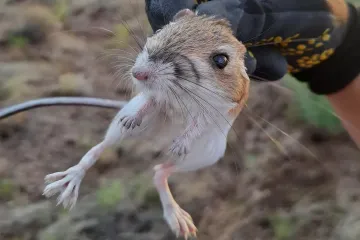
If you find a kangaroo rat displaced during the day—perhaps due to flooding or burrow disturbance—the most humane and safe approach is to leave it undisturbed if possible, or gently encourage it toward the nearest heavy cover or burrow entrance. Any attempt to handle it will provoke extreme panic and frantic attempts to escape, which might be interpreted as aggression but are purely fear-driven behaviors.
| Behavior Trait | Primary Function | Context Observed | Energy Profile |
|---|---|---|---|
| Foot Drumming | Communication/Territory | Social/Low Threat | Low to Moderate |
| Aerial Kick/Jump | Predator Evasion | High Threat (e.g., Snakes) | Very High Burst |
| Burrowing | Water/Temperature Conservation | Daily Cycle | Low |
| Foraging | Survival/Metabolic Water | Nocturnal Activity | Moderate |
| [1] |
When comparing the Desert Kangaroo Rat to a species that relies on overt aggression for defense, like a skunk, the difference is clear. The kangaroo rat expends maximum effort only when a failure to act means death. A skunk, conversely, uses a lower-energy, chemically offensive deterrent as a primary defense mechanism before a direct physical threat is fully realized. This difference highlights the kangaroo rat's specialization as an evasive specialist. They avoid the fight by making the fight impossible to land successfully.
#Videos
Aggressive Nightlife of the Kangaroo Rat | Attenborough | BBC Earth
Related Questions
#Citations
Kangaroo rat - Wikipedia
Aggressive Nightlife of the Kangaroo Rat | Attenborough | BBC Earth
Dipodomys deserti (desert kangaroo rat) - Animal Diversity Web
Aggression and boldness in Merriam's kangaroo rat - Oxford Academic
Watch this kangaroo rat kick a rattlesnake in the face | Science | AAAS
Dipodomys Deserti -The Kangaroo Rat - SBCSentinel
High-speed videos capture how kangaroo rat escapes rattlesnake ...
Behavioural syndromes in Merriam's kangaroo rats (Dipodomys ...
Kangaroo Rat – Facts, Size, Habitat, and Pictures - Animal Spot