Is the salmon shark extinct?
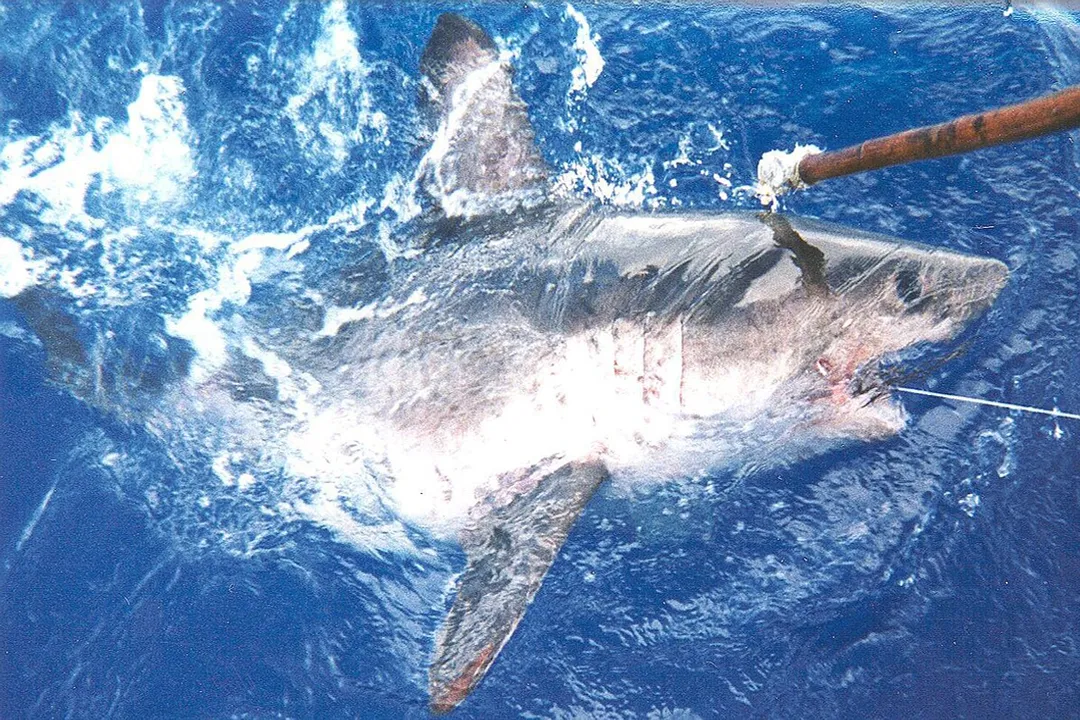
The Lamna ditropis, commonly known as the salmon shark, maintains a distinct presence in the cool, productive waters of the North Pacific Ocean, leading many to inquire about its population stability. While not extinct, this powerful, fast-swimming predator occupies a conservation status that warrants attention, sitting precariously on the edge of vulnerable categories. [1] Its often remote habitat and elusive nature contribute to gaps in comprehensive data, sometimes leading to understandable public concern regarding its long-term survival prospects. [7][9]
# A Northern Mackerel
The salmon shark belongs to the Lamnidae family, placing it alongside the great white and the extinct broad toothed mako. [1] It is a close relative of the white shark, though significantly smaller, typically reaching lengths between $6.5$ and $8.2$ feet ($2$ to $2.5$ meters) and weighing up to $400$ pounds ($180$ kg). [1][2] Females are generally larger than males, a common trait in many shark species. [2]
Physically, the salmon shark is built for speed and activity in colder water. It features a streamlined, stout body shape characteristic of active pelagic hunters. [2] Its coloration is countershaded: dark grey or brownish-black on the dorsal side, contrasting sharply with white on the underside. [7][4] This camouflage helps it blend into the water column when viewed from above against the dark depths or from below against the bright surface light. [2] A distinctive feature is the presence of small, hook-like cusps on the teeth, which are essential for gripping slippery prey. [1][4]
# Vital Signs
This species is endothermic, meaning it can maintain a body temperature higher than the surrounding water, which is a crucial adaptation for life in its frigid environment. [1] This ability allows it to sustain high levels of activity required for chasing down fast-moving prey like salmon. [2]
| Feature | Measurement / Description | Source |
|---|---|---|
| Maximum Length | Approx. $2.5$ meters ($8.2$ ft) | [1][2] |
| Maximum Weight | Approx. $180$ kg ($400$ lbs) | [2] |
| IUCN Status | Near Threatened (NT) | [1] |
| Diet Staples | Salmon, Herring, Rockfish | [2][7] |
# Temperate Range
The distribution of the salmon shark is exclusively confined to the North Pacific Ocean. [1][2] Its range is wide, stretching from the waters off the coast of Japan and Baja California, Mexico, northward into the Bering Sea and Gulf of Alaska. [7][4] They are often associated with cooler, more temperate, and subarctic waters, though they may move into warmer coastal waters seasonally. [2]
These sharks exhibit strong migratory patterns, tracking the availability of their primary food sources. [9] In areas like Alaska, they are particularly abundant along the continental shelf and slope, but they are known to venture into both offshore oceanic environments and nearshore coastal areas. [9] Because the species spans vast international boundaries—from the waters of the US, Canada, Japan, and Russia—effective management requires complex, coordinated international oversight. [1]
# Status Assessment
The conservation status assigned to the salmon shark by the International Union for Conservation of Nature (IUCN) is Near Threatened. [1] This designation indicates that while the species is not currently classified as Vulnerable, Endangered, or Critically Endangered, it is close to qualifying for a threatened category or would likely qualify in the near future without continued conservation efforts. [1] It is important to note that population estimates are difficult, and some regional assessments might differ slightly; for instance, some aggregators list it as Least Concern, but the official IUCN evaluation points toward genuine risk. [8]
The threats driving this classification are primarily anthropogenic. Commercial fishing operations pose the most significant challenge to the salmon shark population. [4]
# Major Pressures
The primary reason the salmon shark is not currently thriving—and why it landed the "Near Threatened" designation—stems directly from human activity in its ocean environment. [4]
# Fishing Impacts
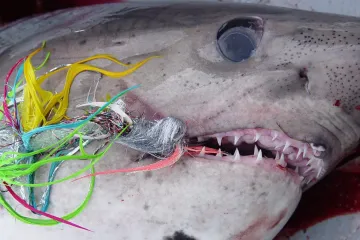
Salmon sharks are frequently caught unintentionally, or as bycatch, in fisheries operating throughout the North Pacific. [4][6] These operations often target commercially valuable species such as salmon, pollock, sablefish, or groundfish using gear like gillnets and longlines. [4] Because the shark shares similar habitats and feeding times with these target species, it becomes entangled or hooked. Mortality rates due to these incidental catches significantly impact population sustainability. [4][9]
In some regions, like the waters managed by Alaska, management bodies are aware of the interaction between fishing gear and sharks, leading to specific monitoring and regulation efforts. [9] However, dealing with bycatch in international waters remains a persistent management hurdle.
# Reproductive Rate
Like many large sharks, the salmon shark has a relatively slow life history strategy, characterized by late maturity and a low reproductive rate. [1][6] They are viviparous, meaning they give birth to live young, but litters are small, sometimes consisting of only one to five pups. [2] A slow recovery rate following heavy fishing mortality means that even moderate pressures can cause population declines that take many years, if not decades, to reverse. [1] This biological characteristic amplifies the danger posed by the high incidence of bycatch. [4]
# Population Dynamics
Understanding the salmon shark’s status is complicated by its migratory nature and the difficulty of conducting comprehensive population surveys across such a massive oceanic range. [3] While traditional methods rely on catch data, these figures often underestimate the true population size because they only reflect fishing effort and success, not total abundance. [9]
A fascinating area of contemporary research involves using genetic markers to better define salmon shark populations. [3] Researchers can analyze DNA from samples to determine if the sharks migrating along the coast of California are genetically distinct from those found near the Aleutian Islands. If distinct, isolated populations exist, the conservation status of one group could be far worse than the aggregate, wide-ranging status suggests. [3] For instance, an isolated coastal group could be heavily impacted by local netting activities, even if the overall species appears stable across the entire Pacific basin. [1] Analyzing these genetic connections helps fisheries managers create more precise, localized conservation plans rather than using a single, broad management approach for the entire North Pacific. [3]
If one were to consider the immediate ecosystem supporting them, an interesting correlation appears: the health of the Pacific salmon runs directly influences the shark population, not just through mortality via fishing gear that targets salmon, but through food availability. [7] A sustained decline in keystone prey species would naturally stress the apex predator, irrespective of direct fishing pressure on the shark itself. This interconnectedness means that policies designed solely to protect salmon will have an indirect but significant stabilizing effect on the salmon shark's food base.
# Future Outlook
To ensure the salmon shark remains firmly "Near Threatened" rather than progressing toward "Vulnerable," continued focus must be placed on reducing incidental mortality. This requires innovation in fishing gear—developing more selective hooks or nets that minimize the capture of non-target species like the salmon shark. [4] Furthermore, strict adherence to existing management plans in areas like the Alaskan waters, where monitoring is more organized, is essential for collecting the necessary data to track population trends accurately. [9]
Ultimately, the salmon shark is very much alive and swimming in the cold depths of the North Pacific. Its continued existence is not in doubt today, but its future sustainability rests on minimizing human impact. The primary goal for researchers and conservationists is to ensure that this capable, warm-blooded predator continues to hunt its namesake prey for generations to come, shifting its official designation away from the precarious "Near Threatened" category back toward true stability. [1][6]
Related Questions
#Citations
Salmon shark - Wikipedia
Lamna ditropis (Salmon shark) - Animal Diversity Web
Did you know... | College of Agricultural Sciences
Salmon Shark - Sharkwater Extinction
The salmon shark (Lamna ditropis) is a species of mackerel shark ...
Salmon Shark - Shark Guardian
Salmon Shark – Discover Fishes - Florida Museum of Natural History
Salmon Shark (Lamna ditropis) - iNaturalist
Salmon Shark Species Profile, Alaska Department of Fish and Game