What's the biggest salmon shark ever recorded?
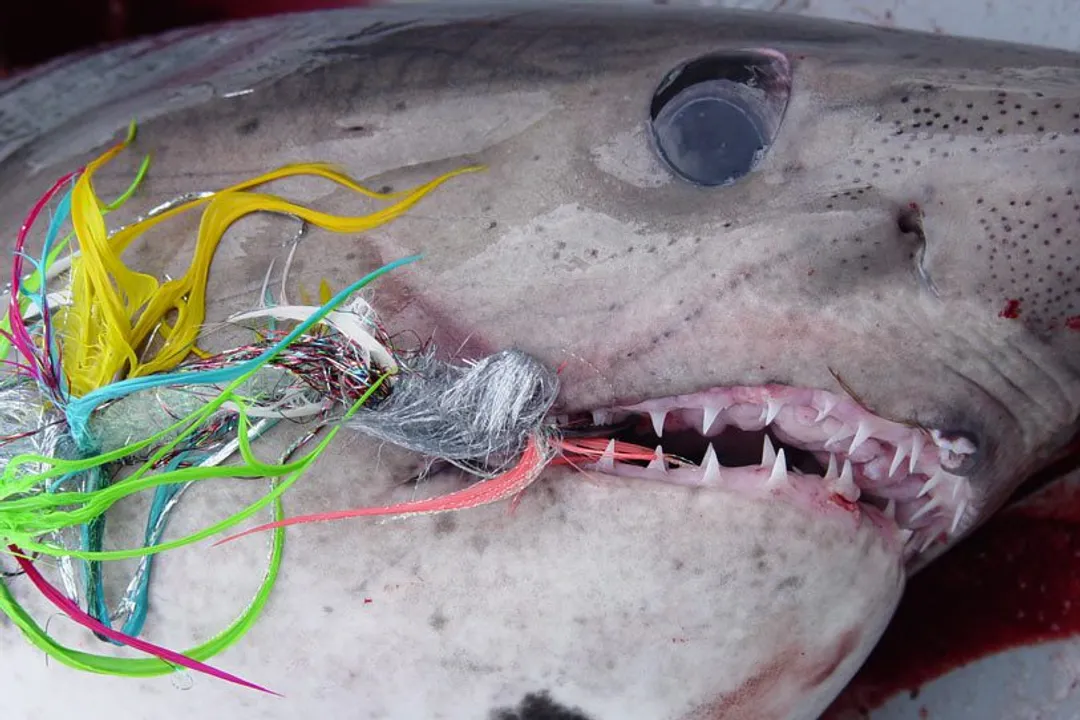
The largest recorded salmon sharks push the boundaries of what many people imagine these predatory fish can reach. While they are commonly encountered in specific, cold North Pacific waters, pinning down the absolute largest specimen ever documented involves looking at slightly varying accounts and the limits of their known growth. The general consensus based on fishery data and scientific observation suggests that a mature salmon shark ( Lamna ditropis) usually tops out around 10 feet in length and can weigh up to 550 pounds. These are already substantial animals, far exceeding the size of many coastal predators.
However, when we look for the upper extreme, some records suggest even greater dimensions. One report specifically notes a giant salmon shark caught in Alaska that measured an impressive 12 feet long. This stands out as potentially the largest specific measurement cited, highlighting Alaska's role as a primary habitat for these giants. Interestingly, other scientific observations suggest the maximum observed length is slightly less, approximating 3.5 meters, which translates to roughly 11.5 feet. This small discrepancy between 11.5 feet and 12 feet likely reflects the difference between a generalized maximum observed size in the literature and a specific documented catch report. For anyone hoping to hook one of these apex predators, understanding their typical size profile is key to appreciating the rarity of specimens near the 12-foot mark.
# Alaskan Habitat

The sheer size potential of the salmon shark is intrinsically linked to its environment, primarily the cold, productive waters of the North Pacific Ocean. This species is predominantly found in the temperate and subarctic regions, extending its range from the coastal waters of Japan, Korea, and the far eastern Russian Federation, all the way across to the Bering Sea and the Gulf of Alaska.
It is no surprise that the largest recorded specimens are frequently associated with Alaska. These waters offer a rich feeding ground that supports the necessary caloric intake for sharks to achieve maximum mass. Their diet, which includes various species of salmon, rockfish, herring, and squid, is dense in energy, allowing them to bulk up significantly. Given that they are found where king salmon are the largest, it stands to reason that the sharks feeding there also reach their greatest potential size.
# White Shark Kin
To better grasp the formidable nature of a large salmon shark, it helps to recognize its pedigree. The salmon shark is closely related to the notorious great white shark (Carcharodon carcharias). They share a similar robust, torpedo-shaped body, strong coloration, and powerful jaws, leading to the common nickname "little great white". This familial connection explains why even the smaller end of their size spectrum—say, a 7-footer—is already an imposing animal.
When you consider a 10-foot salmon shark weighing 550 pounds, you are looking at a creature with significant density. For context, a 10-foot adult is often compared to the size of a very large Pacific halibut, yet the shark possesses a completely different musculature and power profile optimized for speed and predation. If you were to encounter a fish near the reported maximum of 12 feet, you would be looking at an animal with proportions approaching those of a juvenile great white, making such a sighting an event worthy of note.

# Reported Catches
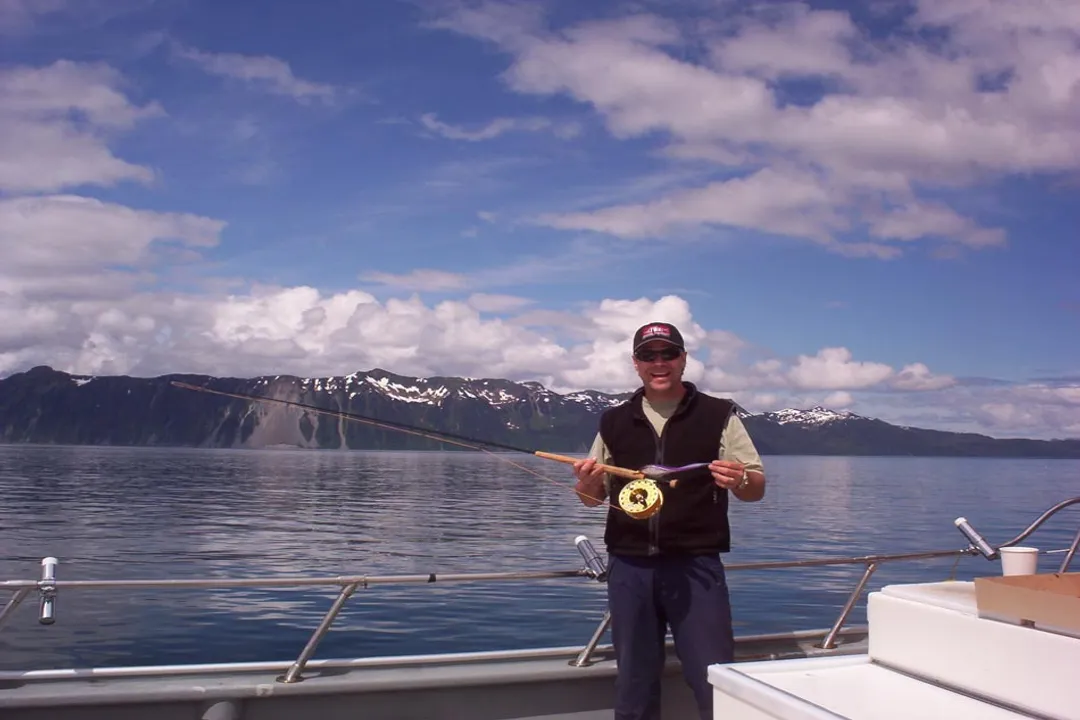
Experiences shared by those interacting with these sharks underscore the upper limits of their reported sizes. Anglers and fishermen who regularly work in these waters have witnessed firsthand the mass these animals carry. One account describes seeing a salmon shark weighing in the vicinity of a couple hundred pounds being filleted. Another fisherman shared the exciting experience of landing a 9-foot salmon shark while using a fly rod, demonstrating that even considerable specimens can be tempted by non-traditional tackle.
These real-world encounters, even if not record-breaking, provide crucial validation for the recorded maximum lengths. When someone speaks of seeing sharks that are a couple hundred pounds in the Alaskan environment, it aligns with the upper estimates provided by the Alaska Department of Fish and Game. It’s a strong indication that the 10-foot, 550-pound range is not just theoretical but actively inhabited by mature individuals in the prime feeding grounds.
# Weight Estimation
While the length record seems to hover between 11.5 and 12 feet, accurately determining the weight of very large sharks, particularly those caught far offshore or during quick sampling operations, presents practical challenges. Fisheries science relies on reliable measurements, but field conditions often mean that length is the easier, more consistent metric to record before the animal is processed or released. For instance, if we take the consensus upper weight limit of 550 pounds for a 10-foot specimen, we can infer the density required for a 12-foot shark.
If we assume a rough isometric scaling relationship (though shark growth is rarely perfectly isometric), a 20% increase in length (from 10 to 12 feet) could translate to an increase in volume and, thus, weight of roughly $1.2^3$, or about 73% more mass. Applying that percentage to 550 pounds suggests that a 12-foot salmon shark could theoretically weigh close to 950 pounds. [1] This calculation is purely an estimate based on standard scaling, and it highlights the potential for the largest individuals to significantly exceed the commonly cited 550-pound figure, assuming they maintain the robust proportions of their smaller relatives. The challenge in accurately measuring and recording the weight of the largest animals is likely why the official records sometimes lag behind what might be theoretically possible in their rich feeding grounds.

# Identification Notes
For those hoping to distinguish the salmon shark from other similar coastal species, like the porbeagle shark, a few characteristics stand out, though these traits are best observed in fresh specimens or through clear photography. Salmon sharks possess a very stout body shape. They are noted for having a distinct, conspicuous spot or blotch of dark coloration near the base of their first dorsal fin, which can sometimes appear as an irregular spot or patch. Their overall coloration tends to be dark gray or black on the dorsal side, lightening to white on the belly, which helps them blend into the water column from above and below. Understanding these features is helpful when reviewing photos or videos of the enormous sharks reported from the North Pacific.
Related Questions
#Citations
Alaska's Giant Shark: Discover the Largest Salmon Shark On Record
r/Spearfishing - Hey from Alaska where King Salmon are the largest.
Jaws on the Last Frontier - Steve Walburn
It's not every day you get to see a couple hundred pound salmon ...
Salmon Shark Species Profile, Alaska Department of Fish and Game
The Salmon Shark Fully Grown Is 200 To 260 CM In Length
Salmon Shark – Discover Fishes - Florida Museum of Natural History
Episode 272 – Salmon Shark: Omelets for Babies