When did Eryops go extinct?
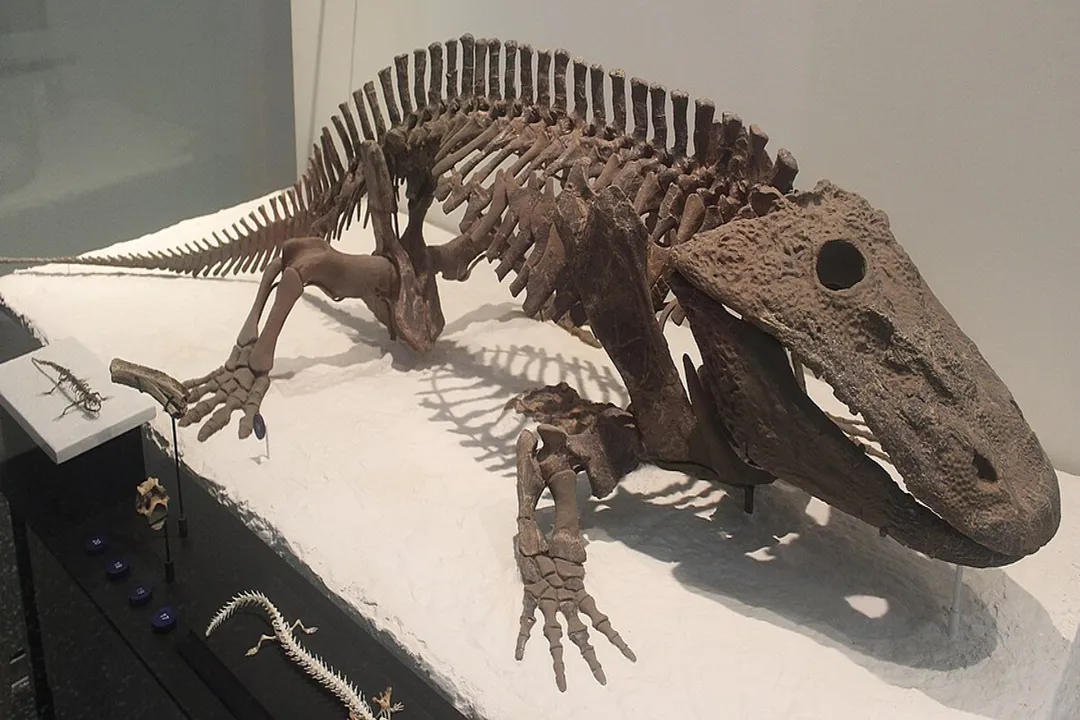
The lifespan of Eryops, that massive, formidable amphibian of the deep past, is defined not by a single, catastrophic end date, but by the geological boundaries of its known existence. To ask precisely when it vanished is to trace the last traces of a significant Paleozoic lineage that dominated the swampy lowlands long before the age of dinosaurs took hold. While the group it belonged to, the temnospondyls, persisted for an astonishingly long time, Eryops itself seems to have faded out earlier, as the Permian period drew toward its middle, rather than being caught in the very final global cataclysm.
# Permian Presence
Eryops is best known from North America, with its most definitive remains, primarily large skulls and robust skeletal pieces, recovered from the Texas Red Beds. The fossils situate this creature squarely within the Permian period, a time spanning from 299 million to 251 million years ago. More specifically, the type species, Eryops megacephalus, is securely dated to the early Permian, known as the Cisuralian epoch. Some specimens point to an age around 295 million years ago, corresponding to the Sakmarian stage within that epoch. Other records place its appearance even earlier, with material showing up in the late Carboniferous, though some of these older assignments have been revised over time.
The creature’s temporal range, according to one classification, stretches from the Pennsylvanian right through the Cisuralian, potentially ending around 273 million years ago. This suggests that Eryops succumbed to environmental shifts or competition well before the close of the Permian and notably missed the planet's most devastating mass extinction, the Permian-Triassic "Great Dying," which occurred roughly 252 million years ago. Some paleontological assessments even suggest its extinction window was earlier, perhaps between 310 and 295 million years ago, indicating it had already disappeared by the time the supercontinent Pangea was fully established and beginning to experience the climatic extremes that would lead to the end-Permian crisis. Evidence from other temnospondyls suggests that while the last of their group survived until the Cretaceous period, around 120 million years ago, Eryops was an earlier representative that had already completed its tenure on Earth.
# A Heavyweight Predator
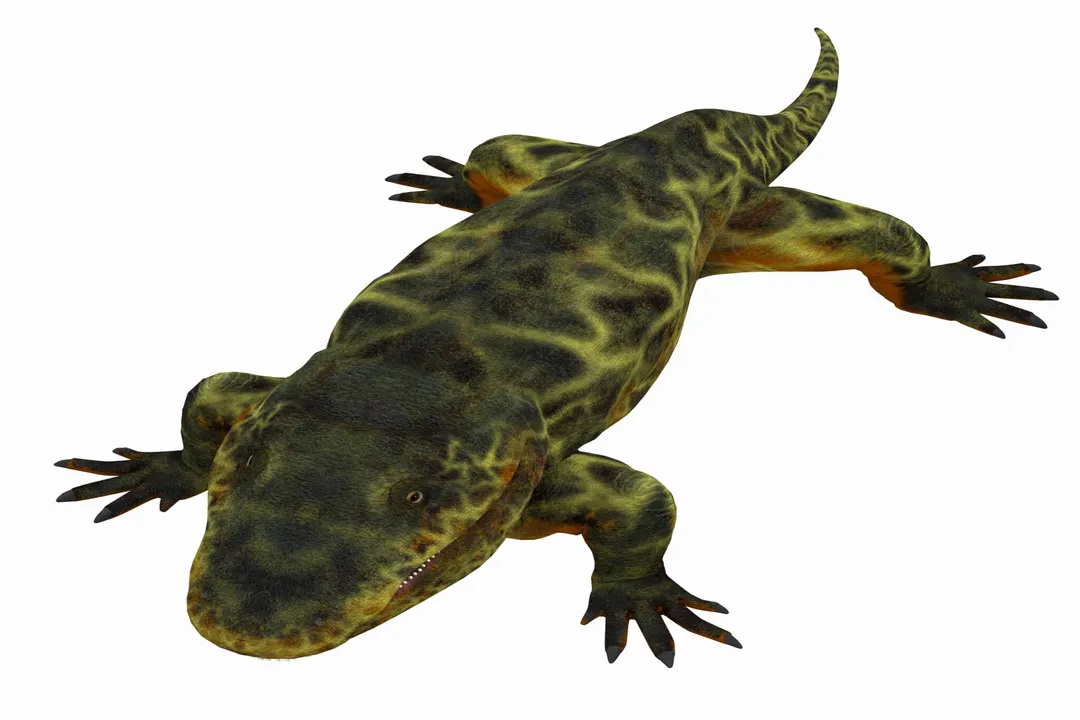
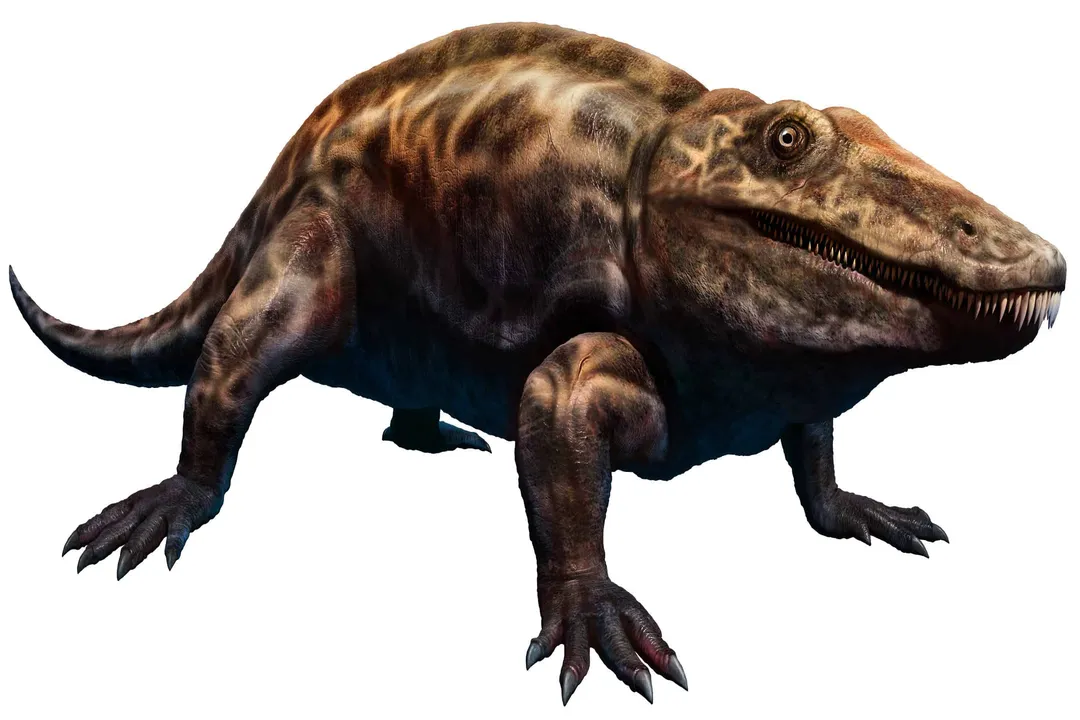
Understanding Eryops is best achieved by considering its sheer mass and build, features that set it apart in the early Permian world. Averaging over 1.5 to 2.0 meters (about 5 to 6.5 feet) in length, some individuals may have approached 3 meters (almost 10 feet). Its estimated weight was significant for the time, generally falling between 102 and 222 kilograms (225 to 489 pounds). This put it among the largest non-amniote tetrapods of its day.
The name Eryops itself means "drawn-out face," derived from the way a large portion of its skull extended forward of its eyes. This skull was large and broad, reaching about 45 cm in length, featuring thick, uneven bones. The eye sockets were notably large and angled upward. This placement, along with its nostrils situated high on the head, is a classic design feature for an ambush predator, allowing it to lie submerged in water while keeping its sensory organs above the surface, much like modern crocodiles or alligators. Given its large gape and maze-toothed (labyrinthodont) dentition—teeth with folded enamel adapted to stress—it likely ambushed and consumed fish, smaller amphibians, and perhaps even small reptiles.
Its postcranial skeleton is remarkably complete for a temnospondyl, revealing a sturdy and robust structure compared to its Paleozoic cousins. The limbs were short but very broad, supported by massive shoulder and hip girdles, indicating it was well-equipped for navigating terrestrial environments. While it was an efficient land-mover relative to some contemporaries, its relatively stiff torso and stout tail suggest it was likely not an agile swimmer, reinforcing the idea that it frequented shallow water bodies like ponds and rivers rather than deep channels. An intriguing detail preserved in a fossilized "mummy" specimen showed that its skin was covered in a pattern of oval bumps, suggesting a degree of external armor or protection.

# Lifestyle and Reproduction
Like most ancient amphibians, Eryops underwent a life cycle starting from an aquatic larval stage, similar to modern tadpoles, although they did not undergo the dramatic metamorphosis seen in modern frogs. Juvenile Eryops possessed poorly developed skeletons, likely residing in sheltered swamps where they were less exposed to danger. As they matured, ossification increased, leading to the heavy bones characteristic of the adults.
Reproduction almost certainly required water. Like many amphibians, Eryops would have laid soft, shell-less eggs in damp areas or directly in water to prevent desiccation, suggesting external fertilization, with males fertilizing eggs released by the female. The discovery of such shell-less egg fossils, sometimes attached to plants for support, bolsters this view. However, the robust terrestrial capabilities hinted at by its limbs have fueled debate, leading some to speculate about varying reproductive strategies or an adaptation toward more reptilian-like development within the temnospondyl group as a whole.
# Ecosystem Role and Demise
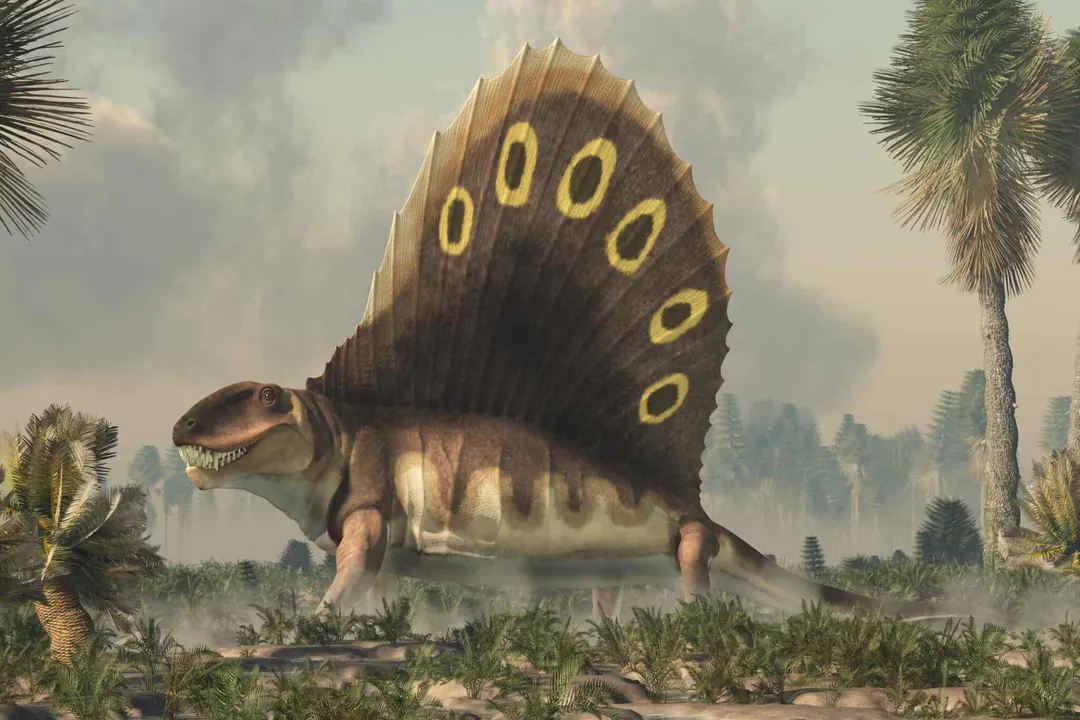
Eryops occupied a high trophic level in its ecosystem. As a large predator in a world of expanding terrestrial fauna, it competed fiercely for resources. Its habitat—lowland areas around streams, ponds, and rivers—placed it in direct competition with other significant predators, such as the sail-backed reptile Dimetrodon, which likely preyed upon juveniles or even unwary adults. In the water, large fish and specialized aquatic predators like the ancient Orthacanthus shark also posed threats.
The puzzle of Eryops's disappearance is tied to the broader history of the Temnospondyli. It is fascinating to consider that Eryops was perhaps perfectly adapted to the environmental swings of the Early Permian, characterized by variable climates ranging from swampy to desert-like conditions in regions like Texas and New Mexico. Its success in both aquatic hunting and terrestrial movement may have given it an edge during these fluctuations. The fact that it seemingly vanished before the massive pressure of the Permian-Triassic extinction—which eliminated 96% of marine and three-quarters of land species—implies that the environmental conditions of the Late Permian, perhaps increased aridity or new, faster competitors, represented a threshold that Eryops could not cross.
We can observe a pattern here: Eryops, a creature seemingly built for robust terrestrial life relative to its predecessors, still appears to have been intrinsically linked to permanent water bodies for reproduction. As the Permian progressed, global climate tended to become drier and more extreme, moving away from the humid swamps of the Early Permian. It is an interesting thought that the very traits making it a successful apex predator in the established Early Permian water-edge environments—its heavy build and reliance on water for laying its vulnerable eggs—might have been insufficient buffers against the slow, relentless shift towards drier terrestrial dominance that characterized the latter half of the era, leading to its extinction around 270 to 273 million years ago.
While the more derived, primarily aquatic temnospondyl lineages did manage to survive the subsequent mass extinction event, persisting in Gondwanan refugia until the Cretaceous, Eryops belonged to an earlier, more generalized branch. It seems this robust, broad-headed hunter was a victim of the changing world of the mid-Permian, a casualty of slow environmental change rather than a sudden, planet-killing impact, though the debate over the ultimate cause of the Great Dying continues to involve discussions of massive volcanism and even meteorite collisions. Eryops, therefore, represents the end of a particular Permian success story, one that preceded the great planetary turnover by tens of millions of years.
Related Questions
#Citations
Eryops - Wikipedia
Eryops | Carboniferous Period, Permian Period, Aquatic - Britannica
Skull that looks like a 'Toy Story' character unearthed in Texas
After Surviving on Earth for More Than 200 Million Years ...
Meet the Egg-Laying Ancient Predator the Looks Like an Alligator