Is a grebe in the duck family?
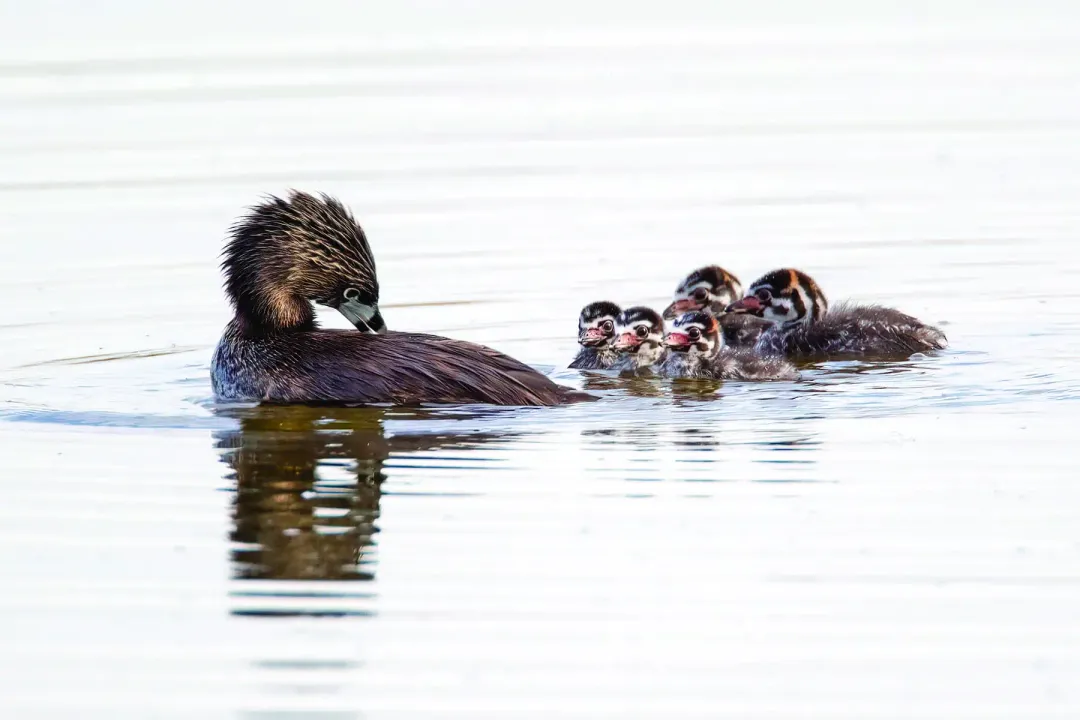
While it is common to see them swimming side-by-side on the same body of water, the grebe is decidedly not a member of the duck family. They may share a preference for aquatic environments, leading many casual observers to group them together, but a closer look at their biology, physical structure, and evolutionary lineage reveals they are quite separate entities in the bird world. [2][4][7] Ducks, geese, and swans belong to the family Anatidae, [1] whereas grebes form their own distinct lineage, classified under the family Podicipedidae. [6][8] Understanding this fundamental separation requires examining the specific characteristics that set these two groups of water birds apart.
# Family Lineage
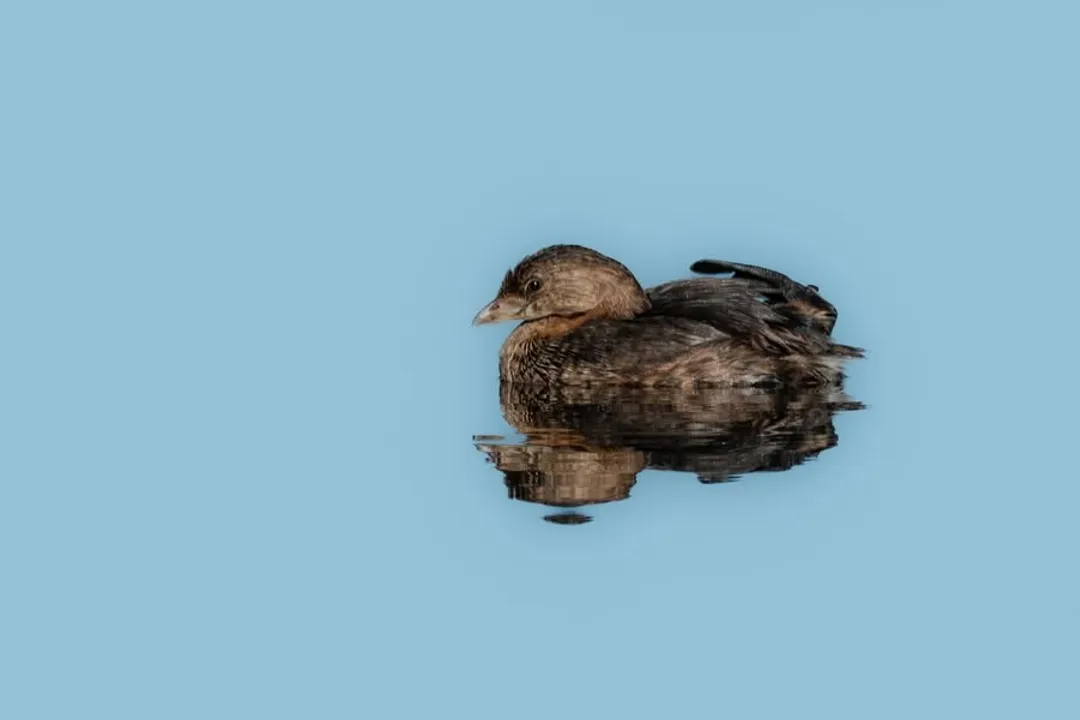
The primary reason a grebe cannot be called a duck is rooted in taxonomy, the science of biological classification. Birds are grouped into orders and families based on shared ancestry and physical characteristics. [1] Ducks, geese, and swans are all members of the Order Anseriformes and the Family Anatidae. [1] Grebes, on the other hand, belong to the Order Podicipediformes. [1] This places them in a completely different evolutionary branch than the waterfowl. [4] The scientific name for the grebe family itself, Podicipedidae, highlights this separation. [6][8] If you look at a modern field guide, you will find grebes treated separately from the sections dedicated to Anatidae (ducks, geese, swans) and even from rails and coots, which share certain habitats. [4]
# Foot Structure
One of the most immediate and functionally significant differences between a grebe and a duck lies in their feet. Ducks possess the classic adaptation for paddling: webbed feet. [4] This means the skin connects the three forward-facing toes, creating a broad, efficient surface for propulsion through the water, much like flippers. [1]
Grebes have an entirely different solution for moving in the water, which contributes to their amazing diving prowess. Instead of webbing that connects all toes, grebes have lobes of skin that stick out from the sides of their toes. [4][5] Imagine a duck's foot, but instead of the skin being stretched tightly between the toes, the skin flares out like separate flaps on each toe, giving the foot a wider surface area for pushing water backward. [4] This lobed foot structure, combined with the fact that their legs are set far back on their bodies, makes them superb swimmers and divers but incredibly awkward on land. [1][5] A duck’s feet are generally positioned more centrally under its body, allowing for a more upright, waddling gait on land compared to the penguin-like clumsiness of a grebe. [1] This unique foot design in grebes is a classic example of convergent evolution—solving the problem of aquatic locomotion differently than the Anatidae family. [4]
# Body Profile and Movement
Observing a grebe and a duck swimming side-by-side reveals distinct differences in their profile and how they hold themselves on the water. Ducks, belonging to the Anseriformes, often appear heavier-bodied and sit higher on the water's surface. [1][7] Their posture tends to be more horizontal, and many species exhibit the classic "dabbling" feeding behavior where they tip their heads and forequarters underwater while their rear ends stick up. [7]
Grebes, by contrast, typically have a more streamlined, torpedo-like body shape. [5] Their necks are often longer and more slender, which they frequently hold in an S-curve. [5] They tend to sit lower in the water than many ducks, often only showing the top of their back and head above the surface, which can make them look deceptively small until they move. [5] The placement of their legs far toward the rear is what enables their incredible ability to propel themselves deep underwater for fishing, making them far superior divers than most ducks. [1][5] When a grebe needs to dive, it simply sinks beneath the surface with minimal splash, whereas many ducks rely on taking a running start for takeoff or use an awkward flapping motion to become airborne. [1]
# Plumage and Head Features
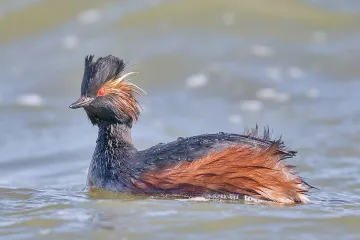
While there is enormous variation within the duck family—from the iridescent heads of male mallards to the muted tones of female eiders—grebes possess distinct head ornamentation that often sets them apart. Many species of grebe are famous for their elaborate head plumes or crests, especially during the breeding season. [5][8] These feathers are used extensively in their complex courtship displays. [5] For example, the Western Grebe is renowned for its synchronized, running-on-water courtship dance, heavily involving these specialized head feathers. [5]
While some ducks have colorful head feathers, the shape and structure of the bill also offer a clue. Ducks generally possess the broad, flattened bill specialized for filtering aquatic vegetation or skimming invertebrates from the water surface. [1][7] Grebes, however, have sharp, pointed bills, designed for spearing fish and aquatic insects, reflecting their primary carnivorous diet. [2][5] The Pied-billed Grebe, for instance, gets its name from its thick, cone-shaped bill, which is distinct from the flatter bills typical of dabbling ducks. [2] If you spot a water bird with a surprisingly sharp, pointed bill and elaborate head feathers during mating season, you are almost certainly looking at a grebe, not a duck. [5]
# Diet and Foraging Strategies
The difference in bill structure directly relates to how these birds feed. Ducks are generally categorized as dabblers (feeding at the surface or tipping over) or divers (fully submerging). Their diet often includes seeds, aquatic plants, and various invertebrates. [7]
Grebes are obligate pursuit divers. [1] Their diet consists almost entirely of animal matter—primarily fish, insects, and crustaceans. [2][8] They hunt underwater by sight, chasing down their prey with powerful strokes of their lobed feet. [5] This reliance on spearing live prey necessitates the sharp bill, whereas a duck’s bill is built for skimming or sifting. [1] Furthermore, grebes are known to swallow their own feathers, which are thought to line their stomachs, potentially acting as a filter to protect the digestive tract from sharp fish bones or aiding in the breakdown of chitin from insects. [2][5] This practice is not characteristic of ducks. [2]
When comparing local sightings, note the activity: if the bird is upending itself with its rear end in the air, it's likely a dabbling duck. [7] If the bird vanishes completely with barely a ripple and stays down for a minute or more pursuing minnows, it's a grebe. [5] It's interesting to consider the energy expenditure in these contrasting feeding styles; a dabbling duck expends minimal energy to snatch surface food, while a grebe commits fully to a high-energy, deep-water dive, a biological strategy that demands a different physiology. [1][5]
# Nesting Habits and Offspring Care
Nesting behavior provides another clear break between the two groups. Ducks build relatively simple nests, often hidden in vegetation near the water, lined with soft down feathers plucked from the female's breast. [1]
Grebes exhibit far more complex and unique nest construction. They are renowned for building floating nests anchored to emergent vegetation in the water. [6] These nests are substantial structures woven from reeds, grasses, and mud, designed to rise and fall with fluctuating water levels. [6][8] In some instances, if water levels drop suddenly, a grebe nest might even end up stranded on dry land, an event rarely survived by a duck nest. [6]
The commitment to chick rearing also differs slightly. While both groups care for their young, grebes have a highly specialized, intimate method of transport. After hatching, grebe chicks are often immediately taken onto the parent's back, tucked securely under the surface feathers. [5] This is a regular behavior for many grebe species, offering warmth, protection from predators, and a mobile refuge as the parents forage. [5] While some waterfowl species show carrying behavior, the near-constant, deeply integrated back-carrying seen in grebes is a hallmark trait often absent or less pronounced in ducks. [1]
# Summary of Key Differences
To make the distinction clear for quick field identification, it helps to summarize these anatomical and behavioral departures:
| Feature | Grebe (Family Podicipedidae) | Duck (Family Anatidae) |
|---|---|---|
| Foot Structure | Lobed toes [4][5] | Fully webbed toes [4] |
| Bill Shape | Sharp, pointed, dagger-like (for spearing) [2][5] | Broad, flattened (for filtering or grazing) [1][7] |
| Body Profile | Streamlined, often sits low in water, long S-curve neck [5] | Generally bulkier, sits higher on water [1][7] |
| Diet Focus | Primarily fish and large aquatic invertebrates (Carnivorous) [2][8] | Plants, seeds, insects (Omnivorous/Herbivorous) [7] |
| Nest Type | Floating structure anchored to reeds/grasses [6][8] | Ground nest, often well-hidden near shore [1] |
| Unique Habit | Swallows feathers for stomach lining [2][5] | Dabbling (tipping) behavior common [7] |
For the dedicated birdwatcher, recognizing these features quickly shifts focus. If you see a bird plunge deep and pursue a fish underwater using feet that look like they have individual flaps instead of a paddle, you can confidently place it outside the Anatidae family. The distinction isn't just academic; understanding why a grebe swims differently than a mallard enriches the experience of watching aquatic bird life.
# Further Considerations for Birders
When you are observing water birds in marshy areas or large lakes, it is easy to lump all medium-to-large swimmers together. However, a true observer should look beyond the general category of "water bird". [7] One useful mental checklist when encountering an unfamiliar bird in this habitat is to first check the feet. If you can see the feet during movement, the lobe/webbing distinction is definitive. If the bird is on land, note the leg position; a bird that has to almost crawl on land because its legs are set far back to maximize underwater propulsion is exhibiting a key grebe adaptation. [1][5]
Another point of subtle confusion arises with Coots, which are neither ducks nor grebes, but belong to the Rail family (Rallidae). [4] Coots have lobed toes like grebes, but their bills are typically short and distinctly black or white, lacking the sharp point of a grebe or the flatness of a duck. [4] Differentiating between a grebe and a coot often comes down to the bill and head shape, and watching their swimming style—coots tend to use their lobed feet in a more clumsy paddling motion rather than the streamlined, powerful pushes of a diving grebe. [4] Considering the ecological niche a bird occupies—the specialized pursuit hunter versus the generalist forager—helps solidify why evolution placed grebes in their own order, far removed from the dabbling and grazing habits of most ducks. [7] They are specialized aquatic predators who happen to share real estate with their waterfowl neighbors. [2]
Related Questions
#Citations
Grebe
Pied-billed grebes: Not a duck, but still a waterbird
Pied-billed grebe unique foot features - Denver
Waterfowl Basics: Get Your Ducks (and Coots, and Grebes) ...
Grebes
Podicipedidae – Grebes
That's Not a Duck: 7 Water Birds You Should Know
Bird Podicipedidae - Grebes